
Dyslipidaemia Management: A Practical Guide to LDL-C Targets and CVD Prevention
Clinical Practice Update — Risk Assessment, LDL-C Goals by Risk Category, Statin Therapy, Nonstatin Add-Ons, Lipoprotein(a), and Special Populations
This is an original clinical education article informed by current guidelines and evidence. See References below for source documents.
- Clinical Focus
- Cardiovascular risk assessment, LDL-C treatment targets, statin intensity selection, ezetimibe and PCSK9 inhibitor escalation, bempedoic acid, lipoprotein(a) measurement, familial hypercholesterolaemia, and hypertriglyceridaemia
- Target Audience
- Primary care physicians, internists, cardiologists, endocrinologists, pharmacists, lipid specialists, residents
- Setting
- Primary care, cardiology outpatient, lipid clinics, preventive cardiology, hospital inpatient (post-ACS)
- Source Evidence
- •2019 ESC/EAS Guidelines for Management of Dyslipidaemias + 2025 Focused Update (Eur Heart J, 2020/2025)
- •2018 AHA/ACC/Multisociety Cholesterol Guideline (Circulation, 2019)
- •2022 ACC Expert Consensus Decision Pathway on Nonstatin Therapies (JACC, 2022)
- •CTT Collaborators Meta-Analysis — Statin Efficacy (Lancet, 2010)
- •FOURIER / ODYSSEY OUTCOMES / CLEAR Outcomes Landmark Trials
Key Clinical Takeaways
The most important actionable points from this Practice Update on dyslipidaemia management and cardiovascular prevention.
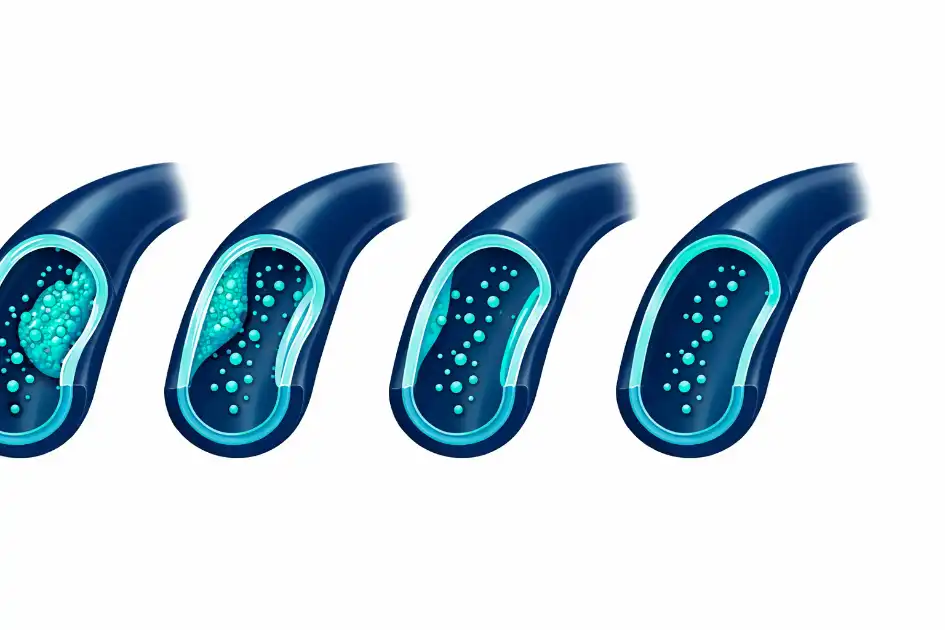
- 1LDL-C is a direct, causal driver of atherosclerotic cardiovascular disease — "lower is better" with no lower safety threshold identified in trials → Why LDL-C Matters
- 2Set LDL-C targets by risk category: <55 mg/dL for very high risk (secondary prevention), <70 mg/dL for high risk, <100 mg/dL for moderate risk, and <116 mg/dL for low risk (ESC approach) → Setting the Target
- 3Start with high-intensity statin therapy for secondary prevention and for high-risk primary prevention patients — this is the single most effective first step → Statin Therapy
- 4Add ezetimibe first when statin alone is insufficient; then escalate to a PCSK9 inhibitor or inclisiran if the target remains unmet → Nonstatin Escalation
- 5Bempedoic acid is a new oral option for patients who are statin-intolerant or need additional LDL-C lowering — the CLEAR Outcomes trial demonstrated cardiovascular benefit → Nonstatin Escalation
- 6For post-ACS patients, the 2025 ESC update recommends initiating high-intensity statin plus ezetimibe during the index hospitalisation to maximise early LDL-C reduction → Post-ACS Lipid Strategy
- 7Measure lipoprotein(a) at least once in every adult to identify those with inherited elevated Lp(a) who carry additional cardiovascular risk independent of LDL-C → Lipoprotein(a)
- 8Use SCORE2/SCORE2-OP (Europe) or the Pooled Cohort Equations (US) for primary prevention risk assessment — coronary artery calcium scoring can reclassify intermediate-risk patients → Risk Assessment
- 9Screen for familial hypercholesterolaemia when LDL-C is above 190 mg/dL (4.9 mmol/L) or when there is a family history of premature CVD — FH requires aggressive lifelong treatment → Familial Hypercholesterolaemia
- 10Dietary supplements and vitamins have no evidence for LDL-C lowering or ASCVD risk reduction — the 2025 ESC update explicitly recommends against their use for this purpose → What Not to Prescribe
How Should You Determine the LDL-C Target?
The fundamental principle of modern dyslipidaemia management is that LDL-C targets are set by the patient's total cardiovascular risk, not by the lipid level alone. Both the ESC/EAS and AHA/ACC frameworks agree that higher-risk patients need lower LDL-C levels, but they differ in how they define and communicate targets.
Perform a formal cardiovascular risk assessment before initiating lipid-lowering therapy in primary prevention. Use SCORE2/SCORE2-OP (ESC) or the Pooled Cohort Equations (AHA/ACC) to stratify patients into risk categories. For intermediate-risk patients where the decision is uncertain, coronary artery calcium (CAC) scoring can help reclassify risk upward or downward.
Strong Rec High Evidence ESC/EAS 2019/2025 AHA/ACC 2018Measure lipoprotein(a) at least once in every adult's lifetime. Elevated Lp(a) (above 50 mg/dL or 125 nmol/L) is a genetically determined, independent risk factor for ASCVD and aortic stenosis. It can reclassify a patient's risk upward and prompt earlier or more intensive lipid-lowering therapy.
Moderate Rec Moderate Evidence ESC/EAS 2019/2025LDL-C Targets by Clinical Risk Category: Choosing the Right Goal for Your Patient
| Risk Category | Who Belongs Here | ESC/EAS LDL-C Goal | AHA/ACC Approach | Practical Tip |
|---|---|---|---|---|
| Very High Risk | Documented ASCVD, prior ACS/MI/stroke, T2DM with target organ damage, severe CKD, FH with ASCVD | <55 mg/dL (1.4 mmol/L) AND ≥50% reduction from baseline | High-intensity statin; add ezetimibe then PCSK9i if LDL-C ≥70 mg/dL | Most patients need combination therapy. Don't settle for statin monotherapy if the target is unmet. |
| High Risk | Markedly elevated single risk factor, T2DM without organ damage but with other risk factors, moderate CKD, FH without ASCVD | <70 mg/dL (1.8 mmol/L) AND ≥50% reduction | High-intensity statin; consider adding ezetimibe if target not met | Diabetes alone puts many patients into the high-risk category. Check for risk-enhancing factors. |
| Moderate Risk | SCORE2 5–10% (or PCE 7.5–20%), young T2DM well-controlled, T1DM <35 years without complications | <100 mg/dL (2.6 mmol/L) | Moderate-to-high intensity statin after risk discussion; consider CAC to refine decision | CAC = 0 can reasonably defer statin therapy (except in diabetes, FH, or smokers). Reassess in 5–10 years. |
| Low Risk | SCORE2 <5% (or PCE <5%); no diabetes, no significant risk factors | <116 mg/dL (3.0 mmol/L) | Lifestyle; consider statin if LDL-C persistently ≥190 mg/dL | Focus on lifestyle. Statin discussion only if LDL-C is very high or a risk-enhancing factor is present. |
- The ESC uses absolute LDL-C targets plus a percentage reduction goal. The AHA/ACC uses percent reduction (at least 50% with high-intensity statin) and adds absolute thresholds (≤70 mg/dL) to guide escalation in very high-risk patients.
- Both frameworks agree: the lower the achieved LDL-C, the lower the event rate. No safety floor has been identified.
Which Statin and Which Intensity?
Prescribe high-intensity statin therapy (atorvastatin 40–80 mg or rosuvastatin 20–40 mg) for all patients with clinical ASCVD (secondary prevention) and for primary prevention patients at high or very high cardiovascular risk. Expect an LDL-C reduction of approximately 50% or more.
Strong Rec High Evidence AHA/ACC 2018 ESC/EAS 2019 CTT 2010Prescribe ezetimibe 10 mg daily as the first add-on when maximally tolerated statin alone does not achieve the LDL-C target. Ezetimibe adds approximately a further 15–20% LDL-C reduction and has proven cardiovascular outcome benefit in the IMPROVE-IT trial when combined with a statin.
Strong Rec High Evidence AHA/ACC 2018 ESC/EAS 2019/2025Prescribe a PCSK9 inhibitor (evolocumab or alirocumab) when the LDL-C target is not achieved despite maximally tolerated statin plus ezetimibe in very high-risk patients. PCSK9 inhibitors lower LDL-C by an additional 50–60% and reduce MACE in the FOURIER and ODYSSEY OUTCOMES trials.
Strong Rec High Evidence AHA/ACC 2018 ESC/EAS 2019/2025Consider bempedoic acid for patients who are statin-intolerant or as additional therapy when LDL-C remains above target. The CLEAR Outcomes trial showed that bempedoic acid reduces MACE in statin-intolerant patients. It works upstream of statins in the cholesterol synthesis pathway and has a significantly lower incidence of muscle-related side effects compared with statins.
Moderate Rec High Evidence ESC/EAS 2025 Update CLEAR OutcomesDo not use dietary supplements or vitamins to reduce LDL-C or lower ASCVD risk. The 2025 ESC focused update explicitly recommends against their use, as no supplement has demonstrated cardiovascular benefit in rigorous trials.
Against Moderate Evidence ESC/EAS 2025 UpdateLipid-Lowering Agents: A Practical Comparison by LDL-C Reduction and Clinical Scenario
| Agent | Expected LDL-C Reduction | CV Outcome Benefit | Best Suited For | Practical Tips |
|---|---|---|---|---|
| High-intensity statin | ≥50% | Yes (extensive RCT data) | Foundation therapy for all high/very high-risk patients | Atorvastatin and rosuvastatin are preferred. Take atorvastatin any time; rosuvastatin any time. Simvastatin 80 mg is not recommended (myopathy risk). |
| Ezetimibe 10 mg | 15–20% additional | Yes (IMPROVE-IT) | First add-on when statin alone falls short; also useful in statin intolerance | Generic, inexpensive, no titration, minimal side effects. Can start concurrently with statin for high-risk patients (especially post-ACS per 2025 ESC update). |
| PCSK9 inhibitor (evolocumab, alirocumab) | 50–60% additional | Yes (FOURIER, ODYSSEY) | Very high-risk patients not at target on statin + ezetimibe; FH | Injectable (every 2 or 4 weeks). Cost remains a barrier. Prior authorisation often required. Efficacy proven in outcomes trials. |
| Inclisiran | ~50% | Pending (ORION-4 trial) | Adherence challenges; twice-yearly injection administered in clinic | siRNA mechanism. Only 2 doses per year after loading. CV outcome trial results still awaited. LDL-C lowering is well established. |
| Bempedoic acid | ~18% additional (more when statin-free) | Yes (CLEAR Outcomes — statin-intolerant) | Statin-intolerant patients; add-on for residual LDL-C burden | Oral, once daily. Prodrug activated in liver (not muscle) — low incidence of muscle symptoms. Monitor uric acid (can increase). Available as fixed-dose combo with ezetimibe. |
Clinical Decision Pathway
Evidence in Context
Where ESC/EAS and AHA/ACC Agree
Both frameworks agree that LDL-C is a causal and modifiable risk factor for ASCVD, statins are the foundation of lipid-lowering therapy, high-intensity statins should be used for secondary prevention and high-risk primary prevention, ezetimibe is the first nonstatin add-on, PCSK9 inhibitors should be used when statin plus ezetimibe is insufficient in very high-risk patients, lifestyle intervention underpins all pharmacological therapy, and a clinician-patient risk discussion should guide primary prevention decisions.
Where ESC/EAS and AHA/ACC Differ
LDL-C target communication: The ESC sets absolute LDL-C targets by risk category (<55, <70, <100 mg/dL) combined with a percentage reduction goal. The AHA/ACC focuses on percent reduction (≥50% with high-intensity statin) and uses absolute thresholds mainly to guide nonstatin escalation in very high-risk patients.
Risk calculators: The ESC uses SCORE2/SCORE2-OP (calibrated by European region). The AHA/ACC uses the Pooled Cohort Equations (calibrated to US populations). Both include CAC scoring as a risk modifier for intermediate-risk patients.
Bempedoic acid: The 2025 ESC focused update explicitly includes bempedoic acid as a Class I recommendation for statin-intolerant patients based on the CLEAR Outcomes trial. The AHA/ACC 2018 guideline predated this trial; the 2022 ACC Expert Consensus Decision Pathway subsequently incorporated it.
Post-ACS combination therapy: The 2025 ESC update recommends starting high-dose statin plus ezetimibe during the index ACS hospitalisation. The AHA/ACC 2018 guideline recommends high-intensity statin with ezetimibe added if LDL-C remains above 70 mg/dL on follow-up.
The 2025 ESC Focused Update: What Changed
The 2025 focused update introduced several notable changes: formal adoption of SCORE2/SCORE2-OP (first introduced in the 2021 ESC Prevention Guidelines) as the recommended risk calculator for dyslipidaemia management, replacing the older SCORE algorithm; addition of bempedoic acid and evinacumab (for homozygous FH) as recommended agents; a specific recommendation to initiate high-dose statin plus ezetimibe during index ACS hospitalisation rather than waiting for follow-up; recognition of Lp(a) as a formal risk modifier with a recommendation for at least one lifetime measurement; new recommendations for statin therapy in HIV patients and cancer patients receiving anthracycline chemotherapy; and an explicit recommendation against dietary supplements for LDL-C lowering.
The CTT Meta-Analysis: Why Every 1 mmol/L Counts
The CTT (Cholesterol Treatment Trialists') Collaborators meta-analysis, encompassing data from over 170,000 participants in 26 statin trials, established that each 1 mmol/L (approximately 39 mg/dL) reduction in LDL-C yields roughly a 22% proportional reduction in major vascular events. This relationship is log-linear and consistent regardless of baseline LDL-C level, meaning patients starting from lower levels still benefit proportionally. No lower threshold of benefit has been identified. This evidence base remains the cornerstone of both the ESC/EAS and AHA/ACC treatment frameworks.
What We Still Don't Know
References
- 1.Mach F, Baigent C, Catapano AL, et al. 2019 ESC/EAS Guidelines for the Management of Dyslipidaemias. Eur Heart J. 2020;41(1):111–188. doi:10.1093/eurheartj/ehz455
- 2.Mach F, Koskinas KC, Roeters van Lennep JE, et al. 2025 Focused Update of the 2019 ESC/EAS Guidelines for the Management of Dyslipidaemias. Eur Heart J. 2025;46(42):4359–4378. doi:10.1093/eurheartj/ehaf190
- 3.Grundy SM, Stone NJ, Bailey AL, et al. 2018 AHA/ACC/Multisociety Guideline on the Management of Blood Cholesterol. Circulation. 2019;139(25):e1082–e1143. doi:10.1161/CIR.0000000000000625
- 4.Baigent C, Blackwell L, Emberson J, et al. (CTT Collaborators). Efficacy and Safety of More Intensive Lowering of LDL Cholesterol. Lancet. 2010;376(9753):1670–1681. doi:10.1016/S0140-6736(10)61350-5
- 5.Nissen SE, Lincoff AM, Brennan D, et al. Bempedoic Acid and Cardiovascular Outcomes in Statin-Intolerant Patients (CLEAR Outcomes). N Engl J Med. 2023;388(15):1353–1364. doi:10.1056/NEJMoa2215024
- 6.Cannon CP, Blazing MA, Giugliano RP, et al. Ezetimibe Added to Statin Therapy after Acute Coronary Syndromes (IMPROVE-IT). N Engl J Med. 2015;372(25):2387–2397. doi:10.1056/NEJMoa1410489
- 7.Sabatine MS, Giugliano RP, Keech AC, et al. Evolocumab and Clinical Outcomes in Patients with Cardiovascular Disease (FOURIER). N Engl J Med. 2017;376(18):1713–1722. doi:10.1056/NEJMoa1615664
- 8.Schwartz GG, Steg PG, Szarek M, et al. Alirocumab and Cardiovascular Outcomes after Acute Coronary Syndrome (ODYSSEY OUTCOMES). N Engl J Med. 2018;379(22):2097–2107. doi:10.1056/NEJMoa1801174
- 9.Writing Committee, Lloyd-Jones DM, Morris PB, et al. 2022 ACC Expert Consensus Decision Pathway on the Role of Nonstatin Therapies for LDL-Cholesterol Lowering. J Am Coll Cardiol. 2022;80(14):1366–1418. doi:10.1016/j.jacc.2022.07.006
- 10.Bhatt DL, Steg PG, Miller M, et al. Cardiovascular Risk Reduction with Icosapent Ethyl for Hypertriglyceridemia (REDUCE-IT). N Engl J Med. 2019;380(1):11–22. doi:10.1056/NEJMoa1812792
- 11.Nicholls SJ, Lincoff AM, Garcia M, et al. Effect of High-Dose Omega-3 Fatty Acids vs Corn Oil on Major Adverse Cardiovascular Events in Patients at High Cardiovascular Risk (STRENGTH). JAMA. 2020;324(22):2268–2280. doi:10.1001/jama.2020.22258
How to Read the Evidence Tags
Every recommendation carries two tags. These are Medaptly's own simplified interpretations for educational clarity.
Recommendation Strength
| Tag | What It Means | In Practice |
|---|---|---|
| Strong Rec | Benefits clearly outweigh risks for most patients. | Standard practice. |
| Moderate Rec | Evidence favours benefit; some uncertainty remains. | Most patients should receive this. |
| Conditional Rec | Benefit less certain; individualise. | Shared decision-making. |
| Against | Risks outweigh benefits. | Avoid. |
Evidence Quality
| Tag | What It Means | Confidence |
|---|---|---|
| High Evidence | Multiple RCTs or meta-analyses. | Very confident. |
| Moderate Evidence | Single RCT or large observational. | Reasonably confident. |
| Low Evidence | Expert consensus or small studies. | Less certain. |
These are Medaptly's simplified interpretations. Consult the original documents in References for full classification systems.