
Under-Recognised Causes of Fatigue: What the Evidence Shows
Synthesising evidence from 11 studies on five frequently overlooked diagnoses — including non-anaemic iron deficiency, occult sleep apnea, and medication-related fatigue — that clinicians may miss in fatigued adults. Evidence level: moderate (mixed RCT and observational).
This is an original evidence synthesis. See References for source studies.
One-Minute Takeaway
One-Minute Takeaway
- Under-recognised causes of fatigue — particularly non-anaemic iron deficiency — have moderate-quality RCT evidence showing that iron supplementation reduced fatigue scores by approximately 48% from baseline in iron-depleted women with normal haemoglobin (Vaucher et al. 2012).
- Obstructive sleep apnea affects an estimated 3–7% of adults, yet a majority of cases remain undiagnosed; population studies consistently link even mild OSA to significant daytime fatigue and diminished quality of life (Punjabi 2008; Young et al. 2002).
- The TRUST trial (n = 737) found that levothyroxine provided no improvement in tiredness scores for older adults with subclinical hypothyroidism, challenging routine treatment of mildly elevated TSH as a fatigue remedy (Stott et al. 2017).
- Evidence gaps remain in several areas: most iron supplementation trials enrolled only premenopausal women, vitamin D supplementation trials for fatigue show mixed results, and the independent contribution of common medications such as statins to fatigue burden is poorly quantified in controlled settings.
Why Under-Recognised Causes of Fatigue Matter
Fatigue ranks among the ten most frequent reasons for a primary care consultation, with reported prevalence ranging from 5% to 38% depending on the population studied. Despite how commonly patients present with this complaint, obtaining a definitive diagnosis proves elusive in the majority of cases. One primary care study found that only 27% of young adults with new-onset fatigue received a condition-based diagnosis, while another reported that fewer than 9% had a clear explanation at one year of follow-up.
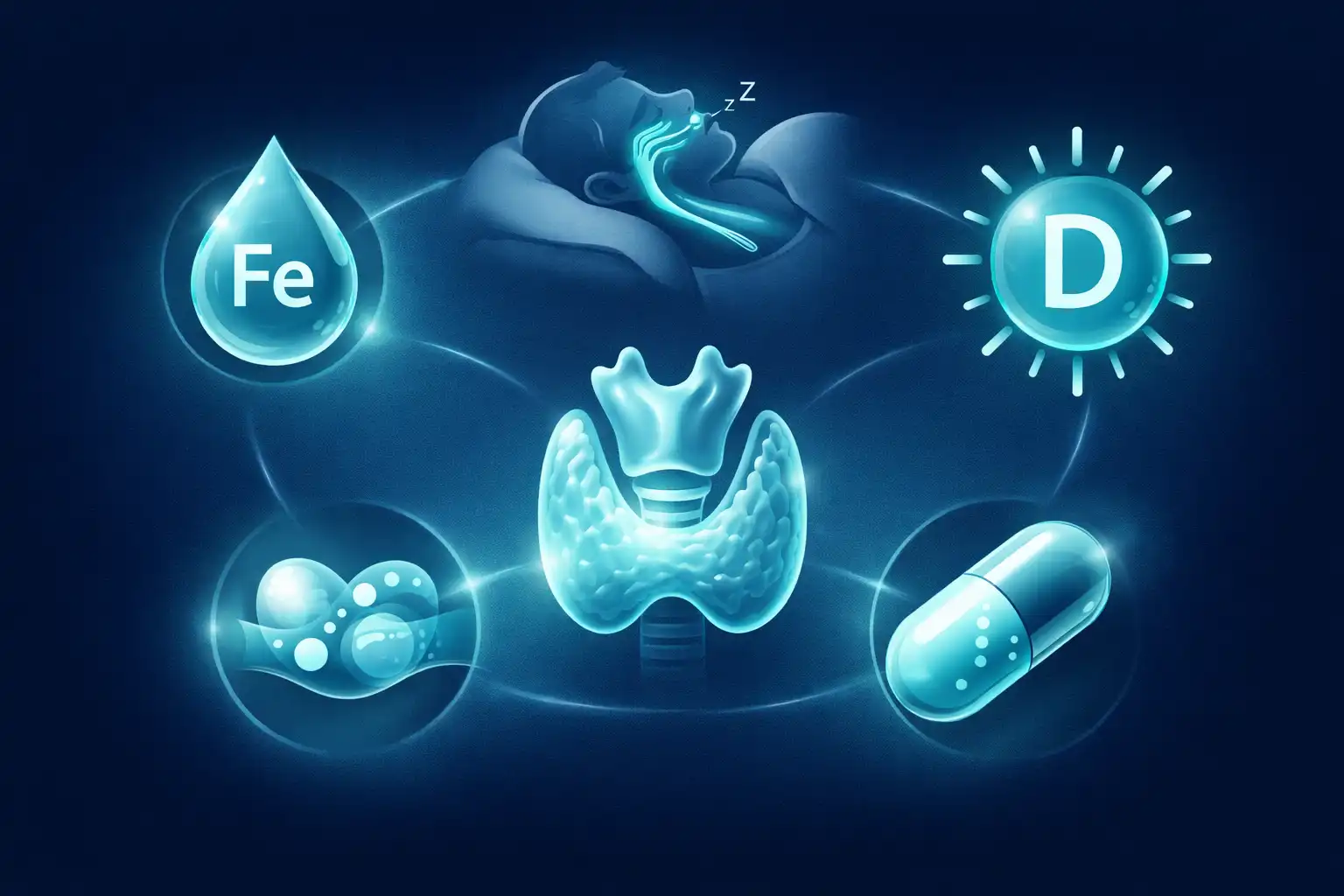
The clinical and economic consequences are substantial. Patients whose fatigue remains unexplained often undergo repeated consultations, extensive laboratory panels, and specialist referrals — frequently without resolution. Meanwhile, conditions such as non-anaemic iron deficiency, mild obstructive sleep apnea, and medication side effects may be contributing to symptoms but are easily overlooked because standard screening algorithms do not consistently target them. This evidence review synthesises findings from 11 key studies to identify five specific diagnoses that warrant closer attention.
What Evidence Was Reviewed
This synthesis draws on 11 studies published between 2002 and 2024, encompassing randomised controlled trials, systematic reviews with meta-analysis, population-based cohort studies, and large cross-sectional datasets. Studies were selected for their direct relevance to fatigue aetiologies that are frequently under-detected in routine primary care. Priority was given to RCTs for interventional claims and to large population studies for prevalence estimates. Evidence through 2025.
| Study | Design | n | Population | Key Finding | Quality |
|---|---|---|---|---|---|
| Vaucher et al. 2012 | Multicentre RCT | 198 | Non-anaemic women, ferritin <50 µg/L | Iron supplementation reduced fatigue by ~48% from baseline vs ~29% placebo | High |
| Verdon et al. 2003 | Double-blind RCT | 144 | Women aged 18–55 with unexplained fatigue | Iron reduced fatigue by 29% vs 13% placebo; effect concentrated in ferritin ≤50 µg/L | High |
| Houston et al. 2018 | SR of RCTs | 634 | Non-anaemic iron-deficient adults | Iron supplementation associated with improved fatigue and physical capacity | Moderate |
| Punjabi 2008 | Epidemiological review | >10,000 | General adult population | OSA prevalence 3–7%; majority of affected individuals remain undiagnosed | Moderate |
| Young et al. 2002 | Population cohort review | >6,000 | Middle-aged adults (Wisconsin Sleep Cohort) | Even mild undiagnosed OSA associated with fatigue and reduced quality of life | High |
| Stott et al. 2017 (TRUST) | Multicentre RCT | 737 | Adults ≥65 with subclinical hypothyroidism | Levothyroxine did not improve tiredness or hypothyroid symptom scores at 1 year | High |
| Collet et al. 2020 (TRUST-Fatigue) | Nested RCT | 230 | Older adults with subclinical hypothyroidism | Levothyroxine had no effect on physical or mental fatigability at 12 months | High |
| Nowak et al. 2016 | Double-blind RCT | 120 | Healthy adults with 25(OH)D <20 µg/L | Single-dose vitamin D₃ significantly improved fatigue scores vs placebo at 4 weeks | Moderate |
| Roy et al. 2014 (EViDiF) | Prospective intervention | 174 | Primary care patients with fatigue + low 25(OH)D | Vitamin D correction significantly improved fatigue severity | Low |
| Golomb et al. 2012 | RCT (UCSD Statin Study) | 1,016 | Healthy adults without cardiovascular disease | Both simvastatin and pravastatin associated with increased fatigue on exertion vs placebo | High |
| Rosenthal et al. 2023 (AAFP Review) | Systematic evidence review | NR | Primary care adults with fatigue | Comprehensive framework for fatigue evaluation; physiologic, secondary, and chronic causes | Moderate |
Key Findings: Under-Recognised Causes of Fatigue
1. Non-Anaemic Iron Deficiency: A Treatable and Overlooked Contributor
Two well-designed RCTs provide convergent evidence that iron deficiency can cause clinically meaningful fatigue even when haemoglobin levels are within the normal range. Vaucher et al. (2012) randomised 198 menstruating women with ferritin below 50 µg/L and normal haemoglobin to 12 weeks of oral iron or placebo; the iron group experienced a fatigue reduction roughly 19 percentage points greater than placebo (95% CI −34.5 to −3.2; p = 0.02). These results closely replicate an earlier trial by Verdon et al. (2003), which found a similar magnitude of benefit over a shorter treatment period.
A 2018 systematic review of RCTs by Houston et al. confirmed these findings across a pooled sample of 634 non-anaemic, iron-deficient adults, reporting consistent improvements in both self-reported fatigue and functional physical capacity. The biological plausibility is well-supported: iron serves as a cofactor for enzymes involved in neurotransmitter metabolism and mitochondrial energy production, pathways that can be impaired before anaemia develops. Approximately 20% of European women of childbearing age have ferritin concentrations below 15 µg/L, yet many remain undiagnosed because standard complete blood count screening does not flag tissue iron depletion in the absence of frank anaemia.
2. Occult Obstructive Sleep Apnea: Fatigue Without Classic Symptoms
Obstructive sleep apnea affects an estimated 3–7% of the general adult population, and evidence from large population cohorts consistently demonstrates that a majority of those affected remain undiagnosed. The Wisconsin Sleep Cohort Study and subsequent epidemiological analyses by Young et al. (2002) and Punjabi (2008) found that even mild, undiagnosed OSA was independently associated with daytime sleepiness, fatigue, and diminished quality of life — outcomes that persisted after adjustment for body mass index, age, and other confounders.
The diagnostic gap is particularly pronounced in women, who frequently present with fatigue and low energy rather than the classically recognised triad of loud snoring, witnessed apneas, and excessive somnolence. Clinic-based referral ratios show men outnumbering women 5–8:1, yet community studies suggest the true sex ratio is closer to 2–3:1, indicating substantial under-recognition in female patients. Given the associated cardiovascular, metabolic, and neurocognitive risks of untreated OSA, screening with validated tools such as the STOP-BANG questionnaire warrants consideration in any patient with persistent unexplained fatigue.
3. Subclinical Hypothyroidism: Treatment May Not Relieve Fatigue
Subclinical hypothyroidism — defined by elevated TSH with normal free T4 — affects between 8% and 18% of adults aged 65 and over and is frequently cited as a cause of fatigue. However, the largest trial to date challenges this assumption. The TRUST trial (Stott et al. 2017) randomised 737 older adults with persistent subclinical hypothyroidism to levothyroxine or placebo and found no clinically meaningful difference in tiredness or hypothyroid symptom scores at one year, despite effective TSH normalisation in the treatment arm.
A nested fatigability study within the TRUST trial (Collet et al. 2020) extended these findings using a more sensitive outcome measure — the Pittsburgh Fatigability Scale — and similarly found no benefit of levothyroxine on physical or mental fatigability. These RCT data suggest that mildly elevated TSH may be an incidental finding rather than the cause of fatigue in many older patients, and that initiating thyroid replacement therapy on the basis of fatigue alone is unlikely to produce benefit in this population.
The TRUST trial enrolled predominantly older adults with mild TSH elevations (mean TSH ~6.4 mIU/L). Evidence is lacking for younger adults or for those with higher TSH levels (≥10 mIU/L), where the relationship between subclinical hypothyroidism and symptoms may differ. A secondary analysis of the TRUST trial by de Montmollin et al. (2020) examined participants who reported hypothyroid symptoms at baseline and still found no significant improvement with levothyroxine therapy. Current guidelines from the ATA and ETA recommend individualised decision-making, considering patient age, degree of TSH elevation, symptom burden, thyroid antibody status, and cardiovascular risk.
Most controlled evidence on subclinical hypothyroidism and fatigue comes from populations aged 65 and older. In younger adults — particularly those with higher TSH levels, positive thyroid peroxidase antibodies, or progression toward overt hypothyroidism — the benefit–risk balance may differ. Smaller crossover trials in younger populations (e.g., Razvi et al. 2007, n = 100) have shown modest improvements in quality of life and endothelial function with levothyroxine, though these trials were not powered for fatigue-specific outcomes. Until larger RCTs are conducted in younger cohorts, clinicians must weigh the available evidence carefully and avoid assuming that TSH normalisation will automatically resolve fatigue.
4. Vitamin D Deficiency: Biologically Plausible but Inconsistently Supported
Low serum 25-hydroxyvitamin D has been cross-sectionally associated with fatigue across multiple populations, and the biological rationale involving mitochondrial function, muscle physiology, and neuroinflammatory pathways is well-described. However, interventional evidence remains mixed. Nowak et al. (2016) conducted a double-blind RCT in 120 otherwise healthy adults with vitamin D deficiency (<20 µg/L) and found that a single high dose of vitamin D₃ produced significantly greater fatigue reduction than placebo at four weeks (mean FAS decrease −3.3 vs −0.8; p = 0.01).
In contrast, a large Mendelian randomisation study using UK Biobank data (n = 327,478) found little genetic evidence supporting a causal relationship between lifelong vitamin D status and self-reported fatigue (OR 1.05; 95% CI 0.87–1.27). The EViDiF study (Roy et al. 2014) observed significant fatigue improvement after vitamin D correction, but its pre-post design without a placebo arm limits causal inference. Taken together, these data suggest that vitamin D supplementation may provide short-term symptomatic benefit in individuals with documented deficiency, but the evidence does not support routine screening or supplementation for fatigue in vitamin D–replete patients.
A 2023 systematic review and meta-analysis by López-Muñoz et al. found that vitamin D supplementation significantly reduced fatigue in patients with multiple sclerosis compared to controls, suggesting disease-specific mechanisms may amplify the relationship between vitamin D status and fatigue. Similar findings have been reported in rheumatoid arthritis and fibromyalgia cohorts, where vitamin D deficiency was identified as a strong independent predictor of fatigue severity. These disease-specific results contrast with the weaker evidence in otherwise healthy populations and underscore the importance of clinical context when evaluating vitamin D testing in fatigued patients.
5. Medication-Induced Fatigue: The Overlooked Iatrogenic Cause
Perhaps the most readily modifiable yet frequently neglected cause of fatigue is medication side effects. The UCSD Statin Study (Golomb et al. 2012) — a randomised, placebo-controlled trial involving 1,016 healthy adults — found that both simvastatin and pravastatin were associated with statistically significant increases in fatigue and reduced energy with exertion compared to placebo. The effect was more pronounced in women taking simvastatin. These findings are consistent with proposed mechanisms involving impaired mitochondrial energy production.
Beyond statins, beta-blockers, antihistamines, antidepressants (particularly sedating SSRIs and TCAs), antiepileptics, and proton pump inhibitors are all commonly prescribed medications with fatigue listed as a recognised adverse effect. In elderly patients receiving polypharmacy — a population where fatigue prevalence is highest — the cumulative sedative and energy-depleting burden of multiple concurrent medications may be substantial. A comprehensive medication review, with specific attention to temporal correlation between drug initiation and fatigue onset, represents a low-cost, high-yield diagnostic step.
Several widely prescribed drug categories carry fatigue as a frequent side effect. Beta-blockers reduce cardiac output and may impair exercise tolerance, particularly in older adults. First-generation antihistamines and sedating second-generation agents cross the blood–brain barrier and produce central sedation. Proton pump inhibitors have been associated with fatigue potentially through impaired magnesium and B12 absorption with chronic use. Gabapentinoids (gabapentin, pregabalin) commonly cause somnolence and lethargy. Opioids, benzodiazepines, and centrally-acting alpha-agonists all contribute to sedation and fatigue burden. When a patient presents with persistent fatigue, systematically reviewing each medication's temporal relationship to symptom onset can reveal overlooked iatrogenic contributions.
While the UCSD Statin Study provides controlled evidence of statin-associated fatigue, clinicians should also consider the nocebo effect. The SAMSON trial and subsequent n-of-1 trial data suggest that a proportion of statin-related symptoms — particularly myalgias — may be attributable to negative expectations rather than pharmacological action. A 2022 meta-analysis in the European Heart Journal estimated overall statin intolerance prevalence at approximately 9% when broadly defined, but only around 5% when restricted to validated criteria. These data highlight the importance of objective re-challenge protocols before permanently attributing fatigue to statin therapy and discontinuing a medication with proven cardiovascular benefit.
Quality & Consistency of Evidence
What the Evidence Does Not Show
The current evidence base has several notable gaps that limit clinical application.
Nearly all iron supplementation trials for non-anaemic fatigue enrolled premenopausal women exclusively. Whether these findings generalise to men, postmenopausal women, or older adults with low ferritin remains unknown; dedicated RCTs in these populations have not been conducted. The optimal ferritin threshold for initiating empiric iron therapy in fatigued patients — whether 30, 50, or 75 µg/L — also lacks consensus-level evidence.
For obstructive sleep apnea, while the epidemiological link to fatigue is well-established, RCTs of CPAP therapy that use fatigue-specific primary endpoints (as opposed to sleepiness scales like the Epworth) are lacking. Whether treating mild OSA specifically improves fatigue, independent of daytime somnolence, is an unanswered question.
The evidence on vitamin D and fatigue lacks adequately powered, placebo-controlled trials in otherwise healthy, non-deficient adults. Current data cannot distinguish whether symptomatic improvement after vitamin D supplementation reflects a true pharmacological effect or regression to the mean. The role of polypharmacy-related fatigue, while clinically intuitive, lacks controlled deprescribing studies that measure fatigue as a primary outcome.
Practical Implications
Based on the current evidence, the following considerations may assist clinicians evaluating adults with persistent, unexplained fatigue. These are evidence-based observations, not directive clinical recommendations.
RCT evidence indicates that fatigue improves with iron supplementation when ferritin is below 50 µg/L, even with normal haemoglobin. Standard laboratory cut-offs may underestimate clinically relevant iron depletion. A trial of oral iron (80 mg elemental iron daily for 12 weeks) may serve both diagnostic and therapeutic purposes in women with unexplained fatigue and low-normal ferritin.
Population data indicate that OSA presents differently in women, with fatigue and low energy predominating over snoring and witnessed apneas. Validated screening tools (STOP-BANG, Berlin Questionnaire) should be considered for any patient with chronic fatigue, particularly those with hypertension, obesity, or metabolic syndrome, even in the absence of partner-reported sleep disturbance.
The TRUST trial provides strong evidence against empiric levothyroxine for fatigue in older adults with mild subclinical hypothyroidism (TSH <10 mIU/L). Clinicians may consider watchful waiting and a search for alternative aetiologies rather than initiating thyroid replacement based solely on a mildly elevated TSH in this age group.
The available evidence supports structured medication review as a component of the fatigue evaluation. Temporal correlation between drug initiation (or dose change) and fatigue onset should be systematically assessed. Statins, beta-blockers, antihistamines, gabapentinoids, and centrally-acting agents are commonly implicated. A trial dose reduction or drug holiday, where clinically safe, may be informative.
Evidence Grade + Bottom Line
Overall Evidence Grade: Moderate
The evidence supporting under-recognised causes of fatigue is moderate overall, with individual components ranging from high (iron deficiency, subclinical hypothyroidism treatment) to mixed (vitamin D). Findings are most robust for non-anaemic iron deficiency and least consistent for vitamin D supplementation. The overall grade is limited by narrow study populations (predominantly premenopausal women for iron trials) and the absence of large deprescribing trials for medication-induced fatigue.
A "moderate" grade indicates that the core findings are supported by good-quality evidence but that confidence in specific effect estimates may change with additional research — particularly in populations currently under-represented in the literature (men, older adults, and ethnically diverse cohorts).
- Non-anaemic iron deficiency (ferritin <50 µg/L) is a treatable and under-detected cause of fatigue, supported by concordant RCT evidence in premenopausal women.
- Obstructive sleep apnea is significantly under-diagnosed, particularly in women who present with fatigue rather than classic symptoms.
- Levothyroxine for mildly elevated TSH does not improve fatigue in older adults — clinicians should look beyond the thyroid panel.
- Vitamin D supplementation may benefit genuinely deficient patients, but evidence does not support routine testing in all fatigued adults.
- Key limitation: Most iron supplementation evidence is restricted to premenopausal women, and medication-induced fatigue lacks formal deprescribing trial data.
Article Information
For Educational Purposes Only. This is an original evidence synthesis informed by the studies listed below. It does not replace clinical judgement. Drug dosages should be verified against current prescribing information.
References
- Houston BL, Hurrie D, Graham J, et al. Efficacy of iron supplementation on fatigue and physical capacity in non-anaemic iron-deficient adults: a systematic review of randomised controlled trials. BMJ Open. 2018;8(4):e019240. DOI: 10.1136/bmjopen-2017-019240
- Vaucher P, Druais PL, Waldvogel S, Favrat B. Effect of iron supplementation on fatigue in nonanemic menstruating women with low ferritin: a randomized controlled trial. CMAJ. 2012;184(11):1247–1254. DOI: 10.1503/cmaj.110950
- Verdon F, Burnand B, Fallab Stubi CL, et al. Iron supplementation for unexplained fatigue in non-anaemic women: double blind randomised placebo controlled trial. BMJ. 2003;326(7399):1124. DOI: 10.1136/bmj.326.7399.1124
- Young T, Peppard PE, Gottlieb DJ. Epidemiology of obstructive sleep apnea: a population health perspective. Am J Respir Crit Care Med. 2002;165(9):1217–1239. DOI: 10.1164/rccm.2109080
- Punjabi NM. The epidemiology of adult obstructive sleep apnea. Proc Am Thorac Soc. 2008;5(2):136–143. DOI: 10.1513/pats.200709-155MG
- Stott DJ, Rodondi N, Kearney PM, et al. Thyroid hormone therapy for older adults with subclinical hypothyroidism. N Engl J Med. 2017;376(26):2534–2544. DOI: 10.1056/NEJMoa1603825
- Collet TH, Bauer DC, Bavalia R, et al. Effect of thyroid hormone therapy on fatigability in older adults with subclinical hypothyroidism: a nested study within a randomized placebo-controlled trial. J Gerontol A Biol Sci Med Sci. 2021;76(6):1100–1107. DOI: 10.1093/gerona/glaa178
- de Montmollin M, Feller M, Beglinger S, et al. L-Thyroxine therapy for older adults with subclinical hypothyroidism and hypothyroid symptoms: secondary analysis of a randomized trial. Ann Intern Med. 2020;172(11):709–716. DOI: 10.7326/M19-3193
- Nowak A, Boesch L, Andres E, et al. Effect of vitamin D3 on self-perceived fatigue: a double-blind randomized placebo-controlled trial. Medicine. 2016;95(52):e5353. DOI: 10.1097/MD.0000000000005353
- Roy S, Sherman A, Monari-Sparks MJ, Schweiker O, Hunter K. Correction of low vitamin D improves fatigue: effect of correction of low vitamin D in fatigue study (EViDiF Study). N Am J Med Sci. 2014;6(8):396–402. DOI: 10.4103/1947-2714.139291
- Golomb BA, Evans MA, Dimsdale JE, White HL. Effects of statins on energy and fatigue with exertion: results from a randomized controlled trial. Arch Intern Med. 2012;172(15):1180–1182. DOI: 10.1001/archinternmed.2012.2171
- Rosenthal TC, Majeroni BA, Pretorius R, Malik K. Fatigue in adults: evaluation and management. Am Fam Physician. 2023;108(1):58–69. Available at: AAFP
- Bytyçi I, Penson PE, Mikhailidis DP, et al. Prevalence of statin intolerance: a meta-analysis. Eur Heart J. 2022;43(34):3213–3223. DOI: 10.1093/eurheartj/ehac015
- White B, Zakkak N, Renzi C, et al. Underlying disease risk among patients with fatigue: a population-based cohort study in primary care. Br J Gen Pract. 2025;75(750):e57–e67. DOI: 10.3399/BJGP.2024.0093