
Silent CKD Progression: What the Evidence Shows About Early Detection
Synthesising evidence from 11 studies — including REVEAL-CKD, DAPA-CKD, EMPA-KIDNEY, and FLOW — on the global underdiagnosis crisis, targeted screening strategies, and the disease-modifying therapies that make early detection actionable. Evidence level: high (large RCTs and multinational observational studies).
This is an original evidence synthesis. See References for source studies.
One-Minute Takeaway
One-Minute Takeaway
- Silent CKD progression remains massively underdiagnosed: the multinational REVEAL-CKD study found that 62–96% of patients with laboratory evidence of stage 3 CKD lacked a recorded diagnosis, even when they had comorbidities such as diabetes and hypertension (Tangri et al. 2023).
- Targeted screening using both eGFR and urine albumin-to-creatinine ratio (UACR) in high-risk populations identifies 4–17% confirmed CKD prevalence and is cost-effective in patients with diabetes ($113–$42,359 per QALY) according to a 2023 systematic review (Yeo et al. 2023).
- Disease-modifying therapies now justify early detection: SGLT2 inhibitors reduced CKD progression by 39% (DAPA-CKD, HR 0.61) and 28% (EMPA-KIDNEY, HR 0.72) regardless of diabetes status, while semaglutide reduced major kidney events by 24% in diabetic CKD (FLOW trial, HR 0.76).
- Albuminuria testing remains the critical gap: despite KDIGO recommendations, fewer than 50% of patients with diabetes in many healthcare systems receive annual UACR testing — a missed opportunity to identify the earliest marker of kidney damage before eGFR declines.
Why Silent CKD Progression Demands Urgent Attention
Chronic kidney disease affects approximately 850 million people worldwide — more than diabetes, cancer, or HIV/AIDS — and the 2017 Global Burden of Disease study identified nearly 700 million cases globally, representing a prevalence of 9.1%. CKD is now the third-fastest growing cause of death worldwide, projected to become the fifth-leading cause of mortality by 2040. Yet despite this enormous burden, CKD remains what the Lancet has called a "neglected chronic disease," characterised by late diagnosis and delayed intervention.
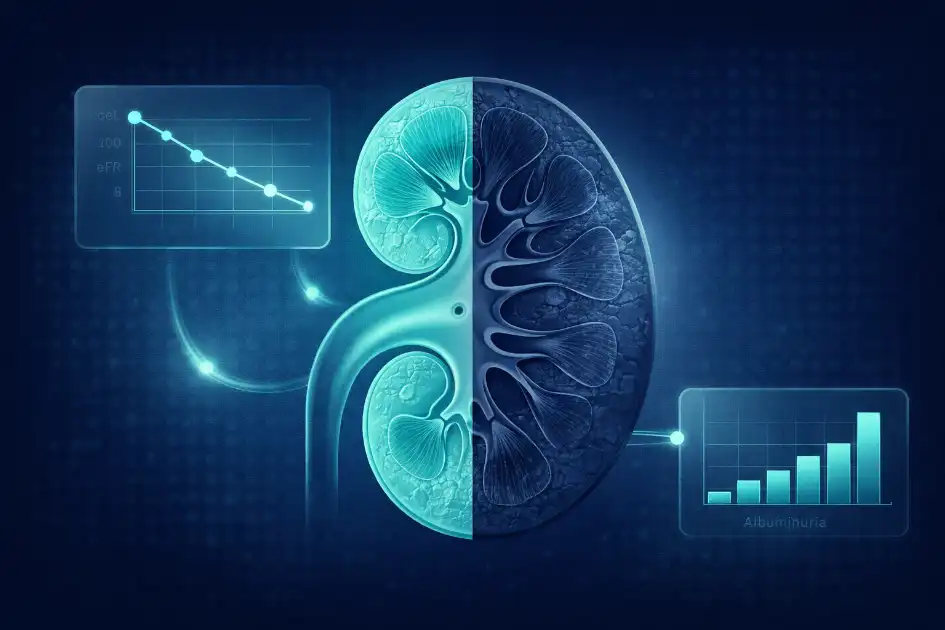
The clinical urgency of early detection has fundamentally changed. A decade ago, the therapeutic options for slowing CKD progression were limited largely to RAAS inhibition and blood pressure control. Today, SGLT2 inhibitors, GLP-1 receptor agonists, and nonsteroidal mineralocorticoid receptor antagonists have demonstrated substantial kidney-protective effects in large RCTs — but these therapies can only benefit patients who are identified. The emergence of multiple disease-modifying agents has transformed CKD screening from a diagnostic exercise into a therapeutic imperative. This evidence review synthesises data from 11 key studies to examine the scope of underdiagnosis, the effectiveness of screening, and the clinical consequences of delayed detection.
What Evidence Was Reviewed
This synthesis draws on 11 studies published between 2020 and 2025, encompassing multinational observational studies, large RCTs, systematic reviews, and cost-effectiveness analyses. Studies were selected to address three interconnected questions: How underdiagnosed is CKD? Does screening work? And does early detection lead to better outcomes? Evidence through 2025.
| Study | Design | n | Population | Key Finding | Quality |
|---|---|---|---|---|---|
| REVEAL-CKD (Tangri 2023) | Multinational observational | 476,706 | Adults with eGFR-defined stage 3 CKD in 5 countries | 62–96% of patients with biochemical stage 3 CKD lacked a recorded diagnosis | High |
| GBD CKD 2020 | Systematic analysis | 697 million | Global population (1990–2017) | Global CKD prevalence 9.1%; third-fastest growing cause of death | High |
| Kovesdy 2022 | Epidemiological update | NR | Global CKD populations | Rising CKD prevalence driven by diabetes, hypertension, obesity; projections through 2040 | Moderate |
| DAPA-CKD (Heerspink 2020) | Multicentre RCT | 4,304 | CKD (eGFR 25–75, UACR ≥200) ± diabetes | Dapagliflozin reduced composite kidney endpoint by 39% (HR 0.61; 95% CI 0.51–0.72); benefit in non-diabetic CKD | High |
| EMPA-KIDNEY (Herrington 2023) | Multicentre RCT | 6,609 | Broad CKD (eGFR 20–45 or 45–90 with UACR ≥200) | Empagliflozin reduced CKD progression/CV death by 28% (HR 0.72; 95% CI 0.64–0.82); >50% non-diabetic | High |
| FLOW (Perkovic 2024) | Multicentre RCT | 3,533 | T2D + CKD (eGFR 25–75) | Semaglutide reduced major kidney events by 24% (HR 0.76); stopped early for efficacy | High |
| SGLT2i Meta-analysis (Nuffield 2022) | Meta-analysis of RCTs | >90,000 | 13 large placebo-controlled SGLT2i trials | 38% relative risk reduction in CKD progression (RR 0.63; 95% CI 0.58–0.69) | High |
| Yeo et al. 2023 | SR of cost-effectiveness | NR | CKD screening in general adults | CKD screening cost-effective in diabetes ($113–$42,359/QALY); not cost-effective in low-risk populations | High |
| Screening SR (2025) | SR of screening studies | 24 studies | Adults with CKD risk factors in primary care | Targeted screening detected 4.4–17.1% confirmed CKD; increased referrals and patient satisfaction | Moderate |
| Levin et al. 2023 | Perspective / framework | NR | Expert framework (Kidney International) | Early detection framework: CKD third-fastest growing cause of death; 90% unaware in high-prevalence areas | Moderate |
| De Boer et al. 2024 (Screening review) | Narrative review | NR | CKD screening strategies (Curr Opin Nephrol) | Albuminuria is the key early marker; SCORE2/PREVENT models now incorporate eGFR/UACR for CV risk | Moderate |
Key Findings: The Scale of Underdiagnosis and What Can Be Done
1. The Diagnosis Gap: REVEAL-CKD Exposes a Global Crisis
The REVEAL-CKD study is the most comprehensive assessment of CKD underdiagnosis to date, examining data from over 476,000 patients across six databases in five countries. Despite having at least two eGFR measurements below 60 mL/min/1.73 m² separated by 91–730 days — meeting the internationally accepted definition of stage 3 CKD — the vast majority lacked a recorded diagnosis. Undiagnosed rates ranged from 61.6% in the United States to 95.5% in France, with Japan (92.1%), Germany (84.3%), and Italy (77.0%) falling in between.
Perhaps most critically, underdiagnosis remained pervasive even among patients with established risk factors for CKD progression. Between 75% and 92% of patients with diabetes, hypertension, or cardiovascular disease — comorbidities that should have prompted CKD screening — remained undiagnosed. Women and older adults were more likely to be undiagnosed than men and younger patients. Additional REVEAL-CKD data from Australia, Brazil, Canada, and Spain showed undiagnosed rates exceeding 80% in all four countries, confirming that this is a truly global phenomenon rather than a healthcare-system-specific failure.
2. Albuminuria: The Earliest Marker Clinicians Are Not Testing
The KDIGO guidelines have consistently recommended dual testing with both eGFR and urine albumin-to-creatinine ratio (UACR) for CKD screening and staging. This recommendation reflects a large body of evidence showing that albuminuria is an independent predictor of CKD progression and cardiovascular events, often preceding eGFR decline by years. The 2023 AHA PREVENT equations and the European SCORE2 CKD addon both now incorporate UACR, further underscoring its prognostic importance beyond kidney disease alone.
Despite this, albuminuria testing rates remain alarmingly low. Studies across multiple healthcare systems indicate that fewer than half of patients with diabetes receive annual UACR measurement as recommended. A 2025 systematic review of risk factor-based CKD screening programmes found that while 22 of 24 studies employed eGFR, only 14 included UACR — suggesting that even within dedicated screening programmes, albuminuria is underutilised. This represents a fundamental gap because a patient with normal eGFR but elevated UACR (stage G1–G2 A2–A3) may have actionable CKD that would be entirely missed by creatinine-based testing alone.
A 2023 systematic review by Yeo et al. examined cost-effectiveness analyses of CKD screening across multiple countries. The evidence strongly supports targeted screening in patients with diabetes (incremental cost-effectiveness ratios ranging from $113 to $42,359 per QALY gained, with a median of $27,471) and in higher-risk ethnic groups (approximately $21,285–$23,902 per QALY). However, universal population screening in adults without diabetes or hypertension was consistently not cost-effective, with ICERs ranging from $117,769 to $1,792,142 per QALY. Key drivers of cost-effectiveness included treatment effectiveness, CKD prevalence, and age of the screened population. The availability of SGLT2 inhibitors — which were not included in many older models — is likely to shift the cost-effectiveness balance further in favour of screening, as the treatment benefit from early detection is now substantially greater.
A 2024 cost-effectiveness analysis from the Netherlands evaluated home-based albuminuria screening using a self-administered dipstick test in the general population. Using real-world data from a prospective screening study, the authors found that population-wide home screening was potentially cost-effective for preventing cardiovascular and kidney events, driven by the high prevalence of previously undetected albuminuria and the availability of effective treatments. While this approach remains experimental and has not been validated in a large RCT, it represents a promising strategy for overcoming the access and convenience barriers that limit clinic-based UACR testing. The integration of point-of-care albuminuria testing into community pharmacy or primary care workflows is another emerging pathway that multiple guideline bodies have endorsed for further evaluation.
3. SGLT2 Inhibitors: Why Early Detection Now Has Therapeutic Consequences
The argument for CKD screening gains its strongest support from the therapeutic revolution that has occurred in kidney medicine. The DAPA-CKD trial (n = 4,304) demonstrated that dapagliflozin reduced the composite endpoint of sustained ≥50% eGFR decline, end-stage kidney disease, or renal/cardiovascular death by 39% compared with placebo (HR 0.61; 95% CI 0.51–0.72) in patients with CKD and albuminuria. Crucially, the benefit was consistent in participants without diabetes (approximately one-third of the cohort), establishing SGLT2 inhibitors as kidney-protective agents independent of glycaemic effects.
The EMPA-KIDNEY trial (n = 6,609) broadened these findings to a more diverse CKD population, including patients with lower levels of albuminuria, more advanced CKD, and a wider range of underlying aetiologies (glomerular disease, hypertensive nephropathy, tubulointerstitial disease). Empagliflozin reduced CKD progression or cardiovascular death by 28% (HR 0.72; 95% CI 0.64–0.82), with over 50% of participants being non-diabetic. A meta-analysis of 13 large SGLT2 inhibitor trials involving over 90,000 patients quantified a 38% relative risk reduction in CKD progression across the class. Lifetime modelling suggests that combined RAAS inhibitor and SGLT2 inhibitor therapy could delay kidney failure by 7–27 years depending on baseline eGFR — but only if patients are identified early enough to benefit.
4. The Expanding Therapeutic Toolkit: GLP-1 RAs and nsMRAs
Beyond SGLT2 inhibitors, the FLOW trial established semaglutide as the first GLP-1 receptor agonist to demonstrate kidney-specific protection. Among 3,533 patients with type 2 diabetes and CKD, semaglutide reduced the composite of kidney failure, sustained ≥50% eGFR decline, or kidney/cardiovascular death by 24% (HR 0.76; 95% CI 0.66–0.88). The trial was stopped early for overwhelming efficacy, and the annual rate of eGFR decline was slowed by 1.16 mL/min/1.73 m² with semaglutide. These benefits were observed on top of background RAAS inhibitor therapy and were maintained regardless of concurrent SGLT2 inhibitor use.
Additionally, finerenone — a nonsteroidal mineralocorticoid receptor antagonist — demonstrated kidney and cardiovascular benefits in the FIDELIO-DKD and FIGARO-DKD trials in patients with type 2 diabetes and CKD, further expanding the treatment arsenal. The convergence of multiple effective therapies from different mechanistic classes means that the traditional four-pillar model of CKD management (RAAS inhibitors, SGLT2 inhibitors, GLP-1 RAs, and nsMRAs) is now supported by robust trial evidence. Each of these therapies requires identification of eligible patients — making systematic screening and accurate staging more consequential than ever.
Both DAPA-CKD and EMPA-KIDNEY enrolled substantial non-diabetic populations and demonstrated consistent kidney protection in this subgroup. Dapagliflozin reduced the primary composite endpoint by 50% (HR 0.50; 95% CI 0.35–0.72) in non-diabetic participants — numerically larger than the effect in diabetic participants, though the interaction p-value was not significant. EMPA-KIDNEY extended this to patients with even lower albuminuria levels and more diverse CKD aetiologies. Current KDIGO guidelines recommend SGLT2 inhibitors for patients with CKD and eGFR ≥20 mL/min/1.73 m², with or without diabetes, particularly when UACR is ≥200 mg/g — though evidence suggests benefit across a broader spectrum. For internists, this means that CKD identified through screening in a non-diabetic patient with hypertension or glomerular disease is now directly actionable with a proven disease-modifying therapy.
The KDIGO heat map — combining eGFR stage (G1–G5) with albuminuria category (A1–A3) — provides a standardised framework for risk-stratifying patients identified through screening. Patients categorised as high risk (green-to-orange transition) or very high risk (red) based on this combined assessment are the populations most likely to benefit from treatment intensification with SGLT2 inhibitors, GLP-1 RAs, or finerenone. Importantly, the heat map demonstrates why eGFR alone is insufficient: a patient with eGFR 70 mL/min/1.73 m² and UACR 400 mg/g (G2 A3) is at higher risk of kidney failure than a patient with eGFR 50 mL/min/1.73 m² and UACR 20 mg/g (G3a A1). Without albuminuria measurement, this risk stratification is impossible, and the highest-risk patients may be missed entirely.
Quality & Consistency of Evidence
What the Evidence Does Not Show
Despite strong evidence for underdiagnosis and effective treatment, critical questions about screening implementation remain unanswered.
No large randomised trial has evaluated whether systematic CKD screening — compared with usual care — reduces kidney failure, cardiovascular events, or mortality. The evidence supporting screening is inferential, linking observational data on underdiagnosis to RCT-proven treatment benefits. While this inference is logically sound, direct demonstration of a screening-to-outcome benefit has not been achieved. The USPSTF has placed CKD screening under active consideration but has not yet issued a formal recommendation, partly because of this evidentiary gap.
The optimal screening strategy — including which tests (eGFR alone vs eGFR + UACR), at what age to begin, how frequently to repeat, and in which risk groups — has not been definitively established by comparative effectiveness research. Cost-effectiveness analyses consistently favour screening in patients with diabetes, but the optimal approach for patients with hypertension alone, obesity, or cardiovascular disease without diabetes is less certain. The role of novel biomarkers (cystatin C, KIM-1, NGAL) in improving risk stratification beyond eGFR and UACR has not been validated in screening-level studies.
Whether the kidney-protective effects of SGLT2 inhibitors extend to patients with CKD and low-level albuminuria (<200 mg/g) or normoalbuminuria remains an area of active investigation. While EMPA-KIDNEY included patients with lower albuminuria and found benefit on eGFR slopes, the trial was underpowered for hard endpoints in the normoalbuminuric subgroup. This uncertainty is clinically relevant because many patients identified through screening will have early-stage disease with modest albuminuria.
Practical Implications
Based on the current evidence, the following considerations may guide internists seeking to improve CKD detection and management. These represent evidence-based observations, not directive clinical recommendations.
KDIGO guidelines recommend screening with both eGFR (using the CKD-EPI 2021 equation) and UACR annually in patients with diabetes, hypertension, cardiovascular disease, or other CKD risk factors. eGFR alone misses early albuminuric disease; UACR alone misses non-proteinuric CKD. The combination enables KDIGO heat-map risk stratification, which directly informs treatment eligibility.
REVEAL-CKD data show that patients with a recorded CKD diagnosis receive more guideline-directed care than biochemically identical patients without one. Automated eGFR reporting by laboratories, integrated clinical decision support, and diagnostic coding prompts in electronic health records are low-cost interventions that can bridge the diagnosis gap at scale.
SGLT2 inhibitors (dapagliflozin, empagliflozin) are recommended for CKD with eGFR ≥20 mL/min/1.73 m², with or without diabetes. For patients with type 2 diabetes and CKD, GLP-1 RAs (semaglutide) and nsMRAs (finerenone) provide additive benefit. Early detection enables initiation of these agents before irreversible nephron loss occurs.
The 2023 SCORE2 CKD addon and the 2024 AHA PREVENT equations now incorporate eGFR and UACR as cardiovascular risk modifiers. Detecting CKD through screening therefore improves cardiovascular risk classification and may change the intensity of statin, antihypertensive, and anticoagulant therapy.
Evidence Grade + Bottom Line
Overall Evidence Grade: Strong
The evidence that CKD is massively underdiagnosed is robust and consistent across countries. The evidence that early-stage CKD can be detected by dual eGFR/UACR testing is well-established. The evidence that multiple drug classes slow CKD progression — including in non-diabetic patients — is supported by large, well-designed RCTs. The indirect chain linking screening → detection → treatment → improved outcomes is strong, though a direct screening RCT with hard endpoints has not been conducted.
A "strong" evidence grade indicates that the core conclusions — CKD is underdiagnosed, targeted screening with eGFR and UACR is effective and cost-effective in high-risk populations, and multiple disease-modifying therapies justify early detection — are supported by high-quality evidence that is unlikely to change with additional research. Implementation of systematic screening in patients with diabetes, hypertension, and cardiovascular disease should be prioritised.
- The majority of stage 3 CKD remains undiagnosed globally — even in patients with diabetes and hypertension who should be screened annually.
- Dual testing with eGFR and UACR is essential; eGFR alone misses early albuminuric disease, which carries the highest progression risk.
- SGLT2 inhibitors reduce CKD progression by 28–39% regardless of diabetes status (DAPA-CKD, EMPA-KIDNEY), making early detection directly actionable.
- The four-pillar CKD treatment model (RAAS inhibitors, SGLT2i, GLP-1 RAs, nsMRAs) requires patient identification to deliver benefit — screening is the prerequisite.
- Key limitation: No large RCT has directly demonstrated that systematic CKD screening reduces kidney failure or cardiovascular events compared with usual care; current evidence relies on an inferential chain from underdiagnosis data and treatment trial outcomes.
Article Information
For Educational Purposes Only. This is an original evidence synthesis informed by the studies listed below. It does not replace clinical judgement. Drug dosages should be verified against current prescribing information.
References
- Tangri N, Moriyama T, Schneider MP, et al. Prevalence of undiagnosed stage 3 chronic kidney disease in France, Germany, Italy, Japan and the USA: results from the multinational observational REVEAL-CKD study. BMJ Open. 2023;13(5):e067386. DOI: 10.1136/bmjopen-2022-067386
- Bikbov B, Purcell CA, Levey AS, et al. Global, regional, and national burden of chronic kidney disease, 1990–2017: a systematic analysis for the Global Burden of Disease Study 2017. Lancet. 2020;395(10225):709–733. DOI: 10.1016/S0140-6736(20)30045-3
- Kovesdy CP. Epidemiology of chronic kidney disease: an update 2022. Kidney Int Suppl. 2022;12(1):7–11. DOI: 10.1016/j.kisu.2021.11.003
- Heerspink HJL, Stefánsson BV, Correa-Rotter R, et al. Dapagliflozin in patients with chronic kidney disease. N Engl J Med. 2020;383(15):1436–1446. DOI: 10.1056/NEJMoa2024816
- The EMPA-KIDNEY Collaborative Group. Empagliflozin in patients with chronic kidney disease. N Engl J Med. 2023;388(2):117–127. DOI: 10.1056/NEJMoa2204233
- Perkovic V, Tuttle KR, Rossing P, et al. Effects of semaglutide on chronic kidney disease in patients with type 2 diabetes. N Engl J Med. 2024;391(2):109–121. DOI: 10.1056/NEJMoa2403347
- Nuffield Department of Population Health Renal Studies Group; SGLT2 inhibitor Meta-Analysis Cardio-Renal Trialists' Consortium. Impact of diabetes on the effects of sodium glucose co-transporter-2 inhibitors on kidney outcomes: collaborative meta-analysis of large placebo-controlled trials. Lancet. 2022;400(10365):1788–1801. DOI: 10.1016/S0140-6736(22)02074-8
- Yeo SC, Wang H, Ang YG, Lim CK, Ooi XY. Cost-effectiveness of screening for chronic kidney disease in the general adult population: a systematic review. Clin Kidney J. 2024;17(1):sfad137. DOI: 10.1093/ckj/sfad137
- Tangri N, Peach EJ, Franzén S, Barone S, Kushner PR. Patient management and clinical outcomes associated with a recorded diagnosis of stage 3 chronic kidney disease: The REVEAL-CKD Study. Adv Ther. 2023;40(6):2869–2885. DOI: 10.1007/s12325-023-02482-5
- Levin A, Okpechi IG, Engel B, et al. Perspectives on early detection of chronic kidney disease: the facts, the questions, and a proposed framework for 2023 and beyond. Kidney Int. 2023;104(1):6–18. DOI: 10.1016/j.kint.2023.03.009
- Fernandez-Fernandez B, Sarafidis P, Soler MJ, Ortiz A. EMPA-KIDNEY: expanding the range of kidney protection by SGLT2 inhibitors. Clin Kidney J. 2023;16(8):1187–1198. DOI: 10.1093/ckj/sfad082