
Abnormal Uterine Bleeding Workup: What the Evidence Shows Distinguishes Heavy Periods from Something More
An original evidence synthesis across 10 key studies — covering the PALM-COEIN framework, when to biopsy, first-line medical management, the coagulopathy every clinician misses, and red flags for endometrial pathology. Evidence level: moderate to high (guidelines, systematic reviews, and RCTs). Through 2026.
This is an original evidence synthesis. See References for source studies.
One-Minute Takeaway
One-Minute Takeaway
- The abnormal uterine bleeding workup should be structured using the FIGO PALM-COEIN classification, which separates structural causes (polyps, adenomyosis, leiomyoma, malignancy/hyperplasia) from non-structural causes (coagulopathy, ovulatory dysfunction, endometrial, iatrogenic, not classified) — and critically, multiple aetiologies can coexist in the same patient (FIGO 2011, revised 2018).
- The LNG-IUS (levonorgestrel-releasing intrauterine system) is recommended as first-line medical treatment for heavy menstrual bleeding by NICE, reducing menstrual blood loss by up to 96% at one year — superior to oral pharmacological alternatives for long-term management (NICE NG88, updated 2024).
- Up to 13% of women with heavy menstrual bleeding have an underlying coagulation disorder such as von Willebrand disease — a diagnosis that is frequently missed without structured screening and that fundamentally changes management (ACOG Committee Opinion 557).
- Endometrial biopsy should not be performed "blindly" but rather in the context of diagnostic hysteroscopy and targeted to women at high risk for endometrial pathology — particularly those with persistent intermenstrual bleeding, and those with infrequent heavy bleeding who are obese or have PCOS (NICE NG88, 2018).
- In many women with HMB and low risk of structural or histological pathology, pharmacological treatment can be started without prior investigation — but failure to respond to initial treatment should prompt imaging and specialist referral.
Why the Abnormal Uterine Bleeding Workup Matters
Up to one-third of women will experience abnormal uterine bleeding during their reproductive years, with the highest frequency clustering around menarche and the perimenopause. Despite its prevalence, the quality-of-life impact is frequently underestimated: health-related quality-of-life scores in women with heavy menstrual bleeding (HMB) fall below the 25th percentile for the general female population, reflecting not just the physical burden of anaemia and fatigue but the disruption to work, social activity, and emotional wellbeing.
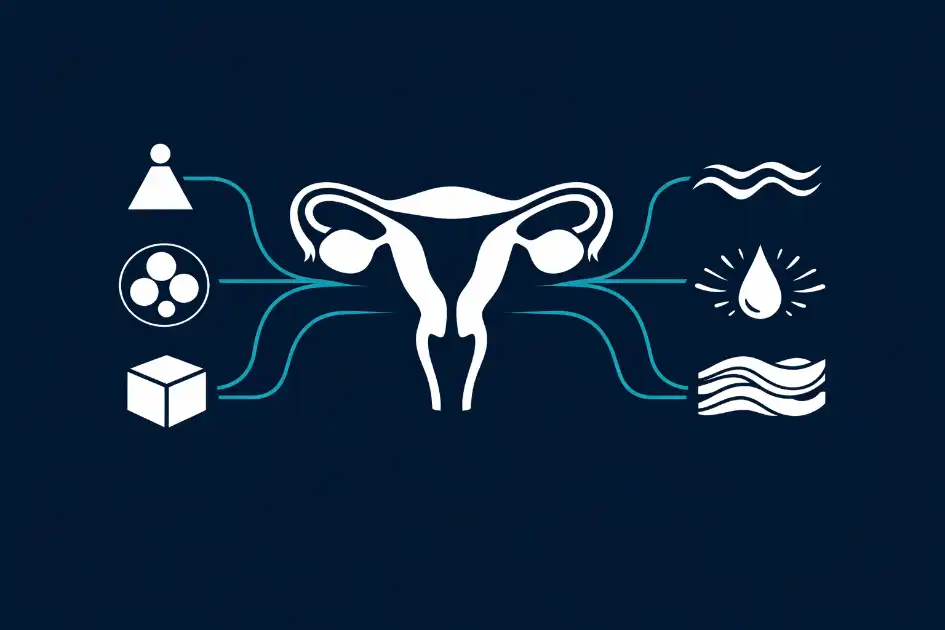
The clinical challenge is not that AUB is difficult to recognise — patients know when their bleeding is abnormal. The challenge is distinguishing the majority of cases that respond to straightforward medical management from the minority that signal serious underlying pathology: endometrial hyperplasia or malignancy, inherited bleeding disorders, or structural lesions requiring procedural intervention. Getting the workup right means neither over-investigating the young woman with anovulatory cycles nor under-investigating the perimenopausal patient whose "heavy periods" mask endometrial neoplasia.
The FIGO PALM-COEIN classification system, now endorsed by major societies worldwide, provides the conceptual framework for this approach. But translating nine aetiological categories into a practical clinical pathway — deciding who needs imaging, who needs biopsy, who can start treatment empirically, and who needs specialist referral — requires synthesis across guidelines that sometimes diverge in their recommendations.
What Evidence Was Reviewed
This synthesis integrates the FIGO classification system and its 2018 revision, NICE guideline NG88 (updated through 2024), ACOG committee opinions on acute AUB and coagulopathy screening, systematic reviews on tranexamic acid and LNG-IUS efficacy, and recent studies applying PALM-COEIN in clinical practice.
| Study | Design | n | Population | Key Finding | Quality |
|---|---|---|---|---|---|
| FIGO PALM-COEIN (Munro et al. 2011, revised 2018) | Classification system | NR | Non-pregnant reproductive-age women | Nine-category system separating structural (PALM) from non-structural (COEIN) causes | High (consensus) |
| NICE NG88 (2018, updated 2024) | Evidence-based guideline | NR | Women with HMB (UK) | LNG-IUS first line; endometrial biopsy only at hysteroscopy for high-risk women; no blind biopsy | High |
| ACOG Committee Opinion 557 (2013) | Committee opinion | NR | Non-pregnant women with acute AUB | PALM-COEIN classification; up to 13% have coagulopathy; structured screening tool for haemostasis disorders | Moderate |
| StatPearls AUB Review (2025) | Comprehensive review | NR | Reproductive-age women | Updated summary of evaluation and management using PALM-COEIN; age-based biopsy recommendations | Moderate |
| Tranexamic acid SR (Leminen & Hurskainen, PMC 2012) | SR of 11 RCTs | 15–294 per trial | Women with HMB | TA reduces MBL by 26–60%; superior to NSAIDs and oral progestins; inferior to LNG-IUS | Moderate |
| Saudi AUB Guideline (2025) | Clinical guideline | NR | Women with AUB (Saudi Arabia) | Comprehensive PALM-COEIN-based pharmacological and surgical management framework | Moderate |
| Whitaker & Critchley 2016 (Best Pract Res Clin Obstet) | Review | NR | Women with AUB | PALM-COEIN as structuring framework; AUB-E as diagnosis of exclusion; fibroids as frequent bystander | Moderate |
| Trivedi et al. 2024 (PALM-COEIN study) | Retrospective cohort | 150 | Women with AUB (India) | Ovulatory dysfunction most common (28%), followed by leiomyoma (24.7%) and endometrial causes (15.3%) | Low-Moderate |
| Asudani et al. 2025 (Perimenopausal AUB) | Clinical study | NR | Perimenopausal women with AUB | PALM-COEIN effective for guiding diagnosis; histopathology essential for surgical specimens | Low-Moderate |
| Marnach & Laughlin-Tommaso 2019 (Mayo Clin Proc) | Review | NR | Women with AUB | Practical evaluation/management algorithm; imaging and biopsy criteria; stepwise treatment approach | Moderate |
Key Findings: A Practical Approach to the Abnormal Uterine Bleeding Workup
PALM-COEIN: Thinking Structurally Changes Everything
The FIGO PALM-COEIN classification fundamentally reframes AUB evaluation by asking two parallel questions: is there a structural cause that can be visualised or sampled (polyp, adenomyosis, leiomyoma, malignancy/hyperplasia), and is there a non-structural process driving the bleeding (coagulopathy, ovulatory dysfunction, primary endometrial disorder, iatrogenic cause, or not yet classified)? The critical clinical insight is that these categories are not mutually exclusive — a woman can have fibroids AND a coagulopathy, or ovulatory dysfunction AND an endometrial polyp. The classification system explicitly accommodates multiple concurrent diagnoses.
Observational data applying PALM-COEIN in clinical practice consistently show that ovulatory dysfunction is the most common single category, accounting for approximately 25–30% of cases, followed by leiomyoma (20–25%) and endometrial causes (15%). However, the distribution varies dramatically by age: ovulatory dysfunction dominates in adolescents and young adults, while structural causes — particularly leiomyoma and adenomyosis — become more prevalent in the perimenopausal years, and the risk of malignancy and hyperplasia rises progressively with age, obesity, and chronic anovulation.
The Coagulopathy That Clinicians Keep Missing
One of the most underrecognised findings in the AUB literature is the prevalence of inherited bleeding disorders. ACOG reports that up to 13% of women with heavy menstrual bleeding have some variant of von Willebrand disease, and up to 20% may have an underlying coagulation disorder of some type — including platelet function disorders and other coagulation factor deficiencies. These numbers mean that coagulopathy screening should not be an afterthought; it should be part of the initial evaluation for any woman with HMB, particularly those presenting in adolescence or with a history of heavy bleeding since menarche.
ACOG provides a structured screening tool: the key questions include heavy menstrual bleeding since menarche, a history of postpartum haemorrhage, surgical bleeding, dental procedure bleeding, bruising without trauma, epistaxis requiring packing, and a family history of bleeding disorders. A positive screen should prompt specific testing for von Willebrand disease (von Willebrand factor antigen, ristocetin cofactor activity, factor VIII) and referral to haematology as appropriate. Identifying a coagulopathy transforms management: it shifts treatment toward haematological approaches (desmopressin, factor replacement) and makes surgical intervention disproportionately hazardous without appropriate perioperative planning.
When to Image, When to Biopsy, and When to Treat Empirically
One of NICE NG88's most practice-changing recommendations is that pharmacological treatment can be started for HMB without prior investigation if the history and examination suggest low risk for structural pathology, cavity abnormality, or histological abnormality. This means that a young woman with regular heavy periods, a normal examination, and no risk factors for endometrial disease can be offered a LNG-IUS (or second-line alternatives) without mandatory ultrasound or biopsy. Investigation is reserved for treatment failure, clinical suspicion, or the presence of specific risk factors.
When imaging is indicated, transvaginal ultrasound is the first-line modality. NICE explicitly recommends against using saline infusion sonography, MRI, or dilatation and curettage as first-line diagnostic tools for HMB. Endometrial biopsy should be performed only in the context of diagnostic hysteroscopy and should be targeted to women at high risk of endometrial pathology — specifically those with persistent intermenstrual or irregular bleeding, and women with infrequent heavy bleeding who are obese or have PCOS. ACOG additionally recommends endometrial sampling for women aged 45 and older with AUB, and for women under 45 with a history of unopposed oestrogen exposure, failed medical management, or persistent bleeding.
The 52-mg levonorgestrel-releasing intrauterine system (LNG-IUS) has consistently demonstrated superior menstrual blood loss reduction compared to all oral pharmacological alternatives in head-to-head trials. At one year, menstrual blood loss is reduced by up to 96%, and approximately 40% of users achieve amenorrhoea. Patient satisfaction and continuation rates are high relative to other hormonal options. NICE recommends it as the first-line treatment for HMB — whether or not a structural cause has been identified — in women with no identified pathology, fibroids smaller than 3 cm not distorting the cavity, or suspected/diagnosed adenomyosis.
The critical counselling point is expectation management: irregular bleeding and spotting are common in the first 3–6 months after insertion, and maximal benefit may take up to six cycles to achieve. Women who discontinue early because of initial irregular bleeding miss the long-term benefit. Additionally, the LNG-IUS provides highly effective contraception, which is relevant for reproductive-age women but may not be desired by all. In women with fibroids, the LNG-IUS reduces menstrual flow but does not reduce fibroid size. Rare but important complications include expulsion (more common with submucosal fibroids) and perforation (~1:1,000).
For women who decline or are unsuitable for LNG-IUS, second-line options include: tranexamic acid (non-hormonal, reduces MBL by 26–60%, taken only during menstruation), NSAIDs (reduce prostaglandin-mediated bleeding and dysmenorrhoea), combined hormonal contraceptives (particularly those containing oestradiol valerate and dienogest, which show superior MBL reduction), and cyclical oral progestogens. The evidence does not show clinically important differences in effectiveness among these second-line options, and the choice should be guided by patient preference, comorbidities, and contraceptive needs.
Acute AUB — defined as bleeding that is sufficiently heavy to require immediate intervention — demands a parallel approach: haemodynamic stabilisation and aetiological diagnosis. ACOG recommends initial assessment for hypovolaemia and haemodynamic instability, followed by classification using the PALM-COEIN system. Laboratory evaluation should include a complete blood count, blood type and crossmatch, pregnancy test, coagulation studies, and thyroid function testing where clinically indicated.
Medical management is preferred as initial treatment in clinically stable patients. Options include intravenous conjugated equine oestrogen (25 mg every 4–6 hours for up to 24 hours), high-dose combined oral contraceptive regimens (typically tapered over days), high-dose oral progestins (medroxyprogesterone acetate 20 mg three times daily for 7 days), and intravenous tranexamic acid. The choice depends on contraindications, haemodynamic status, and the suspected underlying cause. Surgical management — including dilation and curettage, endometrial ablation, hysteroscopic polypectomy or myomectomy, uterine artery embolisation, or hysterectomy — is reserved for patients who are not clinically stable, not suitable for medical management, or fail to respond.
A practical distinction is between the adolescent with acute heavy menstrual bleeding (where coagulopathy screening is essential and hormonal stabilisation typically effective) and the perimenopausal woman with acute bleeding (where endometrial sampling is a priority to exclude hyperplasia or malignancy before committing to hormonal management).
Endometrial hyperplasia and carcinoma sit at the serious end of the AUB spectrum, and the primary clinical task is identifying women who need tissue sampling urgently versus those who can be managed expectantly or medically. Risk factors that should lower the threshold for endometrial assessment include: age 45 or older with any new-onset AUB, postmenopausal bleeding (any episode warrants investigation), persistent intermenstrual bleeding at any age, chronic anovulation (including PCOS), obesity (particularly BMI >30), tamoxifen use, unopposed oestrogen exposure, failed medical management of AUB, and a family history of endometrial, ovarian, or colorectal cancer (Lynch syndrome).
The clinical presentation of endometrial hyperplasia can mimic benign anovulatory bleeding — both present with irregular, often heavy periods in the context of oestrogen excess without adequate progesterone opposition. The distinguishing features are persistence despite treatment, the presence of multiple risk factors, and — on ultrasound — endometrial thickness exceeding age-appropriate thresholds (though endometrial thickness alone has limited sensitivity in premenopausal women). Hysteroscopy with directed biopsy is the gold standard for definitive diagnosis, and NICE explicitly recommends against "blind" office endometrial biopsy as a sole diagnostic tool for HMB.
In postmenopausal women, any unscheduled bleeding is abnormal and warrants investigation. Transvaginal ultrasound measuring endometrial thickness is the initial assessment: a thickness below 4 mm in the absence of hormone replacement therapy has a high negative predictive value for excluding endometrial cancer, though the threshold is less reliable in women on HRT or tamoxifen, where direct visualisation and sampling are preferred.
Adenomyosis — the presence of endometrial glands and stroma within the myometrium — is increasingly recognised as a distinct and common contributor to AUB, particularly in the combination of heavy and painful periods. Historically considered primarily a histological diagnosis made after hysterectomy, improved ultrasound technology (particularly transvaginal sonography with specific criteria) and MRI have enabled non-invasive diagnosis with increasing confidence.
Key ultrasound features suggestive of adenomyosis include asymmetric myometrial thickening, myometrial cysts, heterogeneous myometrial echotexture, and poor definition of the endometrial-myometrial junction. The condition is often associated with endometriosis, and NICE NG88 explicitly notes that pain associated with HMB may be caused by endometriosis rather than adenomyosis — a distinction with treatment implications.
From a management perspective, adenomyosis responds to the same hormonal approaches used for other causes of HMB. The LNG-IUS is recommended by NICE as first-line treatment for HMB associated with suspected or diagnosed adenomyosis, and evidence supports its efficacy in reducing bleeding volume and dysmenorrhoea in this context. GnRH agonists and, more recently, oral GnRH antagonists (such as elagolix and relugolix combinations) can suppress adenomyosis-related symptoms, though these are typically used in specialist settings for short-term bridging or preoperative management. Hysterectomy remains the definitive treatment for women who have completed childbearing and have not responded to medical management.
Quality and Consistency of the Evidence
What the Evidence Does Not Yet Show
Whether investigation before LNG-IUS insertion improves outcomes compared with empirical treatment has not been determined in an RCT. NICE acknowledges this gap and has made it a formal research recommendation. Current practice allows treatment without investigation in low-risk women, but the optimal strategy for balancing missed diagnoses against over-investigation remains undefined.
The PALM-COEIN "E" (endometrial) category lacks effective biomarkers. Primary endometrial disorders — involving abnormal prostaglandin synthesis, fibrinolysis, or other local mechanisms — remain a diagnosis of exclusion. Without a positive diagnostic test, AUB-E is assigned only after structural and other non-structural causes have been ruled out, making its true prevalence uncertain and treatment largely empirical.
The comparative effectiveness of second-line pharmacological treatments for HMB is poorly studied. When LNG-IUS is declined or unsuitable, NICE notes that available evidence does not show clinically important differences among tranexamic acid, NSAIDs, combined hormonal contraceptives, and cyclical oral progestogens — but this reflects an absence of well-powered comparative trials rather than proof of equivalence.
Optimal endometrial thickness thresholds for biopsy in premenopausal women are not validated. While a 4 mm threshold is widely used in postmenopausal bleeding evaluation, endometrial thickness varies substantially with cycle phase in premenopausal women, and no consensus threshold triggers biopsy in this population. Clinical decision-making relies on risk factors and bleeding pattern rather than a standardised thickness cut-off.
Practical Implications for Clinical Practice
Based on the current evidence, the following considerations emerge for structuring an evidence-based approach to abnormal uterine bleeding. These reflect what the evidence supports and should be adapted to individual patient context and local guidelines.
Structuring the evaluation around both structural and non-structural categories prevents the common error of attributing AUB to a single incidental finding. Multiple causes can coexist, and missing a coagulopathy or anovulatory pattern while focusing on fibroids changes outcomes.
With up to 96% reduction in MBL at one year and high patient satisfaction, the LNG-IUS is the most effective non-surgical option. Proper counselling about initial irregular bleeding (3–6 months) is essential for retention and outcomes.
A structured bleeding history using the ACOG screening tool should be part of every HMB evaluation, particularly at menarche or when bleeding has been lifelong. Von Willebrand disease alone accounts for up to 13% of HMB — and requires fundamentally different treatment.
Evidence supports tissue sampling for women ≥45 with AUB, those with persistent intermenstrual bleeding, those with chronic anovulation and obesity, and those failing medical treatment — not as a reflex for all women with heavy periods. Hysteroscopy-directed sampling is preferred over blind biopsy.
Evidence Grade and Bottom Line
Overall Evidence Grade: Moderate to Strong
The classification framework (PALM-COEIN) is well-established and universally endorsed. First-line treatment with LNG-IUS is supported by high-quality evidence. Coagulopathy screening recommendations are based on consistent prevalence data. Endometrial biopsy indications reflect expert consensus with emerging evidence support. Gaps remain in second-line treatment comparisons and the "AUB-E" category.
- The PALM-COEIN system structures AUB evaluation into structural and non-structural causes, with multiple aetiologies frequently coexisting in the same patient.
- The LNG-IUS is the most effective medical treatment for HMB, reducing blood loss by up to 96% at one year — but counselling about the 3–6 month adjustment period is critical for retention.
- Up to 20% of women with HMB have an underlying coagulation disorder; structured screening should be standard, not an afterthought — especially at menarche.
- Endometrial biopsy is indicated for women at high risk of endometrial pathology (age ≥45, obesity, PCOS, persistent intermenstrual bleeding, treatment failure) — not for all women with heavy periods.
- Key limitation: the endometrial category (AUB-E) remains a diagnosis of exclusion without validated biomarkers, and comparative effectiveness of second-line pharmacological treatments has not been rigorously evaluated.
Article Information
For Educational Purposes Only. This is an original evidence synthesis informed by the studies listed below. It does not replace clinical judgement. Drug dosages should be verified against current prescribing information.
References
- Munro MG, Critchley HOD, Broder MS, Fraser IS; FIGO Working Group on Menstrual Disorders. FIGO classification system (PALM-COEIN) for causes of abnormal uterine bleeding in nongravid women of reproductive age. Int J Gynaecol Obstet. 2011;113(1):3–13. DOI: 10.1016/j.ijgo.2010.11.011
- Munro MG, Critchley HOD, Fraser IS; FIGO Menstrual Disorders Committee. The two FIGO systems for normal and abnormal uterine bleeding symptoms and classification of causes of abnormal uterine bleeding in the reproductive years: 2018 revisions. Int J Gynaecol Obstet. 2018;143(3):393–408. DOI: 10.1002/ijgo.12666
- National Institute for Health and Care Excellence. Heavy menstrual bleeding: assessment and management. NICE guideline [NG88]. 2018 (updated 2024). Available from: nice.org.uk/guidance/ng88
- ACOG Committee Opinion No. 557. Management of Acute Abnormal Uterine Bleeding in Nonpregnant Reproductive-Aged Women. Obstet Gynecol. 2013;121(4):891–896. DOI: 10.1097/01.AOG.0000428646.67925.9a
- Abnormal Uterine Bleeding. In: StatPearls [Internet]. Treasure Island (FL): StatPearls Publishing; 2026. Updated 2025 Feb 21. Available from: ncbi.nlm.nih.gov/books/NBK532913
- Leminen H, Hurskainen R. Tranexamic acid for the treatment of heavy menstrual bleeding: efficacy and safety. Int J Womens Health. 2012;4:413–421. DOI: 10.2147/IJWH.S13840
- Whitaker L, Critchley HOD. Abnormal uterine bleeding. Best Pract Res Clin Obstet Gynaecol. 2016;34:54–65. DOI: 10.1016/j.bpobgyn.2015.11.012
- Marnach ML, Laughlin-Tommaso SK. Evaluation and Management of Abnormal Uterine Bleeding. Mayo Clin Proc. 2019;94(2):326–335. DOI: 10.1016/j.mayocp.2018.12.012
- Saudi Abnormal Uterine Bleeding Guideline. J Clin Gynecol Obstet. 2025;14(1):1–13. DOI: 10.14740/jcgo1507
- Trivedi FJ, et al. FIGO classification system (PALM-COEIN) for causes of abnormal uterine bleeding. Int J Reprod Contracept Obstet Gynecol. 2024;13(5):1140–1143. DOI: 10.18203/2320-1770.ijrcog20241090