
Oral Dydrogesterone vs Vaginal Progesterone for IVF Luteal Support: What the Evidence Shows
Synthesising evidence from the LOTUS I and II phase III trials (n = 2,065), an individual participant data meta-analysis, and 10+ RCTs comparing oral dydrogesterone with vaginal progesterone for luteal phase support in fresh and frozen IVF cycles, through 2026.
This is an original evidence synthesis. See References for source studies.
One-Minute Takeaway
One-Minute Takeaway
- Two phase III RCTs (LOTUS I and II, total n = 2,065) established that oral dydrogesterone 30 mg daily is non-inferior to vaginal progesterone for luteal phase support in fresh IVF cycles, with ongoing pregnancy rates of 37.6–38.7% versus 33.1–35.0% and numerically higher live birth rates with dydrogesterone.
- An individual participant data meta-analysis of the LOTUS programme found that oral dydrogesterone was associated with a significantly higher chance of ongoing pregnancy at 12 weeks (OR 1.32, 95% CI 1.08–1.61) and live birth (OR 1.28, 95% CI 1.05–1.56) compared with vaginal progesterone in fresh IVF cycles.
- Safety profiles were comparable between the two treatments in both trials, with no increased risk of congenital anomalies identified in LOTUS programme data or in a 2024 systematic review and meta-analysis of first-trimester dydrogesterone exposure.
- Evidence for dydrogesterone in frozen embryo transfer (FET) cycles is still emerging: recent RCTs and a 2025 meta-analysis suggest comparable outcomes to vaginal progesterone in natural-cycle FET, but the evidence base for FET remains smaller and less robust than for fresh cycles.
Why Luteal Phase Support in IVF Matters
Luteal phase support is a mandatory component of IVF treatment. Controlled ovarian stimulation disrupts normal corpus luteum function, resulting in inadequate endogenous progesterone production that compromises endometrial receptivity and threatens early pregnancy maintenance. Without exogenous progesterone supplementation, pregnancy rates after IVF are substantially reduced.
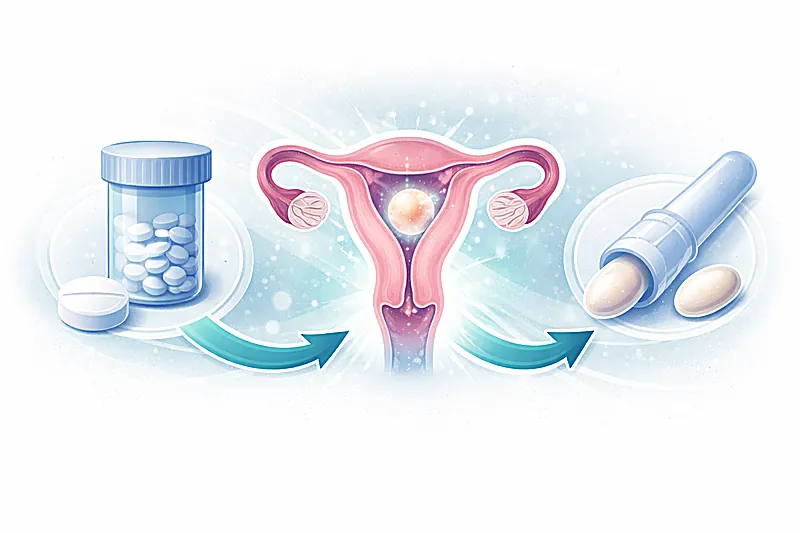
For decades, vaginal micronised progesterone (MVP) — administered as capsules, gel, or suppositories — has been the standard of care for luteal phase support in most IVF centres worldwide. While effective, vaginal progesterone is associated with well-documented drawbacks: vaginal irritation, discharge, discomfort, messiness, and poor patient acceptability. These side effects can be particularly burdensome given that treatment continues for 10–12 weeks of early pregnancy. The oral route of administration has obvious patient-acceptability advantages, but native progesterone is poorly bioavailable when taken orally due to extensive first-pass hepatic metabolism.
Dydrogesterone — a retroprogesterone with a modified molecular structure that confers oral bioavailability, high progesterone receptor selectivity, and resistance to first-pass metabolism — has emerged as the leading oral alternative. Following years of empirical use and smaller trials, the LOTUS programme (two large phase III trials sponsored by Abbott) established the evidence base for dydrogesterone as a viable replacement for vaginal progesterone in fresh IVF cycles. The question of whether this evidence extends to frozen embryo transfer cycles, and whether dydrogesterone is truly superior or merely non-inferior, continues to evolve.
What Evidence Was Reviewed
This synthesis integrates the LOTUS I and II phase III trials, the Griesinger et al. individual participant data meta-analysis (2020), the Barbosa et al. aggregate meta-analysis (2018), a 2025 systematic review focusing on FET cycles, the Katalinic et al. (2024) safety meta-analysis on congenital anomalies, recent RCTs examining combination protocols, and a pharmacokinetic crossover study. Evidence is current through early 2026.
| Study | Design | n | Population | Key Finding | Quality |
|---|---|---|---|---|---|
| LOTUS I (Tournaye et al. 2017) | Phase III, double-blind, double-dummy RCT | 1,031 | Fresh IVF, 38 sites, 14 countries | DYD non-inferior to MVP capsules 600 mg; ongoing pregnancy 37.6% vs 33.1% (+4.7%); live birth 34.6% vs 29.8% | High |
| LOTUS II (Griesinger et al. 2018) | Phase III, open-label RCT | 1,034 | Fresh IVF, 37 sites, 10 countries | DYD non-inferior to MVP gel 90 mg; ongoing pregnancy 38.7% vs 35.0% (+3.7%); comparable safety | High |
| IPD Meta-analysis (Griesinger et al. 2020) | SR/IPD-MA of 9 RCTs (IPD from 2) | 1,957 (IPD) | Fresh IVF cycles | DYD: significantly higher ongoing pregnancy (OR 1.32, 95% CI 1.08–1.61) and live birth (OR 1.28, 95% CI 1.05–1.56) | High |
| Barbosa et al. (2018) | SR/MA of 7 RCTs | ~2,500 | Fresh and FET IVF | Comparable clinical outcomes; DYD non-inferior to MVP across all pregnancy endpoints | Moderate |
| FET SR/MA (2025) | SR/MA of 5 RCTs | NR | FET cycles only | DYD provided at least similar reproductive outcomes to MVP in FET cycles | Moderate |
| Katalinic et al. (2024) | SR/MA | NR | First-trimester DYD exposure | No additional risk of congenital anomalies after first-trimester dydrogesterone use | Moderate |
| Rinaldi et al. (2024) | Prospective RCT | 700 | Fresh IVF, GnRH antagonist | MVP 800 mg vs DYD 20 mg + MVP gel 90 mg: no difference in pregnancy, live birth, or miscarriage rates | Moderate |
| Loreti et al. (2024) | Double-blind crossover | NR | Pharmacokinetic | Oral DYD and MVP achieve comparable endometrial transformation; distinct pharmacokinetic profiles | High |
| NC-FET retrospective (2025) | Retrospective cohort | 2,035 | Natural-cycle FET | DYD alone, MVP alone, and combination: comparable live birth rates (43.8%, 39.0%, 42.1%) | Low |
Key Findings on Oral Dydrogesterone for IVF Luteal Support
Efficacy in Fresh IVF Cycles: Non-Inferiority Established, Possible Superiority
The LOTUS I trial — a double-blind, double-dummy design representing the highest quality evidence in this field — demonstrated that oral dydrogesterone 30 mg daily was non-inferior to vaginal micronised progesterone capsules 600 mg daily for achieving ongoing pregnancy at 12 weeks’ gestation (37.6% vs 33.1%, difference +4.7%, 95% CI −1.2 to +10.6%). Live birth rates showed a similar numerical advantage for dydrogesterone (34.6% vs 29.8%, difference +4.9%, 95% CI −0.8 to +10.7%), though the trial was powered for non-inferiority rather than superiority, and the difference did not reach statistical significance for either endpoint individually.
LOTUS II, comparing dydrogesterone with vaginal progesterone gel 90 mg daily in an open-label design, similarly demonstrated non-inferiority (38.7% vs 35.0% ongoing pregnancy, adjusted difference +3.7%, 95% CI −2.5 to +9.9%). When the data from both LOTUS trials were pooled in an individual participant data meta-analysis, oral dydrogesterone was associated with a statistically significantly higher likelihood of both ongoing pregnancy (OR 1.32, 95% CI 1.08–1.61) and live birth (OR 1.28, 95% CI 1.05–1.56). Per 1,000 women treated, this translates to approximately 381 ongoing pregnancies with dydrogesterone versus 314 with vaginal progesterone — a clinically meaningful difference of 67 additional pregnancies per 1,000 treated.
Frozen Embryo Transfer Cycles: Emerging Evidence
Until recently, the evidence for dydrogesterone in FET cycles was limited. A 2025 systematic review of five RCTs specifically evaluating FET cycles concluded that oral dydrogesterone provided at least similar reproductive outcomes to vaginal progesterone, though the authors noted that the total evidence base for FET remains smaller and less methodologically robust than for fresh cycles. A large retrospective study of 2,035 natural-cycle FET cycles found comparable live birth rates among women receiving dydrogesterone alone (43.8%), vaginal progesterone alone (39.0%), and combination therapy (42.1%), with no statistically significant differences.
The distinction between fresh and frozen cycles is clinically important because the hormonal milieu differs: in fresh cycles, endogenous corpus luteum function provides partial progesterone support, whereas in programmed FET cycles (using exogenous estrogen and progesterone), there is no corpus luteum and progesterone replacement must sustain the pregnancy entirely. Whether dydrogesterone’s systemic progesterone receptor activation is sufficient for this context remains an active area of investigation, though initial data are reassuring.
Safety and Neonatal Outcomes
Across the LOTUS programme, the safety profiles of oral dydrogesterone and vaginal progesterone were comparable for both maternal and fetal/neonatal populations. The incidence of congenital, familial, and genetic disorders in LOTUS II was 6.3% and 5.0% in the dydrogesterone and MVP groups respectively — both consistent with background rates in IVF populations. Congenital heart malformation rates were 2.7% and 5.0%, with no signal of increased risk with dydrogesterone. A dedicated 2024 systematic review and meta-analysis by Katalinic and colleagues concluded that first-trimester dydrogesterone therapy was not associated with any additional risk of congenital anomalies.
Although the LOTUS trials were not designed to directly assess patient preference, it is well documented that oral administration is preferred over vaginal application by the majority of women undergoing IVF. Vaginal progesterone — particularly capsules and suppositories — is associated with vaginal discharge, leakage, irritation, and discomfort that can persist throughout the first trimester. These side effects may reduce adherence to the prescribed regimen, potentially compromising efficacy.
Oral dydrogesterone eliminates these vaginal side effects entirely. It does not produce the sedation associated with oral micronised progesterone, allowing normal daily functioning. This patient-friendliness advantage may have implications beyond comfort: improved adherence could contribute to the efficacy observed in clinical trials. From a practical standpoint, the simplified administration (oral tablet three times daily) may reduce medication errors and improve compliance during a treatment phase already burdened by anxiety and physical demands.
Some centres have adopted combination protocols using oral dydrogesterone alongside a lower dose of vaginal progesterone (typically gel 90 mg), hypothesising that dual-route administration might provide both local endometrial and systemic support. The Rinaldi et al. RCT (2024) compared standard vaginal progesterone 800 mg daily with a combination of oral dydrogesterone 20 mg plus vaginal progesterone gel 90 mg in 700 women. No differences were observed in pregnancy rate (34.9% vs 35.7%), live birth rate (30.6% vs 29.2%), or miscarriage rate (12% vs 18%).
These results suggest that the combination approach does not confer additional benefit over either monotherapy protocol. However, the study used a lower dydrogesterone dose (20 mg vs the 30 mg used in LOTUS) and a different vaginal progesterone comparator dose. The data do not exclude the possibility that combination protocols might benefit specific subgroups (such as women with thin endometria or recurrent implantation failure), but current evidence does not support routine use of combination over monotherapy for standard IVF luteal support.
Economic analyses using LOTUS trial data have been conducted in several national settings. In both Russia and China, deterministic models using live birth as the primary efficacy outcome found that dydrogesterone was associated with a lower cost per live birth compared with vaginal progesterone, driven primarily by the numerically higher live birth rate rather than lower drug costs. The cost of dydrogesterone tablets varies significantly by country and is generally comparable to or slightly higher than vaginal progesterone formulations.
For health systems, the economic calculation extends beyond drug costs: oral dydrogesterone eliminates the need for vaginal applicators, reduces clinic visits related to vaginal side effects, and may reduce pharmacy counselling time. However, formal health technology assessments incorporating patient quality-of-life measures, indirect costs (such as work productivity), and long-term outcomes are not yet available from most healthcare systems. The overall value proposition depends heavily on the local pricing of both dydrogesterone and the specific vaginal progesterone comparator (capsules, gel, or suppositories vary substantially in cost).
Dydrogesterone (marketed as Duphaston) is approved for luteal phase support in IVF in many countries across Europe, Asia, and Latin America. It is not currently approved by the US FDA for this indication, which has limited its adoption in North American IVF practice. In markets where it is available, dydrogesterone has gained significant market share, with some large IVF programmes adopting it as the default luteal support protocol.
The regulatory landscape is relevant to interpreting the evidence: most of the major RCTs were conducted in centres outside the United States, with stimulation protocols, patient populations, and clinical practices that may differ from US practice. However, the LOTUS trials included sites across 14 countries and used both agonist and antagonist protocols, providing reasonable external validity to diverse clinical settings. Clinicians in countries where dydrogesterone is available can draw on a substantial evidence base; those in markets without access will need to await regulatory approvals or use the available vaginal or intramuscular progesterone formulations.
Quality & Consistency of Evidence
What the Evidence Does Not Show
Whether dydrogesterone is truly superior to vaginal progesterone — rather than merely non-inferior — cannot be definitively concluded from the available data. The IPD meta-analysis showed statistical significance, but this pooled analysis combines data from trials with different designs (one double-blind, one open-label) and different vaginal progesterone comparators (capsules vs gel). A large superiority trial powered specifically for live birth rate has not been conducted.
The evidence for programmed (artificial) FET cycles — where no corpus luteum exists and progesterone replacement is the sole source of luteal support — remains insufficient. This is particularly relevant because programmed FET is one of the most common IVF protocols globally, and the pharmacological demands on progesterone replacement are greater than in fresh cycles where residual corpus luteum function persists.
Long-term offspring follow-up data are unavailable from any dydrogesterone luteal support trial. While the 2024 Katalinic meta-analysis provides reassurance regarding congenital anomalies, neurodevelopmental and metabolic outcomes in childhood have not been assessed. Additionally, dydrogesterone remains unavailable in the United States, limiting the generalisability of existing evidence to North American practice.
Practical Implications
Based on the current evidence, several considerations emerge for reproductive medicine clinicians.
Two phase III trials and a pooled IPD analysis provide high-certainty evidence for non-inferiority and a signal of possible superiority of oral dydrogesterone 30 mg daily compared with vaginal progesterone for luteal support in fresh IVF cycles. Where available, it represents an evidence-based alternative to vaginal progesterone.
The oral route eliminates vaginal side effects (discharge, irritation, discomfort) that compromise patient acceptability and may reduce adherence. For a treatment administered three times daily for up to 12 weeks, the patient experience advantage is substantial and clinically relevant.
Current evidence suggests dydrogesterone produces comparable outcomes in natural-cycle FET, but data for programmed FET cycles are limited. Clinicians using dydrogesterone for FET should do so with awareness that the evidence is less robust than for fresh cycles and should monitor outcomes accordingly.
No increased risk of congenital anomalies has been identified in the LOTUS trials or a dedicated meta-analysis. However, total exposed infant numbers remain insufficient to exclude rare adverse events. Long-term offspring follow-up studies are needed and should be prioritised as dydrogesterone use expands globally.
Evidence Grade & Bottom Line
Overall Evidence Grade: Strong (Non-Inferiority in Fresh Cycles) / Limited (FET Cycles)
For the question of whether oral dydrogesterone is at least as effective as vaginal progesterone for luteal support in fresh IVF cycles, the evidence is high-certainty from two phase III trials and an IPD meta-analysis. The IPD analysis suggests a possible efficacy advantage, though definitive superiority is not established. For FET cycles, evidence is limited and evolving.
- Oral dydrogesterone 30 mg daily is non-inferior to vaginal micronised progesterone for luteal phase support in fresh IVF cycles, based on high-certainty evidence from two phase III RCTs and an IPD meta-analysis involving over 2,000 women.
- Pooled data suggest dydrogesterone may provide higher ongoing pregnancy and live birth rates compared with vaginal progesterone (OR 1.32 and 1.28 respectively), though definitive superiority has not been established by a dedicated superiority trial.
- Safety profiles are comparable between the two treatments, with no increased risk of congenital anomalies identified in trial data or a dedicated meta-analysis of first-trimester exposure.
- Evidence for dydrogesterone in frozen embryo transfer cycles is emerging and suggests comparable outcomes in natural-cycle FET, but remains insufficient for programmed FET protocols where progesterone requirements are greater.
- Long-term offspring outcome data and dydrogesterone’s regulatory availability in the United States represent the most significant remaining limitations to global adoption as the default standard of care.
Article Information
For Educational Purposes Only. This is an original evidence synthesis informed by the studies listed below. It does not replace clinical judgement. Drug dosages should be verified against current prescribing information.
References
- Tournaye H, Sukhikh GT, Kahler E, Griesinger G. A phase III randomized controlled trial comparing the efficacy, safety and tolerability of oral dydrogesterone versus micronized vaginal progesterone for luteal support in in vitro fertilization. Hum Reprod. 2017;32(5):1019-1027. DOI: 10.1093/humrep/dex023
- Griesinger G, Blockeel C, Sukhikh GT, et al. Oral dydrogesterone versus intravaginal micronized progesterone gel for luteal phase support in IVF: a randomized clinical trial. Hum Reprod. 2018;33(12):2212-2221. DOI: 10.1093/humrep/dey306
- Griesinger G, Blockeel C, Kahler E, et al. Dydrogesterone as an oral alternative to vaginal progesterone for IVF luteal phase support: a systematic review and individual participant data meta-analysis. PLoS One. 2020;15(11):e0241044. DOI: 10.1371/journal.pone.0241044
- Barbosa MWP, Valadares NPB, Barbosa ACP, et al. Oral dydrogesterone vs vaginal progesterone capsules for luteal-phase support in women undergoing embryo transfer: a systematic review and meta-analysis. JBRA Assist Reprod. 2018;22(2):148-156. DOI: 10.5935/1518-0557.20180024
- Katalinic A, Noftz MR, Garcia-Velasco JA. No additional risk of congenital anomalies after first-trimester dydrogesterone use: a systematic review and meta-analysis. Hum Reprod Open. 2024;2024(1):hoae004. DOI: 10.1093/hropen/hoae004
- Rinaldi L, Crescenzi F, Selman H. Oral dydrogesterone along with vaginal micronized progesterone supplementation for luteal phase support in IVF patients: a prospective randomized trial. BMC Pregnancy Childbirth. 2024;24:845. DOI: 10.1186/s12884-024-07069-8
- Loreti S, Thiele K, De Brucker M, et al. Oral dydrogesterone versus micronized vaginal progesterone for luteal phase support: a double-blind crossover study. Hum Reprod. 2024;39(2):403-412. DOI: 10.1093/humrep/dead254
- Griesinger G. Oral dydrogesterone for luteal phase support in fresh in vitro fertilization cycles: a new standard? Fertil Steril. 2018;109(5):756-762. DOI: 10.1016/j.fertnstert.2018.03.034
- Griesinger G, Tournaye H, Macklon N, et al. Dydrogesterone: pharmacological profile and mechanism of action as luteal phase support in assisted reproduction. Reprod Biomed Online. 2019;38(2):249-259. DOI: 10.1016/j.rbmo.2018.11.017
- Practice Committee of the American Society for Reproductive Medicine. Progesterone supplementation during the luteal phase and in early pregnancy in the treatment of infertility: an educational bulletin. Fertil Steril. 2017;107(1):7-11. DOI: 10.1016/j.fertnstert.2016.09.020