
Endometriosis Treatment: Medical and Surgical Guide 2026
Clinical Practice Update — Empiric Therapy, GnRH Antagonists, Surgery, and Fertility-Preserving Care
This is an original clinical education article informed by current guidelines and evidence. See References below for source documents.
- Clinical Focus
- Evidence-based medical and surgical endometriosis treatment, with attention to pain control and fertility
- Target Audience
- Gynecologists, family physicians, reproductive endocrinologists, primary care clinicians, advanced practice providers
- Setting
- Outpatient gynecology clinics, primary care, fertility clinics, tertiary referral centers
- Source Evidence
- •ESHRE Guideline: Endometriosis (2022 update)
- •ACOG Practice Bulletin — Management of Endometriosis
- •NICE NG73 — Endometriosis: Diagnosis and Management (updated 2024)
- •SOLSTICE Trial — Elagolix for Endometriosis Pain (NEJM, 2017)
- •SPIRIT 1 & 2 Trials — Relugolix Combination Therapy (Lancet, 2022)
Key Clinical Takeaways
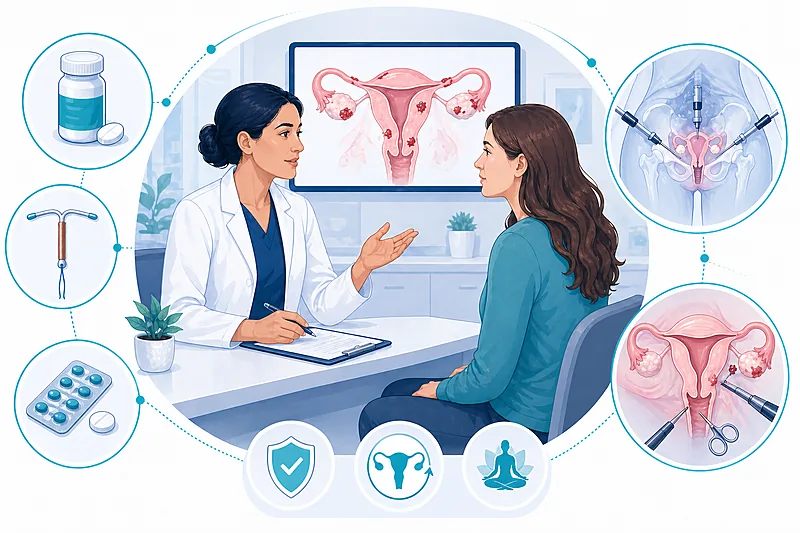
Modern endometriosis treatment is guided by symptom priority, fertility plans, and response to earlier therapy — not by surgical staging. Empiric hormonal suppression is a reasonable first step for pain, laparoscopy is reserved for diagnostic and therapeutic need, and newer oral GnRH antagonists have expanded outpatient options. The points below distill current evidence into actionable rules.
- 1Consider empiric endometriosis treatment in women with a typical history (cyclic pelvic pain, dysmenorrhea, dyspareunia, chronic pelvic pain) — laparoscopic confirmation is no longer required before starting first-line medical therapy → Diagnosis
- 2Obtain transvaginal ultrasound as the initial imaging study; reserve MRI for suspected deep infiltrating disease or when surgery is planned → Diagnosis
- 3Start a combined hormonal contraceptive (pill, patch, or ring) used continuously or a progestin-only option as first-line medical therapy for symptomatic disease → First-Line Medical
- 4Escalate to oral GnRH antagonists (elagolix or relugolix combination therapy) when first-line agents fail or are poorly tolerated — each offers predictable pain reduction without the cost and injection burden of depot GnRH agonists → Second-Line
- 5Add hormonal add-back therapy for any GnRH analogue used beyond 6 months to protect bone density and limit vasomotor symptoms → Second-Line
- 6Prefer laparoscopic excision over ablation for deep infiltrating disease and endometriomas >4 cm — excision offers lower recurrence and clearer pathology → Surgical
- 7Counsel every patient with endometriomas about the risk to ovarian reserve before cystectomy, especially bilateral disease or prior ovarian surgery → Surgical
- 8Refer infertile women with suspected endometriosis early to reproductive medicine — fertility decisions often dictate whether surgery or ART comes first → Fertility
- 9Approach chronic pain multimodally — pelvic floor physiotherapy, neuropathic agents, cognitive-behavioral therapy, and pain specialist input often matter as much as hormonal therapy → Pain Management
Diagnosing Endometriosis Before Starting Treatment
The biggest shift in endometriosis treatment over the last decade is the acceptance that laparoscopy is no longer required before initiating therapy. A suggestive clinical history together with negative examinations for other causes is enough to justify empiric medical management.
Make a clinical diagnosis of suspected endometriosis in women with any combination of cyclic pelvic pain, severe dysmenorrhea unresponsive to NSAIDs, deep dyspareunia, cyclic bowel or bladder symptoms, or subfertility — particularly when symptoms begin shortly after menarche or worsen with age.
Strong Rec Moderate Evidence ESHRE 2022 NICE 2024Perform transvaginal ultrasound as the initial imaging investigation. It detects ovarian endometriomas reliably and, in experienced hands, can identify deep infiltrating endometriosis of the rectovaginal septum and uterosacral ligaments.
Strong Rec High Evidence ESHRE 2022 ACOGReserve pelvic MRI for preoperative mapping of deep infiltrating disease, suspected bowel or bladder involvement, or when ultrasound is equivocal. Do not use MRI as a routine first-line investigation.
Moderate Rec Moderate Evidence ESHRE 2022 NICE 2024Do not rely on CA-125 for diagnosis. Levels are often normal in mild disease and elevated in many other conditions. Its limited utility is confined to monitoring known deep disease or excluding malignancy in specific scenarios.
Against Moderate Evidence ESHRE 2022Typical Symptoms and Clinical Clues
| Symptom Cluster | Typical Description | Suggests Which Pattern | What to Do Next |
|---|---|---|---|
| Severe dysmenorrhea | Pain worsens progressively; not relieved by NSAIDs alone | Superficial or early disease | Clinical diagnosis, TVUS, empiric medical therapy |
| Deep dyspareunia | Pain with deep penetration, sometimes days after | Uterosacral or rectovaginal involvement | Bimanual exam, TVUS, consider MRI |
| Cyclic bowel symptoms | Dyschezia, rectal bleeding, bloating during menses | Deep infiltrating bowel involvement | MRI, specialist referral |
| Cyclic urinary symptoms | Dysuria, urgency, or hematuria synchronous with menses | Bladder or ureteric disease | MRI, cystoscopy, urology input |
| Subfertility | 12+ months trying unsuccessfully (6+ if >35 years) | Any stage, often occult disease | Fertility workup, early reproductive medicine referral |
| Pelvic mass | Adnexal mass on exam or imaging | Endometrioma (ovarian) | TVUS characterisation; surgical planning if >4 cm |
First-Line Medical Endometriosis Treatment
First-line medical endometriosis treatment is simple, cheap, and effective in most patients: combined hormonal contraceptives or progestin-only agents, used continuously to suppress menstruation and the cyclic hormonal surges that drive lesional pain.
Prescribe a combined hormonal contraceptive (combined oral contraceptives, patch, or ring) used continuously — without a monthly withdrawal bleed — as first-line medical therapy for suspected or confirmed endometriosis-associated pain. Continuous regimens outperform cyclic regimens for pain control.
Strong Rec High Evidence ESHRE 2022 ACOGOffer a progestin-only option as an equally valid first-line alternative, especially for women with contraindications to estrogen. The levonorgestrel-releasing intrauterine system (52 mg), dienogest 2 mg daily, norethindrone acetate 5 mg daily, and depot medroxyprogesterone acetate each reduce endometriosis-associated pain effectively.
Strong Rec High Evidence ESHRE 2022 NICE 2024Combine hormonal therapy with scheduled NSAIDs (ibuprofen, naproxen, mefenamic acid) during acute pain episodes. NSAIDs are useful adjuncts but are insufficient as monotherapy for moderate-to-severe endometriosis-associated pain.
Strong Rec Moderate Evidence ESHRE 2022Reassess symptoms at 3 months after initiating first-line therapy. If pain remains moderate or severe, or if side effects are unacceptable, consider switching within class (e.g., combined to progestin-only) before escalating to second-line agents.
Moderate Rec Low Evidence ESHRE 2022First-Line Hormonal Options: A Practical Comparison
| Option | Typical Regimen | Best Suited For | Main Trade-Offs | Practical Tips |
|---|---|---|---|---|
| Combined pill (continuous) | Monophasic 20–35 µg EE + progestin, daily without a break | Dysmenorrhea-predominant; contraception also desired | Estrogen contraindications (VTE risk, >35 and smoker) | Breakthrough bleeding common in first 3 months; warn upfront |
| LNG-IUS 52 mg | Intrauterine device; replaced every 5–8 years | Chronic pelvic pain, adenomyosis overlap, poor adherence | Insertion discomfort; initial irregular bleeding | Particularly useful after surgical excision to prevent recurrence |
| Dienogest | 2 mg PO daily | Deep disease, estrogen contraindicated | Breakthrough bleeding, mood changes; cost in some markets | Generally better bone profile than GnRH analogues long-term |
| Norethindrone acetate | 2.5–15 mg PO daily (commonly 5 mg) | Cost-conscious; add-back therapy with GnRH analogues | Androgenic side effects at higher doses | Widely available and inexpensive |
| DMPA | 150 mg IM every 12 weeks | Poor adherence, no fertility plans | Delayed return of fertility; bone density concerns >2 years | Check bone density if used long-term; counsel on weight changes |
Second-Line Therapy: GnRH Antagonists and Agonists
When first-line hormonal therapy fails, oral GnRH antagonists have largely replaced depot GnRH agonists as the preferred next step — same therapeutic principle (hypothalamic-pituitary suppression), better outpatient profile.
Prescribe elagolix 150 mg daily (up to 24 months) or 200 mg twice daily (up to 6 months) when combined hormonal contraceptives or progestins have failed. Dose selection depends on symptom severity, with the higher dose reserved for severe dyspareunia or refractory dysmenorrhea.
Strong Rec High Evidence SOLSTICE 2017 ACOGConsider relugolix combination therapy (relugolix 40 mg + estradiol 1 mg + norethindrone acetate 0.5 mg) as a single-tablet option that includes built-in add-back. It allows extended use up to 24 months with preserved bone density.
Strong Rec High Evidence SPIRIT 1&2 2022 FDA 2022Add hormonal add-back therapy (typically norethindrone acetate 5 mg daily, with or without low-dose estradiol) when any GnRH analogue is used beyond 6 months. Add-back preserves bone density and reduces vasomotor symptoms without diminishing pain relief.
Strong Rec High Evidence ESHRE 2022 ACOGConsider depot GnRH agonists (leuprolide 3.75 mg IM monthly or 11.25 mg every 3 months) when oral agents are unavailable, intolerable, or non-adherent. Always combine with add-back therapy from the start if duration will exceed 6 months.
Moderate Rec High Evidence ACOGGnRH Analogues at a Glance
| Agent | Class | Route & Dose | Built-in Add-Back | Practical Tips |
|---|---|---|---|---|
| Elagolix | Oral antagonist | 150 mg daily (up to 24 mo) or 200 mg BID (up to 6 mo) | No — add separately if prolonged | Rapid onset; flexible dosing; no flare effect |
| Relugolix combo | Oral antagonist + add-back | Single tablet daily (up to 24 mo) | Yes — E2 1 mg + NETA 0.5 mg | One pill convenience; preserves bone density |
| Leuprolide depot | IM agonist | 3.75 mg monthly or 11.25 mg every 3 months | No — add separately | Initial flare of symptoms; bridge with NSAIDs or first-line hormones |
| Goserelin | SC agonist implant | 3.6 mg monthly or 10.8 mg every 3 months | No — add separately | Similar efficacy to leuprolide; insertion-site reactions occasional |
Surgical Approaches in Endometriosis Treatment
Surgical endometriosis treatment has narrowed in scope but deepened in precision. Laparoscopy remains the gold-standard operative approach, and excision — not ablation — is the technique of choice for deep or cystic disease.
Offer laparoscopy for symptomatic women who have failed or cannot tolerate medical therapy, have an endometrioma >4 cm, have suspected deep infiltrating disease, or are undergoing surgery for another indication (e.g., hysterectomy, adnexectomy).
Strong Rec Moderate Evidence ESHRE 2022 ACOGPrefer laparoscopic excision over ablation (coagulation or vaporisation) for deep infiltrating endometriosis and endometriomas. Excision allows histological confirmation, achieves lower pain recurrence, and removes disease completely rather than destroying only the surface.
Strong Rec Moderate Evidence ESHRE 2022Perform ovarian cystectomy rather than drainage or coagulation for endometriomas >3–4 cm causing pain, growing on serial imaging, or when malignancy cannot be excluded. Counsel about the impact on ovarian reserve — AMH typically declines after cystectomy.
Strong Rec High Evidence ESHRE 2022 ACOGRefer deep infiltrating disease involving the bowel, bladder, or ureters to a specialist center with multidisciplinary expertise (gynecology, colorectal surgery, urology). Surgery in non-specialist settings risks incomplete resection and complications.
Strong Rec Moderate Evidence ESHRE 2022 NICE 2024Consider hysterectomy with bilateral salpingo-oophorectomy only in women who have completed childbearing, have refractory pain, and have failed all conservative options. Hysterectomy alone (with ovarian conservation) does not cure extra-uterine disease but improves pain when adenomyosis is contributing.
Conditional Rec Moderate Evidence ESHRE 2022 ACOGEndometriosis-Associated Infertility
Fertility care is where endometriosis treatment decisions most often diverge from pain-focused treatment. Medical suppressive therapy postpones conception rather than assisting it, so the approach shifts decisively toward surgery, assisted reproduction, or both.
Refer women with suspected endometriosis and subfertility (failure to conceive after 12 months, or 6 months if >35 years) promptly to reproductive medicine. Do not prolong empiric medical therapy in this group — suppressive hormones block conception.
Strong Rec Moderate Evidence ESHRE 2022 ASRMConsider in vitro fertilization rather than further surgery for women with endometriomas <4 cm, advanced maternal age, low ovarian reserve, or coexisting male or tubal infertility. IVF bypasses many disease-related fertility barriers and avoids further insult to ovarian tissue.
Moderate Rec Moderate Evidence ESHRE 2022 ASRMDo not routinely operate on small (<4 cm) asymptomatic endometriomas before IVF. Surgery offers no proven improvement in pregnancy rates and can reduce ovarian reserve. Reserve surgery for pain, growth, or diagnostic concerns.
Against Moderate Evidence ESHRE 2022 ASRMOffer fertility preservation (oocyte cryopreservation) to women with bilateral endometriomas, planned repeat ovarian surgery, or diminished ovarian reserve, particularly when childbearing is postponed.
Moderate Rec Low Evidence ESHRE 2022 ASRMClinical Decision Pathway
A question-based approach to the woman presenting with probable endometriosis. Work through each question before reaching for the prescription pad.
Chronic Pain Management Alongside Endometriosis Treatment
Hormonal suppression reduces lesional activity, but central pain sensitisation often drives persistent symptoms even when disease is well-controlled. Multimodal, multidisciplinary pain management is therefore integral to effective endometriosis treatment.
Assess for central sensitisation in every woman with persistent chronic pain despite adequate hormonal suppression: widespread tenderness, allodynia, sleep disturbance, and associated conditions (fibromyalgia, IBS, interstitial cystitis).
Strong Rec Moderate Evidence ESHRE 2022Offer pelvic floor physiotherapy to women with dyspareunia, vaginismus, or pelvic floor myofascial pain. It complements hormonal therapy and often halves the need for further escalation.
Moderate Rec Moderate Evidence ESHRE 2022Consider neuropathic agents (amitriptyline 10–50 mg nightly, gabapentin 300–900 mg three times daily, or duloxetine 30–60 mg daily) for women with features of central sensitisation or neuropathic pain.
Moderate Rec Low Evidence ESHRE 2022Refer to pain psychology or cognitive-behavioral therapy when chronic pain impairs function, mood, or sleep. CBT reduces pain catastrophising and improves quality-of-life scores in endometriosis cohorts.
Moderate Rec Moderate Evidence ESHRE 2022Avoid long-term opioids for endometriosis pain. They are ineffective for chronic nociplastic pain, carry dependence risk, and can worsen hyperalgesia over time.
Against Moderate Evidence ESHRE 2022 CDCMonitoring and Follow-Up
| Time Point | What to Review | Red Flags | Common Pitfalls |
|---|---|---|---|
| 3 months after first-line | Pain score, cycle control, tolerability | No improvement, mass on imaging, urinary/bowel symptoms | Labelling partial response as failure without switching within class first |
| 6 months (on GnRH analogue) | Pain response, add-back tolerance, bone health risk assessment | Severe vasomotor symptoms, mood change | Missing add-back therapy beyond 6 months |
| 12 months (on any therapy) | Ongoing benefit, fertility plans, need for imaging | New mass, disease progression | Not revisiting fertility priorities as life circumstances change |
| Postoperative 6 weeks | Recovery, pain trajectory, postoperative suppression plan | Persistent or worsening pain, signs of recurrence | Not starting postoperative hormonal therapy promptly |
| Annual (long-term) | Pain, imaging if symptomatic, fertility and QOL reassessment | New or growing endometrioma; persistent pain on maximal therapy | Escalating to repeat surgery without multidisciplinary review |
Evidence in Context
What the evidence shows, where major frameworks agree, and where practice continues to evolve in modern endometriosis treatment.
The Diagnostic Shift: Clinical Diagnosis Replaces Surgery-First
Until the late 2010s, a definitive diagnosis of endometriosis required visualization at laparoscopy. ESHRE’s 2022 update and the NICE 2024 refresh both accept clinical diagnosis in women with a suggestive history. The change acknowledges average diagnostic delays of 7–10 years when surgery is the gatekeeper, and the evidence that empiric medical therapy is effective regardless of surgical confirmation.
Surgery retains an important role — when medical therapy fails, when a mass is present, or when fertility demands it — but is no longer a prerequisite for treatment.
SOLSTICE and SPIRIT: Oral GnRH Antagonists Change Second-Line Care
The SOLSTICE trial established elagolix as an oral alternative to injectable GnRH agonists, achieving significant reductions in dysmenorrhea and non-menstrual pelvic pain. The SPIRIT 1 and 2 trials then demonstrated that relugolix combination therapy — combining antagonist with hormonal add-back in a single daily tablet — reduced pain without the bone loss penalty that limits agonist use.
For many practitioners, oral antagonists have now displaced depot leuprolide as the first escalation step after failed first-line therapy.
Excision vs Ablation: The Ongoing Debate
Trials comparing laparoscopic excision to ablation have generally favoured excision for recurrence and pain outcomes, although methodological heterogeneity limits the strength of the conclusion. For superficial peritoneal disease, the difference may be modest. For deep infiltrating endometriosis and endometriomas, the case for excision is compelling. The ESHRE 2022 and ACOG frameworks converge on this recommendation.
Endometriomas and Ovarian Reserve
Cystectomy removes the endometrioma cyst wall but inevitably takes some adjacent healthy ovarian tissue with it. Post-surgical AMH declines have been consistently documented, particularly after bilateral procedures. This has driven a more conservative surgical approach: leave small asymptomatic endometriomas alone, counsel carefully before operating, and consider fertility preservation first in women with bilateral disease.
What We Still Don’t Know
Uncertainty remains around non-hormonal disease-modifying therapies (immune modulators, angiogenesis inhibitors), the role of microbiome interventions, optimal surveillance intervals after surgical excision, and the prevention of disease recurrence over decades rather than years. Biomarkers for non-invasive diagnosis and monitoring remain aspirational.
References
- 1.Becker CM, Bokor A, Heikinheimo O, et al. ESHRE guideline: endometriosis. Hum Reprod Open. 2022;2022(2):hoac009. doi:10.1093/hropen/hoac009
- 2.Taylor HS, Giudice LC, Lessey BA, et al. Treatment of Endometriosis-Associated Pain with Elagolix, an Oral GnRH Antagonist (SOLSTICE). N Engl J Med. 2017;377(1):28–40. doi:10.1056/NEJMoa1700089
- 3.Giudice LC, As-Sanie S, Arjona Ferreira JC, et al. Once daily oral relugolix combination therapy versus placebo in patients with endometriosis-associated pain (SPIRIT 1 and SPIRIT 2). Lancet. 2022;399(10343):2267–2279. doi:10.1016/S0140-6736(22)00622-5
- 4.American College of Obstetricians and Gynecologists. Management of Endometriosis. ACOG Practice Bulletin No. 114 (reaffirmed). Obstet Gynecol. 2010;116(1):223–236. doi:10.1097/AOG.0b013e3181e8b073
- 5.National Institute for Health and Care Excellence. Endometriosis: diagnosis and management. NICE Guideline NG73 (updated 2024). nice.org.uk/guidance/ng73
- 6.Practice Committee of the American Society for Reproductive Medicine. Endometriosis and infertility: a committee opinion. Fertil Steril. 2012;98(3):591–598. doi:10.1016/j.fertnstert.2012.05.031
- 7.Vercellini P, Buggio L, Frattaruolo MP, et al. Medical treatment of endometriosis-related pain. Best Pract Res Clin Obstet Gynaecol. 2018;51:68–91. doi:10.1016/j.bpobgyn.2018.01.015
How to Read the Evidence Tags
Every recommendation carries two tags — one for recommendation strength and one for evidence quality — plus a source tag. These are Medaptly’s own simplified interpretations, designed for bedside readability.
Recommendation Strength
| Tag | What It Means |
|---|---|
| Strong Rec | High-quality evidence broadly supports this action. |
| Moderate Rec | The weight of evidence favours this action. |
| Conditional Rec | The benefit is less certain — individualise. |
| Against | Evidence shows no benefit or potential harm. |
Evidence Quality
| Tag | What It Means |
|---|---|
| High Evidence | Multiple well-designed RCTs or high-quality meta-analyses. |
| Moderate Evidence | Single RCT or large observational studies. |
| Low Evidence | Expert consensus or small studies. |