
Preeclampsia Management: Diagnosis, BP Control, and Delivery
Clinical Practice Update — Evidence-Based Preeclampsia Management in Pregnancy
This is an original clinical education article informed by current guidelines and evidence. See References below for source documents.
- Clinical Focus
- Evidence-based preeclampsia management from diagnosis through postpartum care
- Target Audience
- Obstetricians, family physicians, maternal-fetal medicine specialists, emergency physicians, midwives
- Setting
- Prenatal clinics, labor and delivery units, emergency departments, postpartum wards
- Source Evidence
- •ACOG Practice Bulletin — Gestational Hypertension and Preeclampsia (2020, reaffirmed)
- •ISSHP Classification and Diagnosis of Hypertensive Disorders of Pregnancy (2018, updated)
- •NICE NG133 — Hypertension in Pregnancy: Diagnosis and Management (2019)
- •CHAP Trial — Antihypertensive Treatment in Chronic Hypertension (NEJM, 2022)
- •ASPRE Trial — Aspirin for Preeclampsia Prevention (NEJM, 2017)
Key Clinical Takeaways
Effective preeclampsia management in pregnancy rests on four time-sensitive decisions: confirm the diagnosis against updated criteria, identify severe features, control blood pressure safely, and choose the right delivery window. The points below distill current evidence into actionable rules for the bedside.
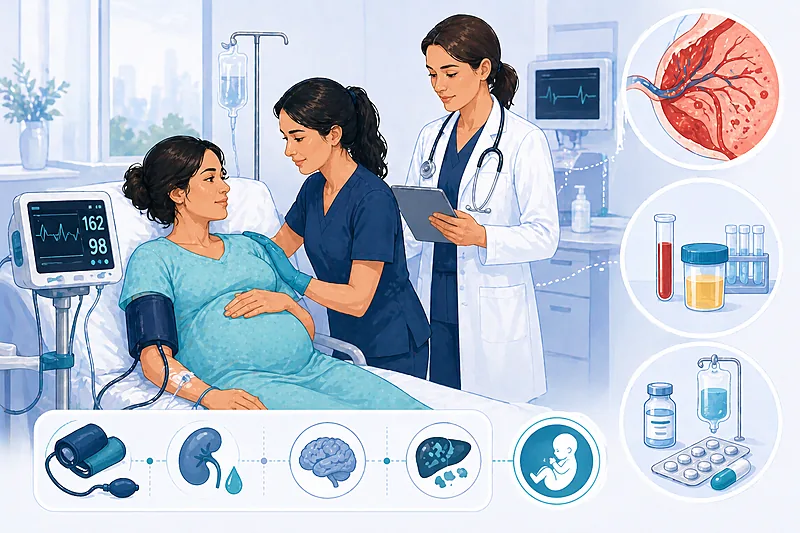
- 1Diagnose preeclampsia when BP is ≥140/90 mmHg after 20 weeks plus proteinuria OR end-organ dysfunction — distinguishing it from gestational hypertension is central to preeclampsia management → Diagnosis
- 2Identify severe features immediately — BP ≥160/110, thrombocytopenia, elevated transaminases, renal insufficiency, pulmonary edema, or new neurologic symptoms → Severity
- 3Treat severe-range hypertension (≥160/110) within 30–60 minutes using IV labetalol, IV hydralazine, or oral immediate-release nifedipine → BP Control
- 4Start intravenous magnesium sulfate for seizure prophylaxis in every patient with preeclampsia with severe features or eclampsia → Magnesium
- 5Deliver at 37 weeks for preeclampsia without severe features; deliver at 34 weeks (or sooner if unstable) when severe features are present → Delivery Timing
- 6Give antenatal corticosteroids if delivery is anticipated before 34 weeks — do not let severe BP delay magnesium or steroid administration → Delivery Timing
- 7Prescribe low-dose aspirin 81–162 mg nightly from 12–28 weeks in women with at least one high-risk or two moderate-risk factors → Prevention
- 8Continue BP monitoring for at least 72 hours postpartum and schedule outpatient review within 7–10 days — the risk window does not close at delivery → Monitoring
- 9Counsel every patient after recovery about lifelong cardiovascular risk — preeclampsia doubles the long-term risk of hypertension and stroke → Postpartum
Diagnosing Preeclampsia: Updated Criteria for Preeclampsia Management
Accurate diagnosis is the foundation of preeclampsia management. A modern definition no longer requires proteinuria — end-organ dysfunction alone is enough when new hypertension is documented after 20 weeks of gestation. Both ACOG and ISSHP now recognise this broader picture, which captures the roughly 10–15% of women who develop organ involvement without significant proteinuria.
Diagnose preeclampsia when a previously normotensive woman develops systolic BP ≥140 mmHg or diastolic ≥90 mmHg on two occasions at least 4 hours apart after 20 weeks, plus either proteinuria (≥300 mg/24h, protein:creatinine ratio ≥0.3, or dipstick 2+) or evidence of end-organ dysfunction.
Strong Rec High Evidence ACOG 2020 ISSHP 2018Recognise end-organ dysfunction as a diagnostic criterion even in the absence of proteinuria: thrombocytopenia (<100,000/µL), transaminases twice the upper limit of normal (HELLP syndrome variant), creatinine >1.1 mg/dL or doubled from baseline, pulmonary edema, or new visual or cerebral symptoms.
Strong Rec High Evidence ACOG 2020Consider angiogenic marker testing (sFlt-1/PlGF ratio) to rule out short-term preeclampsia in women presenting with suspected disease between 20 and 34 weeks, where available. A ratio ≤38 has a negative predictive value above 99% at one week.
Moderate Rec Moderate Evidence NICE 2019 ISSHP 2018Comparing Hypertensive Disorders in Pregnancy
| Condition | BP Threshold | Proteinuria | End-organ Involvement | Key Distinguishing Feature |
|---|---|---|---|---|
| Chronic hypertension | ≥140/90 before 20 weeks | None (unless superimposed) | None | Predates pregnancy or first-trimester onset |
| Gestational hypertension | ≥140/90 after 20 weeks | Absent | Absent | Normalises by 12 weeks postpartum |
| Preeclampsia (no severe features) | ≥140/90 after 20 weeks | Present OR | Mild if present | New-onset organ or vascular involvement |
| Preeclampsia with severe features | ≥160/110 OR lower with severe features | Not required if severe features present | Prominent (hepatic, renal, hematologic, neurologic) | Triggers immediate delivery planning |
| Eclampsia | Any elevated BP (can be normal) | Variable | Cerebral involvement | Generalised tonic-clonic seizure |
Severe Features and Risk Stratification in Preeclampsia Management
The single most important decision in preeclampsia management is whether severe features are present. Their appearance changes everything: magnesium sulfate becomes mandatory, delivery planning shifts toward 34 weeks, and the threshold for hospital admission falls to zero.
- Systolic BP ≥160 mmHg or diastolic ≥110 mmHg on two readings at least 4 hours apart (or sooner if antihypertensive therapy is already needed)
- Platelet count below 100,000/µL
- Hepatic dysfunction: transaminases at least twice the upper limit of normal OR severe, unresponsive right upper quadrant or epigastric pain
- Renal insufficiency: serum creatinine above 1.1 mg/dL, or doubling of baseline creatinine without other cause
- Pulmonary edema
- New-onset cerebral symptoms: persistent headache unresponsive to analgesia, visual disturbances (scotomata, blurred vision), altered mental status
Admit every woman with suspected preeclampsia for initial evaluation. Outpatient management is acceptable only after severe features have been excluded, maternal and fetal surveillance is reliable, and the patient can return promptly if symptoms worsen.
Strong Rec Moderate Evidence ACOG 2020Perform baseline and serial laboratory evaluation in every patient: complete blood count with platelets, serum creatinine, LDH, transaminases, and urine protein quantification. Recheck at least twice weekly in expectant management, or more often if clinical status changes.
Strong Rec Moderate Evidence ACOG 2020 NICE 2019Assess fetal wellbeing at diagnosis with non-stress testing, biophysical profile, and an ultrasound for growth and amniotic fluid volume. Repeat antenatal surveillance at least weekly — more often with fetal growth restriction or oligohydramnios.
Strong Rec Moderate Evidence ACOG 2020Blood Pressure Control in Preeclampsia Management
Severe-range hypertension is a hypertensive emergency — a leading cause of maternal stroke. Acute preeclampsia management requires bringing BP below 160/110 mmHg within 30 to 60 minutes, without overshooting into relative hypotension that could compromise placental perfusion.
Treat severe-range hypertension (≥160/110 mmHg) within 30–60 minutes using IV labetalol, IV hydralazine, or oral immediate-release nifedipine. Target BP is 140–150 / 90–100 mmHg — avoid abrupt drops that reduce uteroplacental flow.
Strong Rec High Evidence ACOG 2020 NICE 2019For ongoing oral antihypertensive therapy in preeclampsia without severe features, prescribe labetalol 200–800 mg twice daily, extended-release nifedipine 30–90 mg daily, or methyldopa 250–500 mg three or four times daily. Target BP 130–150 / 80–100 mmHg.
Strong Rec Moderate Evidence ACOG 2020 NICE 2019In women with chronic hypertension in pregnancy, treat to a target of less than 140/90 mmHg based on the CHAP trial, which showed reduced composite adverse pregnancy outcomes without increased small-for-gestational-age births.
Strong Rec High Evidence CHAP Trial 2022 ACOG 2022Do not use ACE inhibitors, angiotensin-receptor blockers, renin inhibitors, or mineralocorticoid-receptor antagonists in pregnancy. These agents are associated with fetal renal dysgenesis, oligohydramnios, and neonatal death.
Against High Evidence ACOG 2020 FDAAntihypertensive Agents: A Drug-by-Drug Guide
| Drug | Acute Severe-Range Dose | Maintenance Dose | Key Cautions | Practical Tips |
|---|---|---|---|---|
| Labetalol | 20 mg IV; double every 10 min (40, 80) to max 300 mg | 100–400 mg PO BID–TID (max 2.4 g/day) | Avoid in asthma, decompensated heart failure, bradycardia | First-line in most acute-care settings; safe in breastfeeding |
| Hydralazine | 5–10 mg IV every 20 min (max 30 mg) | Not preferred for maintenance | Maternal hypotension, reflex tachycardia, headache | Wait full 20 min before redosing to prevent stacking |
| Nifedipine (IR) | 10 mg PO; repeat in 20 min if needed (max 50 mg) | ER: 30–90 mg daily | Concurrent magnesium may potentiate hypotension (rare) | Useful when IV access is delayed |
| Methyldopa | Not for acute emergencies | 250–500 mg PO 3–4 times daily (max 3 g/day) | Sedation, depression, rare hepatitis & hemolysis | Longest safety record; slow onset (3–6 hours) |
| Nicardipine (IV) | 5 mg/hr infusion; titrate by 2.5 mg/hr every 5 min (max 15 mg/hr) | Transition to oral once stable | Reflex tachycardia, phlebitis at peripheral sites | Useful for refractory cases in ICU settings |
Magnesium Sulfate for Seizure Prophylaxis
Magnesium sulfate remains unmatched for preventing and treating eclamptic seizures. The Magpie trial confirmed it halves the risk of eclampsia in women with preeclampsia. Within modern preeclampsia management, it is given to anyone with severe features, eclampsia, or intrapartum neurologic symptoms.
Initiate IV magnesium sulfate in every woman with preeclampsia with severe features, during labor and delivery, and for at least 24 hours postpartum. Standard regimen: 4–6 g loading dose over 20–30 minutes, then 1–2 g/hour maintenance infusion.
Strong Rec High Evidence Magpie Trial 2002 ACOG 2020Monitor for magnesium toxicity hourly during infusion: deep tendon reflexes, respiratory rate, urine output, and oxygen saturation. If reflexes are lost or respiratory rate falls below 12, stop the infusion and give calcium gluconate 1 g IV over 3 minutes.
Strong Rec Moderate Evidence ACOG 2020Reduce magnesium maintenance infusion to 1 g/hour — or discontinue and redose based on serum levels — in women with serum creatinine above 1.2 mg/dL or oliguria (urine output under 30 mL/hour for 4 hours), as renal clearance determines serum concentration.
Strong Rec Low Evidence ACOG 2020Timing of Delivery
Delivery remains the only definitive cure. The central tension in preeclampsia management is balancing maternal risk against fetal maturity — optimal timing depends on severity, gestational age, and the stability of both patient and pregnancy.
Deliver at 37 weeks 0 days in women with preeclampsia without severe features. Expectant management beyond this point does not improve neonatal outcomes and increases maternal morbidity.
Strong Rec High Evidence ACOG 2020 HYPITAT TrialDeliver at 34 weeks 0 days if severe features are present and maternal-fetal status is stable on inpatient surveillance. Expectant management before 34 weeks is acceptable only in centers with maternal-fetal medicine expertise.
Strong Rec Moderate Evidence ACOG 2020Deliver immediately regardless of gestational age in the presence of uncontrollable severe hypertension, eclampsia, pulmonary edema, placental abruption, disseminated intravascular coagulation, non-reassuring fetal status, or intrauterine fetal demise.
Strong Rec High Evidence ACOG 2020Administer a single course of antenatal corticosteroids (betamethasone 12 mg IM, two doses 24 hours apart) when delivery is anticipated before 34 weeks. Do not delay delivery beyond the completion of the course if maternal or fetal status is deteriorating.
Strong Rec High Evidence ACOG 2020Prefer vaginal delivery when possible — preeclampsia is not an indication for cesarean section by itself. Reserve surgical delivery for standard obstetric indications or when rapid delivery is required.
Moderate Rec Moderate Evidence ACOG 2020Delivery Timing by Clinical Scenario
| Clinical Scenario | Recommended Timing | Corticosteroids | Magnesium | Practical Tips |
|---|---|---|---|---|
| Gestational HTN, no severe features | 37+0 weeks | Not needed | Not required | Outpatient surveillance acceptable |
| Preeclampsia, no severe features | 37+0 weeks | Not needed | Not required (consider intrapartum) | Induction preferred over expectant |
| Preeclampsia with severe features, stable, ≥34 weeks | Deliver now | Not needed | Required | Do not delay for steroid course |
| Preeclampsia with severe features, stable, 23–34 weeks | Expectant if MFM available; otherwise deliver | Give full course | Required | Deliver at first sign of instability |
| Unstable severe preeclampsia, eclampsia, HELLP | Deliver immediately regardless of GA | Only if delivery can be safely delayed ≥24 hours | Required before, during, and after delivery | Stabilise BP before delivery when possible |
Clinical Decision Pathway
A practical, question-based approach to preeclampsia management at the bedside. Work through each question in order.
Monitoring and Postpartum Care
The postpartum period carries substantial and often underappreciated risk. New-onset eclampsia or severe hypertension occurs most commonly in the first 48 hours after delivery but can appear up to 6 weeks postpartum.
Continue inpatient BP monitoring for at least 72 hours after delivery. Monitor symptoms (headache, visual changes, RUQ pain) and laboratory parameters until trending normal.
Strong Rec Moderate Evidence ACOG 2020Schedule outpatient BP review within 7–10 days of discharge — or sooner if symptomatic. Counsel patients to seek urgent care for headache, visual changes, RUQ pain, or home BP ≥150/100 mmHg. Postpartum hypertension may require oral antihypertensive therapy for weeks.
Strong Rec Moderate Evidence ACOG 2020 NICE 2019Counsel every woman about future cardiovascular risk. A history of preeclampsia approximately doubles the lifetime risk of chronic hypertension, stroke, ischemic heart disease, and venous thromboembolism. Encourage lifelong BP monitoring, healthy lifestyle, and aggressive CV risk factor management.
Strong Rec High Evidence AHA 2021 ACOG 2020Monitoring Schedule: What, When, and Why
| Parameter | When to Check | Red Flag Threshold | Common Pitfalls |
|---|---|---|---|
| Blood pressure | Every 4h inpatient; daily home postpartum | ≥160/110 (severe); ≥150/100 at home | Using inappropriate cuff size; single elevated reading dismissed |
| Platelets | Baseline; every 24–48h if declining | <100,000/µL | Falling trend matters more than absolute value |
| Transaminases | Baseline; twice weekly | >2x upper limit of normal | Missing HELLP without classic RUQ pain |
| Creatinine | Baseline; twice weekly | >1.1 mg/dL or doubling | Ignoring baseline pre-pregnancy value |
| Fetal assessment | At diagnosis; weekly or more often | Non-reassuring NST, oligohydramnios, FGR <3rd percentile | Delaying umbilical artery Doppler when growth-restricted |
| Symptom review | Every visit & every shift inpatient | New headache, visual changes, RUQ/epigastric pain | Normalising symptoms as “pregnancy-related” |
Prevention with Low-Dose Aspirin
Prevention is the most cost-effective element of preeclampsia management. Low-dose aspirin, started before 16 weeks in high-risk women, reduces the incidence of preterm preeclampsia by over 60% according to the ASPRE trial.
Prescribe low-dose aspirin 81–162 mg taken nightly from 12–28 weeks (ideally before 16 weeks) until delivery in women with at least one high-risk factor OR two or more moderate-risk factors for preeclampsia.
Strong Rec High Evidence USPSTF 2021 ACOG 2020 ASPRE TrialConsider calcium supplementation (1.2–2 g elemental calcium daily) in populations with dietary calcium intake below 600 mg/day. Calcium reduces preeclampsia risk only in low-calcium populations.
Conditional Rec Moderate Evidence WHO 2020Risk Factors for Aspirin Prophylaxis
| Risk Category | Factor | Decision Threshold |
|---|---|---|
| High-risk (any ONE triggers aspirin) | Prior preeclampsia (especially preterm or recurrent) | One is enough |
| Multifetal gestation | One is enough | |
| Chronic hypertension | One is enough | |
| Type 1 or type 2 diabetes | One is enough | |
| Chronic kidney disease | One is enough | |
| Autoimmune disease (SLE, antiphospholipid syndrome) | One is enough | |
| Moderate-risk (two or more triggers aspirin) | Nulliparity | Combine with at least one other |
| Maternal age ≥35 years | Combine with at least one other | |
| Obesity (pre-pregnancy BMI >30) | Combine with at least one other | |
| Family history of preeclampsia (mother, sister) | Combine with at least one other | |
| Sociodemographic (Black race in US; low income) | Combine with at least one other | |
| Prior adverse pregnancy outcome or fetal growth restriction | Combine with at least one other | |
| IVF conception, interpregnancy interval >10 years | Combine with at least one other |
Evidence in Context
What the evidence shows, where the major frameworks agree, and where they differ in modern preeclampsia management.
Where ACOG, ISSHP, and NICE Agree
All three frameworks converge on the core diagnostic definition (new hypertension plus proteinuria or end-organ involvement after 20 weeks), the use of magnesium sulfate for seizure prevention in severe disease, and delivery at 37 weeks for non-severe disease. Severe-range hypertension (≥160/110) is universally treated urgently with labetalol, hydralazine, or nifedipine.
Low-dose aspirin is endorsed across all three frameworks for high-risk women, although the exact dose and timing windows vary slightly.
Where They Differ: BP Targets in Chronic Hypertension
Before the CHAP trial, ACOG tolerated BP up to 160/105 in chronic hypertension before treating, while NICE recommended a target under 135/85. The 2022 CHAP trial changed US practice by demonstrating that treating to under 140/90 reduced a composite of preeclampsia, preterm birth, placental abruption, and fetal/neonatal death — without increasing small-for-gestational-age infants.
ACOG now endorses treating chronic hypertension to <140/90, aligning practice more closely with NICE and ISSHP.
The ASPRE Trial and Prevention
The ASPRE trial (2017) randomised high-risk women identified by a first-trimester screening algorithm to aspirin 150 mg nightly versus placebo from 11–14 weeks. Preterm preeclampsia (<37 weeks) was reduced by 62% in the aspirin group. This finding reshaped preeclampsia prevention strategies worldwide.
In US practice, 81 mg is standard because 150 mg tablets are not routinely available. Some centers use 162 mg (two 81 mg tablets) in higher-risk patients, which more closely approximates the ASPRE dose.
The Magpie Trial: Magnesium Remains the Gold Standard
Magpie randomised over 10,000 women with preeclampsia to magnesium sulfate or placebo. Eclampsia risk was reduced by more than half in the magnesium group. Numbers needed to treat were lowest in women with severe disease. No alternative agent — phenytoin, diazepam, nimodipine — has matched magnesium’s efficacy, which is why it remains first-line despite the narrow therapeutic window.
What We Still Don’t Know
Uncertainties in contemporary preeclampsia management include: the role of angiogenic biomarkers (sFlt-1/PlGF) in routine US practice, the optimal BP target during expectant management of severe preeclampsia, and the long-term cardiovascular benefit of postpartum antihypertensive intensification. Research into metformin, statins, and sildenafil for prevention is ongoing but not yet practice-changing.
References
- 1.American College of Obstetricians and Gynecologists. Gestational Hypertension and Preeclampsia: ACOG Practice Bulletin Number 222. Obstet Gynecol. 2020;135(6):e237–e260. doi:10.1097/AOG.0000000000003891
- 2.Brown MA, Magee LA, Kenny LC, et al. Hypertensive Disorders of Pregnancy: ISSHP Classification, Diagnosis, and Management Recommendations for International Practice. Hypertension. 2018;72(1):24–43. doi:10.1161/HYPERTENSIONAHA.117.10803
- 3.Tita AT, Szychowski JM, Boggess K, et al. Treatment for Mild Chronic Hypertension during Pregnancy (CHAP Trial). N Engl J Med. 2022;386(19):1781–1792. doi:10.1056/NEJMoa2201295
- 4.Rolnik DL, Wright D, Poon LC, et al. Aspirin versus Placebo in Pregnancies at High Risk for Preterm Preeclampsia (ASPRE Trial). N Engl J Med. 2017;377(7):613–622. doi:10.1056/NEJMoa1704559
- 5.Altman D, Carroli G, Duley L, et al. Do women with pre-eclampsia, and their babies, benefit from magnesium sulphate? The Magpie Trial. Lancet. 2002;359(9321):1877–1890. doi:10.1016/S0140-6736(02)08778-0
- 6.National Institute for Health and Care Excellence. Hypertension in Pregnancy: Diagnosis and Management. NICE Guideline NG133. 2019. nice.org.uk/guidance/ng133
- 7.US Preventive Services Task Force. Aspirin Use to Prevent Preeclampsia and Related Morbidity and Mortality: Recommendation Statement. JAMA. 2021;326(12):1186–1191. doi:10.1001/jama.2021.14781
How to Read the Evidence Tags
Every recommendation carries two tags — one for recommendation strength and one for evidence quality — along with a source tag. These are Medaptly’s own simplified interpretations designed for bedside readability.
Recommendation Strength
| Tag | What It Means |
|---|---|
| Strong Rec | High-quality evidence broadly supports this action. |
| Moderate Rec | The weight of evidence favours this action. |
| Conditional Rec | The benefit is less certain — individualise. |
| Against | Evidence shows no benefit or potential harm. |
Evidence Quality
| Tag | What It Means |
|---|---|
| High Evidence | Multiple well-designed RCTs or high-quality meta-analyses. |
| Moderate Evidence | Single RCT or large observational studies. |
| Low Evidence | Expert consensus or small studies. |