
Endometriosis Treatment: 4 Major Approaches Compared
A clinician-focused evidence synthesis of GnRH antagonists, progestins, and surgical approaches for endometriosis-associated pain and fertility-preserving care.
One-Minute Takeaway on Endometriosis Treatment
One-Minute Takeaway
- Endometriosis treatment evidence strongly supports oral GnRH antagonists (elagolix and relugolix combination therapy) and progestins as effective first-line medical options, with significant pain reduction across pivotal randomized controlled trials.
- Surgical excision produces meaningful and often durable pain relief, but symptom recurrence within five years remains common across surgical cohorts.
- Bone mineral density loss is the principal long-term concern with GnRH antagonist monotherapy; relugolix combined with estradiol and norethindrone add-back substantially mitigates this signal.
- Evidence on optimal sequencing of medical and surgical therapy and on fertility-sparing decisions is less robust than evidence for short-term symptom control.
- Endometriosis treatment selection integrates pain severity, fertility goals, side-effect tolerance, prior response, and access — no single approach fits every patient.
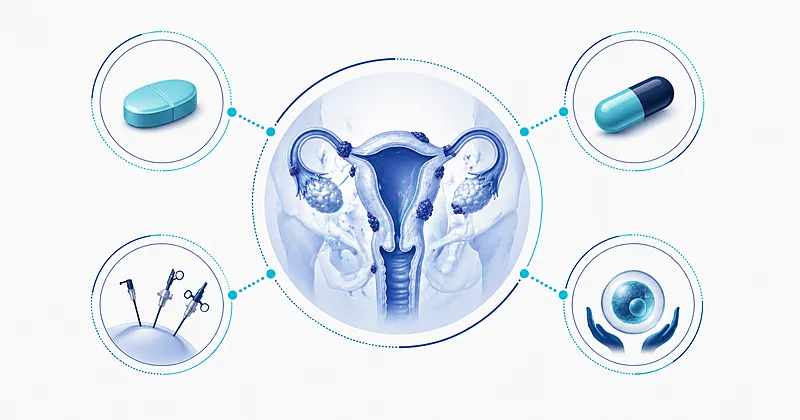
Why Endometriosis Treatment Decisions Are Complex
Endometriosis affects an estimated 6 to 10 percent of reproductive-age women globally, generating chronic pelvic pain, dysmenorrhea, dyspareunia, and infertility that meaningfully reduce quality of life. Mean diagnostic delay continues to span 6 to 10 years from symptom onset to confirmed diagnosis.
Clinical heterogeneity — superficial peritoneal disease, ovarian endometrioma, and deep infiltrating endometriosis — complicates uniform treatment strategies. Pain severity, lesion distribution, and fertility goals all shape an individualized endometriosis treatment plan.
The endometriosis treatment landscape has shifted notably since 2018. The FDA approval of elagolix in 2018 and of relugolix combination therapy in 2022 introduced oral GnRH antagonists with rapid pituitary suppression, predictable reversibility, and favorable oral pharmacokinetics relative to injectable GnRH agonists.
These newer agents now sit alongside established options including combined oral contraceptives, progestins (dienogest, levonorgestrel-releasing intrauterine system, norethindrone acetate, oral medroxyprogesterone), GnRH agonists with hormonal add-back, and laparoscopic surgical excision or ablation.
Clinicians must reconcile evidence from heterogeneous trial designs, evolving guidelines from ESHRE 2022 and ASRM, varying patient priorities, and considerable uncertainty about optimal therapy sequencing. This evidence review synthesizes findings relevant to endometriosis treatment selection in OB/GYN practice.
What Evidence Was Reviewed
This synthesis draws on a curated set of randomized controlled trials, systematic reviews, Cochrane analyses, and major guideline documents addressing pharmacological and surgical endometriosis treatment. Selected sources include pivotal phase 3 trials of elagolix (Elaris EM-I and Elaris EM-II) and relugolix combination therapy (SPIRIT 1 and SPIRIT 2), comparative trials of dienogest and the levonorgestrel-releasing intrauterine system, a Cochrane overview of medical therapy, and a systematic review of laparoscopic excision versus ablation.
The evidence base also includes Cochrane reviews of laparoscopic surgery and endometrioma management, the ESHRE 2022 guideline, the ASRM committee opinion on pelvic pain, and contemporary narrative reviews. Together, these sources cover the full spectrum of contemporary endometriosis treatment decision-making.
| Study (First Author, Year) | Design | n | Population | Comparison | Primary Outcome |
|---|---|---|---|---|---|
| Taylor 2017 (Elaris EM-I) | Phase 3 RCT | 872 | Moderate–severe endometriosis pain | Elagolix 150 mg QD or 200 mg BID vs placebo | Dysmenorrhea + non-menstrual pain at 3 mo |
| Taylor 2017 (Elaris EM-II) | Phase 3 RCT | 817 | Moderate–severe endometriosis pain | Elagolix 150 mg QD or 200 mg BID vs placebo | Dysmenorrhea + non-menstrual pain at 3 mo |
| Surrey 2018 | OL extension | 506 | Elaris EM-I/II completers | Elagolix continuation | 12-month safety and BMD |
| Giudice 2022 (SPIRIT 1) | Phase 3 RCT | 638 | Moderate–severe endometriosis pain | Relugolix-CT vs placebo | Dysmenorrhea + non-menstrual pain at 24 wk |
| Giudice 2022 (SPIRIT 2) | Phase 3 RCT | 623 | Moderate–severe endometriosis pain | Relugolix-CT vs placebo | Dysmenorrhea + non-menstrual pain at 24 wk |
| Strowitzki 2010 | Open-label RCT | 252 | Endometriosis-associated pain | Dienogest 2 mg vs leuprolide | VAS pain change at 24 wk |
| Petta 2005 | RCT | 82 | Pelvic pain + confirmed endometriosis | 52 mg LNG-IUD vs depot GnRH agonist | Pain reduction at 6 mo |
| Pundir 2017 | Systematic review & meta-analysis | NR (10 RCTs) | Surgical patients | Excision vs ablation | Pain, recurrence |
| Duffy/Jacobson 2014 (Cochrane) | Systematic review | NR | Endometriosis pain | Laparoscopy vs diagnostic-only | Pain reduction |
| Hart 2008 (Cochrane) | Systematic review | NR | Ovarian endometriomas | Cystectomy vs ablation/drainage | Recurrence, fertility |
| Becker 2022 (ESHRE) | Guideline | NR | Clinical practice | All approaches | Recommendations |
Key Findings on Endometriosis Treatment
Synthesis across the major endometriosis treatment evidence base reveals consistent themes by therapeutic approach. Findings are most robust for short-term pain reduction with pharmacological agents and for symptom relief following surgical excision. Comparative data, optimal sequencing, and fertility-specific outcomes show greater variability and remain active areas of investigation.
GnRH Antagonists: Robust Pain Reduction with Manageable Bone Effects
Two large pivotal RCT programs anchor the GnRH antagonist evidence base for endometriosis treatment. The Elaris EM-I and EM-II trials of elagolix randomized over 1,600 patients to elagolix 150 mg once daily, 200 mg twice daily, or placebo for six months. Both doses produced statistically significant reductions in dysmenorrhea and non-menstrual pelvic pain at three months.
The 200 mg twice-daily dose generated larger effects on patient-reported pain than the 150 mg once-daily dose, but at the cost of greater bone mineral density (BMD) loss and a higher incidence of vasomotor symptoms. This dose-effect relationship informs duration limits and add-back considerations.
The SPIRIT 1 and SPIRIT 2 trials of relugolix combination therapy randomized over 1,200 patients across both programs. Relugolix 40 mg combined with estradiol 1 mg and norethindrone acetate 0.5 mg, taken once daily, produced dysmenorrhea and non-menstrual pain reduction comparable to higher-dose elagolix.
The combination tablet’s integrated add-back design produced a substantially more favorable bone density profile relative to GnRH agonist comparators. Vasomotor symptoms, headache, and nausea remain common across both agent classes; routine BMD monitoring is most relevant during prolonged elagolix monotherapy.
Progestin Therapy: Long-Term Suppression with Tolerability Advantages
Progestins remain a cornerstone of long-term endometriosis treatment, encompassing dienogest 2 mg daily, the 52 mg levonorgestrel-releasing intrauterine system (LNG-IUD), oral medroxyprogesterone acetate, and norethindrone acetate. The Strowitzki 2010 trial demonstrated that dienogest 2 mg daily was non-inferior to leuprolide acetate for visual analog scale pain reduction over 24 weeks.
Dienogest also showed better tolerability and a more favorable bone density profile than leuprolide in the same comparison. The Petta 2005 trial demonstrated that the LNG-IUD reduced chronic pelvic pain comparably to depot GnRH agonist over six months in women with surgically confirmed endometriosis.
Long-term observational data on dienogest suggest sustained pain reduction beyond 24 months with consistent tolerability. Randomized evidence beyond 6 to 12 months is limited, but progestins offer cost, route flexibility (oral vs intrauterine), and long-term continuity advantages over GnRH-axis agents in routine endometriosis treatment pathways.
Clinical Pearl
Across endometriosis treatment options, response to medical therapy within 8 to 12 weeks is a useful clinical signal. Patients without meaningful pain reduction by this window often warrant dose adjustment, switch to an alternative class (e.g., progestin to GnRH antagonist), or surgical evaluation. Early non-response should prompt reassessment rather than passive continuation.
Surgical Excision: Durable but Incomplete Pain Relief
Laparoscopic surgery for endometriosis-associated pain is supported by Cochrane-level evidence demonstrating benefit over diagnostic laparoscopy alone. The Pundir 2017 systematic review compared excision with ablation across 10 randomized trials and found broadly similar short-term pain outcomes.
Possible advantages for excision were observed in deep infiltrating disease and in reducing recurrence over longer follow-up. Surgical technique, surgeon experience, and disease distribution influence outcomes substantially — outcomes from referral centers may not generalize uniformly.
Recurrence after surgery remains a meaningful clinical reality. Across cohort and randomized data, approximately 20 to 50 percent of patients experience symptom recurrence within five years, with higher rates in younger patients, those with incomplete excision, and those without postoperative hormonal suppression.
The Hart 2008 Cochrane review supports cystectomy over drainage or ablation for symptomatic ovarian endometriomas, citing lower recurrence and better pain outcomes. The trade-off is reduced ovarian reserve as measured by anti-Müllerian hormone (AMH), particularly with bilateral cystectomy or repeat surgery.
Combined and Sequential Approaches: Reducing Recurrence
Sequential and combined medical-surgical approaches are increasingly recommended in contemporary endometriosis treatment frameworks. The ESHRE 2022 guideline supports considering medical therapy as initial management for many patients with confirmed or suspected endometriosis.
Surgery is reserved for medical-therapy failure, specific anatomical indications (e.g., obstructive endometrioma, deep infiltrating disease with bowel or urinary symptoms), or where diagnostic certainty is needed. Postoperative hormonal suppression with combined oral contraceptives, progestins, or LNG-IUD has been shown to reduce dysmenorrhea recurrence and endometrioma recurrence.
Trial-level evidence on optimal duration of postoperative suppression is limited, but observational and randomized data support continuation for at least 18 to 24 months when symptoms persist or recurrence risk is elevated. Selection of the suppressive agent depends on patient priorities, prior response, and contraceptive needs.
Elagolix 150 mg once daily is approved for moderate to severe endometriosis-associated pain and may be continued up to 24 months. Elagolix 200 mg twice daily is approved for moderate to severe dyspareunia and is limited to 6 months because of greater bone density loss observed at this higher dose.
Baseline and periodic dual-energy X-ray absorptiometry (DXA) is recommended for prolonged use, alongside calcium and vitamin D supplementation. Patients with osteoporosis or major risk factors for bone loss are not appropriate candidates.
The single-tablet formulation contains relugolix 40 mg, estradiol 1 mg, and norethindrone acetate 0.5 mg, administered once daily without titration. Approved use extends up to 24 months in the United States.
Bone density loss in pivotal trials was substantially attenuated relative to GnRH agonist comparators, supporting longer-duration use without mandatory drug holidays. Drug-drug interactions with strong P-gp inhibitors warrant caution. Pre-treatment pregnancy exclusion is essential given teratogenic potential.
After laparoscopic excision, options include combined oral contraceptives (cyclic or continuous), oral progestins (dienogest 2 mg daily, norethindrone acetate), the 52 mg LNG-IUD, GnRH agonists with add-back, and oral GnRH antagonists.
Selection balances contraceptive needs, bleeding profile, side-effect tolerance, and cost. Continuous combined oral contraceptive regimens may suppress menstruation and reduce dysmenorrhea recurrence relative to cyclic regimens. The LNG-IUD offers long-acting suppression with minimal systemic exposure.
For patients pursuing pregnancy, hormonal suppression contraindicates conception during therapy. Surgical excision of endometriomas may improve spontaneous conception in selected subgroups but reduces ovarian reserve as measured by AMH, particularly with bilateral cystectomy or repeat surgery.
The ESHRE 2022 guideline emphasizes individualized decision-making weighing pain severity, age, ovarian reserve, partner factors, and ART access. Direct progression to in vitro fertilization may be preferred for older patients, those with bilateral endometriomas, or those with male-factor or tubal coexistence.
Quality & Consistency of Endometriosis Treatment Evidence
Across the major endometriosis treatment evidence base, quality varies meaningfully by therapeutic approach. The GnRH antagonist evidence is grounded in large pivotal RCTs with rigorous designs, blinded outcome assessment, and active-comparator extensions in some programs.
Progestin evidence is anchored by mid-sized RCTs (notably Strowitzki 2010 and Petta 2005) with longer-term observational extensions. Surgical evidence relies on systematic reviews of moderate-quality RCTs with heterogeneous outcome measures, surgical technique variability across centers, and limited blinding by design.
Findings are most consistent for short-term pain reduction across pharmacological agents and least consistent for fertility outcomes following medical or surgical management. Long-term safety extension data exist for elagolix and dienogest but are sparser for newer agents like relugolix combination therapy beyond 24 months.
What the Evidence Does Not Show
Several important questions remain inadequately answered in the contemporary endometriosis treatment evidence base. Direct head-to-head comparisons between oral GnRH antagonists and progestins (particularly dienogest) are sparse, leaving relative effectiveness, tolerability, and bone safety uncertain in routine practice.
Long-term outcomes beyond 24 months for relugolix combination therapy lack robust randomized data, and post-marketing surveillance remains in early phases. Comparative pricing and access also influence real-world endometriosis treatment patterns in ways not captured by RCTs.
The optimal sequencing of medical and surgical therapy is not defined by adequately powered randomized trials. Fertility-specific endpoints — including time to spontaneous conception after surgery, AMH trajectory after endometrioma resection, and IVF outcomes — depend largely on observational cohorts.
Specific Evidence Gaps
- No adequately powered head-to-head RCT comparing oral GnRH antagonists with dienogest or LNG-IUD
- Long-term (>24 months) safety and efficacy data for relugolix combination therapy
- Optimal duration of postoperative hormonal suppression to delay recurrence
- Subgroup performance in deep infiltrating endometriosis, adolescents, and ethnically diverse populations
- Direct evidence on fertility outcomes after medical vs surgical management in symptomatic patients
- Adjunctive non-hormonal therapies (neuromodulators, dietary, behavioral) supported by limited RCT evidence
Practical Implications for Endometriosis Treatment
Based on the current evidence, several considerations emerge for tailoring endometriosis treatment to individual patients. These reflect what the evidence supports rather than absolute clinical directives. Selection should incorporate patient priorities, fertility goals, side-effect tolerance, prior treatment response, and access constraints.
Shared decision-making and structured reassessment over time — typically at 8 to 12 weeks for medical therapy and at 6 to 12 months for sustained response — reduce the likelihood of prolonged ineffective treatment and improve patient-clinician alignment around endometriosis treatment goals.
Pivotal RCTs of elagolix and relugolix combination therapy support these agents for patients with moderate-to-severe endometriosis-associated pain, particularly when prior progestin or oral contraceptive trials have failed or when rapid pituitary suppression is desired.
Dienogest 2 mg daily and the 52 mg LNG-IUD show non-inferiority to GnRH agonists for pain in randomized comparisons, with better long-term tolerability and bone profiles — favoring progestins as a sustainable maintenance option for many patients.
After laparoscopic excision, evidence supports postoperative hormonal suppression (combined oral contraceptives, progestins, or LNG-IUD) for at least 18 to 24 months when symptoms persist or recurrence risk factors are present, to delay symptom and endometrioma recurrence.
For patients pursuing imminent pregnancy, hormonal suppression is contraindicated; surgical considerations and ART pathways take precedence. AMH trajectory, age, and partner factors should inform endometrioma surgery decisions in fertility-focused care.
Evidence Grade & Bottom Line
Overall Evidence Grade: Moderate-to-Strong (varies by domain). Strong evidence supports short-term pain reduction with oral GnRH antagonists and dienogest; moderate evidence supports the LNG-IUD and laparoscopic excision; limited evidence addresses fertility-specific outcomes and optimal therapy sequencing.
The cumulative evidence base supports a moderate-to-strong overall grade for endometriosis treatment, varying by domain. Pivotal RCTs provide strong evidence for short-term pain control with GnRH antagonists. Mid-sized RCTs and observational extensions support progestins for sustained suppression with favorable tolerability.
Surgical evidence supports laparoscopic excision for symptom relief but reflects technique variability and modest long-term durability. Fertility-specific outcomes, optimal sequencing, and long-term safety of newer agents remain less well-defined and represent priority areas for future randomized investigation.
Bottom Line
- Pivotal RCTs support oral GnRH antagonists (elagolix, relugolix combination therapy) and progestins as effective options for endometriosis-associated pain.
- Surgical excision produces meaningful pain relief, but recurrence within five years remains common; postoperative hormonal suppression delays but does not eliminate recurrence.
- Bone mineral density loss is the principal long-term concern with GnRH antagonist monotherapy and is substantially mitigated by relugolix combination therapy.
- Fertility-preserving decisions require individualized weighting of age, ovarian reserve, pain severity, partner factors, and ART access.
- No single endometriosis treatment approach fits every patient — shared decision-making and structured reassessment at 8 to 12 weeks remain essential.
Article Information & References
For Educational Purposes Only. This is an original evidence synthesis informed by the studies listed below. It does not replace clinical judgement. Drug dosages should be verified against current prescribing information.
References
- Taylor HS, Giudice LC, Lessey BA, et al. Treatment of Endometriosis-Associated Pain with Elagolix, an Oral GnRH Antagonist. N Engl J Med. 2017;377(1):28–40. DOI: 10.1056/NEJMoa1700089
- Surrey E, Taylor HS, Giudice L, et al. Long-Term Outcomes of Elagolix in Women With Endometriosis: Results From Two Extension Studies. Obstet Gynecol. 2018;132(1):147–160. DOI: 10.1097/AOG.0000000000002675
- Giudice LC, As-Sanie S, Arjona Ferreira JC, et al. Once daily oral relugolix combination therapy versus placebo in patients with endometriosis-associated pain: two replicate phase 3, randomised, double-blind, studies (SPIRIT 1 and SPIRIT 2). Lancet. 2022;399(10343):2267–2279. DOI: 10.1016/S0140-6736(22)00622-5
- Strowitzki T, Marr J, Gerlinger C, Faustmann T, Seitz C. Dienogest is as effective as leuprolide acetate in treating the painful symptoms of endometriosis: a 24-week, randomized, multicentre, open-label trial. Hum Reprod. 2010;25(3):633–641. DOI: 10.1093/humrep/dep469
- Petta CA, Ferriani RA, Abrao MS, et al. Randomized clinical trial of a levonorgestrel-releasing intrauterine system and a depot GnRH analogue for the treatment of chronic pelvic pain in women with endometriosis. Hum Reprod. 2005;20(7):1993–1998. DOI: 10.1093/humrep/deh869
- Brown J, Farquhar C. Endometriosis: an overview of Cochrane Reviews. Cochrane Database Syst Rev. 2014;(3):CD009590. DOI: 10.1002/14651858.CD009590.pub2
- Pundir J, Omanwa K, Kovoor E, Pundir V, Lancaster G, Barton-Smith P. Laparoscopic excision versus ablation for endometriosis-associated pain: an updated systematic review and meta-analysis. J Minim Invasive Gynecol. 2017;24(5):747–756. DOI: 10.1016/j.jmig.2017.04.008
- Duffy JM, Arambage K, Correa FJ, et al. Laparoscopic surgery for endometriosis. Cochrane Database Syst Rev. 2014;(4):CD011031. DOI: 10.1002/14651858.CD011031.pub2
- Hart RJ, Hickey M, Maouris P, Buckett W. Excisional surgery versus ablative surgery for ovarian endometriomata. Cochrane Database Syst Rev. 2008;(2):CD004992. DOI: 10.1002/14651858.CD004992.pub3
- Becker CM, Bokor A, Heikinheimo O, et al. ESHRE guideline: endometriosis. Hum Reprod Open. 2022;2022(2):hoac009. DOI: 10.1093/hropen/hoac009
- Vercellini P, Viganò P, Somigliana E, Fedele L. Endometriosis: pathogenesis and treatment. Nat Rev Endocrinol. 2014;10(5):261–275. DOI: 10.1038/nrendo.2013.255
- Practice Committee of the American Society for Reproductive Medicine. Treatment of pelvic pain associated with endometriosis: a committee opinion. Fertil Steril. 2014;101(4):927–935. DOI: 10.1016/j.fertnstert.2014.02.012
- Zondervan KT, Becker CM, Missmer SA. Endometriosis. N Engl J Med. 2020;382(13):1244–1256. DOI: 10.1056/NEJMra1810764
- Falcone T, Flyckt R. Clinical Management of Endometriosis. Obstet Gynecol. 2018;131(3):557–571. DOI: 10.1097/AOG.0000000000002469
- Strowitzki T, Marr J, Gerlinger C, Faustmann T, Seitz C. Detailed analysis of a randomized, multicenter, comparative trial of dienogest versus leuprolide acetate in endometriosis. Int J Gynaecol Obstet. 2012;117(3):228–233. DOI: 10.1016/j.ijgo.2012.01.009