
Vaginal Cleansing: Key 48% Endometritis Reduction
Evidence on preoperative antiseptic preparation before cesarean delivery — effect sizes, antiseptic comparisons, and trial heterogeneity reviewed.
One-Minute Takeaway on Vaginal Cleansing
- Vaginal cleansing before cesarean delivery reduces postoperative endometritis by approximately 48% in pooled randomized data (RR 0.52, 95% CI 0.37–0.72).
- The effect is most pronounced in women in labor and those with ruptured membranes, where baseline infection risk is highest.
- Povidone-iodine and chlorhexidine each show benefit; direct head-to-head comparisons remain limited.
- Approximately 17–25 women need to be treated to prevent one case of endometritis, depending on baseline risk.
- Effects on wound infection and maternal sepsis are smaller and less consistent across the available trials.
Why Vaginal Cleansing Before Cesarean Matters
Cesarean delivery is the most commonly performed major operation in obstetrics. Postoperative endometritis follows roughly 5–10% of cesareans overall and rises to 15–25% in laboring patients or those with ruptured membranes. The pathogenesis is well characterized: ascending colonization of the lower uterine segment by vaginal and cervical flora during instrumentation.
Routine intravenous antibiotic prophylaxis substantially reduces this risk, but residual infection still occurs and contributes to length of stay, readmissions, and rare progression to maternal sepsis. Vaginal cleansing with an antiseptic immediately before incision targets the lower-genital-tract inoculum directly, complementing systemic prophylaxis rather than replacing it.
The vaginal cleansing intervention is low-cost, fast to perform, and uses widely available solutions. Whether the marginal benefit justifies routine vaginal cleansing across all cesareans — or whether the largest gains lie in higher-risk subgroups — has been the central clinical question. Multiple randomized trials and two contemporary meta-analyses now address that question with reasonable precision.
Vaginal Cleansing Evidence Reviewed
The evidence base on vaginal cleansing comprises two contemporary systematic reviews with meta-analyses and a series of individual randomized controlled trials spanning roughly two decades. The Caissutti 2017 meta-analysis pooled 16 RCTs (n = 4,837), and the Haas 2020 Cochrane review extended this to 20 RCTs (n = 8,494). Together these capture the great majority of randomized vaginal cleansing data.
Trials varied in antiseptic agent (most commonly povidone-iodine, with several using chlorhexidine-based solutions), application method (swab, scrub, or sponge stick), contact time, and the inclusion of laboring versus elective populations. This heterogeneity has shaped how the pooled effect should be interpreted and where uncertainty remains.
| Study | Year | Design | n | Antiseptic | Population | Primary Outcome |
|---|---|---|---|---|---|---|
| Caissutti et al. | 2017 | SR / MA (16 RCTs) | 4,837 | Mixed | All cesareans | Endometritis |
| Haas et al. (Cochrane) | 2020 | SR / MA (20 RCTs) | 8,494 | Mixed | All cesareans | Endometritis |
| Reid et al. | 2001 | RCT | 308 | Povidone-iodine | Mixed laboring / elective | Composite infection |
| Starr et al. | 2005 | RCT | 196 | Povidone-iodine | All cesareans | Endometritis |
| Haas et al. (early RCT) | 2010 | RCT | 290 | Povidone-iodine | All cesareans | Endometritis |
| Asghania et al. | 2011 | RCT | 200 | Povidone-iodine | All cesareans | Endometritis |
| Yildirim et al. | 2012 | RCT | 334 | Povidone-iodine | Mostly elective | Endometritis |
| Felder et al. | 2019 | Implementation RCT | 1,127 | Povidone-iodine | All cesareans | Endometritis |
| Aref | 2019 | RCT | 380 | Chlorhexidine | All cesareans | Endometritis |
Key Findings on Vaginal Cleansing
Theme 1 — A Consistent Effect Size for Endometritis
The most reliable finding across the vaginal cleansing evidence base is a roughly halving of postoperative endometritis. The Caissutti meta-analysis reported a relative risk of 0.52 (95% CI 0.37–0.72) for vaginal cleansing, and the Haas Cochrane review found a comparable pooled estimate of similar magnitude. Effect sizes in individual vaginal cleansing trials ranged from approximately RR 0.25 to RR 0.85, with point estimates favoring cleansing in nearly every study.
Absolute risk reductions varied with baseline endometritis rates. In trials with overall populations, baseline rates of 6–10% translated into NNTs of roughly 20–25. Trials enriched for laboring women or those with ruptured membranes saw baseline rates of 15–20% and correspondingly smaller NNTs of 7–10.
The combination of consistent direction, clinically meaningful magnitude, and biological plausibility supports a real effect rather than chance or systematic bias. Sensitivity analyses restricted to trials with low risk of bias preserved the same effect size, reinforcing the robustness of the pooled estimate.
Theme 2 — Antiseptic Selection: Povidone-Iodine vs Chlorhexidine
Most randomized vaginal cleansing data come from povidone-iodine 10%, with subgroup point estimates around RR 0.41 in pooled analyses. Chlorhexidine-based protocols (typically 4% chlorhexidine gluconate) show a similar direction of effect, with subgroup estimates around RR 0.62 and confidence intervals that overlap those for povidone-iodine.
Direct head-to-head trials of povidone-iodine versus chlorhexidine for vaginal cleansing remain scarce. Where comparative data exist, no clear superiority has emerged for either agent. Both are inexpensive, widely available, and lack contraindications in the absence of allergy or known sensitivity.
Chlorhexidine offers a theoretical advantage from a longer residual antimicrobial effect, while povidone-iodine has a longer track record in obstetric trials. Practical antiseptic selection for vaginal cleansing therefore often follows institutional supply and preference rather than direct comparative evidence.
Theme 3 — Where Vaginal Cleansing Helps Most
Subgroup analyses of vaginal cleansing consistently show the largest absolute and relative benefit in laboring women and those with ruptured membranes. In the Caissutti analysis, ruptured-membrane subgroups had a pooled RR of approximately 0.27 (95% CI 0.13–0.54). Laboring subgroups showed comparable point estimates with similar precision.
In elective cesareans with intact membranes and no labor, the relative reduction was preserved but absolute event rates were lower, blunting clinical impact. This pattern is biologically plausible: established ascending colonization presents a larger bacterial inoculum, and antisepsis at the surgical interface has more to act on.
Theme 4 — Secondary Outcomes Show Weaker Signals
Effects on outcomes beyond endometritis are weaker and less reproducible. Postoperative fever showed modest reduction in some analyses (pooled RR around 0.65) but did not reach significance in others. Wound (surgical site) infection has not demonstrated a consistent benefit in pooled analyses of vaginal cleansing.
Maternal sepsis is too uncommon in trial populations to be reliably powered. None of the trials reported maternal mortality, neonatal infectious outcomes, or long-term endometrial sequelae as primary outcomes. The boundary of confidence for vaginal cleansing therefore lies at endometritis specifically.
Clinical Pearl
Quality and Consistency of the Evidence
Two recent systematic reviews and meta-analyses of vaginal cleansing anchor the evidence base, supported by roughly twenty randomized trials. The pooled effect on endometritis is concordant across both meta-analyses and across most individual trials, supporting moderate-to-strong confidence in the primary finding.
Heterogeneity exists in antiseptic choice, application method, contact duration, and study population, but does not appear to change the direction of effect. Risk-of-bias assessments rate most contemporary vaginal cleansing trials at low to moderate risk, with the main concerns being lack of blinding of clinicians and variable outcome definitions.
- Endometritis reduction: Consistent across two meta-analyses and the great majority of individual RCTs; pooled effect estimate is precise.
- Subgroup effects (labor, ruptured membranes): Direction is consistent; absolute magnitude scales with baseline risk.
- Antiseptic comparison: Both povidone-iodine and chlorhexidine demonstrably effective; direct head-to-head data sparse.
- Postoperative fever: Reductions observed in some pooled analyses; effect not uniformly significant.
- Wound infection: No reliable evidence of benefit in pooled analyses.
What the Evidence Does Not Show
Knowledge Gaps
- Direct antiseptic comparisons: Few trials directly compare povidone-iodine head-to-head with chlorhexidine for vaginal cleansing specifically.
- Optimal contact time and technique: Trials used a range of approximately 30 seconds to several minutes; no formal dose–response analysis has been performed.
- Effect on serious maternal infection: Trials are underpowered for sepsis, ICU admission, and maternal mortality.
- Neonatal outcomes: Limited data on whether antiseptic exposure has any measurable neonatal effect, particularly with chlorhexidine-based products.
- Special populations: Sparse evidence in HIV-positive patients, preterm cesareans, and patients with chorioamnionitis or known group B streptococcus colonization.
- Cost-effectiveness: Few formal economic analyses despite the low intervention cost.
These gaps in the vaginal cleansing evidence base do not undermine the core finding on endometritis, but they do define the boundaries of confident inference. The current evidence supports a clinical action; it does not yet define the optimal protocol with precision.
Where future research is most likely to refine practice is in three areas: a pragmatic head-to-head comparison of povidone-iodine and chlorhexidine, a standardized contact-time protocol, and adequately powered evaluation of severe maternal infectious outcomes. Until those data exist, protocol choice will continue to draw on indirect comparisons and clinician judgement.
Practical Implications for Vaginal Cleansing
The points below are framed as evidence-based considerations rather than directives. Local protocols, patient-specific factors, and institutional context remain the responsibility of the clinical team.
Pooled randomized data show approximately 48% reduction in endometritis. The intervention is inexpensive, rapidly performed, and shows no safety signal in trial populations.
Povidone-iodine and chlorhexidine each show meaningful reductions in endometritis. Antiseptic selection can follow institutional supply, contraindications, and patient allergy history.
Subgroup analyses consistently show the largest absolute benefit in these higher-risk populations. Prioritising vaginal cleansing in these settings has the strongest evidentiary support.
All contemporary trials administered standard IV antibiotic prophylaxis. The marginal benefit of vaginal cleansing is added to — not substituted for — established systemic prophylaxis.
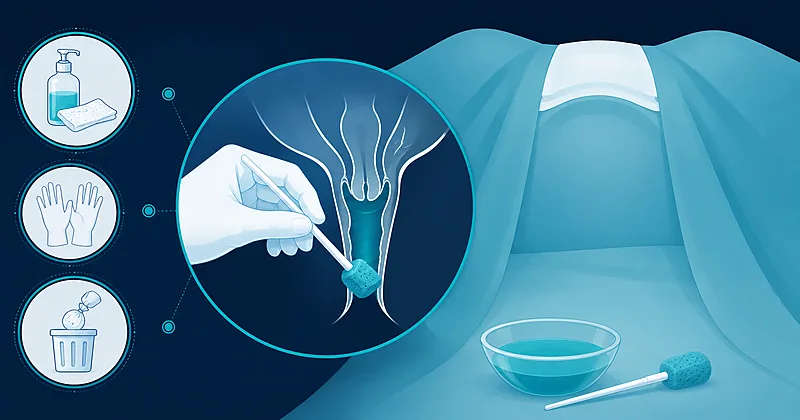
Protocols described in implementation studies typically apply povidone-iodine 10% or chlorhexidine 4% to the vagina using sponge sticks for approximately 30 seconds, immediately after positioning and bladder catheterization and before abdominal antiseptic preparation. This sequencing avoids delaying skin incision and integrates into the existing surgical pause and prep workflow.
Bundled implementation alongside skin antisepsis, glove change after vaginal preparation, and timely antibiotic dosing has shown reductions in postoperative infections beyond what any single component achieves alone.
Patients can be informed that vaginal cleansing is a brief, low-risk addition to standard preoperative preparation that lowers the probability of post-cesarean uterine infection. The intervention does not change the experience of the cesarean itself or the recovery course, and the antiseptic solutions used have decades of obstetric use behind them.
Allergy or hypersensitivity to iodine-based or chlorhexidine-based solutions should be documented in advance; an alternative agent or omission may be appropriate in those cases.
Variation in effect sizes reflects differences in baseline endometritis risk (laboring versus elective populations), antiseptic agent and concentration, application duration, the precise definition of endometritis used as the outcome, and the timing of intravenous antibiotic prophylaxis. Trials enrolling higher-risk populations consistently show larger absolute reductions because more events are available to prevent.
Methodological factors — blinding, allocation concealment, and outcome ascertainment — also contribute, but do not change the direction of effect in sensitivity analyses restricted to low-risk-of-bias trials.
The 2018 ACOG Practice Bulletin on the use of prophylactic antibiotics in labor and delivery acknowledges the evidence for vaginal preparation and notes its consideration, particularly for laboring patients undergoing cesarean. Subsequent commentary and many institutional protocols have moved toward recommending routine application, though uptake varies internationally.
Guideline statements typically defer to local protocol decisions on antiseptic agent and exact technique, given the absence of direct comparative data.
Evidence Grade and Bottom Line
Evidence Grade: Strong. Two contemporary meta-analyses pooling roughly twenty RCTs and 8,500 women show a precise and clinically meaningful reduction in postoperative endometritis with vaginal cleansing before cesarean delivery. The core conclusion is unlikely to be overturned by future research; refinements are more likely in protocol detail than in the central effect.
Bottom Line
- Vaginal cleansing before cesarean reduces postoperative endometritis by approximately 48% in pooled randomized data, with the largest absolute benefit in laboring women and those with ruptured membranes.
- Both povidone-iodine and chlorhexidine show comparable efficacy in pooled analyses; agent selection can follow institutional preference, supply, and allergy history.
- Vaginal cleansing adds to — and does not replace — standard preoperative intravenous antibiotic prophylaxis.
- The intervention has not shown reliable benefit on wound infection or maternal sepsis; the evidentiary boundary lies at endometritis specifically.
- Remaining uncertainties include direct head-to-head antiseptic comparisons, optimal contact time, and effects in special obstetric populations.
Article Information and References
For Educational Purposes Only. This is an original evidence synthesis informed by the studies listed below. It does not replace clinical judgement. Drug dosages should be verified against current prescribing information.
References
- Caissutti C, Saccone G, Zullo F, et al. Vaginal cleansing before cesarean delivery: a systematic review and meta-analysis. Obstetrics & Gynecology. 2017;130(3):527–538. DOI: 10.1097/AOG.0000000000002167
- Haas DM, Morgan S, Contreras K, Kimball S. Vaginal preparation with antiseptic solution before cesarean section for preventing postoperative infections. Cochrane Database of Systematic Reviews. 2020;4(4):CD007892. DOI: 10.1002/14651858.CD007892.pub7
- American College of Obstetricians and Gynecologists. Practice Bulletin No. 199: Use of Prophylactic Antibiotics in Labor and Delivery. Obstetrics & Gynecology. 2018;132(3):e103–e119. DOI: 10.1097/AOG.0000000000002833
- Reid VC, Hartmann KE, McMahon M, Fry EP. Vaginal preparation with povidone iodine and postcesarean infectious morbidity: a randomized controlled trial. Obstetrics & Gynecology. 2001;97(1):147–152. DOI: 10.1016/s0029-7844(00)01089-3
- Starr RV, Zurawski J, Ismail M. Preoperative vaginal preparation with povidone-iodine and the risk of postcesarean endometritis. Obstetrics & Gynecology. 2005;105(5):1024–1029. DOI: 10.1097/01.AOG.0000158108.71925.43
- Haas DM, Pazouki F, Smith RR, et al. Vaginal cleansing before cesarean delivery to reduce postoperative infectious morbidity: a randomized, controlled trial. American Journal of Obstetrics & Gynecology. 2010;202(3):310.e1–310.e6. DOI: 10.1016/j.ajog.2010.01.005
- Yildirim G, Güngördük K, Asicioglu O, et al. Does vaginal preparation with povidone-iodine prior to caesarean delivery reduce the risk of endometritis? A randomized controlled trial. Journal of Maternal-Fetal & Neonatal Medicine. 2012;25(11):2316–2321. DOI: 10.3109/14767058.2012.693994
- Asghania M, Mirblouk F, Shakiba M, Faraji R. Preoperative vaginal preparation with povidone-iodine on post-caesarean infectious morbidity. Journal of Obstetrics and Gynaecology. 2011;31(5):400–403. DOI: 10.3109/01443615.2011.567344
- Felder L, Paternostro A, Quist-Nelson J, et al. Implementation of vaginal cleansing prior to cesarean delivery to decrease endometritis rates. Journal of Maternal-Fetal & Neonatal Medicine. 2019;32(11):1748–1752. DOI: 10.1080/14767058.2017.1416352
- Aref NK. Vaginal cleansing prior to caesarian section: To do or not to do? A randomized trial. Journal of Gynecology Obstetrics and Human Reproduction. 2019;48(1):65–68. DOI: 10.1016/j.jogoh.2018.10.011