
Perioperative Tranexamic Acid: Robust Effects on 4 Outcomes
An evidence synthesis of bleeding reduction, thrombotic safety signal, dose optimization, and mortality across the major perioperative tranexamic acid randomized trials and meta-analyses.
One-Minute Takeaway on Perioperative Tranexamic Acid
One-Minute Takeaway
- Perioperative tranexamic acid consistently reduces allogeneic blood transfusion by approximately one-third (relative risk near 0.62) across more than 100 randomized trials in cardiac, orthopedic, and noncardiac surgery.
- Pooled thrombotic and venous thromboembolic signals are small in magnitude and not statistically significant in most surgical meta-analyses, although heightened vigilance is warranted in selected high-risk cohorts.
- Optimal dosing converges on a 1-gram intravenous bolus before incision, with topical and weight-based alternatives showing comparable efficacy in orthopedic procedures.
- Population-specific cautions emerge: the HALT-IT trial in acute gastrointestinal bleeding showed no mortality benefit, and POISE-3 raised a composite vascular signal in noncardiac surgery.
- The evidence base supports routine intraoperative use in most major elective procedures, with ongoing uncertainty about dose ceilings, seizure risk at high doses, and pediatric and obese populations.
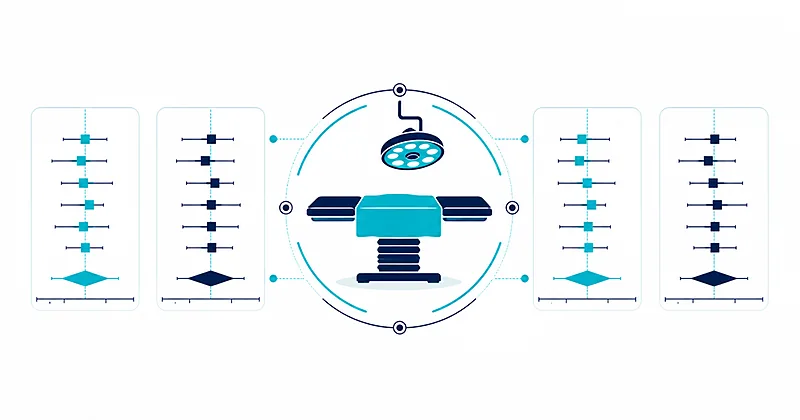
Why Perioperative Tranexamic Acid Matters in Major Surgery
Surgical bleeding remains a leading driver of perioperative morbidity, allogeneic transfusion exposure, and resource utilization. Tranexamic acid is an inexpensive, off-patent antifibrinolytic with a four-decade pharmacovigilance record. The decision to use perioperative tranexamic acid is therefore high-volume, low-cost, and clinically consequential.
Three converging pressures have intensified interest. First, restrictive transfusion strategies and patient blood management programs have pushed clinicians to reduce avoidable transfusion. Second, the cumulative evidence base for perioperative tranexamic acid now spans more than 100 randomized trials. Third, several recent large trials have introduced nuance to enthusiasm, including a composite vascular signal in noncardiac surgery and absent benefit in acute gastrointestinal bleeding.
Despite consistent meta-analytic evidence supporting bleeding reduction, adoption of perioperative tranexamic acid varies substantially across specialties and institutions. Orthopedic surgery has integrated routine use rapidly; noncardiac general surgery lags. This evidence review synthesizes the strongest randomized and meta-analytic data to clarify where the perioperative tranexamic acid evidence base is robust, where it remains uncertain, and where caution is warranted.
Evidence Reviewed on Perioperative Tranexamic Acid Trials
The perioperative tranexamic acid evidence base anchors on a small number of large, well-conducted randomized controlled trials and one major systematic review covering more than 100 trials. The table below summarizes the studies that most directly inform routine practice, ordered by anchor relevance to elective major surgery.
| Trial / Review | Design | n | Population | Primary Outcome |
|---|---|---|---|---|
| Ker Cochrane / BMJ meta-analysis | Systematic review (129 RCTs) | 10,488 | Elective surgery overall | Transfusion need |
| ATACAS | RCT, factorial | 4,662 | Coronary artery surgery | Death + thrombotic composite |
| POISE-3 | RCT, factorial | 9,535 | Noncardiac surgery, high CV risk | Composite bleeding + vascular |
| WOMAN | RCT | 20,060 | Postpartum hemorrhage | Mortality from bleeding |
| CRASH-2 | RCT | 20,211 | Trauma with hemorrhage risk | All-cause mortality |
| HALT-IT | RCT | 12,009 | Acute gastrointestinal bleeding | Death from bleeding |
| Fillingham network meta-analysis | NMA (67 RCTs) | NR | Total knee arthroplasty | Transfusion, blood loss |
| Taeuber meta-analysis (JAMA Surg) | SR/MA + meta-regression (216 trials) | NR | Mixed surgical, IV TXA | VTE and mortality |
| Henry Cochrane review | Systematic review | NR | Elective surgery, antifibrinolytics | Transfusion, mortality |
| Ker topical TXA Cochrane | Systematic review | NR | Surgical and traumatic bleeding | Blood loss, transfusion |
| CRASH-3 | RCT | 12,737 | Acute traumatic brain injury | Head-injury mortality |
The bulk of the perioperative tranexamic acid evidence comes from elective surgical populations. Several large trauma and obstetric trials inform overall safety and efficacy reasoning but should not be uncritically generalized to elective major surgery. The systematic reviews of Ker and Henry remain the anchor for transfusion-related outcomes in elective settings.
Key Findings — A Thematic Synthesis
Theme 1: Bleeding reduction is large and consistent
Across surgical specialties, perioperative tranexamic acid reduces the proportion of patients receiving allogeneic transfusion by a margin that is reproducibly large. The Ker meta-analysis of 129 trials reported a pooled relative risk for transfusion of approximately 0.62 (95% CI 0.58–0.65), corresponding to a relative reduction near one-third.
Effect sizes were directionally concordant in cardiac, orthopedic, hepatic, and major spine populations. The Henry Cochrane review came to a quantitatively similar conclusion using overlapping but not identical trial inclusions. Effect estimates for total blood loss followed the same direction, with weighted mean differences typically in the range of 250–400 mL per case.
In total knee and hip arthroplasty specifically, the Fillingham network meta-analysis demonstrated transfusion reductions of similar magnitude across intravenous, topical, oral, and combined regimens. The persistent finding across networks is that any administration route of perioperative tranexamic acid outperforms placebo on transfusion outcomes.
Theme 2: The thrombotic safety signal — small, scrutinized, and population-dependent
The most contested question is whether perioperative tranexamic acid increases venous thromboembolic or arterial thrombotic events. The Taeuber meta-analysis pooling 216 trials concluded that intravenous tranexamic acid did not significantly increase thromboembolic events overall. Confidence intervals included unity, and meta-regression by dose did not identify a clear dose-toxicity gradient within studied ranges.
Three nuances temper that reassurance. First, most trials excluded patients with recent thromboembolism or active thrombophilia, so generalization to high-risk patients is uncertain. Second, the POISE-3 trial in noncardiac surgery with elevated cardiovascular risk found that a composite vascular outcome (myocardial injury, stroke, peripheral arterial thrombosis, symptomatic VTE) was not non-inferior for tranexamic acid versus placebo, with a hazard ratio of 1.02 (95% CI 0.92–1.14) and a wide non-inferiority margin breached.
Third, the HALT-IT trial in acute gastrointestinal bleeding reported a statistically significant absolute increase in venous thromboembolism with high-dose 24-hour infusion. The signal in HALT-IT involved a much larger total dose than typical perioperative regimens, suggesting a possible dose-duration relationship not captured in single-bolus surgical trials.
Theme 3: Dose optimization — ceiling effects and route equivalence
Dose-finding data for perioperative tranexamic acid are heterogeneous. Most landmark trials in elective surgery used a 1-gram intravenous loading dose pre-incision, sometimes followed by infusion or a second bolus. The ATACAS trial in coronary artery surgery used 100 mg/kg in its higher-dose arm and was associated with an increased seizure rate; lower regimens of 50 mg/kg or 1–2 grams total dose appear safer.
In total joint arthroplasty, the Fillingham network meta-analysis found that topical, intra-articular, intravenous, and oral regimens produced equivalent transfusion outcomes. Topical administration is attractive when systemic absorption is a concern, although plasma concentrations after topical use can approach intravenous levels.
The dose-response for harm shows that very high cumulative doses, particularly in cardiac surgery and HALT-IT, are associated with seizures and possible VTE. The clinical interpretation is that perioperative tranexamic acid has a saturable efficacy plateau, while harms scale with cumulative exposure. Standard 1-gram bolus dosing sits well within the efficacy plateau and below most identified harm thresholds.
Tranexamic acid is a synthetic lysine analogue that reversibly blocks the lysine-binding sites on plasminogen, preventing its conversion to plasmin and inhibiting fibrinolysis. Surgical trauma activates fibrinolytic pathways within minutes of tissue injury, particularly through tissue plasminogen activator release from endothelium and platelets.
By stabilizing the clot rather than promoting clot formation, the drug reduces wound and intraoperative bleeding without producing a strongly prothrombotic state. Plasma concentrations of approximately 10 mg/L are considered sufficient to inhibit fibrinolysis; this is achieved by a 1-gram intravenous bolus and maintained for several hours.
POISE-3 randomized 9,535 patients undergoing noncardiac surgery with elevated cardiovascular risk to perioperative tranexamic acid versus placebo. The bleeding outcome favored tranexamic acid clearly. The composite vascular safety outcome, however, failed to meet the prespecified non-inferiority margin of 1.125, with the upper bound of the confidence interval crossing this threshold.
The trial does not establish causal harm. It does suggest the composite signal warrants individualized risk assessment in high-cardiovascular-risk noncardiac surgery, particularly when the absolute bleeding reduction is modest.
In total joint arthroplasty, the Fillingham network meta-analysis demonstrated comparable transfusion reduction across topical, intra-articular, intravenous, oral, and combined regimens. Topical use was historically thought to limit systemic exposure, but pharmacokinetic studies show that joint-applied tranexamic acid can achieve measurable plasma concentrations.
For practical decision-making, route selection is driven by surgical workflow and patient-specific bleeding risk rather than by efficacy differences. Intravenous administration remains the default in most academic practice.
The seizure signal is most pronounced in cardiac surgery with cumulative doses exceeding approximately 80–100 mg/kg. Proposed mechanisms include glycine receptor antagonism in central nervous system tissue. The signal is dose-dependent and is rare at standard 1-gram bolus regimens used outside cardiac surgery.
Lower-dose regimens (50 mg/kg or fixed 1–2 g) in cardiac populations preserve efficacy while reducing seizure risk and are now the standard recommendation in updated cardiothoracic guidelines.
Clinical pearl: For most elective major surgery, a 1-gram intravenous bolus of perioperative tranexamic acid administered before incision approximates the maximum benefit observed in randomized trials, while remaining well below the cumulative-dose thresholds associated with seizures and possible VTE signals.
Quality and Consistency of the Evidence
Evidence quality varies substantially by outcome. Bleeding-related endpoints are supported by the deepest pool of randomized data, while mortality and thrombotic outcomes rest on fewer but larger trials. The labeled summary below reflects the strength of evidence per outcome, with each colored dot justified by trial count, sample size, consistency, and risk of bias considerations.
Knowledge Gaps in Perioperative Tranexamic Acid Use
What the Evidence Does Not Yet Show
- Whether the POISE-3 composite vascular signal reflects a true causal effect specific to high-cardiovascular-risk noncardiac surgery, or pooling artifact across heterogeneous endpoints.
- Whether perioperative tranexamic acid is beneficial, neutral, or harmful in patients with prior venous thromboembolism, active thrombophilia, or recent arterial events — populations systematically excluded from major RCTs.
- Optimal dose adjustment for severe obesity, renal impairment, and pediatric populations under five years of age, where pharmacokinetic data remain limited.
- Whether routine perioperative tranexamic acid in low-bleeding-risk elective procedures (such as ambulatory general surgery) provides meaningful net clinical benefit.
- The interaction between perioperative tranexamic acid and direct oral anticoagulants, antiplatelet agents, and combined hormonal contraceptives in surgical patients.
- Long-term outcomes beyond 30 days, including delayed thromboembolic events and post-discharge readmission for bleeding or thrombotic causes.
These gaps suggest the perioperative tranexamic acid evidence base is mature for typical elective major surgery in patients without strong thrombophilic features, but immature for the boundary populations where individualized risk assessment matters most. Trials addressing these specific gaps are ongoing.
Practical Implications for Clinical Practice
Translating the perioperative tranexamic acid evidence to bedside decisions requires distinguishing where data are strong from where they remain underdeveloped. The implications below frame what the current evidence supports, rather than prescribing specific institutional protocols.
Evidence Supports Routine Use in Major Elective Surgery
In adult elective cardiac, orthopedic, hepatic, and major spine surgery, randomized evidence consistently demonstrates reduced transfusion exposure with low cumulative-dose regimens, supporting routine intraoperative administration as a default position.
Topical Administration Shows Equivalent Outcomes in Orthopedics
Network meta-analytic evidence in total joint arthroplasty indicates that topical, intra-articular, and intravenous routes produce comparable bleeding outcomes, allowing workflow-driven route selection in orthopedic practice.
Caution Indicated in High Cardiovascular Risk Populations
The POISE-3 composite vascular signal suggests individualized risk assessment in noncardiac surgery with elevated cardiovascular risk, weighing the modest absolute bleeding reduction against potential thrombotic concerns.
Dosing Equipoise Favors Standard Bolus
Comparative dosing data indicate that a 1-gram intravenous bolus pre-incision sits on the efficacy plateau for most major surgery, with high cumulative doses (above approximately 80 mg/kg in cardiac populations) associated with seizures.
Based on the current evidence, the perioperative tranexamic acid framework that aligns with the randomized data is: standard bolus dosing for elective major surgery in average-risk adults; individualized assessment in patients with active thrombophilia or recent thromboembolism; lower cumulative doses in cardiac surgery to mitigate seizure risk; and avoidance of extrapolation to acute gastrointestinal bleeding where HALT-IT contradicts a benefit hypothesis.
Evidence Grade and Bottom Line
Overall evidence grade: Strong for transfusion reduction in elective major surgery; Moderate for thrombotic safety signal interpretation; Limited for boundary populations and acute gastrointestinal bleeding.
The grade reflects a body of evidence anchored on more than 100 randomized trials and two large systematic reviews for the central efficacy outcome, with newer high-quality trials (POISE-3, HALT-IT) refining safety reasoning. The strong grade applies specifically to the transfusion-reduction outcome in adult elective major surgery; weaker grades apply to populations that landmark trials systematically excluded.
Bottom Line
- Routine perioperative tranexamic acid in adult elective major surgery is supported by a high-certainty body of evidence for transfusion reduction, with consistent effect sizes across surgical specialties.
- The pooled thrombotic safety signal across more than two hundred trials is small, statistically non-significant overall, and primarily relevant in selected high-cardiovascular-risk noncardiac surgical populations.
- A 1-gram intravenous bolus before incision represents a defensible default dose for most major surgery, with lower cumulative doses preferred in cardiac populations to mitigate seizure risk.
- The acute gastrointestinal bleeding context, where HALT-IT showed no mortality benefit and a venous thromboembolism signal, should not be extrapolated to elective surgical practice.
- Individualized assessment remains warranted in patients with prior thromboembolic events, severe thrombophilia, or other features under-represented in the major randomized trials.
Article Information and References
For Educational Purposes Only. This is an original evidence synthesis informed by the studies listed below. It does not replace clinical judgement. Drug dosages should be verified against current prescribing information.
- Ker K, Edwards P, Perel P, Shakur H, Roberts I. Effect of tranexamic acid on surgical bleeding: systematic review and cumulative meta-analysis. BMJ. 2012;344:e3054. DOI: 10.1136/bmj.e3054
- Henry DA, Carless PA, Moxey AJ, et al. Anti-fibrinolytic use for minimising perioperative allogeneic blood transfusion. Cochrane Database Syst Rev. 2011;(3):CD001886. DOI: 10.1002/14651858.CD001886.pub4
- Myles PS, Smith JA, Forbes A, et al. Tranexamic acid in patients undergoing coronary-artery surgery. N Engl J Med. 2017;376(2):136–148. DOI: 10.1056/NEJMoa1606424
- Devereaux PJ, Marcucci M, Painter TW, et al. Tranexamic acid in patients undergoing noncardiac surgery. N Engl J Med. 2022;386(21):1986–1997. DOI: 10.1056/NEJMoa2201171
- CRASH-2 Trial Collaborators, Shakur H, Roberts I, et al. Effects of tranexamic acid on death, vascular occlusive events, and blood transfusion in trauma patients with significant haemorrhage (CRASH-2): a randomised, placebo-controlled trial. Lancet. 2010;376(9734):23–32. DOI: 10.1016/S0140-6736(10)60835-5
- WOMAN Trial Collaborators. Effect of early tranexamic acid administration on mortality, hysterectomy, and other morbidities in women with post-partum haemorrhage (WOMAN): an international, randomised, double-blind, placebo-controlled trial. Lancet. 2017;389(10084):2105–2116. DOI: 10.1016/S0140-6736(17)30638-4
- HALT-IT Trial Collaborators. Effects of a high-dose 24-h infusion of tranexamic acid on death and thromboembolic events in patients with acute gastrointestinal bleeding (HALT-IT): an international randomised, double-blind, placebo-controlled trial. Lancet. 2020;395(10241):1927–1936. DOI: 10.1016/S0140-6736(20)30848-5
- Taeuber I, Weibel S, Herrmann E, et al. Association of intravenous tranexamic acid with thromboembolic events and mortality: a systematic review, meta-analysis, and meta-regression. JAMA Surg. 2021;156(6):e210884. DOI: 10.1001/jamasurg.2021.0884
- Fillingham YA, Ramkumar DB, Jevsevar DS, et al. The efficacy of tranexamic acid in total knee arthroplasty: a network meta-analysis. J Arthroplasty. 2018;33(10):3090–3098.e1. DOI: 10.1016/j.arth.2018.04.043
- Ker K, Beecher D, Roberts I. Topical application of tranexamic acid for the reduction of bleeding. Cochrane Database Syst Rev. 2013;(7):CD010562. DOI: 10.1002/14651858.CD010562.pub2
- Roberts I, Shakur H, Afolabi A, et al. The importance of early treatment with tranexamic acid in bleeding trauma patients: an exploratory analysis of the CRASH-2 randomised controlled trial. Lancet. 2011;377(9771):1096–1101. DOI: 10.1016/S0140-6736(11)60278-X
- CRASH-3 Trial Collaborators. Effects of tranexamic acid on death, disability, vascular occlusive events and other morbidities in patients with acute traumatic brain injury (CRASH-3): a randomised, placebo-controlled trial. Lancet. 2019;394(10210):1713–1723. DOI: 10.1016/S0140-6736(19)32233-0