
Pulmonary Embolism Management: 4 Key Approaches Compared
How anticoagulation, systemic thrombolysis, catheter-directed therapy, and embolectomy are matched to hemodynamic and right-ventricular risk.
One-Minute Takeaway
- Pulmonary embolism management is now explicitly risk-tiered: the 2026 AHA/ACC multi-society guideline and the 2019 ESC framework sort patients into high, intermediate-high, intermediate-low, and low risk to match treatment intensity to hemodynamic and right-ventricular danger.
- For low-risk PE, the OTPE randomized trial found outpatient care non-inferior to hospitalization, with recurrent venous thromboembolism in 0.6% of outpatients versus none of inpatients.
- Direct oral anticoagulants are the backbone: in EINSTEIN-PE (4,832 patients), rivaroxaban matched standard therapy for recurrent VTE (HR 1.12) while roughly halving major bleeding (HR 0.49).
- A 16-trial meta-analysis showed systemic thrombolysis lowered all-cause mortality (OR 0.53) but nearly tripled major bleeding (OR 2.73).
- In 2026, HI-PEITHO became the first trial showing catheter-directed therapy cut early decompensation versus anticoagulation alone (4.0% vs 10.3%).
Why Pulmonary Embolism Management Matters
Pulmonary embolism sits on a wide clinical spectrum. At one end are ambulatory patients who can safely finish treatment at home. At the other are patients in obstructive shock who need emergency reperfusion within minutes.
The central task is matching the intensity of treatment to the danger the patient faces. Both the 2026 AHA/ACC multi-society guideline and the 2019 ESC framework organise care around early-mortality risk rather than clot size alone.
For the large normotensive majority, the questions are subtler. Who can go home? Who needs monitoring for silent deterioration? And who might benefit from actively opening the pulmonary arteries?
Getting the tier wrong cuts both ways. Overtreatment exposes stable patients to avoidable bleeding, including intracranial hemorrhage. Undertreatment misses the minority whose right ventricle is quietly failing.
Untreated or under-treated PE can obstruct the pulmonary circulation and precipitate right-ventricular failure. Yet the majority of patients who reach diagnosis and prompt anticoagulation do well. That gap between potential lethality and generally good treated outcomes is why careful pulmonary embolism management, tuned to individual risk, matters more than any single default protocol.
The Clinical Problem in Pulmonary Embolism Management
The first branch point is hemodynamic. Shock or persistent hypotension defines high-risk PE and prompts immediate consideration of reperfusion. Everyone else is normotensive and stratified further.
Among normotensive patients, validated clinical scores separate low from higher risk. A PESI class I–II or a simplified PESI of 0 identifies low-risk PE with a high negative predictive value. The HESTIA criteria offer an alternative checklist for judging home-treatment eligibility.
Intermediate-risk patients are then subdivided by two markers of right-heart stress: RV dysfunction on echocardiography or CT, and elevated cardiac troponin. Both abnormal defines intermediate-high risk; one abnormal defines intermediate-low. The 2026 guideline refines this with new AHA/ACC Acute Pulmonary Embolism Clinical Categories.
Imaging and biomarkers sharpen this picture. On CT, a right-to-left ventricular diameter ratio at or above 1.0 is associated with roughly 2.5-fold higher all-cause mortality. A high-sensitivity troponin below 14 pg/mL carries a negative predictive value near 98% for an adverse in-hospital course, which helps flag patients who are safe to de-escalate.
The unsolved part of the problem is prediction. Most intermediate-risk patients recover on anticoagulation alone, yet a minority progress to collapse. Identifying that minority before shock appears is precisely what reperfusion trials attempt to target.
Available Approaches
Four broad strategies span the risk spectrum, from oral tablets taken at home to devices threaded into the pulmonary arteries. Together they form the toolkit of modern pulmonary embolism management. The verified randomized evidence for each appears below.
| Study / Source | Design | N | Population | Comparison | Key result |
|---|---|---|---|---|---|
| OTPE (Aujesky, 2011) | Open-label RCT, non-inferiority | 344 | Low-risk PE (PESI I–II) | Outpatient vs inpatient care | Recurrent VTE 0.6% vs 0%; 1 death per group; non-inferior |
| EINSTEIN-PE (Büller, 2012) | Open-label RCT, non-inferiority | 4,832 | Symptomatic PE ± DVT | Rivaroxaban vs enoxaparin/VKA | Recurrent VTE HR 1.12 (0.75–1.68); major bleeding HR 0.49 (0.31–0.79) |
| Chatterjee (2014) | Meta-analysis, 16 RCTs | 2,115 | PE, incl. intermediate-risk | Thrombolysis vs anticoagulation | Mortality OR 0.53 (0.32–0.88); major bleeding OR 2.73 (1.91–3.91) |
| PEITHO (Meyer, 2014) | Double-blind RCT | 1,006 | Intermediate-high-risk PE | Tenecteplase vs placebo (+ heparin) | Death/decompensation OR 0.44 (0.23–0.87); extracranial bleeding 6.3% vs 1.2% |
| ULTIMA (Kucher, 2014) | RCT (imaging endpoint) | 59 | Intermediate-risk, RV/LV ≥1.0 | Ultrasound-assisted CDT vs heparin | RV/LV ratio fell 0.30 vs 0.03 at 24h; no major bleeding |
| HI-PEITHO (Rosenfield, 2026) | RCT (clinical endpoint) | 544 | Intermediate-risk + severity | Ultrasound-facilitated CDT + AC vs AC alone | 7-day composite 4.0% vs 10.3%; RR 0.39; NNT 16; bleeding not increased |
| PEERLESS (Jaber, 2024) | RCT (win-ratio composite) | 550 | Intermediate-risk PE | Mechanical thrombectomy vs CDT | Win ratio 5.01 (3.68–6.97) favouring thrombectomy; mortality and bleeding similar |
Anticoagulation Alone, Including Home Treatment
Anticoagulation is the foundation for every risk tier and the only therapy most patients need. Direct oral anticoagulants have largely displaced the heparin-to-warfarin bridge for eligible patients, and the 2026 guideline favours them for this reason.
EINSTEIN-PE randomised 4,832 patients with symptomatic PE to rivaroxaban or enoxaparin followed by a vitamin K antagonist. Recurrent VTE was comparable (2.1% vs 1.8%; HR 1.12, 95% CI 0.75–1.68), while rivaroxaban roughly halved major bleeding (1.1% vs 2.2%; HR 0.49, 95% CI 0.31–0.79).
The safety edge extended to the broader endpoint of major or clinically relevant non-major bleeding (10.3% vs 11.4%; HR 0.90, 95% CI 0.76–1.07). Other factor Xa inhibitors, including apixaban and edoxaban, show a comparable class profile, and current guidelines position direct oral anticoagulants as first-line for most eligible patients.
For low-risk PE, treatment can begin at home. OTPE randomised 344 low-risk patients to outpatient or inpatient care; recurrent VTE occurred in 0.6% of outpatients versus none of inpatients, meeting the non-inferiority threshold. Event numbers were small, so patient selection and reliable follow-up remain essential.
Systemic Thrombolysis
Systemic fibrinolysis dissolves clot quickly but carries a bleeding penalty. It remains first-line for high-risk PE, where the immediate threat to life outweighs hemorrhage risk.
In intermediate-high-risk PE, PEITHO randomised 1,006 patients to tenecteplase or placebo, each with heparin. Fibrinolysis reduced death or hemodynamic decompensation at 7 days (2.6% vs 5.6%; OR 0.44, 95% CI 0.23–0.87). It also raised extracranial bleeding to 6.3% versus 1.2% and increased stroke, with no 30-day mortality difference.
The largest synthesis pooled 16 trials and 2,115 patients. Thrombolysis was associated with lower all-cause mortality (OR 0.53, 95% CI 0.32–0.88; number needed to treat 59) but higher major bleeding (OR 2.73, 95% CI 1.91–3.91; number needed to harm 18). Notably, the bleeding excess was not significant in patients aged 65 and younger.
Restricting the analysis to trials of intermediate-risk PE kept the same shape: lower mortality (OR 0.48, 95% CI 0.25–0.92) alongside more major bleeding (OR 3.19, 95% CI 2.07–4.92). This is the tension at the heart of the intermediate tier, and the reason systemic lysis is not given routinely there. The number of patients harmed by bleeding is smaller than the number who avoid death only in the sickest subgroups.
Catheter-Directed Therapy
Catheter techniques aim for the benefit of reperfusion with less bleeding, either by delivering low-dose lytic locally or by extracting clot mechanically. Enthusiasm grew quickly, but randomized clinical-outcome data arrived only recently.
ULTIMA showed, in 59 patients, that ultrasound-assisted catheter thrombolysis reversed right-ventricular dilatation faster than heparin, lowering the RV/LV ratio by 0.30 versus 0.03 at 24 hours without major bleeding. In the intervention arm the mean ratio fell from 1.28 to 0.99 within a day, with no deaths or recurrent clots at 90 days. Its endpoint was imaging, not clinical outcomes.
In 2026, HI-PEITHO became the first randomized trial to test catheter therapy against anticoagulation alone using clinical endpoints. Among 544 selected intermediate-risk patients, the composite fell from 10.3% to 4.0% (relative risk 0.39), a difference driven mainly by fewer cardiorespiratory decompensations rather than fewer deaths. Major bleeding did not differ significantly (4.1% vs 2.2%), and no patient in either arm sustained an intracranial hemorrhage.
A separate question — which device — was addressed by PEERLESS. It compared large-bore mechanical thrombectomy with catheter-directed thrombolysis in 550 patients. Thrombectomy won on a hierarchical composite (win ratio 5.01, 95% CI 3.68–6.97), driven largely by less clinical deterioration and shorter intensive-care use, with similar mortality and bleeding. Both HI-PEITHO and PEERLESS were industry-funded.
Surgical Embolectomy
Surgical embolectomy removes clot under cardiopulmonary bypass. No randomized trial has evaluated it, so its evidence base is observational. It is generally reserved for high-risk PE when thrombolysis is contraindicated or has failed, or when mobile right-heart thrombus threatens.
Comparative Analysis
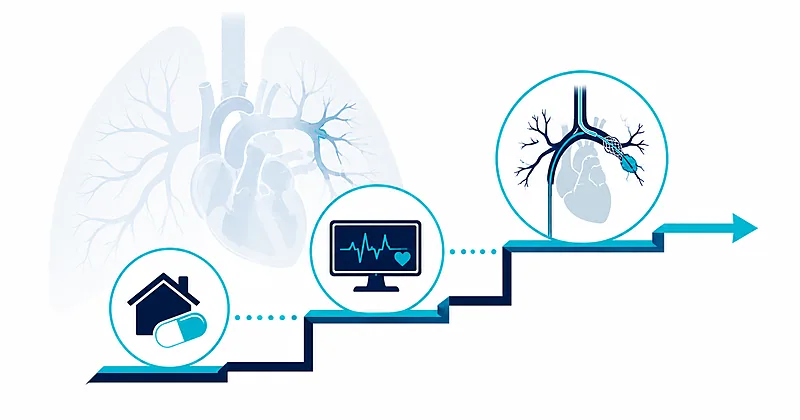
Read together, the trials describe a ladder rather than a menu. Intensity rises with risk, and each step buys a smaller chance of deterioration at a larger chance of harm.
The head-to-head signal is narrow but real. HI-PEITHO shows catheter therapy beats anticoagulation for early decompensation in selected intermediate-high patients. PEERLESS shows thrombectomy beats catheter lysis on a composite among patients already chosen for intervention. Neither demonstrated a mortality difference.
Systemic thrombolysis occupies the extreme. The pooled analysis suggests a mortality benefit, but the bleeding cost — including roughly fourfold higher odds of intracranial hemorrhage — keeps it confined to the highest-risk patients or to rescue after deterioration.
The bleeding gradient explains much of the ladder. Anticoagulation alone carries the lowest hemorrhage burden, catheter-directed therapy added no significant excess in HI-PEITHO, and full-dose systemic lysis produced extracranial bleeding in 6.3% of PEITHO patients versus 1.2% on placebo. As reperfusion intensity rises, the efficacy signal and the bleeding signal rise together, so the tier that fits a patient is the one where expected benefit clears expected harm.
Quality and Consistency of the Evidence
The evidence underpinning pulmonary embolism management is uneven, strong for some questions and thin for others. Rating it by domain shows where confidence is warranted and where caution is.
- Strong — anticoagulation backbone. Multiple large randomized trials show direct oral anticoagulants match vitamin K antagonists for recurrent VTE with less bleeding; findings are consistent across agents.
- Moderate — home treatment of low-risk PE. Supported by one adequately conducted randomized trial and supportive registries, but event numbers are small and selection-dependent.
- Moderate — catheter therapy in intermediate-high PE. One clinical-outcome trial (HI-PEITHO) aligns with consistent physiologic data (ULTIMA), though follow-up is short and the population selected.
- Moderate — systemic thrombolysis. The pooled mortality signal has wide confidence intervals and heterogeneity; the bleeding harm is consistent and well characterised.
- Limited — device choice. Thrombectomy versus lysis rests on a single composite-endpoint trial (PEERLESS) heavily weighted by intensive-care length of stay.
- Limited — surgical embolectomy. No randomized data; guidance is extrapolated from observational series and physiology.
What the Evidence Does Not Show
- No trial shows that catheter therapy or systemic lysis reduces mortality in intermediate-risk PE; HI-PEITHO’s benefit came from cardiorespiratory decompensation, a composite component defined partly by vital-sign scores.
- Durable functional benefit of reperfusion is unproven. Long-term follow-up of the original PEITHO cohort did not show a lasting functional or survival advantage.
- Whether ultrasound energy or intra-pulmonary catheter delivery adds anything is contested; emerging randomized data suggest peripheral infusion may match catheter delivery of the same dose.
- Trial populations skew young, lean, and non-frail. HI-PEITHO enrolled patients aged 18–80 and under-represented the older, comorbid patients typical of real-world intermediate-risk PE.
- High-risk PE remains largely unrandomized; the case for systemic thrombolysis there rests on small trials and physiologic reasoning rather than large outcome studies.
Practical Implications
The evidence supports, rather than dictates, a tiered approach to pulmonary embolism management. For low-risk PE, it supports starting a direct oral anticoagulant and considering home treatment when social circumstances and reliable follow-up allow.
For intermediate-risk PE, it supports anticoagulation with monitoring as the default. Reperfusion is reserved for deterioration, or for selected intermediate-high patients in whom a multidisciplinary team judges the decompensation risk high. Catheter-directed therapy is now an evidence-based option in that setting, not merely a registry concept.
For high-risk PE, it supports prompt systemic thrombolysis unless contraindicated, with catheter-based or surgical reperfusion as alternatives. A pulmonary embolism response team can help weigh these choices under time pressure.
Two further decisions run alongside the acute choice of tier. Anticoagulation duration — at least three months, then extended for unprovoked or persistent-risk events — is judged separately from the acute severity category. And every escalation to lytic or device therapy should be balanced against bleeding risk, reversal options, and access to specialist support.
Evidence Grade and Bottom Line
overall
- Anticoagulation, increasingly with direct oral anticoagulants, is the backbone across all tiers and the only therapy most patients need.
- Risk stratification — hemodynamics, PESI or simplified PESI, RV function, and troponin — determines who escalates and who goes home.
- Systemic thrombolysis lowers mortality in high-risk PE but bleeds substantially; it is not routine for intermediate risk.
- Catheter-directed therapy now has its first positive clinical-outcome trial for intermediate-high PE, though the benefit is early decompensation rather than survival.
- Surgical embolectomy remains a selective, evidence-thin option for the highest-risk patients.
Article Information and References
- Creager MA, Barnes GD, Giri J, et al. 2026 AHA/ACC/ACCP/ACEP/CHEST/SCAI/SHM/SIR/SVM/SVN guideline for the evaluation and management of acute pulmonary embolism in adults. Circulation. 2026;153:e977–e1051. DOI: https://doi.org/10.1161/CIR.0000000000001415
- Konstantinides SV, Meyer G, Becattini C, et al. 2019 ESC guidelines for the diagnosis and management of acute pulmonary embolism developed in collaboration with the European Respiratory Society (ERS). Eur Heart J. 2020;41(4):543–603. DOI: https://doi.org/10.1093/eurheartj/ehz405
- Chatterjee S, Chakraborty A, Weinberg I, et al. Thrombolysis for pulmonary embolism and risk of all-cause mortality, major bleeding, and intracranial hemorrhage: a meta-analysis. JAMA. 2014;311(23):2414–2421. DOI: https://doi.org/10.1001/jama.2014.5990
- Rosenfield K, Klok FA, Piazza G, et al. Ultrasound-facilitated, catheter-directed fibrinolysis for acute pulmonary embolism. N Engl J Med. Published online March 28, 2026. DOI: https://doi.org/10.1056/NEJMoa2516567
- Jaber WA, Gonsalves CF, Stortecky S, et al. Large-bore mechanical thrombectomy versus catheter-directed thrombolysis in the management of intermediate-risk pulmonary embolism: primary results of the PEERLESS randomized controlled trial. Circulation. Published online October 29, 2024. DOI: https://doi.org/10.1161/CIRCULATIONAHA.124.072364
- Meyer G, Vicaut E, Danays T, et al. Fibrinolysis for patients with intermediate-risk pulmonary embolism. N Engl J Med. 2014;370(15):1402–1411. DOI: https://doi.org/10.1056/NEJMoa1302097
- Kucher N, Boekstegers P, Müller OJ, et al. Randomized, controlled trial of ultrasound-assisted catheter-directed thrombolysis for acute intermediate-risk pulmonary embolism. Circulation. 2014;129(4):479–486. DOI: https://doi.org/10.1161/CIRCULATIONAHA.113.005544
- EINSTEIN-PE Investigators; Büller HR, Prins MH, Lensin AWA, et al. Oral rivaroxaban for the treatment of symptomatic pulmonary embolism. N Engl J Med. 2012;366(14):1287–1297. DOI: https://doi.org/10.1056/NEJMoa1113572
- Aujesky D, Roy PM, Verschuren F, et al. Outpatient versus inpatient treatment for patients with acute pulmonary embolism: an international, open-label, randomised, non-inferiority trial. Lancet. 2011;378(9785):41–48. DOI: https://doi.org/10.1016/S0140-6736(11)60824-6