
Secondary Stroke Prevention: DAPT Duration and the ESUS Question
Where short-course dual antiplatelet therapy earns its place — and why empiric anticoagulation for undetermined-source stroke has not.
One-Minute Takeaway
- Modern secondary stroke prevention after a minor, non-cardioembolic event rests on strong randomized evidenceV: brief dual antiplatelet therapy (DAPT) lowers early recurrence, while empiric anticoagulation for embolic stroke of undetermined source (ESUS) does not.
- Five randomized trials converge on DAPT benefit — CHANCE (HR 0.68), POINT (HR 0.75), THALES (HR 0.83), CHANCE-2 (HR 0.77) and INSPIRES (HR 0.79) — with the reduction concentrated in the first weeks.
- Pooled trial data locate the net benefit within roughly the first 21 days; bleeding risk is small in absolute terms but accrues with longer exposure, which favours a short course.
- For ESUS, three anticoagulation trials were neutral: NAVIGATE ESUS (HR 1.07, more bleeding), RE-SPECT ESUS (HR 0.85, non-significant) and ARCADIA (HR 1.00).
- Guidelines therefore support short-term DAPT for early minor stroke or high-risk TIA and advise against routine anticoagulants for ESUS.
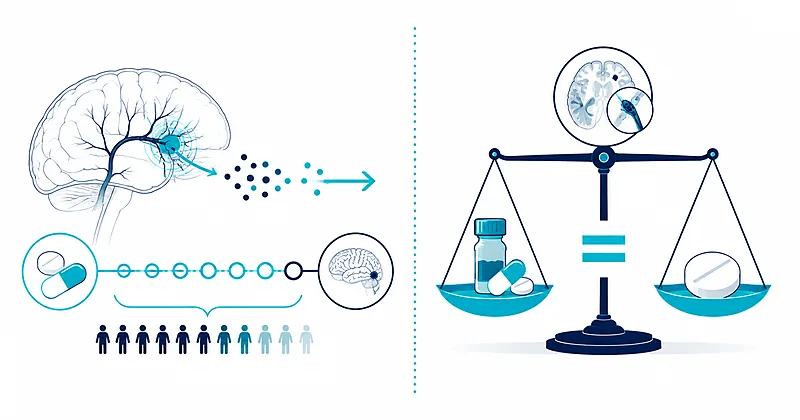
The Clinical Problem in Secondary Stroke Prevention
The days and weeks after a transient ischemic attack (TIA) or minor ischemic stroke carry the highest recurrence risk of the whole illness course. Preventing that early second event is the central task of acute secondary stroke prevention.
Two questions dominate practice. The first is how hard, and for how long, to inhibit platelets after a minor non-cardioembolic event — a trade-off between blocking recurrence and provoking bleeding. The second is whether cryptogenic strokes that look embolic behave like atrial-fibrillation strokes and respond to anticoagulation.
These questions matter because the two wrong answers fail in opposite directions. Under-treating a high-risk minor stroke leaves preventable recurrences on the table. Over-anticoagulating an undifferentiated embolic stroke adds bleeding without a matching gain, as the trial record now shows.
Embolic stroke of undetermined source (ESUS) names a specific slice of this problem: a non-lacunar infarct with no identified cardioembolic or large-artery cause after standard workup. It represents a substantial share of ischemic strokes and recurs at roughly 4–5% per year on antiplatelet therapy.
Available Approaches to Secondary Stroke Prevention
Three antithrombotic strategies frame the current debate: a brief course of dual antiplatelet therapy for the acute window, empiric anticoagulation for ESUS, and single antiplatelet therapy as the long-term backbone. The randomized evidence for each is summarised below, then examined in turn.
| Trial | Design | N | Population | Comparison | Key result |
|---|---|---|---|---|---|
| CHANCE 2013 | RCT, double-blind | 5,170 | Minor stroke / high-risk TIA ≤24 h (China) | Clopidogrel + aspirin (21-day DAPT) vs aspirin | 90-day stroke 8.2% vs 11.7%; HR 0.68 (95% CI 0.57–0.81); no excess major hemorrhage V |
| POINT 2018 | RCT, double-blind | 4,881 | Minor stroke / high-risk TIA ≤12 h (international) | Clopidogrel + aspirin (90 days) vs aspirin | Major ischemic events 5.0% vs 6.5%; HR 0.75 (95% CI 0.59–0.95); major hemorrhage HR 2.32 (95% CI 1.10–4.87) V |
| THALES 2020 | RCT, double-blind | 11,016 | Non-cardioembolic mild–moderate stroke (NIHSS ≤5) / high-risk TIA ≤24 h | Ticagrelor + aspirin (30 days) vs aspirin | Stroke or death 5.5% vs 6.6%; HR 0.83 (95% CI 0.71–0.96); severe bleeding 0.5% vs 0.1% V |
| CHANCE-2 2021 | RCT, double-blind | 6,412 | Minor stroke / high-risk TIA + CYP2C19 loss-of-function (China) | Ticagrelor + aspirin vs clopidogrel + aspirin | 90-day stroke 6.0% vs 7.6%; HR 0.77 (95% CI 0.64–0.94); no excess severe/moderate bleeding V |
| INSPIRES 2023 | RCT, double-blind, 2×2 factorial | 6,100 | Mild stroke (NIHSS ≤5) / high-risk TIA, atherosclerotic, ≤72 h (China) | Clopidogrel + aspirin vs aspirin | 90-day new stroke 7.3% vs 9.2%; HR 0.79 (95% CI 0.66–0.94); moderate–severe bleeding HR 2.08 (95% CI 1.07–4.04) V |
| NAVIGATE ESUS 2018 | RCT, double-blind (stopped early) | 7,213 | ESUS | Rivaroxaban 15 mg vs aspirin 100 mg | Recurrent stroke or systemic embolism 5.1% vs 4.8% per year; HR 1.07 (95% CI 0.87–1.33); major bleeding HR 2.72 (95% CI 1.68–4.39) V |
| RE-SPECT ESUS 2019 | RCT, double-blind | 5,390 | ESUS | Dabigatran 150/110 mg vs aspirin 100 mg | Recurrent stroke 4.1% vs 4.8% per year; HR 0.85 (95% CI 0.69–1.03), non-significant V |
| ARCADIA 2024 | RCT, double-blind (stopped for futility) | 1,015 | Cryptogenic stroke + atrial cardiopathy, no atrial fibrillation | Apixaban 5/2.5 mg vs aspirin 81 mg | Recurrent stroke 4.4% vs 4.4% per year; HR 1.00 (95% CI 0.64–1.55) V |
Short-course dual antiplatelet therapy
Adding a P2Y12 inhibitor to aspirin for a few weeks after a minor event lowers early recurrence with striking consistency. CHANCE first showed a hazard ratio of 0.68 (95% CI 0.57–0.81) for 90-day stroke, and POINT reproduced the effect internationally at HR 0.75 (95% CI 0.59–0.95).
Ticagrelor-based regimens extend the finding. THALES reduced stroke or death to a hazard ratio of 0.83 (95% CI 0.71–0.96), and CHANCE-2 showed ticagrelor bettered clopidogrel specifically in CYP2C19 loss-of-function carriers, at HR 0.77 (95% CI 0.64–0.94).
INSPIRES then pushed the treatment window later, enrolling atherosclerotic minor strokes up to 72 hours from onset. Clopidogrel plus aspirin still reduced 90-day recurrence, at HR 0.79 (95% CI 0.66–0.94), widening the group who can plausibly benefit.
Anticoagulation after embolic stroke of undetermined source
The ESUS construct rested on an appealing hypothesis: if these infarcts are embolic and often cardiac in origin, anticoagulation might outperform aspirin as it does in atrial fibrillation. Three well-powered randomized trials tested that idea, and each returned a neutral result.
NAVIGATE ESUS compared rivaroxaban with aspirin and was halted early. Recurrent stroke rates were similar (hazard ratio 1.07; 95% CI 0.87–1.33), while major bleeding nearly tripled with rivaroxaban (HR 2.72; 95% CI 1.68–4.39).
RE-SPECT ESUS tested dabigatran and likewise found no significant advantage (HR 0.85; 95% CI 0.69–1.03). ARCADIA then enriched enrolment for atrial cardiopathy — the most cardioembolic-appearing ESUS subgroup — yet apixaban and aspirin performed identically (HR 1.00; 95% CI 0.64–1.55).
The likely explanation is heterogeneity. Patients labelled ESUS carry multiple potential embolic sources at once, so a single anticoagulant strategy applied to the undifferentiated group cannot help, and it imports bleeding risk without a compensating stroke reduction.
Single antiplatelet therapy — the long-term backbone
Once the acute DAPT window closes, single antiplatelet therapy remains the standard long-term platform for non-cardioembolic stroke. Aspirin served as the comparator arm in every trial above, and prolonging dual therapy beyond the early weeks adds bleeding without a matching reduction in recurrence.
For ESUS specifically, single antiplatelet therapy is the evidence-aligned maintenance choice, paired with a search for occult atrial fibrillation. When atrial fibrillation is found, the calculus changes and anticoagulation becomes appropriate — a different clinical situation from empiric ESUS anticoagulation.
Comparative Analysis
The two headline strategies are not competitors for the same patient; they answer different questions in different windows. Short-course DAPT addresses the acute, high-risk phase after a minor non-cardioembolic event. Anticoagulation for ESUS addresses whether a cryptogenic embolic mechanism warrants a switch away from antiplatelets at all.
On the DAPT side the signal is coherent. Across five randomized trials the relative reduction in early recurrence clusters in a similar range, and the direction never reverses. The trade-off is a real but small absolute rise in bleeding, front-loaded against a benefit that is itself front-loaded — which is why a defined 21- to 30-day course is favoured over indefinite dual therapy.
On the ESUS side the signal is equally coherent, and negative. Three anticoagulants across three trials, including a deliberately enriched subgroup, failed to beat aspirin. That consistency turns an early disappointment into a settled conclusion for unselected ESUS patients.
Read together, the strategies point to a single practical stance. Treat the acute window aggressively but briefly with dual antiplatelets when the event qualifies, and resist empiric anticoagulation for cryptogenic embolic stroke unless a specific indication such as atrial fibrillation emerges.
Quality and Consistency of the Evidence
Evidence strength varies by question. The two central conclusions rest on multiple concordant randomized trials; the finer points of duration and subgroups are supported but less settled.
- Early recurrence reduction with short-course DAPT High — five randomized trials (CHANCE, POINT, THALES, CHANCE-2, INSPIRES) agree in direction and approximate magnitude.
- Anticoagulation is not superior for unselected ESUS High — three randomized trials with three different agents, all neutral, including an enriched subgroup.
- Optimal DAPT duration near 21 days Moderate–High — pooled patient-level analysis plus the later-window INSPIRES data, though duration was not the randomized comparison.
- Bleeding increase with DAPT Moderate — a consistent hazard across trials, but small in absolute terms and sensitive to duration and agent.
- Benefit of anticoagulation in specific ESUS subgroups Insufficient — trials that examined subgroups such as severe atrial enlargement were underpowered to confirm or exclude an effect.
Most DAPT trials enrolled Asian or predominantly atherosclerotic populations, and CHANCE-2 applies only to genotype-defined carriers. These features shape how directly each result transfers to a given patient, and they are noted rather than smoothed over.
What the Evidence Does Not Show
The trials answer their primary questions but leave defined territory uncharted. Naming those gaps is more useful than a blanket call for further study.
- Whether any refined ESUS subgroup — severe atrial cardiopathy, cancer-associated hypercoagulability, or a dominant single embolic source — benefits from anticoagulation. ARCADIA was stopped for futility and underpowered for severe left-atrial enlargement.
- The best antiplatelet agent and duration for moderate strokes and later presentation windows, since trial populations were mostly mild and early, and largely atherosclerotic in INSPIRES.
- Whether ticagrelor plus aspirin outperforms clopidogrel plus aspirin outside CYP2C19 loss-of-function carriers, where no direct head-to-head confirms superiority.
- Whether emerging factor XIa inhibitors will reduce recurrence without the bleeding penalty that sank anticoagulation in ESUS. These agents remain in earlier-phase testing, and no efficacy figure is asserted here.
Practical Implications
The following reflect what the evidence supports; they are not a substitute for individualized clinical judgement.
For early-arriving minor non-cardioembolic stroke or high-risk TIA, the trial record supports starting dual antiplatelet therapy within 24 hours — and up to 72 hours based on INSPIRES — to reduce early recurrence. Current AHA/ASA guidance gives short-term DAPT its strongest class of recommendation in this setting.
On duration, the pooled analysis supports a short, defined course of roughly 21 days for clopidogrel–aspirin (about 30 days for ticagrelor–aspirin), followed by single antiplatelet therapy. The small, exposure-related bleeding risk argues against prolonging dual therapy without a separate indication.
For ESUS or cryptogenic stroke without atrial fibrillation, current evidence and AHA/ASA guidance do not support empiric direct oral anticoagulants or ticagrelor. Single antiplatelet therapy plus prolonged rhythm monitoring for occult atrial fibrillation is the evidence-aligned path; a positive monitor changes the indication.
Evidence Grade and Bottom Line
Overall evidence grade: High (for the two central conclusions)- Strong evidence supports brief dual antiplatelet therapy to reduce early recurrence after minor non-cardioembolic stroke or high-risk TIA, with benefit concentrated in the first weeks.
- Strong evidence indicates that empiric anticoagulation does not reduce recurrence in unselected ESUS and, with rivaroxaban, increases major bleeding.
- Evidence suggests a short, defined DAPT course near 21 days optimises the balance of recurrence prevention against bleeding.
- Insufficient evidence exists to determine whether any specific ESUS subgroup benefits from anticoagulation; this remains an open question.
Article Information and References
For Educational Purposes Only. This is an original evidence synthesis informed by the studies listed below. It does not replace clinical judgement. Drug dosages should be verified against current prescribing information.
- Pan Y, Elm JJ, Li H, et al. Outcomes associated with clopidogrel-aspirin use in minor stroke or transient ischemic attack: a pooled analysis of the CHANCE and POINT trials. JAMA Neurol. 2019;76(12):1466–1473. DOI: https://doi.org/10.1001/jamaneurol.2019.2531
- Kleindorfer DO, Towfighi A, Chaturvedi S, et al. 2021 Guideline for the Prevention of Stroke in Patients With Stroke and Transient Ischemic Attack: A Guideline From the American Heart Association/American Stroke Association. Stroke. 2021;52(7):e364–e467. DOI: https://doi.org/10.1161/STR.0000000000000375
- Wang Y, Wang Y, Zhao X, et al. Clopidogrel with aspirin in acute minor stroke or transient ischemic attack (CHANCE). N Engl J Med. 2013;369(1):11–19. DOI: https://doi.org/10.1056/NEJMoa1215340
- Johnston SC, Easton JD, Farrant M, et al. Clopidogrel and aspirin in acute ischemic stroke and high-risk TIA (POINT). N Engl J Med. 2018;379(3):215–225. DOI: https://doi.org/10.1056/NEJMoa1800410
- Johnston SC, Amarenco P, Denison H, et al. Ticagrelor and aspirin or aspirin alone in acute ischemic stroke or TIA (THALES). N Engl J Med. 2020;383(3):207–217. DOI: https://doi.org/10.1056/NEJMoa1916870
- Wang Y, Meng X, Wang A, et al. Ticagrelor versus clopidogrel in CYP2C19 loss-of-function carriers with stroke or TIA (CHANCE-2). N Engl J Med. 2021;385(27):2520–2530. DOI: https://doi.org/10.1056/NEJMoa2111749
- Gao Y, Chen W, Pan Y, et al. Dual antiplatelet treatment up to 72 hours after ischemic stroke (INSPIRES). N Engl J Med. 2023;389(26):2413–2424. DOI: https://doi.org/10.1056/NEJMoa2309137
- Hart RG, Sharma M, Mundl H, et al. Rivaroxaban for stroke prevention after embolic stroke of undetermined source (NAVIGATE ESUS). N Engl J Med. 2018;378(23):2191–2201. DOI: https://doi.org/10.1056/NEJMoa1802686
- Diener HC, Sacco RL, Easton JD, et al. Dabigatran for prevention of stroke after embolic stroke of undetermined source (RE-SPECT ESUS). N Engl J Med. 2019;380(20):1906–1917. DOI: https://doi.org/10.1056/NEJMoa1813959
- Kamel H, Longstreth WT Jr, Tirschwell DL, et al. Apixaban to prevent recurrence after cryptogenic stroke in patients with atrial cardiopathy: the ARCADIA randomized clinical trial. JAMA. 2024;331(7):573–581. DOI: https://doi.org/10.1001/jama.2023.27188