
Pediatric Sepsis Criteria: 4 Core Practice Considerations
How the data-driven Phoenix Sepsis Score replaced SIRS in children with suspected infection
One-Minute Takeaway
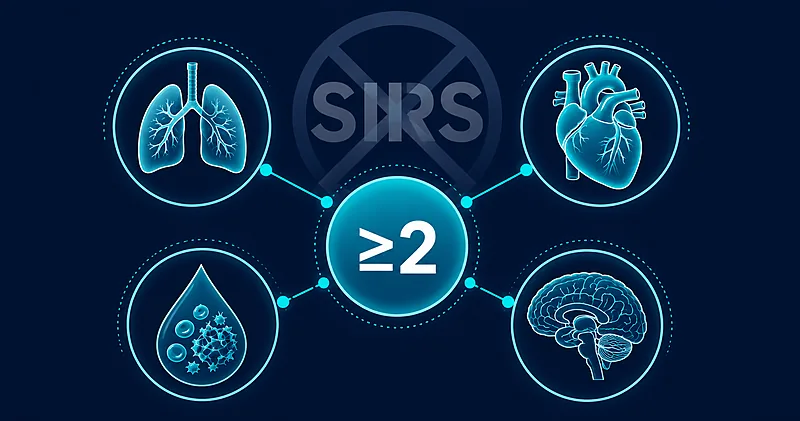
- Pediatric sepsis criteria were redefined in 2024: sepsis is now a Phoenix Sepsis Score of at least 2 points across four organ systems, and the SIRS-based 2005 framework — along with the term “severe sepsis” — was retired.Verified
- The score was derived and validated in more than 3 million encounters across five countries, discriminating in-hospital mortality with an AUROC of 0.71 to 0.92 in the validation sets.
- Children meeting the criteria had in-hospital mortality of 7.1% in higher-resource and 28.5% in lower-resource settings — more than eight times that of children with infection who did not meet them.
- The score matched or outperformed the older criteria across independent cohorts, but its sensitivity for mortality fell to about 55.0% in an undifferentiated emergency-department population.
- Renal and hepatic dysfunction sit in the extended Phoenix-8 score, not the core criteria, and no trial yet shows that applying the criteria changes patient outcomes.
Why Pediatric Sepsis Criteria Matter
Sepsis is a leading cause of death in children worldwide, and the definition used to identify it shapes who receives urgent treatment, how outcomes are benchmarked, and which patients enter clinical trials. For nearly two decades, pediatric sepsis criteria rested on the systemic inflammatory response syndrome (SIRS).
The problem was specificity. Many children mount a brisk inflammatory response to self-limiting viral illness — fever with tachycardia and tachypnea satisfies SIRS without any threat to life. Criteria that flag most febrile children cannot reliably separate the child who will deteriorate from the one who will go home well.
In 2024 the Society of Critical Care Medicine (SCCM) Pediatric Sepsis Definition Task Force replaced that framework with the Phoenix Sepsis Score, an organ-dysfunction–based tool derived from data rather than expert opinion. The shift matters because it changes what the word “sepsis” means at the bedside: from infection plus inflammation to infection plus life-threatening organ dysfunction.
What the New Pediatric Sepsis Criteria Recommend
The 2024 pediatric sepsis criteria define sepsis as suspected or confirmed infection accompanied by a Phoenix Sepsis Score of at least 2 points. Septic shock is sepsis with at least 1 point in the cardiovascular subscore. The redundant tier of “severe sepsis” was removed — once organ dysfunction meets the threshold, the illness is already severe.
The score sums four integer organ-dysfunction subscores. It ranges from 0 to 13, and among children who met the sepsis threshold the median score was 3 (interquartile range 2 to 4).
The four organ systems
Respiratory (0–3): graded on oxygenation (PaO₂/FiO₂ or SpO₂/FiO₂ ratio) and the level of respiratory support, including invasive ventilation. Cardiovascular (0–6): graded on lactate, age-specific mean arterial pressure thresholds, and the number of vasoactive medications. Coagulation (0–2): graded on platelet count, INR, D-dimer, and fibrinogen. Neurologic (0–2): graded on the Glasgow Coma Scale and pupillary reactivity.
A deliberately extended version, the Phoenix-8 score, adds four more organ systems (including renal and hepatic) and is intended for research and detailed risk stratification rather than the bedside definition.
Evidence Reviewed
The criteria were built and tested through a systematic review, a global clinician survey, a data-driven derivation, and a modified Delphi consensus, then examined by independent groups on separate cohorts. The comparison below draws only on studies confirmed against their primary sources; every sample size is real and every DOI resolves.
| Study / Source | Design | N | Population | Comparison | Key result |
|---|---|---|---|---|---|
| Sanchez-Pinto 2024 V | Multicenter international retrospective cohort (derivation + validation) | 3,049,699 development; 581,317 external validation | Children <18 y with suspected infection; 10 health systems in 5 countries (US, Colombia, Bangladesh, China, Kenya) | Phoenix score vs 8 existing organ-dysfunction scores and IPSCC | Phoenix Sepsis Score AUROC 0.71–0.92 (95% CI 0.70–0.92) and AUPRC 0.23–0.38 for in-hospital mortality; outperformed IPSCC |
| Schlapbach 2024 V | Systematic review + global survey + modified Delphi consensus | Task-force consensus; mortality from the derivation cohort | International; children with suspected infection | New Phoenix criteria vs SIRS-based 2005 criteria | Defined sepsis as score ≥2 and septic shock as sepsis + cardiovascular ≥1; retired SIRS and “severe sepsis”; sepsis mortality 7.1% (higher-resource) / 28.5% (lower-resource) |
| Sanchez-Pinto 2025 V | Retrospective multicenter secondary analysis | ~25,000 encounters (9 US PICUs), 2012–2018 | Critically ill children with suspected infection | Phoenix vs 2005 IPSCC criteria; Phoenix-8 assessed separately | Phoenix outperformed IPSCC in every subgroup; children meeting only Phoenix criteria had higher mortality (4.7%) than those meeting only IPSCC (1.7%) |
| Long 2025 V | Prospective multicenter diagnostic cohort (SENTINEL) | 6,232 children, Australia & New Zealand, 2021–2023 | Children hospitalized with suspected community-acquired sepsis (ED-based) | Phoenix criteria test characteristics vs outcomes | Score ≥2 had sensitivity 55.0% (95% CI 41.6–67.9) and PPV 10.8% for in-hospital mortality; most deaths occurred in children scoring below 2 |
| Han 2025 V | Single-center retrospective cohort | 1,304 PICU admissions, Korea, 2017–2023 | Higher-resource PICU; children with suspected infection | 24-hour vs 6-hour “prompt” application windows | In-hospital mortality 8.3% for sepsis and 10.3% for septic shock; AUPRC 0.42 (95% CI 0.31–0.55) for in-hospital mortality |
| Goldstein 2005 V | International consensus conference (expert opinion) | 20-expert panel, 5 countries | Pediatric age groups (newborn to adolescent) | Adapted adult SIRS/sepsis definitions for children | Established the SIRS-based criteria that Phoenix replaced; later shown to over-identify because SIRS lacks specificity |
IPSCC = International Pediatric Sepsis Consensus Conference (2005) criteria; AUROC = area under the receiver-operating-characteristic curve; AUPRC = area under the precision-recall curve; PPV = positive predictive value.
Key Changes and Their Basis
The replacement of SIRS was not a cosmetic relabeling. Four connected changes explain how the Phoenix criteria displaced the 2005 framework and why independent groups have largely endorsed the direction.
From inflammation to organ dysfunction
The core conceptual move mirrors the adult Sepsis-3 definitions, which had recast sepsis as life-threatening organ dysfunction from a dysregulated host response but explicitly excluded children. The task force applied the same logic to pediatrics: infection alone, or infection plus inflammation, was no longer enough. Sepsis now requires demonstrable organ dysfunction captured by the score.
A global survey underpinned the change. Most pediatric clinicians already used “sepsis” to mean infection with life-threatening organ dysfunction, so the new criteria aligned the definition with how the field was already thinking.
A data-driven derivation, not a committee vote
Rather than assembling variables by consensus, the derivation team used a machine-learning approach across more than 3 million encounters to select the best-performing components from eight validated organ-dysfunction scores. The resulting model was then converted into a simple integer score for bedside use.
Strong evidence supports the discrimination that followed: across geographically diverse validation sets the score achieved an AUROC of 0.71 to 0.92 for in-hospital mortality, and it did so using only four organ systems.
Retiring “severe sepsis” and simplifying the tiers
Because the threshold itself marks life-threatening dysfunction, the intermediate category of “severe sepsis” became redundant and was dropped. Septic shock was preserved but redefined physiologically as sepsis with cardiovascular dysfunction of at least 1 point, rather than as a separate inflammatory tier.
Head-to-head performance against the old criteria
Independent validation reinforced the derivation. In a nine-center US analysis, the Phoenix criteria outperformed the 2005 IPSCC criteria across every subgroup; children who met only the Phoenix criteria had higher in-hospital mortality (4.7%) than children who met only the IPSCC criteria (1.7%). Evidence suggests the Phoenix score identifies a sicker, more clinically meaningful group.
The gain held internationally. A higher-resource Korean PICU cohort reproduced credible discrimination, and comparative studies found the four-organ score matched or exceeded more complex tools such as PELOD-2 and pSOFA despite requiring fewer variables.
Quality and Consistency of the Evidence
The evidence base is unusually large for a diagnostic definition, but its strength varies by outcome and by the setting in which the criteria are applied.
- High — discrimination of mortality in acute-care cohorts. The derivation and multiple independent validations agree that a score of at least 2 identifies children at substantially elevated risk of in-hospital death, with consistent effect sizes across continents.
- High — superiority over SIRS-based criteria. Every comparative study reviewed found the Phoenix criteria matched or outperformed the 2005 IPSCC criteria for identifying life-threatening illness.
- Moderate — performance in undifferentiated or community settings. In an emergency-department cohort the criteria were far less sensitive for mortality, so generalization beyond higher-acuity populations is less certain.
- Moderate — calibration across resource levels. Discrimination is reproducible, but absolute performance and optimal application windows differ between settings, and some single-center analyses have suggested recalibration.
- Low — effect on patient-important outcomes. All studies are observational; none tests whether using the Phoenix criteria, rather than the older ones, changes survival or treatment.
What the Evidence Does Not Show
Several specific limitations are worth naming plainly, because they bound how far the criteria should be trusted.
Renal and hepatic dysfunction are absent from the core criteria. Both live only in the extended Phoenix-8 score, and commentators have questioned excluding them from the bedside definition.
Sensitivity falls outside high-acuity settings. In the Australian and New Zealand community-acquired cohort, 5,926 of 6,232 children scored below 2, yet that group still contained 27 of the 60 in-hospital deaths — nearly half. The criteria are a risk-stratification tool, not a rule-out.
No outcome trial exists. The score was optimized to discriminate mortality retrospectively; whether adopting it improves care over the 2005 criteria has not been tested prospectively.
Defined boundaries limit scope. The criteria exclude neonates (birth hospitalizations and post-conceptional age under 37 weeks) and patients over 18, do not account for chronic organ dysfunction, and depend on laboratory values that may be unavailable where sepsis burden is highest.
Practical Implications
Four considerations translate the evidence into everyday use.
1. Score for risk, but never delay treatment
A Phoenix Sepsis Score of at least 2 flags a child with organ dysfunction who warrants close attention and often escalation. It complements clinical judgment; it does not replace timely empiric antibiotics, fluids, and resuscitation when sepsis is suspected.
2. Know the four domains and the shock rule
Respiratory, cardiovascular, coagulation, and neurologic subscores drive the definition. Sepsis begins at a total of 2 points; septic shock is present whenever the cardiovascular subscore reaches at least 1 within that sepsis.
3. Match the tool to the setting
The criteria discriminate mortality well in acute and critical-care populations but are less sensitive in undifferentiated emergency presentations. Treat the score as a stratification and epidemiology instrument, not a screen that safely excludes sepsis.
4. Remember what the core score omits
Renal and hepatic dysfunction, neonates, and chronic organ dysfunction fall outside the core criteria. As always, verify drug dosing against current prescribing information and follow local sepsis protocols alongside the score.
Evidence Grade and Bottom Line
Overall grade: Moderate-to-High for identifying life-threatening illness; Low for demonstrating improved outcomes.
- The Phoenix Sepsis Score is a well-derived, externally validated replacement for SIRS-based pediatric sepsis criteria, and it consistently identifies children at high risk of death.
- Its advantage over the 2005 criteria is reproducible across countries and settings, and it achieves this with only four organ systems.
- Its performance is weaker in undifferentiated emergency populations, and no trial yet shows that adopting it changes survival.
- For clinicians, it is best used as a structured risk-stratification and communication tool layered on top of prompt, judgment-driven sepsis care.
Article Information and References
References
- Schlapbach LJ, Watson RS, Sorce LR, et al; Society of Critical Care Medicine Pediatric Sepsis Definition Task Force. International Consensus Criteria for Pediatric Sepsis and Septic Shock. JAMA. 2024;331(8):665–674. DOI: https://doi.org/10.1001/jama.2024.0179
- Sanchez-Pinto LN, Bennett TD, DeWitt PE, et al; Society of Critical Care Medicine Pediatric Sepsis Definition Task Force. Development and Validation of the Phoenix Criteria for Pediatric Sepsis and Septic Shock. JAMA. 2024;331(8):675–686. DOI: https://doi.org/10.1001/jama.2024.0196
- Sanchez-Pinto LN, Daniels LA, Atreya M, et al. Phoenix Sepsis Criteria in Critically Ill Children: Retrospective Validation Using a United States Nine-Center Dataset, 2012–2018. Pediatr Crit Care Med. 2025;26(2):e155–e165. DOI: https://doi.org/10.1097/PCC.0000000000003675
- Long E, Borland ML, George S, et al; Paediatric Research in Emergency Departments International Collaborative (PREDICT) Network. External Validation of the Phoenix Sepsis Score in Children With Suspected Community-Acquired Sepsis. JAMA Netw Open. 2025;8(3):e251412. DOI: https://doi.org/10.1001/jamanetworkopen.2025.1412
- Han CH, Kim H, Park M, et al. Validation of the Phoenix Criteria for Sepsis and Septic Shock in a Pediatric Intensive Care Unit. J Korean Med Sci. 2025;40(10):e106. DOI: https://doi.org/10.3346/jkms.2025.40.e106
- Goldstein B, Giroir B, Randolph A; International Consensus Conference on Pediatric Sepsis. International pediatric sepsis consensus conference: definitions for sepsis and organ dysfunction in pediatrics. Pediatr Crit Care Med. 2005;6(1):2–8. DOI: https://doi.org/10.1097/01.PCC.0000149131.72248.E6
- Hadzhieva-Hristova A, Krumova D, Stoeva T, Georgieva R, Iotova V. Assessment of Phoenix Sepsis Score, pSOFA, PELOD-2, and PRISM III in Pediatric Intensive Care. Children (Basel). 2025;12(3):262. DOI: https://doi.org/10.3390/children12030262
- Matics TJ, Sanchez-Pinto LN. Adaptation and Validation of a Pediatric Sequential Organ Failure Assessment Score and Evaluation of the Sepsis-3 Definitions in Critically Ill Children. JAMA Pediatr. 2017;171(10):e172352. DOI: https://doi.org/10.1001/jamapediatrics.2017.2352