
Restless Legs Syndrome: 7 Essential Treatment Rules
Clinical Practice Update — Diagnosis, Iron Workup, First-Line Therapy, and Refractory Management
This is an original clinical education article informed by current guidelines and evidence. See References below for source documents.
- Clinical Focus
- Evidence-based diagnosis and management of restless legs syndrome in adults
- Target Audience
- Primary care physicians, neurologists, sleep specialists, nephrologists, pharmacists
- Setting
- Primary care, neurology outpatient, sleep clinic, dialysis unit
- Source Evidence
- •IRLSSG Updated Consensus Diagnostic Criteria (Allen et al., Sleep Med, 2014)
- •AAN Practice Guideline on Treatment of RLS in Adults (Winkelman, Neurology, 2016)
- •Mayo Clinic Updated RLS Management Algorithm (Silber et al., 2021)
- •IRLSSG Task Force: Iron Treatment Guidelines (Allen et al., Sleep Med, 2018)
- •Mayo Clinic Consensus on Opioids in Refractory RLS (Silber et al., 2018)
Key Clinical Takeaways
The landscape of restless legs syndrome treatment has shifted dramatically. The 2021 Mayo Clinic algorithm and recent guideline updates have reversed a long-standing hierarchy: alpha-2-delta ligands are now preferred over dopamine agonists as first-line pharmacotherapy, driven by a decade of accumulating evidence that dopamine-agonist augmentation is both common and often irreversible. Iron repletion has also been elevated from afterthought to cornerstone. The points below distil this evolving evidence into rules you can apply today.
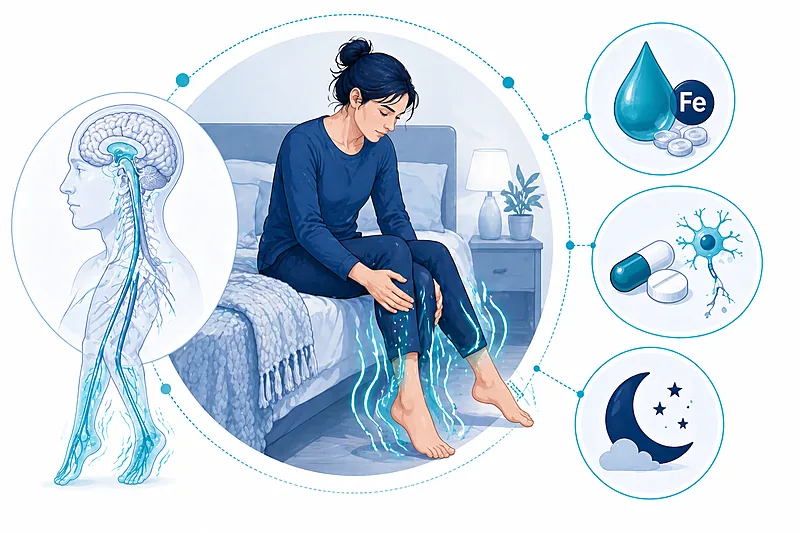
- 1Diagnose restless legs syndrome using the five IRLSSG criteria — urge to move legs with unpleasant sensation, worse at rest, relief on movement, evening/night predominance, not explained by mimics → Diagnosis
- 2Check ferritin and transferrin saturation in every patient — low iron stores are the most common modifiable contributor to restless legs syndrome → Iron Workup
- 3Treat with oral iron on alternate days (ferrous sulfate 325 mg + vitamin C) when ferritin is below 75–100 µg/L and TSAT below 20% → Iron Workup
- 4Start an alpha-2-delta ligand (gabapentin enacarbil, gabapentin, or pregabalin) as first-line pharmacotherapy — the 2021 algorithm reversed the old dopamine-agonist-first approach → First-Line
- 5Reserve dopamine agonists for specific situations — severe symptoms, obesity, or patients who cannot tolerate alpha-2-delta therapy — at the lowest effective dose → First-Line
- 6Screen actively for augmentation at every follow-up — earlier symptom onset, proximal or contralateral spread, and increased symptom intensity are the warning signs → Augmentation
- 7Consider low-dose opioids (methadone, extended-release oxycodone) only for refractory restless legs syndrome after proper multidisciplinary review → Refractory
- 8Review the medication list — antihistamines, SSRIs, SNRIs, antipsychotics, and metoclopramide frequently worsen restless legs syndrome and can often be substituted → Secondary Causes
- 9Counsel on lifestyle adjustments — regular sleep, moderate exercise, and reduction of alcohol, caffeine, and nicotine — alongside any pharmacological plan → Monitoring
Diagnosing Restless Legs Syndrome Using IRLSSG Criteria
Restless legs syndrome is a clinical diagnosis. The updated 2014 IRLSSG consensus criteria remain the standard: all five essential features must be present, and the fifth explicitly requires exclusion of conditions that mimic the phenotype. Polysomnography is not required for diagnosis but can be useful in unclear cases or when suspicion of coexisting sleep disorders is high.
The Five IRLSSG Essential Features
Patients describe an urge to move the legs, usually accompanied by uncomfortable sensations (pulling, crawling, aching, itching deep in the muscle). These sensations begin or worsen during periods of rest or inactivity, are partially or totally relieved by movement such as walking or stretching, are worse in the evening or at night than during the day, and cannot be fully attributed to another medical condition such as nocturnal leg cramps, positional discomfort, or peripheral neuropathy.
Apply all five IRLSSG criteria to confirm restless legs syndrome. Failure to meet any single criterion should prompt reconsideration, particularly for criterion five, which requires active exclusion of mimics such as nocturnal leg cramps, positional discomfort, peripheral neuropathy, venous insufficiency, and akathisia.
Strong Rec High Evidence IRLSSG 2014Assess severity using a validated tool such as the IRLS rating scale (IRLS) at baseline and each follow-up. Severity guides treatment intensity and forms the reference for detecting augmentation later.
Strong Rec Moderate Evidence AAN 2016Distinguish primary (idiopathic, often with family history) from secondary restless legs syndrome at the first visit. Common secondary drivers include iron deficiency, end-stage renal disease, pregnancy, peripheral neuropathy, and medications; each meaningfully alters the management plan.
Strong Rec Moderate Evidence IRLSSG 2014 Silber 2021Do not routinely request polysomnography to diagnose restless legs syndrome. Reserve it for patients with atypical features, suspected periodic limb movement disorder as the only finding, or coexisting obstructive sleep apnoea that warrants direct evaluation.
Against Moderate Evidence AAN 2016Differential Diagnoses Not to Miss
| Condition | Distinguishing Feature | Tip for the Bedside |
|---|---|---|
| Nocturnal leg cramps | Painful, visible muscle contraction, sudden onset, brief duration | Cramps relieved by stretching one specific muscle; RLS relieved by general movement |
| Peripheral neuropathy | Burning, tingling, numbness, sensory deficit on examination | Symptoms not relieved by movement; stocking distribution; coexistence common |
| Akathisia (drug-induced) | Whole-body restlessness, continuous, no circadian pattern | Starts with antipsychotic or antiemetic exposure; often unrelated to sleep |
| Positional discomfort | Localised to pressure area, immediate relief with one specific movement | Seen in long-haul travel, bed-bound patients; no circadian component |
| Chronic venous insufficiency | Heavy aching legs, worse after standing, visible varicosities or oedema | Symptoms worsen with prolonged standing, better with elevation — opposite pattern |
Iron Workup and Addressing Secondary Causes
Low brain iron is central to the pathophysiology, and repletion of iron stores is the single most evidence-based disease-modifying intervention short of pharmacotherapy. The key measurements are serum ferritin and transferrin saturation (TSAT); total iron-binding capacity and serum iron alone are not sufficient. Samples should be drawn in the morning and fasted where practical, as ferritin fluctuates with inflammation.
Measure fasting morning ferritin and TSAT in every patient with restless legs syndrome at diagnosis. A ferritin below 75–100 µg/L or TSAT below 20% is an indication for iron supplementation, even in the absence of anaemia.
Strong Rec High Evidence IRLSSG Iron 2018Prescribe ferrous sulfate 325 mg orally on alternate days (with 100–200 mg vitamin C to enhance absorption), taken on an empty stomach. Alternate-day dosing improves absorption and tolerability compared with daily dosing.
Strong Rec Moderate Evidence IRLSSG Iron 2018Consider intravenous ferric carboxymaltose (typically 1 g as a single dose) when oral iron is not tolerated, absorbed, or effective, or when rapid repletion is needed. IV iron is particularly useful in end-stage renal disease and severe symptomatic restless legs syndrome with low ferritin.
Moderate Rec Moderate Evidence IRLSSG Iron 2018Review medications that commonly provoke or worsen restless legs syndrome: sedating antihistamines (diphenhydramine), SSRIs and SNRIs, tricyclics, metoclopramide, centrally acting antipsychotics. Substitute where possible — often the symptoms settle.
Strong Rec Moderate Evidence Silber 2021Counsel patients on lifestyle modification: regular sleep schedule, moderate daytime exercise (vigorous evening exercise can worsen symptoms), reduced caffeine, alcohol, and nicotine. These measures are rarely curative alone but support pharmacotherapy and are universally recommended.
Moderate Rec Low Evidence Silber 2021Iron Options Compared
| Formulation | Typical Dose | Best Candidate | Practical Tips |
|---|---|---|---|
| Ferrous sulfate | 325 mg alternate days + 100–200 mg vitamin C | Most outpatients with mild-to-moderate iron deficit | GI side effects common; alternate-day improves absorption and tolerance |
| Ferrous fumarate / gluconate | Equivalent elemental iron | Those intolerant of ferrous sulfate | Slightly better GI tolerability in some patients |
| Ferric carboxymaltose (IV) | 1000 mg single infusion | Oral failure/intolerance, rapid repletion, ESRD | Monitor for hypophosphataemia; recheck ferritin at 8–12 weeks |
| Ferric derisomaltose (IV) | 1000 mg single infusion | Alternative IV option | Less hypophosphataemia risk than ferric carboxymaltose |
First-Line Treatment for Restless Legs Syndrome
The 2021 Mayo Clinic algorithm reframed first-line pharmacotherapy. Alpha-2-delta calcium channel ligands — gabapentin enacarbil, gabapentin, and pregabalin — are now preferred over dopamine agonists for most adults with moderate-to-severe restless legs syndrome. The rationale is straightforward: dopamine agonists cause augmentation in a substantial proportion of patients over time, and augmentation is difficult to reverse once established. Alpha-2-delta ligands do not cause augmentation.
Start gabapentin enacarbil 600 mg in the early evening (around 5 pm) as first-line pharmacotherapy for moderate-to-severe restless legs syndrome. Alternatives include gabapentin 300–1200 mg nightly or pregabalin 75–450 mg nightly.
Strong Rec High Evidence AAN 2016 Silber 2021Counsel patients on the common side effects of alpha-2-delta ligands: sedation, dizziness, weight gain, peripheral oedema, and cognitive slowing. Start low and titrate slowly; dose-adjust in renal impairment.
Strong Rec Moderate Evidence Silber 2021Consider a dopamine agonist (pramipexole, ropinirole, or rotigotine patch) as an alternative first-line choice in specific situations: obesity where alpha-2-delta-related weight gain is unacceptable, coexisting severe pain syndromes, or failure/intolerance of alpha-2-delta ligands. Use the lowest effective dose.
Conditional Rec Moderate Evidence Silber 2021Warn every patient starting a dopamine agonist about augmentation and impulse control disorders (pathological gambling, hypersexuality, compulsive shopping, binge eating). Document the discussion. Rotigotine patch has a lower reported rate of both complications than oral agents.
Strong Rec High Evidence Silber 2021Do not use levodopa as chronic therapy for restless legs syndrome. It is associated with very high augmentation rates and is reserved for intermittent use only in mild, infrequent symptoms.
Against High Evidence Silber 2021Pharmacological Options: A Drug-by-Drug Guide
| Drug | Starting Dose | Target Range | Augmentation Risk | Practical Tips |
|---|---|---|---|---|
| Gabapentin enacarbil | 600 mg at 5 pm | 600–1200 mg daily | None | Licensed for RLS; renal dose adjustment needed |
| Gabapentin | 300 mg at night | 300–1800 mg divided | None | Off-label but widely used; absorption plateaus above 1200 mg |
| Pregabalin | 75 mg at night | 150–450 mg daily | None | More predictable absorption than gabapentin |
| Pramipexole | 0.125 mg at night | 0.125–0.5 mg daily | High (7–10% per year) | Keep dose at or below 0.5 mg to reduce augmentation |
| Ropinirole | 0.25 mg at night | 0.25–4 mg daily | High | Similar augmentation concerns; watch impulse control |
| Rotigotine patch | 1 mg/24 h patch | 1–3 mg/24 h | Lower than oral DAs | Steady plasma levels; skin site reactions common |
Recognising Augmentation and Managing Refractory Disease
Dopamine-agonist augmentation is the iatrogenic counterpart of restless legs syndrome itself — treatment-induced worsening that can be more disabling than the original disease. Recognising it early is essential. Refractory disease, after augmentation is addressed and other measures optimised, may warrant opioid therapy in selected patients under multidisciplinary oversight.
Signs of Dopamine-Agonist Augmentation
- Symptoms appearing earlier in the day than before starting the drug
- Shorter latency between rest and symptom onset
- Spread to previously uninvolved body parts (arms, trunk)
- Greater intensity of symptoms despite stable or increased dose
- Paradoxical worsening with an increased dose, or improvement on dose reduction
- Reduced effect of movement on symptom relief
When augmentation is recognised, do not increase the dopamine agonist. Instead, recheck and replete iron, remove provoking medications, then consider cross-titration to an alpha-2-delta ligand or a rotigotine patch, or referral to a specialist for managed dopamine-agonist withdrawal.
Strong Rec Moderate Evidence Silber 2021Warn patients undergoing dopamine-agonist withdrawal about the rebound period — typically 1–4 weeks of severe symptoms before settling. Bridge with alpha-2-delta therapy and, when necessary, short-term low-dose opioid cover under specialist supervision.
Strong Rec Low Evidence Silber 2021Consider low-dose methadone (5–20 mg daily) or extended-release oxycodone for refractory restless legs syndrome only after failure of iron repletion, alpha-2-delta ligands, and appropriate dopamine-agonist trials. Follow Mayo Clinic consensus criteria: formal informed consent, structured opioid risk assessment, and single-prescriber arrangement.
Moderate Rec Moderate Evidence Silber 2018 Silber 2021Do not prescribe opioids for mild-to-moderate restless legs syndrome or before exhausting iron, alpha-2-delta, and dopamine-agonist options. Screen for prior opioid misuse, respiratory risk factors, and obstructive sleep apnoea before any opioid trial.
Against Moderate Evidence Silber 2018Clinical Decision Pathway
A practical, question-based walk-through of restless legs syndrome from first presentation to long-term management. Work through the questions in order.
Monitoring and Follow-Up
Structured follow-up is an underappreciated driver of outcomes in restless legs syndrome. Four domains should be tracked at every review: symptom severity, sleep quality, augmentation signs, and drug tolerability. Iron status should be re-checked periodically because it changes over time and is modifiable.
| Parameter | When to Check | What to Look For | Common Pitfalls |
|---|---|---|---|
| IRLS severity score | Every visit | Trend vs baseline; minimal clinically important change | Relying on global impressions alone |
| Ferritin and TSAT | Baseline; 8–12 weeks after iron repletion; annually thereafter | Ferritin > 75–100 µg/L and TSAT > 20% | Over-reliance on haemoglobin; RLS benefits from iron without anaemia |
| Augmentation screen | Every visit on any dopamine agonist | Earlier onset, spread, increased intensity, dose-paradox | Increasing the dose to “cover” worsening symptoms |
| Impulse control disorders | Every visit on dopamine agonist | New gambling, shopping, sexual, or eating compulsions | Patients often do not volunteer these; ask directly |
| Sleep quality | Every visit | Sleep onset latency, nocturnal awakenings, daytime somnolence | Missing coexistent obstructive sleep apnoea |
| Mood and anxiety | Every visit | Depression and anxiety common; SSRIs can worsen RLS | Prescribing SSRI without reviewing RLS impact |
Evidence in Context
What the current evidence supports, where the major guidelines align, and where clinically relevant gaps remain in the management of restless legs syndrome.
The Shift to Alpha-2-Delta First-Line
The AAN 2016 practice guideline listed dopamine agonists and alpha-2-delta ligands as co-equal first-line options. The 2021 Mayo Clinic updated algorithm explicitly re-prioritised alpha-2-delta ligands as preferred, driven by accumulating evidence that dopamine-agonist augmentation is both common (around 7–10% per year for oral agents) and often refractory. This was one of the most significant practice changes in restless legs syndrome management over the last decade.
Iron as a Primary Therapy
The 2018 IRLSSG iron task force report consolidated evidence that iron repletion — oral or intravenous — reduces symptom severity, particularly in patients with ferritin below 75–100 µg/L. Randomised data for intravenous ferric carboxymaltose are the strongest. This changed the conversation from “iron only if anaemic” to “iron as primary disease-modifying therapy” in anyone with suboptimal iron stores, regardless of haemoglobin.
The Opioid Question
Low-dose opioids, particularly methadone and extended-release oxycodone, have good supporting evidence in refractory restless legs syndrome, including long-term observational data showing sustained benefit without escalating doses in selected patients. The 2018 Mayo Clinic opioid consensus provides a framework that explicitly balances efficacy against the risk of misuse in the broader context of the opioid epidemic. Outside that framework, opioids should not be used.
Pregnancy and Paediatrics
Restless legs syndrome worsens in about a quarter of pregnancies, typically peaking in the third trimester and resolving after delivery. Iron repletion is the preferred strategy. Gabapentin and pregabalin are used cautiously with specialist input where needed; dopamine agonists are generally avoided. Paediatric disease is recognised and should follow specialist pathways, with particular attention to iron status.
What We Still Don’t Know
The mechanism of dopamine-agonist augmentation, optimal management strategies once it develops, and the role of newer agents such as selective adenosine-receptor modulators remain active areas of research. Long-term safety data for chronic opioid use in restless legs syndrome are still maturing. The role of non-pharmacological interventions such as pneumatic compression devices and vibration therapy is promising but not yet definitive.
References
- 1.Allen RP, Picchietti DL, Garcia-Borreguero D, et al. Restless legs syndrome/Willis-Ekbom disease diagnostic criteria: updated International Restless Legs Syndrome Study Group (IRLSSG) consensus criteria — history, rationale, description, and significance. Sleep Med. 2014;15(8):860–873. doi:10.1016/j.sleep.2014.03.025
- 2.Winkelman JW, Armstrong MJ, Allen RP, et al. Practice guideline summary: Treatment of restless legs syndrome in adults. Neurology. 2016;87(24):2585–2593. doi:10.1212/WNL.0000000000003388
- 3.Silber MH, Buchfuhrer MJ, Earley CJ, et al. The Management of Restless Legs Syndrome: An Updated Algorithm. Mayo Clin Proc. 2021;96(7):1921–1937. doi:10.1016/j.mayocp.2020.12.026
- 4.Allen RP, Picchietti DL, Auerbach M, et al. Evidence-based and consensus clinical practice guidelines for the iron treatment of restless legs syndrome/Willis-Ekbom disease in adults and children: an IRLSSG task force report. Sleep Med. 2018;41:27–44. doi:10.1016/j.sleep.2017.11.1126
- 5.Silber MH, Becker PM, Buchfuhrer MJ, et al. The Appropriate Use of Opioids in the Treatment of Refractory Restless Legs Syndrome: Mayo Clinic Consensus. Mayo Clin Proc. 2018;93(1):59–67. doi:10.1016/j.mayocp.2017.11.007
- 6.Garcia-Borreguero D, Silber MH, Winkelman JW, et al. Guidelines for the first-line treatment of restless legs syndrome/Willis-Ekbom disease, prevention and treatment of dopaminergic augmentation: a combined task force of the IRLSSG, EURLSSG, and the RLS-Foundation. Sleep Med. 2016;21:1–11. doi:10.1016/j.sleep.2016.01.017
How to Read the Evidence Tags
Every recommendation in this article carries two tags — one for recommendation strength and one for evidence quality — using Medaptly’s own simplified interpretations.
Recommendation Strength
| Tag | What It Means |
|---|---|
| Strong Rec | High-quality evidence broadly supports this action. |
| Moderate Rec | The weight of evidence favours this action. |
| Conditional Rec | The benefit is less certain — individualise based on patient factors. |
| Against | Evidence shows no benefit or potential harm. |
Evidence Quality
| Tag | What It Means |
|---|---|
| High Evidence | Multiple well-designed RCTs or high-quality meta-analyses. |
| Moderate Evidence | Single RCT or large observational studies. |
| Low Evidence | Expert consensus or small studies. |