
Subacute Combined Degeneration: The B12 Myelopathy
Clinical Practice Update — How NICE, haematology, and neurology guidance reshape the recognition, testing, and urgent treatment of vitamin B12 myelopathy, including the nitrous oxide epidemic
This is an original clinical education article informed by current guidelines and evidence. See References below for source documents.
- Clinical Focus
- Recognising subacute combined degeneration before anaemia appears, choosing the right B12 and functional tests, treating before results return, identifying nitrous oxide and copper mimics, and planning durable replacement
- Target Audience
- Neurologists, emergency physicians, internists, general practitioners, haematologists, residents, medical students, pharmacists
- Setting
- Emergency department, neurology and general medical wards, outpatient neurology and primary care
- Source Evidence
- •National Institute for Health and Care Excellence. Vitamin B12 deficiency in over 16s: diagnosis and management (NICE guideline NG239, 2024)
- •Devalia V, Hamilton MS, Molloy AM. Guidelines for the diagnosis and treatment of cobalamin and folate disorders (British Committee for Standards in Haematology; Br J Haematol, 2014)
- •Paris A, Lake L, Joseph A, et al. Nitrous oxide-induced subacute combined degeneration of the cord: diagnosis and treatment (Practical Neurology, 2023; ABN clinical practice guide)
- •Healton EB, Savage DG, Brust JC, et al. Neurologic aspects of cobalamin deficiency (Medicine, 1991)
- •Vasconcelos OM, Poehm EH, McCarter RJ, et al. Potential outcome factors in subacute combined degeneration: review of observational studies (J Gen Intern Med, 2006)
- •Kumar N. Copper deficiency myelopathy (human swayback) (Mayo Clinic Proceedings, 2006)
What Changed in Practice
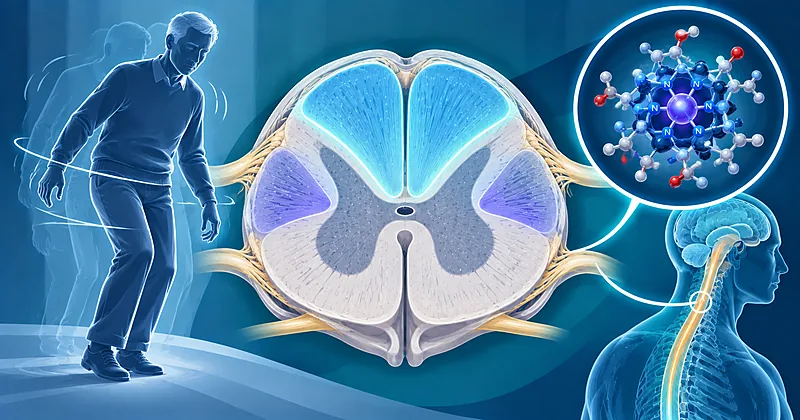
Subacute combined degeneration is the spinal cord lesion of vitamin B12 deficiency — symmetric damage to the dorsal columns and lateral corticospinal tracts, usually with a peripheral neuropathy alongside. It is among the few myelopathies that treatment can reverse, yet it is still missed when clinicians wait for anaemia or trust a “normal” B12 level.4,9 Recent guidance has changed how deficiency is tested, when treatment starts, and what to suspect in a young adult with a new sensory ataxia.1,3
Key Clinical Takeaways
These actions follow from the changes above, most practice-changing first. Each links to the section with the threshold and evidence behind it.
- 1Start intramuscular hydroxocobalamin as soon as blood is drawn in any patient with suspected B12-related neurological deficit → Which Treatment Should Start First, and How Fast
- 2Ask every young adult with sensory ataxia, paraesthesia, or leg weakness about nitrous oxide, and test homocysteine or MMA rather than B12 alone → Nitrous Oxide: The New Face of Subacute Combined Degeneration
- 3Do not exclude subacute combined degeneration because the haemoglobin and MCV are normal → Who Should Be Suspected of Subacute Combined Degeneration
- 4Use a functional marker (MMA or homocysteine) whenever total B12 is indeterminate and the neurology fits → What Confirms Subacute Combined Degeneration
- 5Never give folic acid alone to a patient who may be B12 deficient → Which Treatment Should Start First, and How Fast
- 6Check copper and zinc when the picture looks like subacute combined degeneration but B12 studies are normal or treatment fails → What Else Looks Like It
- 7Find and document the cause, because it decides whether replacement is lifelong → How Long Is Treatment, and What Is the Cause
Why This Update Matters
Neurological recovery in B12 deficiency depends on how long and how severe the deficit was before treatment. Most patients improve, but only a minority recover completely.5,6 Every week of delay lets reversible myelin swelling become fixed axonal loss. The rise in recreational nitrous oxide has also shifted the typical patient from an older adult with pernicious anaemia to a young adult whose blood count and B12 level may look normal.3,14
Who Should Be Suspected of Subacute Combined Degeneration?
Subacute combined degeneration typically starts with symmetric tingling or numbness in the feet, sometimes the hands. It then progresses over weeks to months to loss of vibration and joint-position sense, sensory ataxia, and spastic weakness.5,9 Because a large-fibre neuropathy often runs alongside, the classic combination is upgoing plantars with absent ankle jerks. Cognitive slowing, mood change, and visual loss from optic neuropathy can accompany or precede the cord signs.5,8
Consider subacute combined degeneration in any patient with symmetric distal paraesthesia plus impaired proprioception, a positive Romberg sign, or unexplained gait disorders. Practice impact: test vibration and joint position at the toes in every “neuropathy” or “unsteady” referral.
Strong RecModerate EvidenceHealton 1991NICE NG239 2024Do not exclude B12 deficiency because the haemoglobin and MCV are normal; neurological disease occurs without anaemia or macrocytosis in over a quarter of patients.
AgainstModerate EvidenceLindenbaum/NEJM 1988Evaluate for B12 deficiency when upper motor neuron signs coexist with depressed or absent ankle reflexes.
Moderate RecLow EvidenceStabler/NEJM 2013Ask specifically about risk factors: pernicious anaemia or autoimmune disease, gastrectomy or bariatric surgery, ileal disease, a vegan diet, metformin, long-term acid suppression, and nitrous oxide exposure.
Strong RecModerate EvidenceNICE NG239 2024BSH 2014Consider B12 deficiency in unexplained cognitive decline, depression, or bilateral optic neuropathy, particularly with any sensory signs.
Moderate RecLow EvidenceHealton 1991Briani 2013What Confirms Subacute Combined Degeneration?
No single test is a gold standard for B12 deficiency. Total B12 is cheap but poorly reflects tissue status. Active B12 (holotranscobalamin) performs similarly overall, and NICE treats the two as interchangeable first-line tests except in pregnancy.1 MMA and homocysteine accumulate when B12 is lacking or inactive, so they act as functional confirmation in indeterminate cases.9,10
Perform total B12 or active B12 as the first-line test, and interpret it with NICE bands: below 180 ng/L (133 pmol/L) or active below 25 pmol/L confirms deficiency; 180–350 ng/L or active 25–70 pmol/L is indeterminate. Practice impact: an “indeterminate” result with neurological signs is a prompt to test further, not a reason to stop.
Strong RecModerate EvidenceNICE NG239 2024Use locally validated thresholds where the laboratory’s assay differs substantially from the NICE bands.
Moderate RecLow EvidenceNICE NG239 2024Perform MMA or homocysteine when the B12 result is indeterminate and the clinical picture suggests deficiency.
Strong RecModerate EvidenceNICE NG239 2024BSH 2014Draw diagnostic samples before the first injection, but do not delay treatment while results are pending.
Strong RecLow EvidenceNICE NG239 2024ABN/Paris 2023Perform MRI of the cervical and thoracic cord in suspected subacute combined degeneration, looking for symmetric dorsal column T2 hyperintensity (the axial “inverted V”).
Moderate RecModerate EvidenceBriani 2013Hemmer/JNNP 1998Do not exclude subacute combined degeneration because spinal MRI is normal; imaging changes may be absent, particularly early or after treatment has started.7
AgainstModerate EvidenceHemmer/JNNP 1998Consider nerve conduction studies and somatosensory evoked potentials to document the neuropathy and dorsal column involvement when the diagnosis is uncertain or a baseline is needed.
Conditional RecLow EvidenceHemmer/JNNP 1998Perform intrinsic factor antibodies once deficiency is confirmed; a positive result supports pernicious anaemia, but a negative result does not exclude it.
Strong RecModerate EvidenceBSH 2014NICE NG239 2024Reading the B12 Tests at the Bedside
| Test | What It Tells You | Where It Misleads | Best Use in Suspected Myelopathy |
|---|---|---|---|
| Total B12 | Circulating cobalamin, mostly bound to inactive carriers | Assays vary widely; normal in nitrous oxide inactivation; falls physiologically in pregnancy | First-line screen; below 180 ng/L confirms |
| Active B12 (holotranscobalamin) | Fraction available to cells | Higher cost; also normal in nitrous oxide exposure | First-line alternative; preferred in pregnancy |
| Methylmalonic acid | Functional marker specific to B12-dependent metabolism | Raised in renal impairment and volume depletion | Confirms indeterminate results; first-line in nitrous oxide use |
| Homocysteine | Functional marker of B12 and folate status | Raised in folate or B6 deficiency, renal impairment, hypothyroidism; sample handling matters | Confirms indeterminate results; first-line in nitrous oxide use |
| Intrinsic factor antibodies | Supports pernicious anaemia | Positive in only about half; recent B12 injection can interfere | Establishes the cause, not the deficiency |
Which Treatment Should Start First, and How Fast?
The goal in subacute combined degeneration is to restore tissue B12 before swollen myelin becomes lost axons. For neurological involvement, haematology and NICE guidance favour intramuscular replacement at intensive frequency. The regimen continues until improvement plateaus, then moves to maintenance.1,2
Start hydroxocobalamin 1 mg intramuscularly on alternate days until there is no further neurological improvement, then 1 mg every two months, in B12 deficiency with neurological involvement. Practice impact: write the loading course as open-ended and reviewed against the examination, not as a fixed number of doses.
Strong RecLow EvidenceBSH 2014Start treatment the same day in the emergency department or clinic when neurological deficits are present, rather than deferring to primary care.
Strong RecLow EvidenceABN/Paris 2023NICE NG239 2024Do not give folic acid alone to a patient who may be B12 deficient; it can correct the anaemia while the neurological damage progresses. If both are deficient, start B12 first or at the same time.
AgainstModerate EvidenceBSH 2014Avoid switching to oral B12 during the loading phase of neurological disease.
AgainstLow EvidenceNICE NG239 2024BSH 2014Monitor potassium and the blood count in the first days of treatment when severe megaloblastic anaemia is present.
Conditional RecLow EvidenceCarmel/Blood 2008Refer for physiotherapy and gait rehabilitation early, alongside replacement, when there is sensory ataxia or weakness.
Moderate RecLow EvidenceABN/Paris 2023Replacement Regimens Compared
The doses below reflect published UK guidance and trial regimens. Cyanocobalamin injection schedules vary between countries and institutions and are local-protocol dependent — confirm against your formulary.
| Agent and Route | Neurological Loading | Maintenance | Evidence Base | Practical Notes |
|---|---|---|---|---|
| Hydroxocobalamin IM (UK standard) | 1 mg alternate days until no further improvement | 1 mg every 2 months | BSH guideline; consensus | Better retained than cyanocobalamin; injections generally well tolerated |
| Hydroxocobalamin IM (nitrous oxide myelopathy) | 1 mg every other day for at least 2 weeks, first dose in ED | Individualise to cause and ongoing exposure | ABN clinical practice guide | Stock in emergency departments; continue on admission |
| Cyanocobalamin IM or deep SC (common US practice) | Intensive early dosing — schedule per local protocol | Typically monthly | Consensus; local protocol | More frequent maintenance than hydroxocobalamin |
| Cyanocobalamin oral high dose | Not recommended for loading in neurological disease | 1–2 mg daily in selected stable patients | Small RCTs; Cochrane low-certainty | Works via passive absorption even without intrinsic factor; relies on adherence |
Nitrous Oxide: The New Face of Subacute Combined Degeneration
Nitrous oxide irreversibly oxidises the cobalt in cobalamin, disabling methionine synthase even when circulating B12 is normal. Heavy recreational use — from small canisters or larger cylinders — produces a myeloneuropathy that looks like classic subacute combined degeneration. There is often a prominent peripheral neuropathy that can resemble Guillain–Barré syndrome.3,14 The ABN guide was written to speed recognition and treatment in emergency departments.3
Ask every patient with new paraesthesia, sensory ataxia, or leg weakness — especially young adults — directly and non-judgementally about nitrous oxide use, including amount and duration. Practice impact: make “any laughing gas or balloons?” a routine question in acute sensory presentations.
Strong RecLow EvidenceABN/Paris 2023Perform plasma homocysteine or serum MMA as the initial test when nitrous oxide use is suspected, because total and active B12 may be normal.
Strong RecLow EvidenceNICE NG239 2024ABN/Paris 2023Start hydroxocobalamin 1 mg intramuscularly as soon as possible and continue every other day for at least two weeks, taking blood first but not waiting for results.
Strong RecLow EvidenceABN/Paris 2023Counsel complete abstinence as the core of treatment, and refer to drug and alcohol services with a harm-reduction approach.
Strong RecLow EvidenceABN/Paris 2023Evaluate with nerve conduction studies when weakness is prominent, since nitrous oxide often causes a motor-predominant axonal neuropathy that can mimic Guillain–Barré syndrome.
Moderate RecLow EvidenceABN/Paris 2023Garakani 2016Avoid routine methionine or folic acid supplementation outside a trial; they have been proposed as adjuncts, but evidence is insufficient to recommend them.
Conditional RecLow EvidenceABN/Paris 2023What Else Looks Like It?
A dorsal column and pyramidal syndrome has a short, important differential. Copper deficiency myelopathy is the closest clinical and radiological copy. It occurs after upper-gastrointestinal or bariatric surgery, with malabsorption, and with excess zinc intake, including zinc-containing denture creams.15 Cervical spondylotic myelopathy and incidental spondylosis often coexist with B12 deficiency in older adults.
Check serum copper, caeruloplasmin, and zinc when the picture suggests subacute combined degeneration but B12 and functional markers are normal, or when B12 replacement fails.
Strong RecLow EvidenceKumar/Mayo 2006Evaluate for both B12 and copper deficiency after bariatric or gastric surgery, as the two can coexist.
Moderate RecLow EvidenceKumar/Mayo 2006Test syphilis serology and HIV in a sensory-ataxic myelopathy of uncertain cause.
Moderate RecLow EvidenceStabler/NEJM 2013Reassess the diagnosis when deficits keep progressing despite adequate B12 replacement and abstinence from nitrous oxide.
Moderate RecLow EvidenceCarmel/Blood 2008Separating the Dorsal Column Mimics
| Condition | Clue That Points Away From B12 | Most Useful Discriminating Test |
|---|---|---|
| Copper deficiency myelopathy | Prior gastric or bariatric surgery; zinc excess; neutropenia | Serum copper, caeruloplasmin, zinc |
| Nitrous oxide myelopathy | Young adult; recent heavy use; normal total B12 | Homocysteine or MMA; exposure history |
| Tabes dorsalis | Lightning pains, Argyll Robertson pupils, no pyramidal signs | Treponemal serology; CSF |
| HIV vacuolar or HTLV-1 myelopathy | Risk factors; slowly progressive spastic paraparesis | HIV and HTLV-1 serology |
| Cervical spondylotic myelopathy | Neck pain, radicular arm signs, focal compression | MRI with matching compression |
| Multiple sclerosis | Relapses, asymmetric or short-segment lesions, brain lesions | Brain MRI; CSF oligoclonal bands |
| Vitamin E deficiency, Friedreich ataxia | Malabsorption, or early onset with cardiomyopathy | Vitamin E level; genetic testing |
Clinical Decision Pathway
A question-based route from first suspicion of subacute combined degeneration to a treatment and cause plan.
How Long Is Treatment, and What Is the Cause?
Loading dose corrects the deficiency; the cause decides the duration. Pernicious anaemia and surgical loss of the stomach or terminal ileum are permanent. Diet, medication, and nitrous oxide may be reversible.2,10
Continue lifelong maintenance when the cause is irreversible — pernicious anaemia, total or partial gastrectomy, or ileal resection. Practice impact: code the cause in the record so maintenance injections are not stopped at a later medication review.
Strong RecModerate EvidenceBSH 2014NICE NG239 2024Evaluate the cause in every confirmed case: intrinsic factor antibodies, surgical and gastrointestinal history, diet, medication review, and nitrous oxide exposure.
Strong RecLow EvidenceNICE NG239 2024Consider coeliac disease and other malabsorptive states when there is no dietary, drug, or autoimmune explanation.
Conditional RecLow EvidenceBSH 2014Reassess long-term metformin therapy for B12 status: in the Diabetes Prevention Program Outcomes Study, each year of use increased the odds of deficiency.16
Moderate RecModerate EvidenceDPPOS 2016Counsel patients on vegan diets about ongoing supplementation or fortified foods once loading is complete.
Moderate RecLow EvidenceNICE NG239 2024Do not stop maintenance because the serum B12 is high after injections; the level reflects recent dosing, not a cured cause.
AgainstLow EvidenceCarmel/Blood 2008Who Needs a Different Approach?
Pregnancy lowers total B12 without true deficiency, anaesthetic nitrous oxide can unmask latent deficiency, and older adults may present with cognitive change rather than myelopathy.1,9,11
Use active B12 as the initial test in pregnancy, since total B12 falls physiologically.
Strong RecLow EvidenceNICE NG239 2024Evaluate for B12 deficiency after bariatric surgery with regular monitoring and prophylactic supplementation, and check copper at the same time.
Moderate RecLow EvidenceBSH 2014Kumar/Mayo 2006Interpret MMA and homocysteine cautiously in chronic kidney disease, relying on clinical findings and treatment response where results are borderline.
Moderate RecLow EvidenceStabler/NEJM 2013Consider B12 deficiency in older adults with cognitive decline and sensory signs, while recognising that replacement is less likely to reverse established dementia.
Conditional RecLow EvidenceHealton 1991Monitoring and Follow-Up in Subacute Combined Degeneration
Recovery in subacute combined degeneration is gradual. Paraesthesia and proprioception usually improve before spasticity, and improvement can continue for months.5,6 The aim of follow-up is to confirm response, keep maintenance on track, and recognise treatment failure early.
Monitor neurological function with a structured examination — vibration and position sense, Romberg, gait, and power — at each review during loading and in the months after.
Moderate RecLow EvidenceHealton 1991Reassess the diagnosis of subacute combined degeneration if there is no neurological improvement after an adequate loading course.
Moderate RecLow EvidenceCarmel/Blood 2008Consider repeating MMA or homocysteine when response is uncertain, rather than serum B12, which rises after any injection.
Conditional RecLow EvidenceCarmel/Blood 2008Stabler/NEJM 2013Counsel patients that residual deficits are common. Older age, longer symptom duration, more severe deficits, and longer MRI lesions predict incomplete recovery. Practice impact: set realistic expectations at the first visit to support adherence.
Moderate RecLow EvidenceVasconcelos 2006Healton 1991Monitor nitrous oxide users for relapse of use at every visit, and re-examine if symptoms return.
Moderate RecLow EvidenceABN/Paris 2023Reassess with repeat spinal MRI only when the course is atypical; clinical recovery can precede radiological resolution.
Conditional RecLow EvidenceVasconcelos 2006| What to Track | When | Signal That Changes the Plan | Common Pitfall |
|---|---|---|---|
| Vibration, position sense, Romberg | Every review in loading and early follow-up | Plateau → move to maintenance; decline → reassess | Recording only “sensation intact” to pinprick |
| Gait and spasticity | Every review | Persistent ataxia → intensify rehabilitation | Stopping physiotherapy once numbness improves |
| Blood count and potassium | First days if severely anaemic | Falling potassium or failure of reticulocyte rise | Missing a coexisting iron deficiency unmasked by treatment |
| MMA or homocysteine | If response is uncertain | Persistent elevation → adherence, exposure, or wrong diagnosis | Rechecking serum B12 instead |
| Nitrous oxide use | Every visit in exposed patients | Renewed use → counsel, refer, extend treatment | Assuming abstinence without asking |
| Maintenance injections | Every 2 months (hydroxocobalamin) | Missed doses → recall | Maintenance quietly stopped at a medication review |
Evidence in Context
Where the guidance on subacute combined degeneration agrees, where it differs, and what the evidence behind it can and cannot support.
Where NICE, BSH, and the ABN Agree▾
All three advise urgent parenteral treatment of neurological B12 deficiency without waiting for results, and all accept that serum B12 is imperfect and functional markers help.
Where They Differ in Emphasis▾
BSH gives an open-ended loading schedule; the ABN nitrous oxide guide sets a floor of at least two weeks; NICE focuses on who to test and test thresholds, deferring dosing to prescribing references.
Oral Versus Intramuscular Replacement▾
Small randomised trials, pooled by Cochrane, show high-dose oral B12 corrects biochemical deficiency about as well as injection. Certainty is low and neurological outcomes were not the focus, so injections remain standard in subacute combined degeneration.
How Firm Is the Prognostic Evidence?▾
Predictors of recovery — age, symptom duration, severity, Romberg and Babinski signs, MRI lesion length — come from case series and a pooled case review. Use them to counsel, never to withhold treatment.
Test Thresholds Across Laboratories▾
Assays differ, and NICE allows validated local thresholds, so the same number may be reported differently between hospitals.
Evidence Gaps
These are the open questions clinicians meet when managing subacute combined degeneration, where practice still rests on consensus or observational data.
- The optimal loading frequency and duration for neurological B12 deficiency have never been compared in a randomised trial.
- Whether high-dose oral B12 is adequate for maintenance after subacute combined degeneration, rather than for uncomplicated deficiency, is untested.
- The value of methionine or other adjuncts in nitrous oxide myelopathy is unknown.
- No validated tool predicts which patients will recover fully, and prognostic factors come largely from case series.
- The best functional test (MMA versus homocysteine) and its cut-off in nitrous oxide exposure remain unsettled.
- Whether routine B12 screening in long-term metformin or acid-suppression users prevents neurological disease has not been shown.
References
- 1.National Institute for Health and Care Excellence. Vitamin B12 deficiency in over 16s: diagnosis and management. NICE guideline NG239. London: NICE; 2024. https://www.nice.org.uk/guidance/ng239
- 2.Devalia V, Hamilton MS, Molloy AM; British Committee for Standards in Haematology. Guidelines for the diagnosis and treatment of cobalamin and folate disorders. Br J Haematol. 2014;166(4):496-513. https://doi.org/10.1111/bjh.12959
- 3.Paris A, Lake L, Joseph A, et al. Nitrous oxide-induced subacute combined degeneration of the cord: diagnosis and treatment. Pract Neurol. 2023;23(3):222-228. https://doi.org/10.1136/pn-2022-003631
- 4.Lindenbaum J, Healton EB, Savage DG, et al. Neuropsychiatric disorders caused by cobalamin deficiency in the absence of anemia or macrocytosis. N Engl J Med. 1988;318(26):1720-1728. https://doi.org/10.1056/NEJM198806303182604
- 5.Healton EB, Savage DG, Brust JC, Garrett TJ, Lindenbaum J. Neurologic aspects of cobalamin deficiency. Medicine (Baltimore). 1991;70(4):229-245. https://doi.org/10.1097/00005792-199107000-00001
- 6.Vasconcelos OM, Poehm EH, McCarter RJ, Campbell WW, Quezado ZM. Potential outcome factors in subacute combined degeneration: review of observational studies. J Gen Intern Med. 2006;21(10):1063-1068. https://doi.org/10.1111/j.1525-1497.2006.00525.x
- 7.Hemmer B, Glocker FX, Schumacher M, Deuschl G, Lücking CH. Subacute combined degeneration: clinical, electrophysiological, and magnetic resonance imaging findings. J Neurol Neurosurg Psychiatry. 1998;65(6):822-827. https://doi.org/10.1136/jnnp.65.6.822
- 8.Briani C, Dalla Torre C, Citton V, et al. Cobalamin deficiency: clinical picture and radiological findings. Nutrients. 2013;5(11):4521-4539. https://doi.org/10.3390/nu5114521
- 9.Stabler SP. Vitamin B12 deficiency. N Engl J Med. 2013;368(2):149-160. https://doi.org/10.1056/NEJMcp1113996
- 10.Green R, Allen LH, Bjørke-Monsen AL, et al. Vitamin B12 deficiency. Nat Rev Dis Primers. 2017;3:17040. https://doi.org/10.1038/nrdp.2017.40
- 11.Carmel R. How I treat cobalamin (vitamin B12) deficiency. Blood. 2008;112(6):2214-2221. https://doi.org/10.1182/blood-2008-03-040253
- 12.Kuzminski AM, Del Giacco EJ, Allen RH, Stabler SP, Lindenbaum J. Effective treatment of cobalamin deficiency with oral cobalamin. Blood. 1998;92(4):1191-1198. https://doi.org/10.1182/blood.V92.4.1191
- 13.Wang H, Li L, Qin LL, Song Y, Vidal-Alaball J, Liu TH. Oral vitamin B12 versus intramuscular vitamin B12 for vitamin B12 deficiency. Cochrane Database Syst Rev. 2018;3:CD004655. https://doi.org/10.1002/14651858.CD004655.pub3
- 14.Garakani A, Jaffe RJ, Savla D, et al. Neurologic, psychiatric, and other medical manifestations of nitrous oxide abuse: a systematic review of the case literature. Am J Addict. 2016;25(5):358-369. https://doi.org/10.1111/ajad.12372
- 15.Kumar N. Copper deficiency myelopathy (human swayback). Mayo Clin Proc. 2006;81(10):1371-1384. https://doi.org/10.4065/81.10.1371
- 16.Aroda VR, Edelstein SL, Goldberg RB, et al. Long-term metformin use and vitamin B12 deficiency in the Diabetes Prevention Program Outcomes Study. J Clin Endocrinol Metab. 2016;101(4):1754-1761. https://doi.org/10.1210/jc.2015-3754
- 17.Hunt A, Harrington D, Robinson S. Vitamin B12 deficiency. BMJ. 2014;349:g5226. https://doi.org/10.1136/bmj.g5226
How to Read the Evidence Tags
Every recommendation carries a strength tag and an evidence tag — Medaptly’s own simplified reading of the underlying guidance, not a reproduction of any source body’s grading system. Subacute combined degeneration is rarely studied in trials, so a strong recommendation with a low-evidence tag is common by design: a safe, low-cost action with large potential benefit.
| Strength Tag | What It Means |
|---|---|
| Strong Rec | High-quality evidence or strong consensus broadly supports this action |
| Moderate Rec | The weight of evidence favours this action |
| Conditional Rec | The benefit is less certain — individualise |
| Against | Evidence points to no benefit or potential harm |
| Evidence Tag | What It Means |
|---|---|
| High Evidence | Multiple well-designed trials or high-quality meta-analyses |
| Moderate Evidence | A single trial, large cohort, or substantial observational dataset |
| Low Evidence | Expert consensus, case series, or very-low-certainty evidence |