
Pelvic Inflammatory Disease Treatment: 8 Critical Rules
Clinical Practice Update — Diagnostic Criteria, Outpatient and Inpatient Regimens, Tubo-Ovarian Abscess Care, IUD Considerations, and Long-Term Sequelae
This is an original clinical education article informed by current guidelines and evidence. See References below for source documents.
- Clinical Focus
- Evidence-based pelvic inflammatory disease treatment from initial empiric therapy through abscess management and counselling
- Target Audience
- Family physicians, emergency physicians, obstetrician-gynecologists, sexual health clinicians, pharmacists, nurse practitioners
- Setting
- Primary care, sexual health clinics, emergency departments, hospital inpatient units
- Source Evidence
- •CDC Sexually Transmitted Infections Treatment Guidelines (2021)
- •BASHH UK National Guideline for the Management of PID (2018, updated 2020)
- •WHO Guidelines for the Management of Symptomatic STIs (2021)
- •ACOG Committee Opinion — Long-Acting Reversible Contraception (PID-related guidance, 2019)
- •PEACH Trial — Outcomes of Outpatient vs Inpatient PID Therapy (AJOG, 2002)
Key Clinical Takeaways
Effective pelvic inflammatory disease treatment rests on three principles: treat early on minimum clinical criteria, use the right combination regimen for 14 days, and counsel honestly about sequelae. The rules below translate current evidence into actions you can take at the first visit.
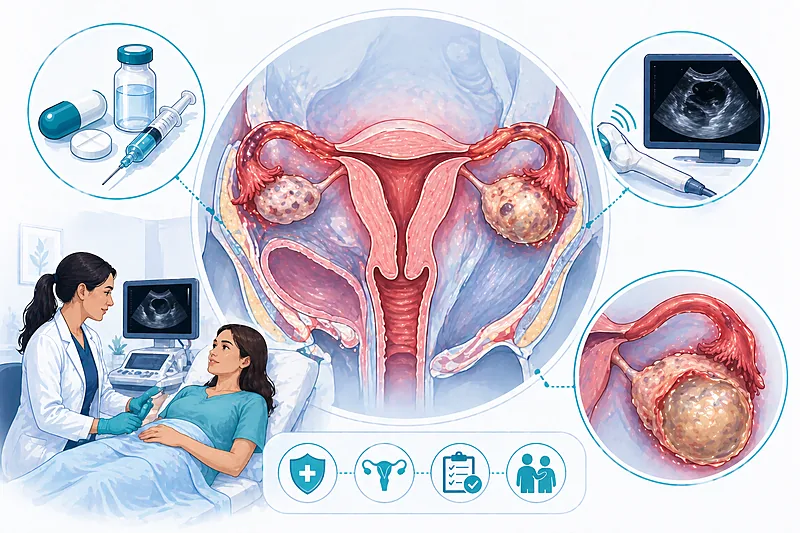
- 1Treat empirically on minimum clinical criteria — do not wait for positive Chlamydia trachomatis or gonorrhea testing before starting antibiotics → Diagnosis
- 2Use CDC’s 2021 outpatient regimen: ceftriaxone 500 mg IM single dose + doxycycline 100 mg twice daily + metronidazole 500 mg twice daily for 14 days → Outpatient Regimen
- 3Admit for IV therapy when pregnancy, tubo-ovarian abscess, failed outpatient therapy, severe illness, or inability to tolerate oral treatment → Inpatient Regimen
- 4Treat a tubo-ovarian abscess with broad-spectrum IV antibiotics first; drain if it fails to respond within 48–72 hours or is >7–8 cm → TOA Care
- 5Leave an IUD in place if the patient is improving on therapy within 48–72 hours; remove only if no clinical response → IUD Considerations
- 6Test all patients for HIV, syphilis, gonorrhoea, and chlamydia at diagnosis; rescreen for gonorrhoea and chlamydia at 3 months → Diagnosis
- 7Treat all sexual partners of the last 60 days empirically for gonorrhoea and chlamydia regardless of the partner’s symptoms → Partner Care
- 8Counsel every patient on long-term sequelae: infertility, ectopic pregnancy, and chronic pelvic pain rise after each episode → Sequelae
- 9Review at 48–72 hours to confirm clinical response — failure to improve is the signal to escalate, image, or reconsider the diagnosis → Monitoring
Diagnostic Criteria in Pelvic Inflammatory Disease Treatment
The starting point of pelvic inflammatory disease treatment is a low diagnostic threshold. The CDC 2021 criteria deliberately sacrifice specificity for sensitivity — the cost of missing a case (tubal damage, infertility, ectopic pregnancy) is far greater than the cost of a 14-day antibiotic course.
- Cervical motion tenderness on pelvic examination
- Uterine tenderness on pelvic examination
- Adnexal tenderness on pelvic examination
Start empiric antibiotic therapy in any sexually active young woman with pelvic or lower abdominal pain who has cervical motion, uterine, or adnexal tenderness on pelvic examination — the CDC minimum criterion.
Strong Rec High Evidence CDC STI 2021 BASHH 2018Strengthen diagnostic confidence with supportive criteria: oral temperature above 38.3°C, abnormal cervical or vaginal mucopurulent discharge, abundant white cells on wet-mount, elevated ESR or CRP, or laboratory evidence of gonorrhoea or chlamydia.
Moderate Rec Moderate Evidence CDC STI 2021Exclude pregnancy with a urine or serum hCG in every patient before treatment — an ectopic pregnancy can mimic PID and requires a completely different pathway.
Strong Rec Moderate Evidence BASHH 2018Test every patient diagnosed with PID for gonorrhoea, chlamydia, HIV, and syphilis. Consider testing for Mycoplasma genitalium where locally available, particularly in recurrent or refractory cases.
Strong Rec Moderate Evidence CDC STI 2021Arrange transvaginal ultrasound when a tubo-ovarian abscess is suspected, the diagnosis is unclear, or the patient is severely unwell — the scan is not needed in most mild outpatient cases.
Moderate Rec Moderate Evidence CDC STI 2021 BASHH 2018Outpatient Pelvic Inflammatory Disease Treatment
Most cases of pelvic inflammatory disease can be treated as an outpatient. The PEACH trial showed no meaningful difference in long-term reproductive outcomes between outpatient and inpatient therapy for mild-to-moderate disease, provided adherence is good and follow-up is reliable.
Prescribe the CDC 2021 outpatient regimen: ceftriaxone 500 mg IM as a single dose (1 g if body weight ≥ 150 kg), PLUS doxycycline 100 mg orally twice daily for 14 days, PLUS metronidazole 500 mg orally twice daily for 14 days.
Strong Rec High Evidence CDC STI 2021Add metronidazole to every outpatient regimen — the 2021 CDC update made it mandatory rather than optional, based on growing evidence of anaerobic involvement even in mild disease.
Strong Rec Moderate Evidence CDC STI 2021Consider the BASHH alternative regimen of intramuscular ceftriaxone followed by ofloxacin 400 mg twice daily plus metronidazole 500 mg twice daily for 14 days where doxycycline is poorly tolerated — but avoid fluoroquinolones as first-line given rising gonococcal resistance.
Conditional Rec Moderate Evidence BASHH 2018Do not use azithromycin monotherapy for PID — it lacks the spectrum for anaerobes and has poorer long-term outcomes than combination therapy in trials.
Against Moderate Evidence CDC STI 2021Advise patients to abstain from sexual intercourse until they and their partner(s) have completed therapy and all symptoms have resolved, to prevent re-infection during the treatment period.
Strong Rec Moderate Evidence CDC STI 2021Antibiotic Regimens at a Glance
| Regimen | Drugs and Doses | Best Suited For | Practical Tips & Cautions |
|---|---|---|---|
| CDC Outpatient | Ceftriaxone 500 mg IM × 1 + Doxycycline 100 mg PO BID × 14d + Metronidazole 500 mg PO BID × 14d | Mild-to-moderate disease; able to tolerate oral therapy | Check doxycycline tolerance; counsel on alcohol avoidance with metronidazole. |
| BASHH UK Outpatient | Ceftriaxone 1 g IM × 1 + Doxycycline 100 mg PO BID × 14d + Metronidazole 400 mg PO BID × 14d | UK practice; similar clinical outcomes | Higher ceftriaxone dose reflects UK gonococcal resistance trends. |
| CDC Inpatient A | Ceftriaxone 1 g IV every 24h + Doxycycline 100 mg PO or IV every 12h + Metronidazole 500 mg PO or IV every 12h | Severe disease; tubo-ovarian abscess; pregnancy | Step down to oral doxycycline + metronidazole after 24–48h of clinical improvement to complete 14 days. |
| CDC Inpatient B | Clindamycin 900 mg IV every 8h + Gentamicin loading dose then 3–5 mg/kg once daily | Severe beta-lactam allergy; tubo-ovarian abscess with strong anaerobic coverage needed | Monitor renal function and aminoglycoside levels. |
| Pregnancy regimen | Ceftriaxone + azithromycin + metronidazole (individualise with specialist input) | Pregnant patients — always admit | Avoid doxycycline and fluoroquinolones. Involve obstetrics and infectious disease early. |
Inpatient Pelvic Inflammatory Disease Treatment and Tubo-Ovarian Abscess
Admission remains essential for a defined minority — those who are pregnant, severely unwell, have a tubo-ovarian abscess, cannot tolerate oral therapy, or have failed outpatient management. Get the antibiotics right first, then decide whether drainage is needed.
Admit the patient when any of the following are present: pregnancy, tubo-ovarian abscess, severe illness (high fever, peritonitis, vomiting), failure of outpatient therapy at 48–72 hours, or inability to tolerate or comply with oral therapy.
Strong Rec High Evidence CDC STI 2021 BASHH 2018Start broad-spectrum IV therapy for confirmed tubo-ovarian abscess: ceftriaxone 1 g IV daily PLUS metronidazole 500 mg IV every 8 hours PLUS doxycycline 100 mg PO or IV every 12 hours, continued until at least 24 hours of clinical improvement.
Strong Rec Moderate Evidence CDC STI 2021Consider image-guided percutaneous or transvaginal drainage of a tubo-ovarian abscess when it measures 7–8 cm or more, the patient is clinically worsening, or there is no improvement after 48–72 hours of IV antibiotics.
Moderate Rec Moderate Evidence ACOG 2019Reserve surgical exploration for suspected ruptured abscess, haemodynamic instability, or failure of percutaneous drainage. Laparoscopic washout with fertility preservation is preferred over open hysterectomy in reproductive-age women.
Moderate Rec Low Evidence Expert ConsensusStep down from IV to oral therapy after 24–48 hours of clinical improvement to complete a total of 14 days, using doxycycline plus metronidazole as the oral continuation.
Strong Rec Moderate Evidence CDC STI 2021IUD Considerations and Partner Care
Two decisions beyond the antibiotics often make the difference to recurrence: what to do about an intrauterine device, and whether partners are treated. Getting both right prevents early re-infection.
Leave an IUD in place if the patient is improving clinically within 48–72 hours of starting antibiotics — early removal is not required and may compromise future contraception needs.
Moderate Rec Moderate Evidence CDC STI 2021 ACOG CO 672Remove the IUD if the patient fails to improve within 48–72 hours of appropriate antibiotic therapy, and replace it with alternative contraception cover.
Moderate Rec Low Evidence CDC STI 2021Evaluate and treat all sexual partners who had contact within 60 days before symptom onset. Empiric therapy for gonorrhoea and chlamydia is appropriate even if the partner is asymptomatic.
Strong Rec Moderate Evidence CDC STI 2021Use expedited partner therapy (patient-delivered partner therapy) in jurisdictions where it is legal and when direct evaluation is not feasible — this improves treatment completion rates.
Moderate Rec Moderate Evidence CDC STI 2021Rescreen for gonorrhoea and chlamydia 3 months after treatment completion to detect re-infection, which is more common than treatment failure.
Strong Rec Moderate Evidence CDC STI 2021Counselling on Long-Term Sequelae
The reason PID matters long after the antibiotics finish is its impact on reproduction and chronic health. Patients deserve an honest, proportionate conversation at the first visit — not vague reassurance.
Counsel every patient on the main long-term sequelae: tubal factor infertility (roughly 8% after one episode, rising with each episode), ectopic pregnancy (six-fold increased risk), and chronic pelvic pain.
Strong Rec Moderate Evidence BASHH 2018 PEACH Trial 2002Stress that earlier treatment and avoiding re-infection reduce sequelae rates — this reframes adherence and partner care as protective rather than punitive.
Moderate Rec Moderate Evidence BASHH 2018Advise women planning pregnancy after PID that conception is possible but often slower. Prompt investigation of any early pregnancy symptoms is essential given the elevated ectopic risk.
Moderate Rec Moderate Evidence BASHH 2018Offer comprehensive sexual health advice: condoms for STI prevention, HPV vaccination catch-up where eligible, and discussion of pre-exposure prophylaxis for HIV in high-risk patients.
Strong Rec Moderate Evidence CDC STI 2021Clinical Decision Pathway
A practical, question-based sequence for the patient presenting with lower abdominal or pelvic pain in whom PID is suspected. Work through the questions in order.
Monitoring and Follow-Up
| Parameter | When to Check | What to Look For | Common Pitfalls |
|---|---|---|---|
| Clinical review | 48–72 hours after starting outpatient therapy | Defervescence, pain reduction, ability to tolerate oral intake | Do not wait a full week — failure to improve at 48–72 hours is the escalation trigger. |
| Adherence check | At the 72-hour review | Taking all three drugs; partner treatment progress | Non-adherence, especially to doxycycline twice-daily dosing, is the commonest cause of apparent failure. |
| Imaging reassessment | If TOA present, at 48–72 hours and before discharge | Reduction in abscess size; no new collections | Do not discharge a patient with a stable or enlarging TOA on antibiotics alone. |
| STI rescreening | 3 months after treatment | Re-infection with gonorrhoea or chlamydia | Book the follow-up at the index visit — attendance rates drop steeply if deferred. |
| Long-term review | If chronic pelvic pain persists >3 months | Adhesional disease, endometriosis, persistent pain | Refer to gynaecology or chronic pain services; avoid repeat empiric antibiotics. |
Evidence in Context
Where the major guidelines agree, where they differ, and what recent trials and surveillance data have changed.
Where CDC, BASHH, and WHO Agree
All three bodies share the same architecture: empiric treatment on minimum clinical criteria, a 14-day course combining a cephalosporin, doxycycline, and metronidazole, partner treatment for the 60-day window, and screening for HIV and syphilis. They all recommend test-of-re-infection rather than test-of-cure.
Where CDC, BASHH, and WHO Differ
Ceftriaxone dose: CDC 2021 raised the dose to 500 mg (1 g if body weight ≥ 150 kg); BASHH UK uses 1 g as standard. Both reflect trends in gonococcal resistance.
Metronidazole: CDC 2021 made metronidazole mandatory; BASHH leaves room for omission in mild cases without anaerobic features.
Mycoplasma genitalium: BASHH and WHO explicitly address resistance-guided therapy where testing is available; CDC is more cautious about recommending routine testing.
PEACH Trial: What It Changed
The PEACH randomised trial compared outpatient oral cefoxitin plus doxycycline with an inpatient IV cefoxitin plus doxycycline regimen. Short-term clinical outcomes were similar, and after years of follow-up the rates of infertility, ectopic pregnancy, and chronic pelvic pain did not differ. This study underpins the move toward outpatient management for mild-to-moderate disease.
Mycoplasma genitalium: The Emerging Pathogen
Growing evidence implicates Mycoplasma genitalium in a meaningful minority of PID cases. Because of widespread macrolide resistance, testing where available and resistance-guided therapy with moxifloxacin or pristinamycin is now advocated in recurrent or treatment-failing cases, particularly in the UK and Europe.
What We Still Do Not Know
The optimal approach to subclinical PID, the role of doxy-PEP in recurrent PID, the best threshold for percutaneous vs surgical drainage of TOA, and whether newer oral cephalosporins can safely replace intramuscular ceftriaxone all remain open questions.
References
- 1.Workowski KA, Bachmann LH, Chan PA, et al. Sexually Transmitted Infections Treatment Guidelines, 2021. MMWR Recomm Rep. 2021;70(4):1–187. doi:10.15585/mmwr.rr7004a1
- 2.Ross J, Guaschino S, Cusini M, Jensen J. 2017 European guideline for the management of pelvic inflammatory disease. Int J STD AIDS. 2018;29(2):108–114. doi:10.1177/0956462417744099
- 3.Ness RB, Soper DE, Holley RL, et al. Effectiveness of inpatient and outpatient treatment strategies for women with pelvic inflammatory disease: results from the Pelvic Inflammatory Disease Evaluation and Clinical Health (PEACH) Randomized Trial. Am J Obstet Gynecol. 2002;186(5):929–937. doi:10.1067/mob.2002.121625
- 4.World Health Organization. Guidelines for the management of symptomatic sexually transmitted infections. Geneva: WHO; 2021. who.int/publications/i/item/9789240024168
- 5.Brunham RC, Gottlieb SL, Paavonen J. Pelvic Inflammatory Disease. N Engl J Med. 2015;372(21):2039–2048. doi:10.1056/NEJMra1411426
- 6.ACOG Committee Opinion No. 672: Clinical Challenges of Long-Acting Reversible Contraceptive Methods. Obstet Gynecol. 2016;128(3):e69–e77. doi:10.1097/AOG.0000000000001644
- 7.Savaris RF, Fuhrich DG, Duarte RV, Franik S, Ross JDC. Antibiotic therapy for pelvic inflammatory disease. Cochrane Database Syst Rev. 2017;4(4):CD010285. doi:10.1002/14651858.CD010285.pub2
How to Read the Evidence Tags
Every recommendation carries two tags for recommendation strength and evidence quality — Medaptly’s own simplified system.
Recommendation Strength
| Tag | What It Means |
|---|---|
| Strong Rec | High-quality evidence broadly supports this action. |
| Moderate Rec | The weight of evidence favours this action. |
| Conditional Rec | The benefit is less certain — individualise. |
| Against | Evidence shows no benefit or potential harm. |
Evidence Quality
| Tag | What It Means |
|---|---|
| High Evidence | Multiple well-designed RCTs or high-quality meta-analyses. |
| Moderate Evidence | Single RCT or large observational studies. |
| Low Evidence | Expert consensus or small studies. |