
VBAC Delivery: 8 Essential TOLAC Rules for 2026
Clinical Practice Update — Candidate Selection, Success Calculators, Intrapartum Management, Uterine Rupture Recognition, and Shared Decision-Making
This is an original clinical education article informed by current guidelines and evidence. See References below for source documents.
- Clinical Focus
- Evidence-based VBAC delivery in women with one or more prior cesarean births, from antenatal counselling to intrapartum management
- Target Audience
- Obstetricians, maternal-fetal medicine specialists, family physicians providing maternity care, midwives, labor and delivery nurses
- Setting
- Antenatal clinics, labor and delivery units with immediate access to cesarean delivery capability
- Source Evidence
- •ACOG Practice Bulletin 205 — Vaginal Birth After Cesarean Delivery (2019, reaffirmed 2022)
- •RCOG Green-top Guideline 45 — Birth After Previous Caesarean Birth (2015)
- •SOGC Clinical Practice Guideline — Trial of Labour After Caesarean (2019)
- •MFMU Network Cesarean Registry — Landon et al., NEJM 2004
- •Grobman VBAC Prediction Model — MFMU Calculator (2007, updated 2021)
Key Clinical Takeaways
Effective VBAC delivery care depends on three decisions made well before labor: selecting the right candidate, estimating success honestly, and confirming that emergency cesarean capability is available at the birthing site. The rules below distill current evidence into an antenatal and intrapartum workflow.
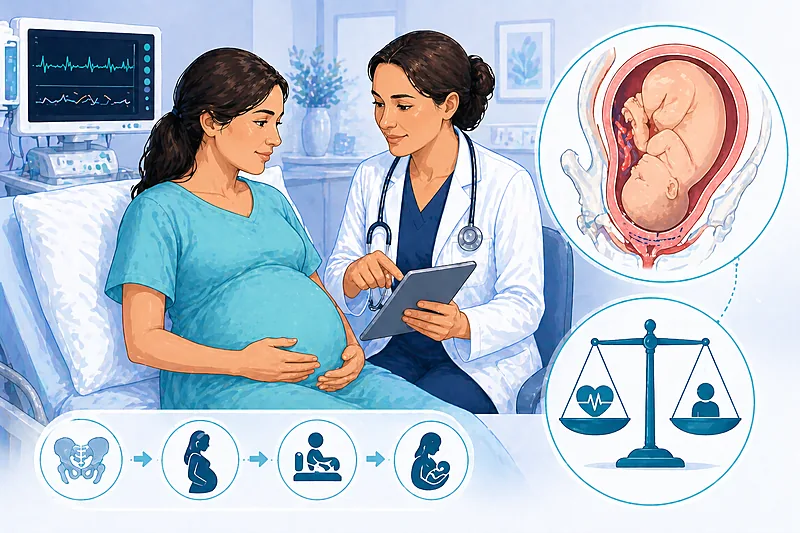
- 1Offer trial of labor to most women with one previous low-transverse cesarean and no current contraindication → Eligibility
- 2Do not offer TOLAC when there is a previous classical, T-shaped, or fundal incision — rupture risk is prohibitive → Eligibility
- 3Use the Grobman MFMU calculator at the first prenatal visit to personalise success prediction and share it openly with the patient → Counselling
- 4Conduct TOLAC only where immediate access to cesarean delivery and anaesthesia is continuously available → Safety
- 5Avoid misoprostol for induction during TOLAC — it is associated with significantly higher rupture risk → Induction
- 6Use continuous electronic fetal monitoring throughout active TOLAC — a change in the tracing is the earliest rupture sign → Intrapartum
- 7Recognise fetal bradycardia, new severe abdominal pain, loss of station, or vaginal bleeding as rupture-until-proven-otherwise → Rupture Recognition
- 8Document shared decision-making in detail — including the specific success estimate, rupture risk, and the patient’s choice → Shared Decisions
- 9Revisit the plan at each antenatal visit and again in early labor — the balance of risks shifts with gestational age and clinical events → Decision Pathway
Who Is a Candidate for VBAC Delivery?
The single biggest determinant of safe VBAC delivery is appropriate candidate selection. Most women with one prior low-transverse cesarean are candidates. A minority have features that contraindicate TOLAC or that markedly raise rupture risk, and these need to be identified early.
Offer TOLAC to women with one previous low-transverse cesarean delivery, a non-recurring indication for the prior surgery, no other absolute contraindication, and cephalic presentation at term.
Strong Rec High Evidence ACOG PB 205 RCOG GTG 45Consider TOLAC reasonable in women with two previous low-transverse cesarean deliveries, recognising that rupture risk is modestly higher (roughly 1.3–1.8%) than after a single prior cesarean.
Moderate Rec Moderate Evidence ACOG PB 205Do not offer TOLAC in women with a previous classical, inverted T, or J-shaped uterine incision, or any prior fundal surgery such as myomectomy entering the cavity — rupture risk is prohibitively high (4–10%).
Against High Evidence ACOG PB 205 RCOG GTG 45Consider TOLAC acceptable in selected women with a prior low-vertical cesarean, provided the incision did not extend into the contractile fundus — use operative notes where available to confirm.
Conditional Rec Low Evidence ACOG PB 205Conduct TOLAC only in a facility with continuous availability of obstetrician, anaesthesia, operating room, and neonatal resuscitation — the ability to perform an emergency cesarean within 30 minutes is the safety floor.
Strong Rec Moderate Evidence ACOG PB 205Prior Incision Types and TOLAC Risk
| Incision Type | Approximate Rupture Risk | TOLAC Position | Practical Comment |
|---|---|---|---|
| Low-transverse (1 prior) | 0.5–0.7% spontaneous; higher with induction | Candidate — offer | Standard TOLAC candidate; largest evidence base. |
| Low-transverse (2 prior) | 1.3–1.8% | Candidate — with individualised counselling | Discuss modestly higher rupture risk; success rates similar to single prior. |
| Low-vertical | 1–2% (limited data) | Selected candidates | Confirm the incision did not extend into the contractile fundus. |
| Classical, T, or J | 4–10% | Contraindicated | Plan elective repeat cesarean at 36–37 weeks. |
| Unknown scar | Similar to low-transverse unless classical was likely | Candidate — if no features suggesting classical | Explore indication: preterm extreme prematurity or transverse lie raises suspicion of classical. |
| Prior myomectomy (uterine cavity entered) | Comparable to classical | Generally contraindicated | Review the operation note before counselling. |
Counselling and Success Calculators in VBAC Delivery
Good counselling in VBAC delivery turns abstract probabilities into a decision the woman and her family can make. The MFMU calculator provides a personalised success estimate; pair it with a frank discussion of rupture risk, maternal morbidity, and neonatal outcomes under each route.
Use a validated VBAC success prediction tool such as the MFMU Grobman calculator at the first antenatal visit, and revisit the estimate near term as clinical factors evolve.
Moderate Rec Moderate Evidence Grobman 2007 ACOG PB 205Use the 2021 revised Grobman model, which removed race and ethnicity as predictors. The updated calculator performs comparably to the original while avoiding problematic race-based adjustments.
Strong Rec Moderate Evidence Grobman 2021Counsel on three numbers the woman deserves to know: her personal success estimate, the absolute uterine rupture risk (roughly 0.5–0.7% with a prior low-transverse scar), and the overall maternal and neonatal morbidity of successful VBAC compared with repeat cesarean.
Strong Rec High Evidence Landon 2004 ACOG PB 205Document shared decision-making in detail: the success estimate offered, the rupture risk discussed, the woman’s stated preference, and any contextual factors (distance from hospital, prior birth experience, future reproductive plans).
Strong Rec Moderate Evidence ACOG PB 205Key Numbers for VBAC Counselling
| Outcome | TOLAC — Successful | TOLAC — Failed | Elective Repeat Cesarean |
|---|---|---|---|
| Overall success rate | 60–80% (higher if prior vaginal birth) | 20–40% | Not applicable |
| Uterine rupture | Approximately 0.5% | Approximately 1.0% | Very low (<0.1%) |
| Maternal morbidity | Lowest overall | Highest (combined labor + surgery) | Intermediate |
| Blood transfusion | Rare | More frequent | Uncommon |
| Future pregnancy complications | Lowest (no additional scar) | Elevated (additional scar) | Elevated placenta accreta spectrum risk |
Intrapartum Management and Induction
Spontaneous labor is the safest setting for TOLAC. Induction and augmentation are acceptable but raise rupture risk, and agent choice matters — misoprostol is contraindicated, oxytocin must be used cautiously, and mechanical methods are preferred where ripening is needed.
Provide continuous electronic fetal monitoring throughout active TOLAC — tracing changes are the most sensitive early sign of impending rupture.
Strong Rec Moderate Evidence ACOG PB 205 RCOG GTG 45Do not use misoprostol for labor induction or cervical ripening in women with a prior cesarean delivery — the associated rupture rate is substantially higher than oxytocin or mechanical methods.
Against High Evidence ACOG PB 205 FDA WarningUse a Foley or double-balloon mechanical catheter for cervical ripening in women undergoing induction during TOLAC. Mechanical methods carry lower rupture risk than prostaglandins.
Moderate Rec Moderate Evidence ACOG PB 205 SOGC 2019Use low-dose oxytocin cautiously for augmentation with close tracing review. Avoid escalating beyond usual protocol maxima, and investigate inadequate progress rather than pushing doses higher.
Moderate Rec Moderate Evidence ACOG PB 205Offer epidural analgesia freely during TOLAC — it does not mask the symptoms of uterine rupture and its availability supports informed decision-making when a patient is weighing pain relief options.
Strong Rec Moderate Evidence ACOG PB 205 RCOG GTG 45Recognising and Responding to Uterine Rupture
Uterine rupture during TOLAC is uncommon but catastrophic if delayed. The single best determinant of neonatal outcome is the time from recognition to delivery. Train the team to recognise the pattern, not the textbook symptom list.
- Sudden fetal heart rate abnormality — prolonged deceleration or bradycardia (the most common presenting sign)
- New severe abdominal pain breaking through adequate epidural
- Loss of fetal station on examination
- Change in uterine contour or loss of fetal presenting part from the pelvis
- Vaginal bleeding out of proportion to examination
- Maternal haemodynamic instability, tachycardia, or hypotension
- Cessation of previously adequate contractions on tocography
Treat any sudden fetal heart rate abnormality, new severe abdominal pain, or vaginal bleeding in a woman undergoing TOLAC as suspected uterine rupture and proceed immediately to emergency cesarean delivery.
Strong Rec High Evidence ACOG PB 205Confirm uterine rupture at surgery: a dehiscence with intact serosa is a different entity from a complete rupture with fetal parts extruded. Distinguishing them matters for counselling about future pregnancies.
Moderate Rec Moderate Evidence ACOG PB 205Counsel women with a prior uterine rupture against TOLAC in any subsequent pregnancy — recurrence risk is high and the maternal and neonatal consequences are severe.
Against Moderate Evidence ACOG PB 205Shared Decision-Making Tools
VBAC is one of a small number of obstetric decisions where the patient’s values legitimately change the best course of action. Frame the conversation so she can weigh the trade-offs that matter to her, not only those that minimise one particular outcome.
Use a structured decision aid that walks the woman through success prediction, rupture risk, maternal and neonatal morbidity, and recovery differences — written or digital aids improve satisfaction with the decision regardless of which route is chosen.
Strong Rec Moderate Evidence Cochrane SDA ACOG PB 205Revisit the woman’s preferences at each antenatal visit rather than treating the initial decision as fixed — values and circumstances evolve, and the team’s plan should too.
Moderate Rec Low Evidence Expert ConsensusAddress geographical and logistical factors honestly — a woman who lives 2 hours from an obstetric unit faces a different risk profile from one who can reach the hospital in 15 minutes.
Moderate Rec Low Evidence Expert ConsensusRespect the woman’s choice to decline TOLAC even if she is an excellent candidate. Equally, respect her choice to pursue it where the absolute risks are small and the centre can support her safely.
Strong Rec Low Evidence ACOG PB 205 Ethics ConsensusClinical Decision Pathway
A practical, question-based sequence for the woman with one or more prior cesarean deliveries presenting for antenatal care. The questions structure a conversation that can be revisited throughout pregnancy.
Monitoring and Follow-Up
| Parameter | When to Check | What to Look For | Common Pitfalls |
|---|---|---|---|
| Success probability estimate | Booking visit and again at 36–37 weeks | Changes in weight, BP, gestational age at delivery assumption | Treating the early number as fixed; repeat calculation as pregnancy evolves. |
| Continuous fetal monitoring | From active labor until delivery | Variable, late, or prolonged decelerations; bradycardia | Do not attribute a sudden bradycardia in TOLAC to hyperstimulation without first excluding rupture. |
| Maternal vital signs | Every 15–30 min during active TOLAC | Tachycardia, hypotension, new pain | Epidural can mask pain — rely on the full picture. |
| Labor progression | Per unit protocol | Cervical change and fetal descent | Prolonged arrest despite adequate oxytocin is an indication for repeat cesarean, not further escalation. |
| Post-delivery review | Before discharge and at 6 weeks | Debrief, contraception planning, future reproductive preferences | An unplanned repeat cesarean or rupture deserves a dedicated debrief and written summary. |
Evidence in Context
Where the major guidelines agree, where they diverge, and what recent work has added to VBAC practice.
Where ACOG, RCOG, and SOGC Agree
All three bodies endorse TOLAC for most women with one prior low-transverse cesarean, require immediate cesarean capability on site, contraindicate misoprostol, recommend continuous electronic fetal monitoring, and recognise shared decision-making as central to good practice. They also agree on elective repeat cesarean for classical or T-shaped incisions.
Where ACOG, RCOG, and SOGC Differ
Two prior cesareans: ACOG accepts TOLAC after two low-transverse cesareans in selected women; RCOG is more cautious; SOGC sits in the middle and emphasises individualisation.
Induction thresholds: ACOG permits cautious oxytocin induction; RCOG is more restrictive and prefers spontaneous labor whenever possible.
Facility requirements: ACOG uses “immediately available” language for emergency cesarean capability; RCOG and SOGC use similar but slightly different framings.
The MFMU Cesarean Registry: Foundational Data
The MFMU Cesarean Registry, led by Landon and colleagues in 2004, remains the single largest prospective dataset on TOLAC outcomes. It established the baseline rupture risk (approximately 0.7%), the substantial success rates (around 74% overall), and the clear penalty attached to induction with prostaglandins. Modern practice is still largely built on this foundation.
The Grobman Calculator: Evolution and Race Removal
The 2007 Grobman model incorporated race and ethnicity as predictors, which systematically lowered success estimates for Black and Hispanic women despite mixed evidence on causation. The 2021 revised model removed race, and subsequent validation has shown equivalent discrimination. Current ACOG guidance endorses the updated calculator.
What We Still Do Not Know
The comparative safety of outpatient cervical ripening in TOLAC candidates, the role of ultrasound measurement of the lower uterine segment to predict rupture, the ideal timing of induction in TOLAC, and the safety of TOLAC after three or more prior cesareans all remain active research questions.
References
- 1.ACOG Practice Bulletin No. 205: Vaginal Birth After Cesarean Delivery. Obstet Gynecol. 2019;133(2):e110–e127. doi:10.1097/AOG.0000000000003078
- 2.Royal College of Obstetricians and Gynaecologists. Birth After Previous Caesarean Birth. Green-top Guideline No. 45. London: RCOG; 2015. rcog.org.uk/guidance/green-top-no-45
- 3.Landon MB, Hauth JC, Leveno KJ, et al. Maternal and perinatal outcomes associated with a trial of labor after prior cesarean delivery. N Engl J Med. 2004;351(25):2581–2589. doi:10.1056/NEJMoa040405
- 4.Grobman WA, Lai Y, Landon MB, et al. Development of a nomogram for prediction of vaginal birth after cesarean delivery. Obstet Gynecol. 2007;109(4):806–812. doi:10.1097/01.AOG.0000259312.36053.02
- 5.Grobman WA, Sandoval G, Rice MM, et al. Prediction of vaginal birth after cesarean delivery in term gestations: a calculator without race and ethnicity. Am J Obstet Gynecol. 2021;225(6):664.e1–664.e7. doi:10.1016/j.ajog.2021.05.021
- 6.Dy J, DeMeester S, Lipworth H, et al. No. 382-Trial of Labour After Caesarean. SOGC Clinical Practice Guideline. J Obstet Gynaecol Can. 2019;41(7):992–1011. doi:10.1016/j.jogc.2018.11.008
- 7.Guise JM, Eden K, Emeis C, et al. Vaginal birth after cesarean: new insights. Evid Rep Technol Assess (Full Rep). 2010;(191):1–397. AHRQ Publication No. 10-E003. pubmed.ncbi.nlm.nih.gov/20629481
How to Read the Evidence Tags
Every recommendation carries two tags for recommendation strength and evidence quality — Medaptly’s own simplified system.
Recommendation Strength
| Tag | What It Means |
|---|---|
| Strong Rec | High-quality evidence broadly supports this action. |
| Moderate Rec | The weight of evidence favours this action. |
| Conditional Rec | The benefit is less certain — individualise. |
| Against | Evidence shows no benefit or potential harm. |
Evidence Quality
| Tag | What It Means |
|---|---|
| High Evidence | Multiple well-designed RCTs or high-quality meta-analyses. |
| Moderate Evidence | Single RCT or large observational studies. |
| Low Evidence | Expert consensus or small studies. |