
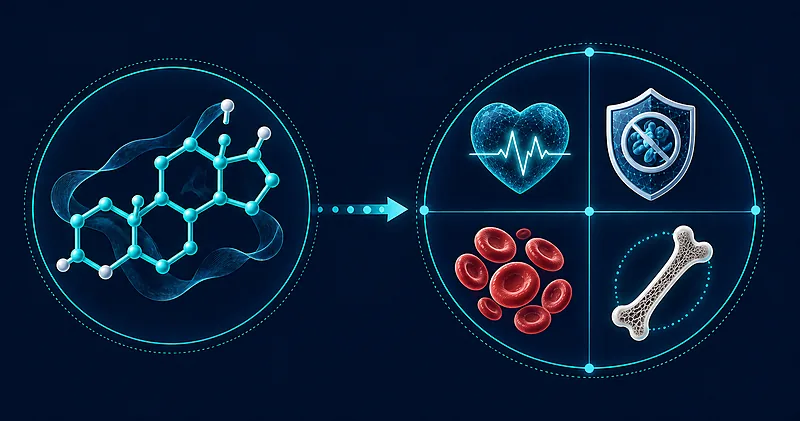
Testosterone Therapy: Pivotal Effects on 4 Outcomes
Evidence synthesis on the TRAVERSE trial and post-trial appraisal of testosterone therapy for cardiovascular safety, atrial fibrillation, thrombosis, and fracture risk in primary care.
One-Minute Takeaway on Testosterone Therapy
One-Minute Takeaway
- Testosterone therapy received reassuring cardiovascular safety data from the TRAVERSE trial (n=5,246 men with hypogonadism and cardiovascular risk), with the primary major adverse cardiovascular event (MACE) composite showing non-inferiority versus placebo over a median 33 months.
- Despite the reassuring primary endpoint, TRAVERSE identified statistically significant increases in atrial fibrillation, pulmonary embolism, and clinical fractures.
- The FDA’s 2014 boxed warning regarding cardiovascular risk has been substantially attenuated, but venous thromboembolism caution and hematocrit monitoring remain warranted.
- Diagnosis of hypogonadism requires two morning total testosterone measurements below threshold plus consistent clinical symptoms — not testosterone testing alone.
- Major guideline bodies (Endocrine Society, AUA, ACP) recommend testosterone therapy only for symptomatic hypogonadism, not for age-related testosterone decline alone.
Why Testosterone Therapy Matters in Primary Care
Testosterone prescribing has grown substantially in the US over the past two decades, with much of the increase driven by direct-to-consumer marketing for “low T” framed around aging-related symptoms rather than confirmed clinical hypogonadism. Family physicians are increasingly the prescribers, the monitors, and the decision-makers on continuation.
Until 2023, the cardiovascular safety of testosterone therapy was a contested area. Observational studies in the early 2010s — Vigen 2013 in JAMA and Finkle 2014 in PLOS One — raised concerns about increased myocardial infarction and stroke risk, leading the FDA in 2014 to add a boxed warning regarding cardiovascular risk to all testosterone product labeling.
Subsequent meta-analyses produced conflicting estimates, and the absence of an adequately powered prospective trial left the question unresolved. The TRAVERSE trial published in 2023 changed the evidentiary landscape — providing the first prospective randomized assessment of cardiovascular safety in men with both confirmed hypogonadism and pre-existing or elevated cardiovascular risk.
For family physicians, the post-TRAVERSE practice question is no longer “is testosterone therapy cardiovascularly dangerous?” — it is “in whom is symptomatic hypogonadism appropriately diagnosed, and how should the atrial fibrillation, venous thromboembolism, and fracture signals from TRAVERSE inform monitoring and shared decision-making?”
What Evidence Was Reviewed
This synthesis draws on the TRAVERSE primary publication and prespecified subgroup analyses, the T-Trials coordinated RCT series in older men, the foundational observational studies that prompted the 2014 FDA boxed warning, current Endocrine Society and AUA guidelines, the ACP guidance for age-related low testosterone, and the AHRQ-commissioned systematic review that informed multiple guideline bodies.
The table below summarizes the key evidence sources informing the comparative claims in this review.
| Study / Source | Design | n | Population | Intervention / Focus | Primary Outcome |
|---|---|---|---|---|---|
| TRAVERSE (Lincoff 2023) | RCT, non-inferiority | 5,246 | Men 45–80, hypogonadism + CV risk | Transdermal T gel vs placebo | MACE composite (CV death, non-fatal MI, non-fatal stroke) |
| TRAVERSE Fracture (Snyder 2024) | Prespecified analysis | 5,204 | TRAVERSE participants | T vs placebo | Clinical fracture incidence |
| T-Trials (Snyder 2016) | Coordinated RCTs (7 trials) | 790 | Men ≥65 with low testosterone | T gel vs placebo, 1 year | Sexual function, vitality, physical function, others |
| Vigen 2013 (JAMA) | Retrospective cohort | 8,709 | VA patients with low T | T treatment vs none | All-cause mortality, MI, stroke composite |
| Finkle 2014 (PLoS One) | Cohort | 55,593 | Men with TRT prescriptions | T treatment | Non-fatal MI within 90 days |
| Diem 2020 (AHRQ for ACP) | Systematic review | 38 trials | Men with low testosterone | T treatment vs placebo | Sexual function, mood, physical, harms |
| Endocrine Society 2018 (Bhasin) | Practice guideline | — | Men with hypogonadism | Diagnostic + treatment recommendations | Reference standard |
| AUA 2018 (Mulhall) | Practice guideline | — | Men with testosterone deficiency | Diagnostic + treatment recommendations | Reference standard |
| ACP 2020 (Qaseem) | Practice guideline | — | Men with age-related low T | T treatment for age-related decline | Sexual function focus |
| FDA 2014 / 2015 communications | Regulatory action | — | Men prescribed testosterone | Boxed warning, label updates | CV and VTE warnings |
Key Findings on Testosterone Therapy and Cardiovascular Safety
Outcome 1 — TRAVERSE Establishes Cardiovascular Non-Inferiority
The TRAVERSE trial randomized 5,246 men aged 45–80 with confirmed symptomatic hypogonadism (two morning total testosterone measurements below 300 ng/dL) and either pre-existing cardiovascular disease or high cardiovascular risk to transdermal testosterone gel or matching placebo. After median 33 months of follow-up, the primary composite of cardiovascular death, non-fatal myocardial infarction, or non-fatal stroke occurred in 7.0% of the testosterone arm versus 7.3% with placebo (HR 0.96, 95% CI 0.78–1.17, P < 0.001 for non-inferiority).
This finding addressed years of safety concern from observational studies and meta-analyses suggesting elevated cardiovascular risk with testosterone therapy. The FDA’s 2014 boxed warning predicated on those signals can now be reappraised against TRAVERSE’s prospective randomized data, and the 2025 FDA boxed-warning revisions reflect that updated evidence.
Importantly, TRAVERSE was a non-inferiority trial, not a superiority trial. It did not demonstrate cardiovascular benefit, only that meaningful harm — within the prespecified non-inferiority margin — was excluded. This distinction matters when counseling patients who hope testosterone therapy might improve cardiovascular outcomes; it should not be presented as cardioprotective.
Outcome 2 — Atrial Fibrillation Occurred More Frequently With Testosterone Therapy
Despite the reassuring primary endpoint, several adverse signals from TRAVERSE warrant clinical attention. New-onset atrial fibrillation occurred in 3.5% of testosterone-treated men versus 2.4% with placebo (HR 1.46, 95% CI 1.07–1.99). This was a prespecified secondary outcome that reached statistical significance.
The mechanism remains incompletely understood but may reflect testosterone’s effects on left atrial structure, electrical remodeling, or autonomic balance. The absolute increase is modest but clinically meaningful, particularly in older men with multiple cardiovascular risk factors who comprise a large share of testosterone therapy candidates in primary care.
Practical implication: a baseline ECG and consideration of palpitation symptoms are reasonable at therapy initiation, with follow-up clinical assessment for new arrhythmia symptoms during ongoing treatment.
Outcome 3 — Venous Thromboembolism Signal Confirmed
TRAVERSE reported pulmonary embolism in 0.9% of testosterone-treated men versus 0.5% with placebo (HR 1.55), and the broader venous thromboembolism signal aligns with prior FDA analyses that prompted a 2014 label warning regarding VTE risk with testosterone therapy.
The biological basis includes testosterone’s effects on hematocrit (via increased erythropoiesis) and on coagulation factors. The thrombotic signal is most pronounced in the first 6 months of therapy, suggesting careful monitoring during initiation and a low threshold for evaluation of new respiratory or limb symptoms in this window.
Hematocrit monitoring at baseline, 3–6 months, and annually thereafter remains a guideline-endorsed practice; therapy is typically held when hematocrit exceeds 54%, with phlebotomy considered in men with persistent erythrocytosis or thrombosis history.
Outcome 4 — Fracture Risk Was Unexpectedly Elevated
A surprising secondary finding from TRAVERSE was a higher rate of clinical fracture in testosterone-treated men compared with placebo (HR 1.43). This was unexpected, given testosterone’s known beneficial effects on bone mineral density demonstrated in earlier trials including the T-Trials bone substudy.
The mechanism remains unclear. The Snyder 2024 NEJM analysis hypothesized increased physical activity associated with improved energy and mood as a contributor — more activity meaning more falls — but this remains conjecture rather than confirmed mechanism.
The finding has practical implications for fracture-risk assessment in candidates for testosterone therapy and for fall-risk counseling at therapy initiation, particularly in older men or those with prior fragility fractures or osteoporosis risk factors.
Diagnosis Requires Stringent Criteria, Not Routine Screening
Both Endocrine Society 2018 and AUA 2018 guidelines specify that diagnosis of male hypogonadism requires consistent symptoms (decreased libido, erectile dysfunction, fatigue, mood changes, decreased muscle mass) combined with two morning total testosterone measurements below the lower limit of normal. The Endocrine Society uses 264 ng/dL; the AUA uses 300 ng/dL.
A complete evaluation includes free testosterone or sex hormone-binding globulin assessment when total testosterone is borderline, LH and FSH to distinguish primary from secondary hypogonadism, and exclusion of reversible causes including acute illness, opioids, exogenous androgens, and severe obesity.
Routine screening of asymptomatic men, or initiation of testosterone therapy based on symptoms alone without biochemical confirmation, is not supported by current guidelines. The ACP 2020 guideline specifically recommends against testosterone therapy for non-sexual symptoms (fatigue, vitality, energy) related to age-related testosterone decline.
Clinical pearl on testosterone therapy initiation: A single low total testosterone level is insufficient for diagnosis. Two morning measurements are required, with attention to assay timing (testosterone has diurnal variation) and the need for SHBG or free testosterone in equivocal cases.
TRAVERSE was a multicenter, randomized, double-blind, placebo-controlled non-inferiority trial that enrolled 5,246 men aged 45–80 with both clinical hypogonadism and pre-existing cardiovascular disease or elevated cardiovascular risk. Two morning total testosterone measurements below 300 ng/dL plus at least one symptom of hypogonadism were required for entry.
Participants were randomized to 1.62% transdermal testosterone gel (titrated to maintain levels of 350–750 ng/dL) or matching placebo gel. Median follow-up was 33 months, with the trial designed to test non-inferiority for a major adverse cardiovascular event composite (CV death, non-fatal MI, non-fatal stroke) at a hazard ratio margin of 1.5.
The trial answered: does testosterone therapy in men with hypogonadism and cardiovascular risk increase major adverse cardiovascular events? The answer was “no, within the prespecified margin.” It did not test whether testosterone therapy improves cardiovascular outcomes (it does not), nor did it study men without cardiovascular risk or with severe heart failure.
A practical primary-care workflow for confirming male hypogonadism before initiating testosterone therapy:
- Symptoms first: Decreased libido, erectile dysfunction, fatigue, mood changes, decreased muscle mass, gynecomastia.
- Two morning total testosterone measurements at least one week apart (before 10 AM in younger men; ideally before noon in older men where the diurnal pattern is blunted).
- If borderline: Add SHBG and calculate free testosterone, or measure free testosterone by equilibrium dialysis where available.
- If consistently low: Add LH and FSH (low/normal LH suggests secondary hypogonadism; elevated suggests primary).
- Exclude reversible causes: Acute illness within 4 weeks, opioids, exogenous androgens or anabolic steroids, severe obesity (consider weight loss before therapy), depression, sleep apnea.
- Pituitary workup (prolactin, TSH, IGF-1, MRI if very low LH/FSH or other findings) when secondary hypogonadism is identified.
Documentation of two confirmatory testosterone measurements plus consistent symptoms is the threshold for initiating testosterone therapy supported by all major guideline bodies.
An evidence-aligned monitoring schedule for men on testosterone therapy:
- Baseline: CBC (hematocrit), PSA in men > 40, lipids, fasting glucose/A1c, ECG (consider given AF signal), bone density assessment if other risk factors.
- 3 months: Total testosterone (target 350–750 ng/dL trough), hematocrit, symptom response, PSA.
- 6 months: Repeat hematocrit, symptom assessment, vigilance for VTE symptoms.
- 12 months and annually: Total testosterone, hematocrit, PSA, symptom and adverse event review.
- Hold or reduce dose if: Hematocrit > 54% (consider phlebotomy), unexplained PSA rise > 1.4 ng/mL/yr, new prostate findings, new VTE, unstable cardiovascular disease.
- Discontinue and reassess if: No symptomatic benefit by 6 months, contraindications develop, new prostate or breast cancer.
This monitoring scheme aligns with Endocrine Society and AUA guidance and pre-dates TRAVERSE; the post-TRAVERSE additions are mainly attention to atrial fibrillation symptoms and a baseline ECG when feasible.
The Vigen 2013 retrospective cohort of 8,709 VA patients with low testosterone reported elevated rates of mortality, MI, and stroke in men on testosterone therapy. The Finkle 2014 cohort of 55,593 men with TRT prescriptions reported a higher rate of non-fatal MI in the 90 days following initiation, particularly in men with prior cardiovascular disease.
Both studies were observational and subject to substantial confounding by indication: men prescribed testosterone differ systematically from those who are not, with potentially worse baseline cardiovascular health driving a portion of the apparent excess events. Subsequent reanalyses of Vigen identified data classification issues that further attenuated the signal.
TRAVERSE, as a prospective RCT in a similar population (men with hypogonadism and cardiovascular risk), is the appropriate evidentiary update — and its finding of cardiovascular non-inferiority is the contemporary reference standard.
Available testosterone formulations differ in pharmacokinetics, monitoring approach, and cost:
- Transdermal gel (1% or 1.62%): Daily application; smooth pharmacokinetics; risk of transfer to family members; the formulation tested in TRAVERSE.
- Intramuscular cypionate or enanthate: Every 1–2 weeks; pronounced peaks and troughs; lower cost; long history of use.
- Long-acting IM undecanoate: Every 10 weeks after loading; smoother levels; pulmonary oil microembolism risk requires REMS observation in the US.
- Transdermal patch: Daily; significant skin reactions limit adherence.
- Subcutaneous pellets: Implanted every 3–4 months; requires office procedure.
- Oral undecanoate (newer formulation): Twice daily; absorption with food; specific monitoring requirements.
- Nasal gel and buccal: Less commonly used; multiple daily doses.
TRAVERSE specifically tested transdermal gel; effects on the four headline outcomes for other formulations are extrapolated rather than directly trial-tested.
Quality & Consistency of Evidence on Testosterone Therapy
The evidence base for testosterone therapy has matured considerably with TRAVERSE, but consistency varies meaningfully across outcomes and populations.
What the Evidence on Testosterone Therapy Does Not Show
Several specific gaps remain in the testosterone therapy evidence base. Naming them clearly helps clinicians counsel patients honestly and prioritize where ongoing research will refine practice.
Specific Evidence Gaps
- Long-term outcomes beyond median 33-month follow-up: TRAVERSE provides medium-term safety; cardiovascular and other outcomes at 5–10 years are not yet established.
- Atrial fibrillation mechanism: Whether testosterone-related atrial fibrillation is structural, electrical, or autonomic in origin is unclear; subtype data (paroxysmal vs persistent) are limited.
- Fracture mechanism: The TRAVERSE fracture signal is unexplained; whether it reflects increased activity with improved energy, intrinsic bone effects, or another mechanism remains conjecture.
- VTE risk modifiers: Baseline thrombophilia, smoking, immobility, and other modifiers of testosterone-related thrombotic risk are not well characterized.
- Comparative safety across formulations: TRAVERSE used transdermal gel; whether IM cypionate, undecanoate, or pellets share the same safety profile is extrapolated rather than tested.
- Men without cardiovascular risk: TRAVERSE enrolled men with pre-existing CV disease or risk; effects in low-CV-risk hypogonadal men are less directly informed.
- Cognitive outcomes: T-Trials reported mixed cognitive signals; whether testosterone therapy affects long-term cognitive trajectory remains uncertain.
- Heart failure subgroups: TRAVERSE excluded NYHA class III/IV heart failure; effects in advanced HF are unknown.
- Prostate cancer surveillance: Long-term prostate cancer incidence on testosterone therapy in men with prior elevated PSA or biopsies remains an open question despite reassuring shorter-term data.
- Withdrawal effects: Optimal approach to discontinuing testosterone therapy after extended use, including HPG axis recovery, is incompletely studied.
Practical Implications
Based on the current evidence on testosterone therapy, the following considerations may help structure prescribing and monitoring decisions in family practice. These are framed as evidence-supported considerations rather than directive recommendations.
Confirm Hypogonadism Before Initiating Treatment
Two morning total testosterone measurements below threshold plus consistent symptoms. Evaluate for reversible causes (obesity, opioids, illness) and add SHBG, free testosterone, LH/FSH where indicated. A single low value is insufficient.
TRAVERSE Reassures on Cardiovascular Safety
The largest prospective RCT in men with hypogonadism and cardiovascular risk shows non-inferiority for the MACE composite. The 2014 boxed-warning rationale has substantially attenuated, supporting more confident shared decision-making.
Atrial Fibrillation Risk Warrants Baseline Assessment
A baseline ECG and counseling about palpitation symptoms are reasonable at therapy initiation, particularly in older men or those with structural heart disease, given the TRAVERSE AF signal (HR 1.46).
Hematocrit Monitoring Mitigates Thrombotic Risk
CBC at baseline, 3 months, 6 months, and annually. Hold testosterone therapy at hematocrit above 54%, with phlebotomy considered for persistent erythrocytosis. Maintain low threshold for VTE workup with respiratory or limb symptoms.
Avoid Testosterone Therapy for Non-Hypogonadal Symptoms
Major guidelines do not support testosterone therapy for age-related decline alone, fatigue or vitality without confirmed deficiency, or fertility-seeking men (testosterone suppresses spermatogenesis). Counsel accordingly.
Counsel on Fracture Risk Despite BMD Improvement
The unexpected TRAVERSE fracture signal warrants attention to fall prevention and fracture risk assessment, particularly in older men or those with osteoporosis risk factors, even though testosterone improves bone mineral density.
Implementation Considerations
The most common testosterone therapy pitfalls in primary care are starting therapy on a single low value, treating non-specific aging symptoms without confirmed biochemical hypogonadism, omitting the baseline workup (PSA, hematocrit, lipids), and inconsistent follow-up monitoring. A simple workflow — symptoms plus two morning levels at diagnosis, baseline labs and ECG at initiation, follow-up at 3 and 6 months, then annual review — addresses most of these gaps without requiring specialist referral.
Evidence Grade & Bottom Line
Overall Evidence Grade: STRONG for cardiovascular non-inferiority (MACE), atrial fibrillation signal, diagnostic criteria, and sexual function benefit in confirmed hypogonadism. MODERATE for venous thromboembolism risk and the TRAVERSE fracture signal. STRONG against using testosterone therapy for non-hypogonadal age-related decline.
Bottom Line
- TRAVERSE provides the first adequately-powered prospective evidence that testosterone therapy in men with hypogonadism and cardiovascular risk does not increase the major adverse cardiovascular event composite within prespecified non-inferiority margins.
- Newly significant signals from TRAVERSE — atrial fibrillation, pulmonary embolism, and clinical fracture — warrant baseline assessment, ongoing monitoring, and patient counseling, even as the headline cardiovascular concern has eased.
- Diagnosis of hypogonadism continues to require two morning testosterone measurements plus consistent clinical symptoms; testosterone therapy is not appropriate for symptoms of aging without confirmed biochemical deficiency.
- Hematocrit monitoring, PSA surveillance, and structured follow-up at 3, 6, and 12 months remain the practical backbone of safe testosterone therapy in primary care.
- Long-term outcomes beyond 33 months, comparative safety across formulations, and effects in lower-cardiovascular-risk populations remain important areas of ongoing research.
Article Information & References
For Educational Purposes Only. This is an original evidence synthesis informed by the studies listed below. It does not replace clinical judgement. Drug dosages should be verified against current prescribing information.
References
- Lincoff AM, Bhasin S, Flevaris P, et al. Cardiovascular safety of testosterone-replacement therapy. N Engl J Med. 2023;389(2):107–117. DOI: 10.1056/NEJMoa2215025
- Snyder PJ, Bhasin S, Cunningham GR, et al. Testosterone treatment and fractures in men with hypogonadism. N Engl J Med. 2024;390(10):928–936. DOI: 10.1056/NEJMoa2308836
- Snyder PJ, Bhasin S, Cunningham GR, et al. Effects of testosterone treatment in older men. N Engl J Med. 2016;374(7):611–624. DOI: 10.1056/NEJMoa1506119
- Bhasin S, Brito JP, Cunningham GR, et al. Testosterone therapy in men with hypogonadism: an Endocrine Society clinical practice guideline. J Clin Endocrinol Metab. 2018;103(5):1715–1744. DOI: 10.1210/jc.2018-00229
- Mulhall JP, Trost LW, Brannigan RE, et al. Evaluation and management of testosterone deficiency: AUA guideline. J Urol. 2018;200(2):423–432. DOI: 10.1016/j.juro.2018.03.115
- Qaseem A, Horwitch CA, Vijan S, Etxeandia-Ikobaltzeta I, Kansagara D. Testosterone treatment in adult men with age-related low testosterone: a clinical guideline from the American College of Physicians. Ann Intern Med. 2020;172(2):126–133. DOI: 10.7326/M19-0882
- Diem SJ, Greer NL, MacDonald R, et al. Efficacy and safety of testosterone treatment in men: an evidence report for a clinical practice guideline by the American College of Physicians. Ann Intern Med. 2020;172(2):105–118. DOI: 10.7326/M19-0830
- Vigen R, O’Donnell CI, Barón AE, et al. Association of testosterone therapy with mortality, myocardial infarction, and stroke in men with low testosterone levels. JAMA. 2013;310(17):1829–1836. DOI: 10.1001/jama.2013.280386
- Finkle WD, Greenland S, Ridgeway GK, et al. Increased risk of non-fatal myocardial infarction following testosterone therapy prescription in men. PLoS One. 2014;9(1):e85805. DOI: 10.1371/journal.pone.0085805
- Basaria S, Coviello AD, Travison TG, et al. Adverse events associated with testosterone administration. N Engl J Med. 2010;363(2):109–122. DOI: 10.1056/NEJMoa1000485
- Corona G, Maseroli E, Rastrelli G, et al. Cardiovascular risk associated with testosterone-boosting medications: a systematic review and meta-analysis. Expert Opin Drug Saf. 2014;13(10):1327–1351. DOI: 10.1517/14740338.2014.950653
- Cunningham GR, Stephens-Shields AJ, Rosen RC, et al. Testosterone treatment and sexual function in older men with low testosterone levels. J Clin Endocrinol Metab. 2016;101(8):3096–3104. DOI: 10.1210/jc.2016-1645
- Resnick SM, Matsumoto AM, Stephens-Shields AJ, et al. Testosterone treatment and cognitive function in older men with low testosterone and age-associated memory impairment. JAMA. 2017;317(7):717–727. DOI: 10.1001/jama.2016.21044
- Roy CN, Snyder PJ, Stephens-Shields AJ, et al. Association of testosterone levels with anemia in older men: a controlled clinical trial. JAMA Intern Med. 2017;177(4):480–490. DOI: 10.1001/jamainternmed.2016.9540
- US Food and Drug Administration. FDA drug safety communication: FDA cautions about using testosterone products for low testosterone due to aging; requires labeling change to inform of possible increased risk of heart attack and stroke with use. March 3, 2015. DOI: 10.31525/fda1-ucm436259.htm