
Normal Pressure Hydrocephalus: Robust Effects on 4 Outcomes
Evidence synthesis on idiopathic normal pressure hydrocephalus — diagnostic workup, tap test predictive value, ventriculoperitoneal shunt outcomes, and differentiation from Alzheimer and Parkinson disease.
One-Minute Takeaway on Normal Pressure Hydrocephalus
One-Minute Takeaway
- Strong evidence supports a structured diagnostic workup for normal pressure hydrocephalus combining the Hakim triad (gait, cognition, urinary incontinence), characteristic neuroimaging features, and a CSF removal challenge to identify shunt-responsive patients.
- The high-volume tap test and extended lumbar drainage have moderate to good predictive value for shunt response; extended drainage (over 2–4 days) shows higher sensitivity than a single tap.
- Ventriculoperitoneal shunt placement produces clinically meaningful improvement in roughly 60–80% of selected patients short-term, with attenuation of benefit over 3–5 years.
- Gait improvement is the most reliably responsive domain; cognitive and urinary improvement are less consistent and tend to plateau or decline earlier.
- Differentiating idiopathic disease from Alzheimer and Parkinson is essential — comorbid neurodegeneration is common and modulates the durability of shunt benefit.
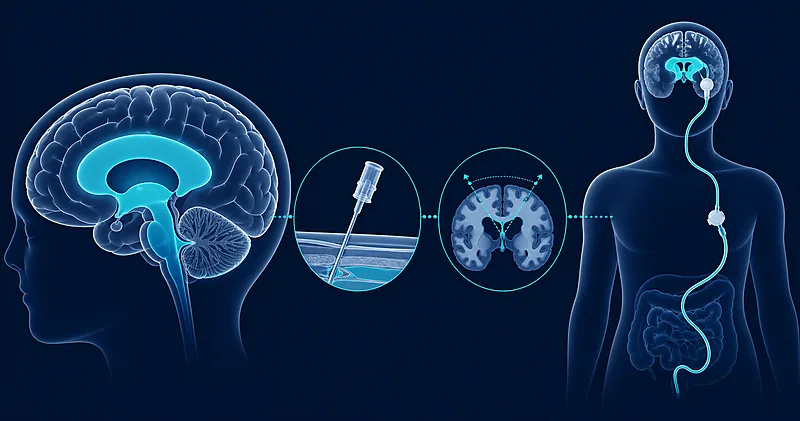
Why This Topic Matters
Normal pressure hydrocephalus is among the few causes of cognitive and gait decline in older adults that are potentially reversible with surgery. Estimated prevalence in adults over 65 is 0.2–2%, rising to roughly 5% in those over 80, although the condition remains substantially underdiagnosed in routine practice.
The diagnostic challenge is twofold. First, the Hakim triad is non-specific — gait disturbance, cognitive impairment, and urinary incontinence are common and have many alternative causes in older adults. Second, ventriculomegaly on imaging frequently coexists with neurodegenerative disease, and distinguishing the two requires careful clinical, imaging, and CSF assessment.
Treatment with ventriculoperitoneal shunt is effective in selected patients but carries surgical risk. Patient selection is therefore the dominant determinant of outcome — better candidates derive larger and more durable benefit. Standardized workup, formalized response prediction with tap test or extended drainage, and careful exclusion of competing diagnoses are central to evidence-based care.
For neurologists, the practical implication is that referral pathways and willingness to investigate should be appropriately calibrated. Underdiagnosis denies effective treatment to a meaningful population, while overdiagnosis subjects patients with neurodegenerative disease to surgery they will not benefit from.
Recent evidence also reframes long-term outcomes. Shunt benefit is real and clinically meaningful in the first 1–2 years, but improvement attenuates over 3–5 years even with functioning shunts, particularly in patients with comorbid Alzheimer or vascular pathology. Setting realistic expectations is part of high-quality normal pressure hydrocephalus management.
What Evidence Was Reviewed
This evidence synthesis on normal pressure hydrocephalus draws on the AAN 2015 practice guideline, the international iNPH guidelines (Relkin 2005, Marmarou 2005), the Japanese guidelines (Mori 2012), the European Multicentre Study, and major systematic reviews of shunt outcomes. Studies span 1965 (the Hakim and Adams seminal description) through 2017.
Most evidence on normal pressure hydrocephalus comes from prospective cohorts and systematic reviews; randomized trials of shunt versus no shunt do not exist due to clinical equipoise concerns. Outcome measures vary across studies but typically include the iNPH grading scale, modified Rankin scale, gait analysis (Timed Up and Go, 10-meter walk), and cognitive batteries.
| Source | Type | n | Focus | Headline finding |
|---|---|---|---|---|
| AAN Practice Guideline (Halperin et al., 2015) | Practice guideline | Narrative synthesis | Shunt response and predictors | Shunt likely improves gait; predictive value of tap test and extended drainage |
| International iNPH Guidelines (Relkin et al., 2005) | Consensus guideline | Narrative | Diagnostic criteria — probable, possible, unlikely | Standardized diagnostic categories; imaging features defined |
| Marmarou 2005 (Neurosurgery) | Diagnostic test review | Narrative | Predictive value of supplemental tests | Extended lumbar drainage highest sensitivity for shunt response |
| Toma 2013 (Acta Neurochir, systematic review) | Systematic review | 64 studies, ~3,063 patients | Shunt outcomes | 71% improvement at last follow-up; declining rates over time |
| Klinge 2012 (European Multicentre Study) | Prospective cohort | 115 | 1-year shunt outcomes | 69% improvement on iNPH scale at 12 months |
| Mori 2012 (Japanese Guidelines, 2nd ed) | Practice guideline | Narrative | Comprehensive iNPH management | DESH (disproportionately enlarged subarachnoid-space hydrocephalus) imaging pattern emphasized |
| Wikkelsø 1982 (JNNP) | Prospective cohort | Foundational | Tap test as predictive tool | Established lumbar puncture symptom response as predictor of shunt benefit |
| Espay 2017 (Annals of Neurology) | Cohort analysis | Critical review | iNPH and neurodegeneration overlap | Argues ventriculomegaly may represent early neurodegeneration in many cases |
| Williams & Malm 2016 (Continuum) | Narrative review | — | Diagnosis and treatment of iNPH | Practical synthesis of clinical, imaging, and CSF assessment |
| Israelsson 2016 (INPH-CRasH study) | Cohort | 176 | Comorbidities including depression | High burden of vascular and psychiatric comorbidity in iNPH cohorts |
| Bradley 2015 (AJNR) | Imaging review | — | CSF flow and imaging biomarkers | High aqueductal CSF stroke volume and DESH may aid diagnosis |
Key Findings on Normal Pressure Hydrocephalus
Theme 1: The Hakim triad is sensitive but not specific
The classical triad of gait disturbance, cognitive impairment, and urinary incontinence remains the clinical entry point for considering normal pressure hydrocephalus. However, all three features are common in older adults from many causes, and only a minority of triad-presenting patients actually have shunt-responsive disease.
Gait disturbance is the most reliable component — magnetic, broad-based, shuffling, with reduced step height and impaired turning. Cognitive impairment is typically subcortical (slowed processing, executive dysfunction) rather than the predominant memory loss of Alzheimer disease. Urinary symptoms range from urgency to overt incontinence.
Theme 2: Imaging features refine diagnosis beyond ventriculomegaly
Ventriculomegaly with an Evans index above 0.3 is necessary but not sufficient. Modern imaging criteria emphasize disproportionately enlarged subarachnoid-space hydrocephalus (DESH) — characterized by tight high-convexity sulci alongside widened Sylvian fissures — and a callosal angle below approximately 90 degrees on coronal imaging.
Bradley 2015 highlighted high aqueductal CSF stroke volume on phase-contrast MRI as a supportive but not diagnostic feature. The Mori 2012 Japanese guidelines incorporate DESH explicitly. These imaging refinements increase specificity and help differentiate normal pressure hydrocephalus from age-related ventricular enlargement and from compensated atrophy in neurodegenerative disease.
Theme 3: Tap test and extended drainage have predictive value
A high-volume lumbar puncture removing 30–50 mL of CSF — the tap test — has moderate sensitivity (approximately 60–75%) and high specificity (over 90%) for predicting shunt response. Patients are evaluated on standardized gait and cognitive tasks before and 24–48 hours after the procedure.
Extended lumbar drainage over 2–4 days has higher sensitivity (approximately 80–95%) at the cost of a more invasive and resource-intensive procedure. The Marmarou 2005 review and subsequent AAN 2015 guideline both recognize extended drainage as the more accurate predictive test, with the simpler tap test serving as a reasonable initial screen.
Theme 4: Shunt outcomes vary across the four clinical domains
Toma 2013 systematically reviewed 64 studies covering 3,063 patients undergoing ventriculoperitoneal shunt for normal pressure hydrocephalus and reported 71% improvement at last follow-up. The European Multicentre Study (Klinge 2012) reported 69% improvement on the iNPH scale at 12 months, including substantial gains in gait and continence.
Effect sizes vary by domain in normal pressure hydrocephalus. Gait response is the most consistent and durable, with measurable improvements in walking speed and Timed Up and Go scores. Urinary improvement is moderate and frequently sustained.
Cognitive improvement is the least consistent — many patients show stabilization rather than improvement, particularly when comorbid neurodegenerative disease is present. Health-related quality of life improves in parallel with gait and continence.
Theme 5: Comorbid neurodegeneration is common and modulates outcomes
Espay 2017 and the INPH-CRasH cohort demonstrate that vascular disease, Alzheimer pathology, and Parkinson features frequently coexist with the imaging and clinical phenotype of normal pressure hydrocephalus. Postmortem and biomarker studies suggest that 30–75% of clinically diagnosed cases harbor coexistent neurodegenerative changes.
This overlap explains why initial shunt benefit often attenuates over 3–5 years even when the shunt is patent and CSF dynamics remain normalized. It also reframes pre-operative counseling — patients should be informed that shunt placement may produce robust short-term improvement followed by gradual decline reflecting underlying neurodegeneration.
Theme 6: Differentiation from Alzheimer and Parkinson is achievable but requires care
Differentiating normal pressure hydrocephalus from Alzheimer disease relies on the cognitive profile (subcortical-frontal in iNPH vs hippocampal-temporal in AD), the predominance of gait over memory complaints, and DESH or callosal angle imaging features. CSF amyloid and tau biomarkers can support discrimination when available.
Differentiation from Parkinson disease focuses on the gait quality — magnetic and broad-based in normal pressure hydrocephalus rather than narrow-based with festination and asymmetric onset typical of Parkinson disease. Levodopa response, asymmetry, rest tremor, and bradykinesia favor Parkinson; symmetric gait apraxia with preserved arm swing favors normal pressure hydrocephalus.
Clinical pearl. The single most informative bedside observation is gait. A patient whose memory complaints overshadow walking difficulty is unlikely to have shunt-responsive normal pressure hydrocephalus; one whose magnetic, wide-based gait dominates the clinical picture — even with imperfect cognition — is the candidate worth investigating with formal CSF challenge.
Quality & Consistency of Evidence
The evidence base on normal pressure hydrocephalus rests primarily on prospective and retrospective cohorts, systematic reviews, and consensus guidelines. Randomized comparison of shunt versus no shunt has not been performed in adequately powered fashion due to clinical equipoise concerns once tap-test responders are identified.
What the Evidence Does Not Show
Despite accumulated clinical experience in normal pressure hydrocephalus, several important questions remain unsettled. Recognizing these gaps prevents overconfident extrapolation from cohort data to individual patient decisions.
Specific Gaps in the Evidence Base
- No randomized shunt vs no-shunt trial. All efficacy estimates derive from cohort designs susceptible to selection bias; the absolute benefit attributable to surgery alone is therefore uncertain.
- Optimal preoperative test combination. Whether tap test, extended drainage, intracranial pressure monitoring, or some combination produces the best predictive accuracy is not definitively settled.
- Programmable vs fixed-pressure valves. Comparative effectiveness data are limited; programmable valves are increasingly favored but with modest randomized evidence.
- Long-term outcomes beyond 5 years. Cohorts with multi-year follow-up are small and heterogeneous; trajectories of cognition and function in shunted patients are incompletely characterized.
- Role of CSF biomarkers. Amyloid and tau profiles may help identify shunt-responsive patients with less comorbid Alzheimer pathology, but practical thresholds and incorporation into selection algorithms remain undefined.
- Treatment of suspected disease without classic features. Patients with isolated gait or isolated cognitive features and ventriculomegaly are common but under-represented in formal evidence.
These gaps reinforce the value of multidisciplinary care — neurology, neurosurgery, neuropsychology, and physical therapy together — when contemplating shunt placement for suspected normal pressure hydrocephalus.
Practical Implications for Normal Pressure Hydrocephalus
Based on the current evidence, the following considerations emerge for the workup and management of suspected normal pressure hydrocephalus. They reframe what the trial data support — not what individual clinicians must do — and depend on local resources and patient preference.
Recognition and Initial Assessment
Trigger workup when one or more triad features are present, particularly when gait disturbance dominates. Document detailed gait observation (magnetic, broad-based, reduced step height), cognitive screen with attention to subcortical-frontal pattern, and urinary history.
Neuroimaging
MRI brain with assessment of Evans index, callosal angle, presence of DESH pattern, and exclusion of obstructive lesions or alternative diagnoses. CT may suffice when MRI is contraindicated.
Differential Workup
Reasonable evaluation for alternative or coexistent diagnoses — Alzheimer-pattern cognition, Parkinson features, vascular disease, structural lesions. CSF biomarkers (amyloid, tau) when available can support the differential.
CSF Removal Challenge
High-volume tap test (30–50 mL CSF) with standardized pre- and post-procedure gait and cognitive assessment. Extended lumbar drainage over 2–4 days for cases with high suspicion but negative tap test, given its higher sensitivity.
Shunt Decision and Counseling
Refer to neurosurgery for ventriculoperitoneal shunt in tap-test or extended-drainage responders. Counsel patients on realistic expectations: short-term benefit likely, attenuation possible over years, surgical risks and the need for valve adjustments.
Evidence Supports Structured Workup
The AAN 2015 guideline and international consensus support combining clinical, imaging, and CSF challenge components rather than relying on any single feature.
Extended Drainage Shows Higher Sensitivity
When tap test is negative but suspicion remains, extended lumbar drainage offers improved sensitivity and is supported by AAN 2015 as a more accurate predictive test.
Gait Improvement is the Most Reliable Outcome
Across systematic reviews, gait response to shunting is the most consistent improvement; cognitive and urinary domains are less reliable but often improve.
Comorbidity Awareness Tempers Expectations
Coexistent Alzheimer or vascular disease modulates durability of shunt benefit; preoperative counseling should reflect this realistic trajectory.
Implementation Considerations
Formal gait assessment using Timed Up and Go and 10-meter walk test before and after CSF removal provides a reproducible, quantitative response measure. A change of approximately 20% or more in gait speed or TUG time is broadly used as a positive response threshold. Multidisciplinary review with neurosurgery, neurology, neuropsychology, and physical therapy improves selection accuracy and post-shunt rehabilitation outcomes.
Ventriculomegaly is common in older adults from atrophy alone (ex vacuo), in chronic small-vessel disease, in untreated hydrocephalus from obstructive lesions, and in advanced neurodegenerative disease. Distinguishing features supporting iNPH include DESH pattern, narrow callosal angle (under 90°), Evans index above 0.3 with disproportionate enlargement compared with sulcal atrophy, and a clinical picture in which gait disturbance dominates.
Definitions vary, but most centers use a clinically meaningful improvement on standardized gait testing — for example, more than 20% improvement in Timed Up and Go time, more than 10% improvement in 10-meter walk speed, or a clear qualitative reduction in gait apraxia. Cognitive batteries are sometimes used as supplementary measures. Documentation of pre- and post-tap performance in the same conditions is essential to avoid false attribution of practice or placebo effect.
Programmable valves allow non-invasive pressure adjustment to optimize symptom relief while minimizing overdrainage complications such as subdural hematoma. Most centers initiate at a higher opening pressure and titrate down based on symptom response. MRI compatibility varies by valve model — some require post-MRI verification of setting. Long-term valve adjustment requires ongoing clinical follow-up rather than a one-time intervention.
The most common complications include subdural hematoma or hygroma from overdrainage (5–10%), shunt infection (2–5%), shunt malfunction or obstruction requiring revision (10–20% over 5 years), and seizures. Complication rates have decreased with programmable valves and improved technique, but the surgical risk profile must still be weighed against likely benefit, particularly in older patients with multiple comorbidities.
Evidence Grade & Bottom Line
Evidence Grade: Moderate (for short-term shunt benefit and tap-test predictive value) / Limited (for long-term durability beyond 5 years and randomized comparison vs no surgery). Evidence quality is constrained by the absence of randomized shunt-versus-no-shunt trials, but cohort and systematic-review data are concordant on short-term benefit in carefully selected patients.
Bottom Line
- A structured workup combining clinical triad assessment, imaging features (Evans index, callosal angle, DESH), and CSF removal challenge is the foundation of evidence-based normal pressure hydrocephalus diagnosis.
- High-volume tap test offers reasonable specificity for shunt response prediction; extended lumbar drainage has higher sensitivity and is supported when initial tap test is negative but clinical suspicion remains.
- Ventriculoperitoneal shunt produces clinically meaningful short-term improvement in 60–80% of selected patients, with gait being the most reliably responsive domain.
- Comorbid Alzheimer and vascular pathology are common and modulate the durability of shunt benefit; realistic counseling on attenuation over 3–5 years is essential.
- Differentiation from Alzheimer and Parkinson disease relies on cognitive profile, gait quality, imaging features, and selective use of CSF biomarkers when available.
Article Information & References
For Educational Purposes Only. This is an original evidence synthesis informed by the studies listed below. It does not replace clinical judgement. Drug dosages should be verified against current prescribing information.
References
- Halperin JJ, Kurlan R, Schwalb JM, et al. Practice Guideline: Idiopathic Normal Pressure Hydrocephalus: Response to Shunting and Predictors of Response. Neurology. 2015;85(23):2063-2071. DOI: 10.1212/WNL.0000000000002193
- Relkin N, Marmarou A, Klinge P, Bergsneider M, Black PM. Diagnosing Idiopathic Normal-Pressure Hydrocephalus. Neurosurgery. 2005;57(3 Suppl):S4-S16. DOI: 10.1227/01.NEU.0000168185.29659.C5
- Marmarou A, Bergsneider M, Klinge P, Relkin N, Black PM. The Value of Supplemental Prognostic Tests for the Preoperative Assessment of Idiopathic Normal-Pressure Hydrocephalus. Neurosurgery. 2005;57(3 Suppl):S17-S28. DOI: 10.1227/01.NEU.0000168184.01002.60
- Mori E, Ishikawa M, Kato T, et al. Guidelines for Management of Idiopathic Normal Pressure Hydrocephalus: Second Edition. Neurologia Medico-Chirurgica. 2012;52(11):775-809. DOI: 10.2176/nmc.52.775
- Toma AK, Papadopoulos MC, Stapleton S, Kitchen ND, Watkins LD. Systematic Review of the Outcome of Shunt Surgery in Idiopathic Normal-Pressure Hydrocephalus. Acta Neurochirurgica. 2013;155(10):1977-1980. DOI: 10.1007/s00701-013-1835-5
- Klinge P, Hellström P, Tans J, Wikkelsø C. One-Year Outcome in the European Multicentre Study on Idiopathic Normal Pressure Hydrocephalus. Acta Neurologica Scandinavica. 2012;126(3):145-153. DOI: 10.1111/j.1600-0404.2012.01676.x
- Williams MA, Malm J. Diagnosis and Treatment of Idiopathic Normal Pressure Hydrocephalus. Continuum (Minneapolis, Minn.). 2016;22(2 Dementia):579-599. DOI: 10.1212/CON.0000000000000305
- Espay AJ, Da Prat GA, Dwivedi AK, et al. Deconstructing Normal Pressure Hydrocephalus: Ventriculomegaly as Early Sign of Neurodegeneration. Annals of Neurology. 2017;82(4):503-513. DOI: 10.1002/ana.25046
- Israelsson H, Allard P, Eklund A, Malm J. Symptoms of Depression Are Common in Patients With Idiopathic Normal Pressure Hydrocephalus: The INPH-CRasH Study. Neurosurgery. 2016;78(2):161-168. DOI: 10.1227/NEU.0000000000001093
- Wikkelsø C, Andersson H, Blomstrand C, Lindqvist G. The Clinical Effect of Lumbar Puncture in Normal Pressure Hydrocephalus. Journal of Neurology, Neurosurgery, and Psychiatry. 1982;45(1):64-69. DOI: 10.1136/jnnp.45.1.64
- Bradley WG. CSF Flow in the Brain in the Context of Normal Pressure Hydrocephalus. American Journal of Neuroradiology. 2015;36(5):831-838. DOI: 10.3174/ajnr.A4124
- Tisell M, Höglund M, Wikkelsø C. National and Regional Incidence of Surgery for Adult Hydrocephalus in Sweden. Acta Neurologica Scandinavica. 2005;112(2):72-75. DOI: 10.1111/j.1600-0404.2005.00451.x
- Hakim S, Adams RD. The Special Clinical Problem of Symptomatic Hydrocephalus With Normal Cerebrospinal Fluid Pressure. Journal of the Neurological Sciences. 1965;2(4):307-327. DOI: 10.1016/0022-510X(65)90016-X