
Plasma p-tau217: 6 Essential Practice Considerations for Alzheimer Diagnosis
How the strongest blood biomarker for Alzheimer’s is moving from research cohorts toward memory-clinic decisions — and where it still falls short.
One-Minute Takeaway
- Plasma p-tau217 is the most accurate blood biomarker for Alzheimer’s disease pathology, with high-quality evidence showing areas under the curve of roughly 0.92–0.97 for detecting amyloid — comparable to cerebrospinal fluid and PET. [V]
- In a 30-study meta-analysis, plasma p-tau217 detected amyloid pathology with about 82% sensitivity and 86% specificity. [V]
- In a 1,213-patient study, a p-tau217–based blood test reached about 90% accuracy, exceeding primary care physicians (61%) and dementia specialists (73%) using standard workup. [V]
- The 2024 Alzheimer’s Association criteria accept accurate p-tau217 assays (≥90% accuracy versus amyloid PET) as standalone Core 1 diagnostic biomarkers in symptomatic patients. [V]
- Readiness gaps remain: assay-specific cutoffs, lower primary-care accuracy, reduced performance in older or comorbid patients, and no validated role in screening or treatment monitoring.
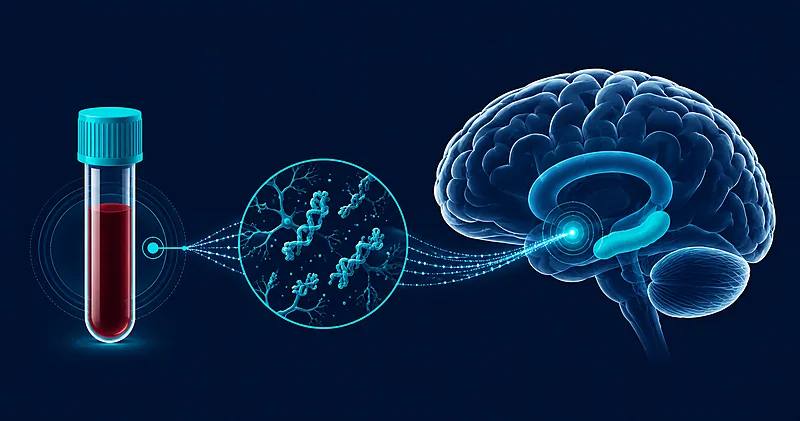
Why Plasma p-tau217 Matters
Confirming Alzheimer’s disease has historically required amyloid PET or a cerebrospinal fluid sample obtained by lumbar puncture. Both are reference-standard tests, yet both are costly, invasive, or limited in availability, which restricts timely diagnosis for many patients.
The equation changed with approved anti-amyloid therapies such as lecanemab and donanemab. These treatments require confirmed amyloid pathology before initiation, sharply increasing demand for accessible and accurate ways to detect Alzheimer’s biology.
Among blood biomarkers, tau phosphorylated at threonine 217 emerged as the strongest signal. Plasma p-tau217 tracks amyloid and tau pathology with accuracy approaching cerebrospinal fluid, and the 2024 revised diagnostic criteria formally recognized accurate p-tau217 assays as a diagnostic option.
Evidence Reviewed
This synthesis draws on landmark diagnostic-accuracy studies, head-to-head assay comparisons, prospective primary and secondary care cohorts, and a systematic review with meta-analysis. The studies below use amyloid PET or cerebrospinal fluid as the reference standard, and report the sample sizes verified for this review.
| Study | Design | N | Population | Assay / comparison | Key result |
|---|---|---|---|---|---|
| Palmqvist 2020 (JAMA) | Cross-sectional, 3 cohorts | ~1,400 | Neuropathology, memory clinic, PSEN1 kindred | Plasma p-tau217 (immunoassay) vs other biomarkers | AD vs other neurodegenerative disease: AUC 0.96 (95% CI 0.93–0.98) V |
| Ashton 2024 (JAMA Neurol) | Cross-sectional, 3 cohorts | 786 | Unimpaired, MCI, dementia | ALZpath p-tau217 (Simoa immunoassay) | Amyloid AUC 0.92–0.96 (95% CI 0.89–0.99); tau AUC 0.93–0.97 V |
| Barthelemy 2024 (Nat Med) | Two-cohort cross-sectional | 1,759 | Cognitively impaired (MCI, mild dementia) | Plasma %p-tau217 (mass spectrometry) vs FDA-approved CSF | Amyloid-PET AUC 0.95–0.97 (equivalent to CSF); tau-PET AUC 0.95–0.98 (superior to CSF) V |
| Palmqvist 2024 (JAMA) | Prospective, primary + secondary care | 1,213 | Patients with cognitive symptoms | APS2 (%p-tau217 + amyloid-beta 42/40) | Accuracy 90% (95% CI 88–92%); vs primary care physicians 61% and dementia specialists 73% V |
| Palmqvist 2025 (Nat Med) | Prospective, 5 cohorts | 1,767 | Cognitive symptoms, primary + secondary care | Fully automated Lumipulse p-tau217 | AUC 0.93–0.96; secondary-care accuracy 89–91%, primary-care accuracy 85% V |
| Khalafi 2025 (Alz Dement) | Systematic review & meta-analysis | 30 studies | Unimpaired + cognitively impaired | Plasma p-tau217 vs amyloid / tau PET | Amyloid: 82% sensitivity, 86% specificity; tau: 83% sensitivity, 83% specificity V |
Every figure above was confirmed against a primary source retrieved for this review. Accuracy is assay- and cutoff-dependent, so values are not directly interchangeable between tests.
Key Findings on Plasma p-tau217
Accuracy for Alzheimer’s pathology
Across independent cohorts, plasma p-tau217 identified amyloid pathology with AUCs of roughly 0.92 to 0.97. In the original BioFINDER-2 analysis, p-tau217 separated Alzheimer’s disease from other neurodegenerative disorders with an AUC of 0.96 (95% CI 0.93–0.98).
The 30-study meta-analysis found pooled sensitivity of about 82% and specificity of 86% for amyloid pathology, with similar figures for tau. These results were more consistent among cognitively impaired patients than among unimpaired individuals.
How it compares with other markers and cerebrospinal fluid
Plasma p-tau217 has outperformed other blood markers, including p-tau181, p-tau231, and the amyloid-beta 42/40 ratio, for detecting Alzheimer’s pathology. Measured by mass spectrometry as a percentage of total tau, %p-tau217 was clinically equivalent to FDA-approved cerebrospinal fluid tests for amyloid status and performed better for tau status.
Comparability across platforms is encouraging. A head-to-head study of a fully automated Lumipulse assay and a Simoa immunoassay reported near-identical accuracy, with AUCs around 0.95 for distinguishing Alzheimer’s disease from other neurodegenerative conditions.
Performance in real-world and primary care settings
In a prospective study of 1,213 patients, the APS2 blood test reached about 90% accuracy in both primary and secondary care. That result exceeded standard clinical judgment, where primary care physicians achieved 61% accuracy and dementia specialists 73% after routine workup.
A later study of 1,767 patients evaluated a fully automated p-tau217 assay with predefined cutoffs. Accuracy was 89–91% in secondary care and 85% in primary care, and was lower in patients aged 80 or older at 83%.
Quality and Consistency of the Evidence
- Strong — diagnostic accuracy in symptomatic patients. Large, multi-cohort studies show consistent AUCs of 0.92–0.97 for amyloid pathology in cognitively impaired populations, with performance comparable to cerebrospinal fluid.
- Moderate — primary-care and community performance. Accuracy of 85–90% is promising but rests on fewer cohorts, runs below specialty-care performance, and is still expanding to diverse settings.
- Moderate — assay and platform comparability. Several high-performing assays exist, but performance is assay-specific and cross-assay standardization efforts remain in progress.
- Emerging — prognosis, staging, and treatment monitoring. Associations with future decline and with therapy response are documented, but thresholds for individual clinical decisions are not established.
- Insufficient — screening asymptomatic people. Current criteria restrict use to symptomatic evaluation, and evidence does not support population screening.
Between-study heterogeneity is a recurring caveat. Cutoffs vary, most cohorts derive from memory clinics or research settings, and populations have been predominantly of European ancestry, so performance in more diverse, multi-ethnic populations still needs confirmation.
What the Evidence Does Not Show
- No single standardized, transferable cutoff exists across assays; each test carries its own thresholds and reference ranges.
- Validation in unselected primary care and in diverse, multi-ethnic community populations is still limited, though growing.
- Performance in mixed pathology, non-Alzheimer’s dementias, and across comorbidities is less certain; concentrations can be influenced by factors such as kidney function and body mass.
- No validated role exists as a standalone treatment-monitoring tool, even though plasma p-tau217 declines after anti-amyloid therapy.
- Predicting when symptoms will begin in unimpaired individuals remains a research question; plasma-based “clock” models are early and not for routine use.
Practical Implications
The evidence supports a defined and cautious role for plasma p-tau217 rather than unrestricted use. Six considerations follow from the current data.
- Reserve testing for symptomatic patients within a comprehensive clinical evaluation; criteria do not support screening people without cognitive symptoms.
- Select a validated, high-performing p-tau217 assay that meets the roughly 90% accuracy bar, because performance does not transfer automatically between assays or cutoffs.
- Consider a two-cutoff, rule-in and rule-out approach, and refer intermediate gray-zone results for confirmatory cerebrospinal fluid or amyloid PET.
- Interpret results cautiously in adults aged 80 or older and in renal impairment or other conditions that may shift measured concentrations.
- Expect somewhat lower accuracy in primary care than in memory clinics; confirmatory testing and specialist input remain valuable for uncertain cases.
- When assessing anti-amyloid therapy eligibility, a positive result supports amyloid positivity, but confirm per local protocols; the marker is not yet validated for monitoring treatment response.
Evidence Grade and Bottom Line
Overall grade
High for diagnosis · Moderate for primary care · Emerging for monitoring
High-quality diagnostic evidence supports plasma p-tau217 for detecting Alzheimer’s pathology in symptomatic and cognitively impaired patients. Evidence is moderate for primary-care deployment and emerging for prognosis and treatment monitoring.
- Plasma p-tau217 is the most clinic-ready blood biomarker for Alzheimer’s disease and is recognized in the 2024 criteria as a Core 1 option when accuracy reaches at least 90%.
- It is largely ready as a diagnostic aid in memory-clinic and specialty settings, ideally with a two-cutoff strategy and confirmatory testing for intermediate results.
- Primary-care deployment, assay standardization, and roles in prognosis and monitoring are still maturing.
Article Information and References
- Khalafi M, Dartora WJ, McIntire LBJ, et al. Diagnostic accuracy of phosphorylated tau217 in detecting Alzheimer’s disease pathology among cognitively impaired and unimpaired: a systematic review and meta-analysis. Alzheimers Dement. 2025;21(2):e14458. DOI: https://doi.org/10.1002/alz.14458
- Barthelemy NR, Salvado G, Schindler SE, et al. Highly accurate blood test for Alzheimer’s disease is similar or superior to clinical cerebrospinal fluid tests. Nat Med. 2024;30(4):1085–1095. DOI: https://doi.org/10.1038/s41591-024-02869-z
- Palmqvist S, Tideman P, Mattsson-Carlgren N, et al. Blood biomarkers to detect Alzheimer disease in primary care and secondary care. JAMA. 2024;332(15):1245–1257. DOI: https://doi.org/10.1001/jama.2024.13855
- Palmqvist S, Warmenhoven N, Anastasi F, et al. Plasma phospho-tau217 for Alzheimer’s disease diagnosis in primary and secondary care using a fully automated platform. Nat Med. 2025;31(6):2036–2043. DOI: https://doi.org/10.1038/s41591-025-03622-w
- Ashton NJ, Brum WS, Di Molfetta G, et al. Diagnostic accuracy of a plasma phosphorylated tau 217 immunoassay for Alzheimer disease pathology. JAMA Neurol. 2024;81(3):255–263. DOI: https://doi.org/10.1001/jamaneurol.2023.5319
- Palmqvist S, Janelidze S, Quiroz YT, et al. Discriminative accuracy of plasma phospho-tau217 for Alzheimer disease vs other neurodegenerative disorders. JAMA. 2020;324(8):772–781. DOI: https://doi.org/10.1001/jama.2020.12134
- Jack CR Jr, Andrews JS, Beach TG, et al. Revised criteria for diagnosis and staging of Alzheimer’s disease: Alzheimer’s Association Workgroup. Alzheimers Dement. 2024;20(8):5143–5169. DOI: https://doi.org/10.1002/alz.13859
- Schindler SE, Petersen KK, Saef B, et al. Head-to-head comparison of leading blood tests for Alzheimer’s disease pathology. Alzheimers Dement. 2024;20(11):8074–8096. DOI: https://doi.org/10.1002/alz.14315
- Janelidze S, Barthelemy NR, Salvado G, et al. Plasma phosphorylated tau 217 and amyloid-beta 42/40 to predict early brain amyloid-beta accumulation in people without cognitive impairment. JAMA Neurol. 2024;81(9):947–957. DOI: https://doi.org/10.1001/jamaneurol.2024.2619
- Palmqvist S, Tideman P, Cullen N, et al. Prediction of future Alzheimer’s disease dementia using plasma phospho-tau combined with other accessible measures. Nat Med. 2021;27(6):1034–1042. DOI: https://doi.org/10.1038/s41591-021-01348-z
- Ashton NJ, Janelidze S, Mattsson-Carlgren N, et al. Differential roles of amyloid-beta 42/40, p-tau231 and p-tau217 for Alzheimer’s trial selection and disease monitoring. Nat Med. 2022;28(12):2555–2562. DOI: https://doi.org/10.1038/s41591-022-02074-w
- Therriault J, Servaes S, Tissot C, et al. Equivalence of plasma p-tau217 with cerebrospinal fluid in the diagnosis of Alzheimer’s disease. Alzheimers Dement. 2023;19(11):4967–4977. DOI: https://doi.org/10.1002/alz.13026
- Ashton NJ, Puig-Pijoan A, Mila-Aloma M, et al. Plasma and CSF biomarkers in a memory clinic: head-to-head comparison of phosphorylated tau immunoassays. Alzheimers Dement. 2023;19(5):1913–1924. DOI: https://doi.org/10.1002/alz.12841
- Janelidze S, Bali D, Ashton NJ, et al. Head-to-head comparison of 10 plasma phospho-tau assays in prodromal Alzheimer’s disease. Brain. 2023;146(4):1592–1601. DOI: https://doi.org/10.1093/brain/awac333
- Meyer MR, Kirmess KM, Eastwood S, et al. Clinical validation of the PrecivityAD2 blood test: a mass spectrometry-based test with algorithm combining %p-tau217 and amyloid-beta 42/40 ratio to identify presence of brain amyloid. Alzheimers Dement. 2024;20(5):3179–3192. DOI: https://doi.org/10.1002/alz.13764
Evidence synthesis prepared as an educational literature review. Every statistic and DOI in this version was independently re-verified against its primary source in a Mode C audit; two items were corrected. Schema date placeholders remain for the author to complete at publication.