
Aspirin for Preeclampsia Prevention: What the Evidence Shows on Dose, Timing, and Who Benefits
Synthesising evidence from 12+ randomised trials, individual participant data meta-analyses, and updated guideline recommendations on optimal aspirin prophylaxis — including the ASPRE, ASPREO, and StopPRE trials, through 2026.
This is an original evidence synthesis. See References for source studies.
One-Minute Takeaway
One-Minute Takeaway
- Aspirin for preeclampsia prevention at doses of 100–162 mg daily, initiated before 16 weeks’ gestation, reduces preterm preeclampsia by approximately 62% in high-risk women identified by combined first-trimester screening (ASPRE trial, OR 0.38, 95% CI 0.20–0.74).
- Doses above 100 mg appear more effective than the US-standard 81 mg. FIGO recommends 150 mg nightly, while the ASPREO trial suggests 162 mg may offer additional benefit for obese high-risk individuals, though definitive comparative data remain limited.
- Aspirin prophylaxis consistently prevents preterm preeclampsia but shows little effect on term preeclampsia — suggesting the two phenotypes may have distinct pathophysiological pathways not equally responsive to antiplatelet therapy.
- In women with chronic hypertension, the ASPRE subgroup analysis found no significant aspirin benefit for preterm preeclampsia prevention, identifying this as a population where the intervention may be less effective despite their high baseline risk.
- The optimal duration of therapy remains debated: the StopPRE trial demonstrated that aspirin discontinuation at 24–28 weeks was non-inferior to continuation in women with a normal sFlt-1:PlGF ratio, though this approach requires biomarker-guided selection not yet routine in all settings.
Why Aspirin for Preeclampsia Prevention Matters
Preeclampsia complicates approximately 2–8% of pregnancies globally and remains one of the leading causes of maternal death and preterm birth. It carries long-term cardiovascular consequences for mothers and is associated with fetal growth restriction, placental abruption, and neonatal morbidity. Despite decades of research, preeclampsia has no curative treatment other than delivery — making prevention the most impactful clinical strategy available.
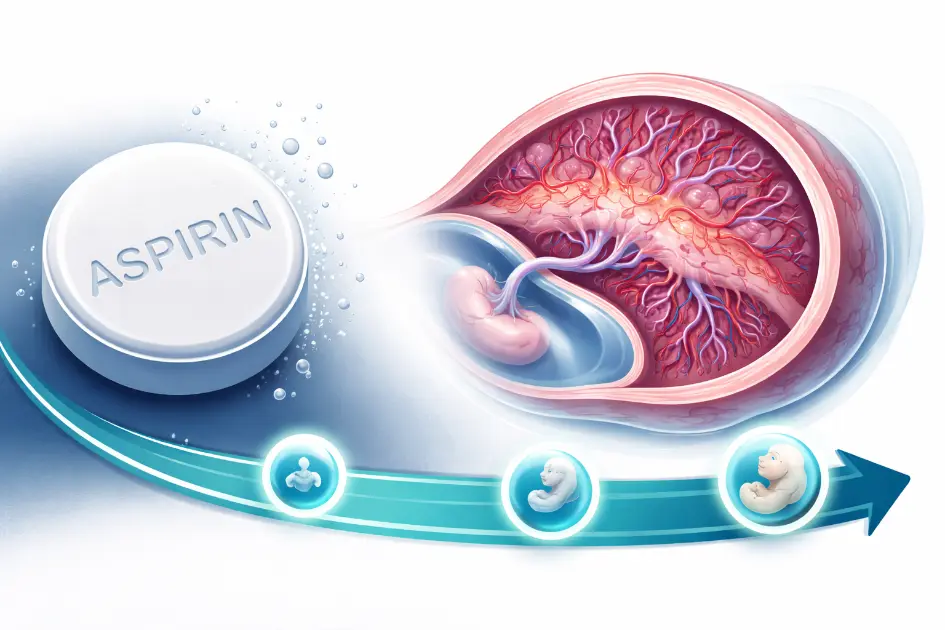
Low-dose aspirin has been the subject of over 100 RCTs involving more than 47,000 pregnancies. Yet despite this extensive evidence base, major clinical questions persist: which dose is optimal, when should it be started, how should patients be selected, and when — if ever — can it safely be stopped? Disparities in guideline recommendations across countries (ACOG recommends 81 mg; FIGO and NICE recommend 150 mg) reflect genuine uncertainty about the dose–response relationship. Recent trials and meta-analyses have provided important new data to inform these decisions.
What Evidence Was Reviewed
This synthesis integrates evidence from the landmark ASPRE trial, the PARIS individual participant data meta-analysis, the Cochrane antiplatelet review, recent head-to-head dose comparison trials (ASPREO, Khander et al. 2026), the StopPRE aspirin discontinuation trial, key systematic reviews and meta-analyses on dose and timing, and current guideline recommendations from ACOG, FIGO, USPSTF, and NICE. Evidence is current through early 2026.
| Study | Design | n | Population | Key Finding | Quality |
|---|---|---|---|---|---|
| ASPRE (Rolnik et al. 2017) | Multicentre RCT | 1,776 | High-risk (combined algorithm), singletons | 150 mg nightly reduced preterm PE by 62% (OR 0.38, 95% CI 0.20–0.74) | High |
| PARIS IPD MA (Askie et al. 2007) | IPD meta-analysis of 31 RCTs | 32,217 | Mixed-risk | 10% overall PE reduction (RR 0.90, 95% CI 0.84–0.97); greater effect with ≤16 wk initiation | High |
| Cochrane (Duley et al. 2019) | SR/MA of 77 RCTs | 40,249 | Mixed-risk | Antiplatelets reduced PE (RR 0.82, 95% CI 0.77–0.88) and preterm birth (RR 0.93) | High |
| Bujold et al. 2010 / updated 2014 | SR/MA | ~11,000 | High-risk, ≤16 wk start | Aspirin initiated ≤16 wks reduced PE by 53% (RR 0.47, 95% CI 0.34–0.65) | High |
| USPSTF 2021 SR (Henderson et al.) | Systematic review | ~23,000 | High-risk, US context | Aspirin 81 mg reduced overall PE (RR 0.85), preterm PE (RR 0.62 when initiated <16 wks) | High |
| ASPREO (Amro et al. 2025) | Open-label RCT | 220 | Obese, high-risk, US | 162 mg vs 81 mg: 78% probability of benefit, ~12% estimated decrease in severe PE | Moderate |
| Khander et al. 2026 | RCT | NR | High-risk, US | 162 mg vs 81 mg comparative trial results (recently published) | Moderate |
| StopPRE (Mendoza et al. 2023) | Open-label noninferiority RCT | 936 | High-risk, sFlt-1:PlGF ≤38 | Aspirin discontinuation at 24–28 wks was non-inferior; fewer bleeding events in discontinuation group | High |
| ASPRE subgroup (Poon et al. 2017) | Secondary analysis of RCT | 1,620 | Subgroups by medical history | No benefit of aspirin in chronic hypertension subgroup (OR 1.29); strong benefit in those without cHTN (OR 0.27) | Moderate |
| ASPRE compliance analysis (Wright et al. 2017) | Secondary analysis of RCT | 1,620 | By compliance level | With ≥90% compliance, aspirin effect substantially larger (OR 0.24, 95% CI 0.09–0.65) | Moderate |
Key Findings on Aspirin for Preeclampsia Prevention
The Dose Question: 81 mg vs. 150 mg and Beyond
The aspirin dose debate represents one of the most consequential unresolved questions in obstetric pharmacotherapy. Meta-analyses consistently suggest a dose–response relationship, with doses above 100 mg yielding greater preterm preeclampsia reduction than doses of 75–81 mg. The ASPRE trial used 150 mg nightly and achieved a 62% reduction in preterm preeclampsia — substantially larger than the approximately 10% overall reduction observed in earlier pooled analyses that primarily used 60–80 mg.
The ASPREO trial — the first US-based RCT directly comparing 162 mg with 81 mg in obese high-risk pregnant individuals — found that 162 mg was associated with a 78% probability of benefit over 81 mg, with an estimated 12% absolute decrease in severe preeclampsia rates. While the trial was designed with Bayesian methodology and the result did not meet conventional frequentist thresholds, it provided the first prospective comparative evidence favouring higher doses in this population. A 2026 RCT by Khander and colleagues at Weill Cornell similarly compared 162 mg with 81 mg, adding to this emerging comparative evidence base.
Timing of Initiation: The 16-Week Threshold
Evidence from multiple meta-analyses converges on the finding that aspirin initiated at or before 16 weeks’ gestation is substantially more effective than later initiation. Bujold and colleagues demonstrated that early initiation (at or before 16 weeks) reduced preeclampsia risk by approximately 53% (RR 0.47, 95% CI 0.34–0.65), whereas initiation after 16 weeks showed no significant benefit. The ASPRE trial initiated aspirin between 11 and 14 weeks, which aligns with first-trimester combined screening.
This timing effect is biologically plausible: aspirin’s primary preventive mechanism appears to involve modulation of early trophoblast invasion and spiral artery remodelling, processes that are largely completed by mid-gestation. Later initiation may miss this critical window of placental vascular development. Current guidelines from FIGO recommend initiation between 11 and 14+6 weeks, ACOG recommends starting between 12 and 28 weeks (optimally before 16 weeks), and NICE advises from 12 weeks.
Patient Selection: Who Benefits Most?
Risk stratification is central to aspirin prophylaxis. The US-based USPSTF approach relies on clinical maternal risk factors: one high-risk factor (history of preeclampsia, multifetal gestation, chronic hypertension, pregestational diabetes, renal disease, autoimmune conditions) or two or more moderate-risk factors (nulliparity, obesity, family history, age above 35, socioeconomic factors) triggers aspirin recommendation. This approach detects roughly 40% of women who will develop preterm preeclampsia at an 11% screen-positive rate.
The ASPRE trial employed a fundamentally different approach — a Bayesian algorithm combining maternal factors, mean arterial pressure, uterine artery pulsatility index, and serum biomarkers (PAPP-A and PlGF) at 11–13 weeks. This multimarker screening achieves substantially better performance, though it requires resources not universally available. Notably, the ASPRE subgroup analysis revealed that women with chronic hypertension may not benefit from aspirin prophylaxis for preterm preeclampsia (OR 1.29, 95% CI 0.33–5.12), while those without chronic hypertension had a striking reduction (OR 0.27, 95% CI 0.12–0.60).
One of the most consistent findings across the aspirin literature is the differential effect on preterm versus term preeclampsia. The ASPRE trial found a 62% reduction in preterm preeclampsia but no significant effect on term preeclampsia. This pattern has been replicated across multiple meta-analyses and is not merely a statistical artifact — it likely reflects two distinct disease phenotypes.
Preterm preeclampsia is predominantly a placental disorder, driven by inadequate trophoblast invasion and defective spiral artery remodelling in early gestation. Aspirin’s antiplatelet and anti-inflammatory effects during the critical window of placentation can modify this pathway. Term preeclampsia, by contrast, is increasingly understood as a maternal cardiovascular syndrome with later-onset endothelial dysfunction, which is less amenable to modification through early aspirin therapy. This biological distinction has important implications for patient counselling: aspirin prophylaxis should be framed as reducing the risk of early and severe disease, not all forms of preeclampsia.
Women with chronic hypertension represent a particularly challenging subgroup. They carry one of the highest baseline risks for superimposed preeclampsia (up to 25–30% in some cohorts), yet the ASPRE trial found no significant aspirin benefit in this population. A dedicated systematic review by Richards and colleagues (2023) confirmed that aspirin did not reduce preeclampsia incidence in women with pre-existing hypertension, though it was associated with a reduction in the risk of preterm delivery and small-for-gestational-age births.
This paradox may reflect the distinct pathophysiology of superimposed preeclampsia in the context of chronic hypertension — where maternal vascular endothelial dysfunction may predominate over placental insufficiency. The finding has direct clinical relevance: while aspirin is still recommended for this group by most guidelines (since it carries minimal risk and may have secondary benefits), clinicians should counsel that the effect on preeclampsia itself is uncertain. Careful blood pressure management with appropriate antihypertensives likely offers greater benefit in this population.
A secondary analysis of the ASPRE trial by Wright and colleagues demonstrated that aspirin’s preventive effect was critically dependent on adherence. Among participants with 90% or greater compliance (taking at least 90% of prescribed pills), the odds ratio for preterm preeclampsia was 0.24 (95% CI 0.09–0.65) — a 76% reduction. In those with lower adherence, the benefit was markedly attenuated.
This finding has practical implications for prenatal care delivery. Simply prescribing aspirin is insufficient; strategies to promote daily adherence — including evening dosing routines, pill reminders, and patient education about the importance of consistent intake — may substantially influence clinical outcomes. The ASPRE adherence data also suggest that the true biological efficacy of aspirin at adequate doses with full compliance may be considerably larger than the intention-to-treat estimates suggest.
The StopPRE trial (Mendoza et al., JAMA 2023) addressed a previously unstudied question: whether aspirin can be safely discontinued before 36 weeks in women whose biomarker profile becomes reassuring. Among 936 women at high risk for preterm preeclampsia who had a normal sFlt-1:PlGF ratio at 24–28 weeks, aspirin discontinuation was non-inferior to continuation — with preterm preeclampsia rates of 1.48% in the discontinuation group versus 1.73% in the continuation group.
Importantly, the discontinuation group had significantly fewer bleeding complications (8.0% vs 12.7%) and fewer adverse pregnancy outcomes at term. This trial introduces the concept of biomarker-guided aspirin duration — personalising treatment length based on placental function markers rather than applying a uniform stop date. However, this approach currently requires access to sFlt-1:PlGF ratio testing, which is not universally available. Without biomarker reassurance, the standard recommendation to continue until 36 weeks remains appropriate.
Quality & Consistency of Evidence
What the Evidence Does Not Show
No large, adequately powered, double-blind RCT has directly compared 81 mg with 150 mg or 162 mg of aspirin. The ASPREO trial (n = 220) and the recently published Khander et al. trial provide preliminary comparative data, but definitive evidence from a trial powered for clinical endpoints is lacking. The ongoing ASAPP trial (NCT04070573) is designed to address this gap by comparing 81 mg with 162 mg in a larger population.
Aspirin’s role in preventing term preeclampsia remains undemonstrated. No trial or meta-analysis has shown a significant reduction in preeclampsia occurring at or after 37 weeks. This gap is particularly relevant because term preeclampsia accounts for the majority of cases and carries its own burden of morbidity. Whether alternative interventions — such as calcium supplementation, exercise, or other pharmacological agents — might address this phenotype remains an active area of investigation.
The optimal approach for low-resource settings, where first-trimester biomarker screening is unavailable and where aspirin doses above 81 mg may not be accessible or affordable, has been insufficiently studied. Additionally, long-term offspring neurodevelopmental outcomes following in-utero aspirin exposure have only recently begun to be evaluated, with observational data suggesting no adverse effects, but no RCT-derived follow-up data extending beyond early childhood are available.
Practical Implications
Based on the current evidence, several considerations emerge for obstetric providers implementing aspirin prophylaxis for preeclampsia prevention.
The strongest preventive effect occurs when aspirin is started at or before 16 weeks’ gestation, with initiation at 11–14 weeks optimal. The evidence base is robust and consistent across multiple meta-analyses. Universal first-trimester risk screening creates the earliest opportunity for identification and intervention.
Meta-analytic evidence and the ASPRE trial data support a dose above 100 mg daily for optimal preterm preeclampsia prevention. Where available, 150 mg (FIGO/NICE) or 162 mg (two US 81-mg tablets, as used in ASPREO) represent evidence-informed options. Evening dosing is associated with enhanced efficacy.
The ASPRE adherence analysis demonstrated that the clinical effect of aspirin is profoundly influenced by compliance. Strategies to support daily adherence — counselling, pill organisers, bedtime routines — may be as important as the prescribing decision itself.
Where sFlt-1:PlGF ratio testing is available, the StopPRE trial supports aspirin discontinuation at 24–28 weeks in women with a normal ratio, reducing bleeding risk without increasing preeclampsia incidence. Where biomarker testing is unavailable, continuation until 36 weeks remains the standard approach.
Evidence Grade & Bottom Line
Overall Evidence Grade: Strong (Aspirin Prevents Preterm Preeclampsia) / Moderate (Optimal Dose Comparison)
For the fundamental question of whether aspirin prevents preterm preeclampsia in high-risk women when initiated early, the evidence is high-certainty. For the comparative dose question (81 mg vs. 150+ mg), evidence is moderate and consistently directional, but lacks a definitive head-to-head trial. The safety profile across all studied doses is well established.
- Aspirin at doses of 100–162 mg daily, initiated before 16 weeks’ gestation, reduces preterm preeclampsia by approximately 50–62% in appropriately selected high-risk women, with no increase in major adverse events.
- Aspirin prophylaxis primarily prevents preterm (placental) preeclampsia and does not significantly reduce term preeclampsia, reflecting the distinct pathophysiology of these two phenotypes.
- Adherence strongly modifies aspirin’s effectiveness: women who take aspirin consistently (≥90% compliance) experience substantially greater benefit than those with lower adherence.
- Women with chronic hypertension may not experience a reduction in superimposed preeclampsia from aspirin, though secondary benefits on preterm delivery and fetal growth may still justify its use in this population.
- The optimal aspirin dose for US populations (81 mg vs. 162 mg) remains the subject of ongoing comparative trials; clinicians should follow evolving evidence while recognising that the available data favour doses above 100 mg.
Article Information
For Educational Purposes Only. This is an original evidence synthesis informed by the studies listed below. It does not replace clinical judgement. Drug dosages should be verified against current prescribing information.
References
- Rolnik DL, Wright D, Poon LC, et al. Aspirin versus placebo in pregnancies at high risk for preterm preeclampsia. N Engl J Med. 2017;377(7):613-622. DOI: 10.1056/NEJMoa1704559
- Askie LM, Duley L, Henderson-Smart DJ, Stewart LA; PARIS Collaborative Group. Antiplatelet agents for prevention of pre-eclampsia: a meta-analysis of individual patient data. Lancet. 2007;369(9575):1791-1798. DOI: 10.1016/S0140-6736(07)60712-0
- Duley L, Meher S, Hunter KE, Seidler AL, Askie LM. Antiplatelet agents for preventing pre-eclampsia and its complications. Cochrane Database Syst Rev. 2019;(10):CD004659. DOI: 10.1002/14651858.CD004659.pub3
- Bujold E, Roberge S, Lacasse Y, et al. Prevention of preeclampsia and intrauterine growth restriction with aspirin started in early pregnancy: a meta-analysis. Obstet Gynecol. 2010;116(2 Pt 1):402-414. DOI: 10.1097/AOG.0b013e3181e9322a
- Henderson JT, Vesco KK, Senger CA, Thomas RG, Redmond N. Aspirin use to prevent preeclampsia and related morbidity and mortality: updated evidence report and systematic review for the US Preventive Services Task Force. JAMA. 2021;326(12):1192-1206. DOI: 10.1001/jama.2021.8551
- Amro FH, Blackwell SC, Pedroza C, et al. Aspirin 162 mg vs 81 mg for preeclampsia prophylaxis in high-risk obese individuals: a comparative effectiveness open-label randomized trial (ASPREO). Am J Obstet Gynecol. 2025;232(3):315.e1-315.e8. DOI: 10.1016/j.ajog.2024.06.038
- Mendoza M, Bonacina E, Garcia-Manau P, et al. Aspirin discontinuation at 24 to 28 weeks’ gestation in pregnancies at high risk of preterm preeclampsia: a randomized clinical trial. JAMA. 2023;329(7):542-550. DOI: 10.1001/jama.2023.0691
- Poon LC, Wright D, Rolnik DL, et al. Aspirin for Evidence-Based Preeclampsia Prevention trial: effect of aspirin in prevention of preterm preeclampsia in subgroups of women according to their characteristics and medical and obstetrical history. Am J Obstet Gynecol. 2017;217(5):585.e1-585.e5. DOI: 10.1016/j.ajog.2017.07.038
- Wright D, Poon LC, Rolnik DL, et al. Aspirin for Evidence-Based Preeclampsia Prevention trial: influence of compliance on beneficial effect of aspirin in prevention of preterm preeclampsia. Am J Obstet Gynecol. 2017;217(6):685.e1-685.e5. DOI: 10.1016/j.ajog.2017.08.110
- Horgan R, Hage Diab Y, Waller J, Abuhamad A, Saade G. Low-dose aspirin therapy for the prevention of preeclampsia: time to reconsider our recommendations? Am J Obstet Gynecol. 2023;229(4):410-418. DOI: 10.1016/j.ajog.2023.04.031
- Khander A, Thomas C, Matthews K, et al. Comparison of 162 mg and 81 mg aspirin for prevention of preeclampsia: a randomized controlled trial. Obstet Gynecol. 2026;147(1):87-96. DOI: 10.1097/AOG.0000000000006100
- Richards EMF, Giorgione V, Stevens O, Thilaganathan B. Low-dose aspirin for the prevention of superimposed preeclampsia in women with chronic hypertension: a systematic review and meta-analysis. Am J Obstet Gynecol. 2023;228(4):395-408. DOI: 10.1016/j.ajog.2022.09.037
- Poon LC, Shennan A, Hyett JA, et al. The International Federation of Gynecology and Obstetrics (FIGO) initiative on pre-eclampsia: a pragmatic guide for first-trimester screening and prevention. Int J Gynaecol Obstet. 2019;145 Suppl 1:1-33. DOI: 10.1002/ijgo.12802
- ACOG Committee Opinion No. 743. Low-dose aspirin use during pregnancy. Obstet Gynecol. 2018;132(1):e44-e52. DOI: 10.1097/AOG.0000000000002708