
VBAC Two Cesareans: 5 Pivotal Practice Considerations
A reassessment of real-world outcomes covering success rates, uterine rupture risk, and counseling implications
One-Minute Takeaway on VBAC Two Cesareans
What the contemporary evidence supports:
- VBAC two cesareans achieves a successful vaginal delivery in roughly 65–75% of carefully selected candidates, with a pooled success rate near 71%.
- Uterine rupture risk in pooled cohort data ranges from 0.9% to 3.7%, modestly higher than the 0.5–1.0% reported with a single prior cesarean.
- Prior vaginal delivery — particularly a prior successful VBAC — is the strongest predictor of success and may reduce rupture risk.
- Maternal hysterectomy and transfusion rates are higher than with VBAC after one cesarean, but absolute risks remain low in candidate-selected populations.
- Both ACOG (2019) and the RCOG (2015) endorse a trial of labor as reasonable for appropriately counseled women with two prior low-transverse cesareans.
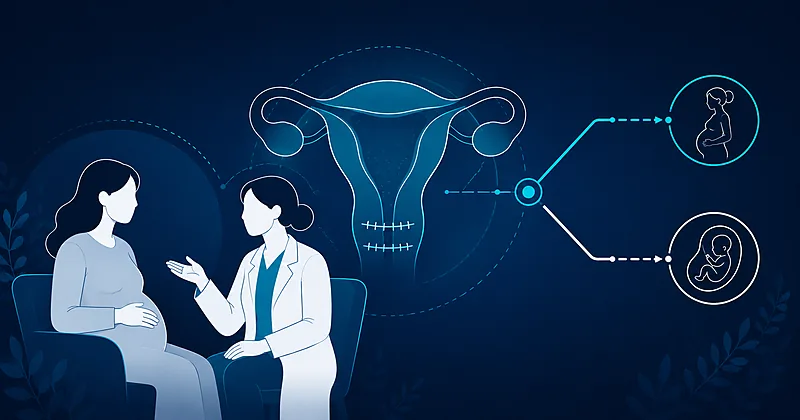
Why This Topic Matters
Cesarean delivery rates in the United States have stabilized near 32%, and globally the proportion continues to climb. Each repeat cesarean compounds a woman’s lifetime surgical risk profile, particularly through cumulative exposure to placenta accreta spectrum disorders, dense pelvic adhesions, and complications during subsequent procedures.
For women with two prior low-transverse cesareans who desire additional pregnancies, the choice between a third elective repeat cesarean and a trial of labor carries meaningful long-term implications. Historically, VBAC two cesareans was considered too risky, with many institutions limiting trial of labor to women with only one prior scar.
Contemporary observational evidence has reframed the conversation. Large cohort studies and a key meta-analysis suggest that, with appropriate candidate selection and resourced labor units, VBAC two cesareans yields outcomes that are clinically acceptable for many women. Yet uncertainty persists about absolute risk magnitudes and which patient subgroups derive the most net benefit.
The counseling task is genuinely difficult. Clinicians must convey absolute risks, account for individual modifiers such as prior vaginal delivery, and respect maternal autonomy in choosing between two imperfect options. A clear synthesis of the contemporary evidence is essential to that conversation.
Evidence Reviewed: VBAC Two Cesareans Studies
This synthesis draws on the systematic review and meta-analysis by Tahseen and Griffiths, the MFMU Network prospective cohort reported by Landon and colleagues, a retrospective multicenter analysis by Macones and colleagues, and supporting cohort studies on predictors of success and rupture. Together these studies provide the contemporary evidence base for VBAC two cesareans.
| Study | Design | VBAC-2 n | Success rate | Rupture rate | Key comparator finding |
|---|---|---|---|---|---|
| Tahseen and Griffiths 2010 (BJOG) | Systematic review and meta-analysis (17 studies) | 5,666 | 71.1% | 1.36% | Rupture roughly double VBAC-1 pooled rate (0.72%) |
| Landon and colleagues 2006 (MFMU) | Prospective multicenter cohort | 975 | ~65% | 1.7% | Significantly higher rupture than VBAC-1 (0.9%); transfusion 3.2% vs 1.6% |
| Macones and colleagues 2005 (AJOG) | Retrospective multicenter cohort | 1,082 | ~75% | 0.9% | Rupture difference vs VBAC-1 not statistically significant after adjustment |
| Cahill and colleagues 2010 (BJOG) | Retrospective multicenter cohort | NR (subgroup) | ~79% | ~0.9% | Outcomes similar to VBAC-1 in selected women |
| Mercer and colleagues 2008 (Obstet Gynecol) | Prospective subgroup analysis (MFMU) | NR | Up to 90% with prior VBAC | Reduced with prior vaginal delivery | Prior vaginal birth is the strongest success predictor |
| Stamilio and colleagues 2007 (Obstet Gynecol) | Retrospective cohort | NR | Variable | Up to 4.8% with IPI <6 mo | Short interpregnancy interval elevates rupture risk |
| Hibbard and colleagues 2001 (AJOG) | Retrospective cohort (failed TOLAC) | Mixed VBAC-1/2 | — | — | Failed trial of labor carries the highest maternal morbidity |
| ACOG 2019 Practice Bulletin No. 205 | Guideline synthesis | — | — | — | Endorses VBAC two cesareans as reasonable in selected candidates |
“NR” denotes not separately reported for the VBAC two cesareans subgroup. Success rate ranges reflect candidate selection, induction policy, and prior vaginal delivery status across study populations.
Key Findings Synthesized by Theme
Success rates are lower but clinically substantial
Across the major cohort studies, vaginal delivery is achieved in roughly two-thirds to three-quarters of women attempting VBAC two cesareans. The Tahseen and Griffiths meta-analysis reported a pooled success rate of 71.1%, with study-level rates ranging from 45% to 89% depending on candidate selection.
The MFMU Network cohort reported by Landon and colleagues observed a lower 65% success rate, plausibly reflecting a more diverse population and less selective entry criteria. Macones and colleagues reported a higher 75% success rate in their retrospective cohort, where induction protocols and candidate screening differed.
The clinical implication is that VBAC two cesareans success rates are modestly lower than the 70–80% typically quoted for VBAC after one cesarean, but the gap is small. For most candidates, the probability of successful vaginal delivery exceeds the probability of an intrapartum cesarean.
Uterine rupture risk is modestly elevated
The signal that drives the most clinical anxiety is uterine rupture. The Tahseen meta-analysis reported a pooled VBAC-2 rupture rate of 1.36%, compared with 0.72% for VBAC after one cesarean — roughly a doubling of absolute risk in pooled data.
The MFMU cohort reported a similar pattern, with rupture occurring in 1.7% of VBAC two cesareans labors versus 0.9% with one prior cesarean. The difference reached statistical significance in that analysis, with adjusted odds suggesting a meaningful elevation in absolute risk.
Macones and colleagues reached a slightly different conclusion. After adjustment for confounders, the VBAC-2 versus VBAC-1 rupture difference (0.9% vs 0.7%) did not reach statistical significance. The discrepancy likely reflects population differences, induction practices, and statistical power.
Maternal morbidity patterns parallel rupture
Composite maternal morbidity is consistently higher in VBAC two cesareans than in VBAC-1. The Tahseen meta-analysis reported hysterectomy rates of 0.55% versus 0.19% (roughly three times higher in absolute terms) and transfusion requirement of 2.01% versus 1.21%.
Importantly, Hibbard and colleagues showed that the morbidity penalty falls heavily on women who undergo failed trials of labor, particularly when ending in emergency cesarean. Successful VBAC remains the safest of the three pathways from a maternal morbidity standpoint, even after two prior cesareans.
Predictors of success and safety
Prior vaginal delivery is the single most powerful modifier. Mercer and colleagues, analyzing the MFMU cohort, showed that women with a prior successful VBAC had success rates approaching 90% on subsequent attempts and substantially lower rupture risk.
Other modifiers identified across studies include spontaneous labor onset (favorable), short interpregnancy interval — particularly under six months (unfavorable, with rupture rates up to 4.8% in the Stamilio data), and induction with prostaglandins (unfavorable, though oxytocin-only induction appears safer).
Maternal body mass index, gestational age beyond 40 weeks, and estimated fetal weight greater than 4 kg also reduce success rates, although their independent contribution to rupture risk is less clear. Validated prediction tools, such as the Grobman nomogram, can be adapted to two-cesarean populations with appropriate caveats.
Clinical Pearl
Quality and Consistency of the Evidence
The body of evidence supporting VBAC two cesareans is observational. No randomized trials directly compare trial of labor with elective repeat cesarean in this population, and the ethical and logistical barriers to such a trial make one unlikely. Quality ratings below reflect study design, sample size, consistency across studies, and risk of confounding.
What the Evidence Does Not Yet Show
Important Knowledge Gaps
- No randomized data. The absence of randomized trials means residual confounding cannot be excluded. Women selected for trial of labor differ from those undergoing elective repeat cesarean in ways that imperfectly adjusted observational models may miss.
- Neonatal outcome power. Rare but serious neonatal endpoints — hypoxic-ischemic encephalopathy, perinatal death — are inadequately powered in available studies. Rupture-attributable neonatal harm in VBAC two cesareans remains imprecise.
- Induction safety. Optimal induction protocols are unclear. Prostaglandin-based induction is associated with higher rupture risk, but data on mechanical ripening and low-dose oxytocin in two-prior-cesarean women are sparse.
- Interpregnancy interval thresholds. Although shorter intervals appear higher risk, the precise threshold below which trial of labor should be discouraged in VBAC two cesareans candidates is not well defined.
- Prediction tools. Validated success and rupture prediction calculators are largely derived from VBAC-1 populations. Their performance specifically for VBAC two cesareans has not been rigorously evaluated.
These gaps do not invalidate the available evidence, but they argue for individualized counseling, conservative thresholds for emergent intervention, and ongoing prospective data collection in centers offering VBAC two cesareans as a routine option.
Practical Implications for VBAC Two Cesareans Counseling
The following considerations summarize what the contemporary evidence supports — and what it does not — for clinicians counseling women with two prior low-transverse cesareans. Each is framed around what the evidence shows, not what individual clinicians should mandate.
Evidence Supports VBAC Two Cesareans as a Reasonable Option in Selected Candidates
ACOG (2019) and RCOG (2015) both endorse a trial of labor for women with two prior low-transverse cesareans and no other contraindications. Pooled success rates near 71% and rupture rates around 1.4% support this position. Candidacy is best confirmed by a documented prior low-transverse uterine incision and absence of classical scar or fundal extension.
Prior Vaginal Delivery Demonstrates Substantial Benefit
Across multiple cohorts, a prior successful vaginal birth — particularly a prior VBAC — is the single most powerful modifier of success and safety. Women with this history may be counseled toward success rates approaching 85–90% and reduced rupture risk. Document and weight this finding prominently.
Continuous Intrapartum Monitoring Aligns with Standard VBAC Practice
Available data on rupture detection support continuous electronic fetal monitoring, immediate cesarean capability, and on-site anesthesia. These resource requirements are no different from VBAC-1, but should be confirmed before offering VBAC two cesareans at a given facility.
Counseling Should Present Absolute Risk Numbers Explicitly
Numerical framing improves comprehension. A practical counseling frame: approximately 71 of 100 women will deliver vaginally; approximately 1 to 2 of 100 will experience uterine rupture; rupture-attributable serious neonatal harm occurs in a small minority of ruptures. Pair each number with its underlying source quality.
Evidence Suggests Caution with Prostaglandin Induction and Short Interpregnancy Intervals
Prostaglandin-based labor induction and interpregnancy intervals shorter than 18 months — particularly under 6 months — have been associated with rupture rates substantially higher than baseline. Where induction is needed in VBAC two cesareans candidates, mechanical methods and low-dose oxytocin warrant preference, although direct comparative data remain limited.
Counseling Frame
Evidence Grade and Bottom Line
Evidence Grade: Moderate. Multiple consistent observational studies including a substantive meta-analysis support contemporary guidance, but the absence of randomized data and limited neonatal outcome power mean confidence is moderate rather than strong. Future high-quality prospective registry data may refine the absolute risk estimates.
A moderate grade indicates the available evidence is sufficient to support current guideline recommendations, but additional high-quality data could meaningfully refine the magnitude of risk and benefit estimates. Clinicians should counsel women using the contemporary numbers while acknowledging that observational designs cannot fully exclude residual confounding.
In particular, the rupture rate estimate of 1–1.7% is reasonably stable across cohorts, but the precise neonatal harm attributable to rupture in VBAC two cesareans candidates remains imprecise.
Recommendations could shift if large prospective registry studies refine absolute neonatal outcomes, if a validated VBAC two cesareans prediction tool emerges, or if comparative data on induction methods specifically in this population become available. None of these are imminent, but each is a plausible source of update over the next decade.
Moderate grade does not mean ambivalent. It means clinicians should counsel decisively using the best available numbers, while acknowledging the boundary of certainty. Shared decision-making frameworks that quantify success, rupture, and morbidity in absolute terms are well suited to this evidence level.
Bottom Line
- VBAC two cesareans is a clinically reasonable option for selected women with two prior low-transverse cesareans and no other contraindications, supported by ACOG and RCOG guidance and a substantive observational evidence base.
- Pooled success rates of approximately 71% and uterine rupture rates of roughly 1 to 1.7% represent the most defensible absolute numbers for counseling, with prior vaginal delivery substantially improving outcomes.
- Maternal hysterectomy and transfusion are somewhat more frequent than with VBAC after one cesarean, but absolute risks remain low and concentrated in failed trials of labor.
- The absence of randomized data, limited neonatal outcome power, and unclear induction safety in this population justify individualized counseling, careful intrapartum monitoring, and ongoing data collection.
Article Information
References
- Tahseen S, Griffiths M. Vaginal birth after two caesarean sections (VBAC-2)—a systematic review with meta-analysis of success rate and adverse outcomes of VBAC-2 versus VBAC-1 and repeat (third) caesarean sections. BJOG. 2010;117(1):5-19. DOI: 10.1111/j.1471-0528.2009.02351.x
- Landon MB, Spong CY, Thom E, et al. Risk of uterine rupture with a trial of labor in women with multiple and single prior cesarean delivery. Obstet Gynecol. 2006;108(1):12-20. DOI: 10.1097/01.AOG.0000224694.32531.f3
- Macones GA, Cahill A, Pare E, et al. Obstetric outcomes in women with two prior cesarean deliveries: is vaginal birth after cesarean delivery a viable option? Am J Obstet Gynecol. 2005;192(4):1223-8. DOI: 10.1016/j.ajog.2004.12.082
- Cahill AG, Tuuli M, Odibo AO, Stamilio DM, Macones GA. Vaginal birth after caesarean for women with three or more prior caesareans: assessing safety and success. BJOG. 2010;117(4):422-7. DOI: 10.1111/j.1471-0528.2010.02498.x
- Mercer BM, Gilbert S, Landon MB, et al. Labor outcomes with increasing number of prior vaginal births after cesarean delivery. Obstet Gynecol. 2008;111(2 Pt 1):285-91. DOI: 10.1097/AOG.0b013e31816102b9
- American College of Obstetricians and Gynecologists. ACOG Practice Bulletin No. 205: Vaginal Birth After Cesarean Delivery. Obstet Gynecol. 2019;133(2):e110-e127. DOI: 10.1097/AOG.0000000000003078
- Royal College of Obstetricians and Gynaecologists. Birth after previous caesarean birth. Green-top Guideline No. 45. London: RCOG; 2015. Available from: RCOG Green-top Guideline No. 45
- Stamilio DM, DeFranco E, Paré E, et al. Short interpregnancy interval: risk of uterine rupture and complications of vaginal birth after cesarean delivery. Obstet Gynecol. 2007;110(5):1075-82. DOI: 10.1097/01.AOG.0000286759.49895.46
- Sentilhes L, Vayssière C, Beucher G, et al. Delivery for women with a previous cesarean: guidelines for clinical practice from the French College of Gynecologists and Obstetricians (CNGOF). Eur J Obstet Gynecol Reprod Biol. 2013;170(1):25-32. DOI: 10.1016/j.ejogrb.2013.05.015
- Smith GC, White IR, Pell JP, Dobbie R. Predicting cesarean section and uterine rupture among women attempting vaginal birth after prior cesarean section. PLoS Med. 2005;2(9):e252. DOI: 10.1371/journal.pmed.0020252
- Grobman WA, Lai Y, Landon MB, et al. Development of a nomogram for prediction of vaginal birth after cesarean delivery. Obstet Gynecol. 2007;109(4):806-812. DOI: 10.1097/01.AOG.0000259312.36053.02
- Hibbard JU, Ismail MA, Wang Y, Te C, Karrison T, Parker MA. Failed vaginal birth after a cesarean section: how risky is it? I. Maternal morbidity. Am J Obstet Gynecol. 2001;184(7):1365-71; discussion 1371-3. DOI: 10.1067/mob.2001.115044