
Pediatric Type 1 Diabetes: Three Modern Approaches Compared
From delaying disease onset to automating insulin delivery — what randomized trials show about the therapies and technologies now reshaping childhood diabetes care.
One-Minute Takeaway
- Pediatric type 1 diabetes care now advances on three evidence-backed fronts, each supported by randomized controlled trials: a disease-modifying antibody, continuous glucose monitoring, and automated insulin delivery.
- Teplizumab delayed progression to clinical (stage 3) disease in high-risk youth, with a hazard ratio of 0.41 and a median delay of roughly two years in the pivotal trial.
- Closed-loop (automated insulin delivery) systems raised time in target range by about 9 to 12 percentage points versus control across trials spanning toddlers to adolescents.
- Continuous glucose monitoring produced a small but significant HbA1c reduction in adolescents, while its benefit in very young children centred on less hypoglycaemia rather than more time in range.
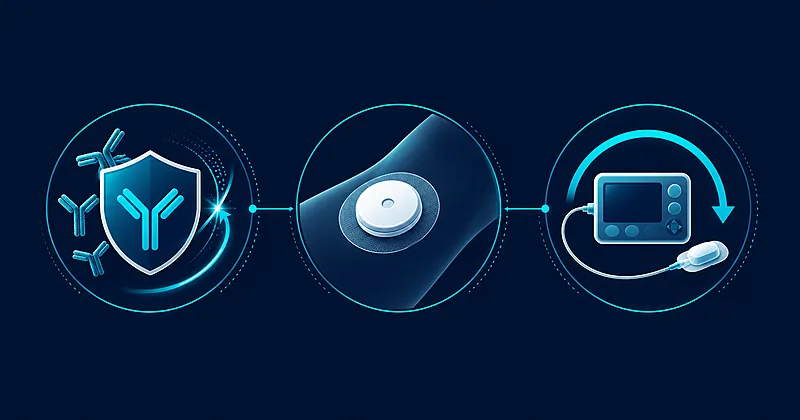
- The three approaches address different goals — prevention, monitoring, and delivery — and are increasingly combined rather than chosen between.
Why Pediatric Type 1 Diabetes Matters
Type 1 diabetes is among the most common chronic conditions of childhood, and it demands continuous, high-stakes self-management from children and their families. Every meal, illness, and night carries a risk of hypoglycaemia or hyperglycaemia.
Glycaemic control in young people has historically lagged behind targets. In the T1D Exchange registry, only about 17% of adolescents and young adults reached the recommended HbA1c target below 7.5%, underscoring how difficult day-to-day control remains in this age group.
Age at onset also carries long-term weight. Earlier diagnosis is associated with a longer lifetime of exposure and a greater cumulative burden of vascular risk, which sharpens the appeal of delaying disease and improving control from the outset.
For decades the only tools were insulin and fingerstick glucose testing. Three distinct advances have since entered pediatric practice, and this review synthesises the randomized evidence behind each: a therapy that alters the autoimmune process itself, sensors that reveal glucose continuously, and algorithms that adjust insulin automatically.
These three approaches are not mutually exclusive. Teplizumab acts before or shortly after diagnosis, while continuous glucose monitoring and automated delivery manage established disease — and modern closed-loop systems are built directly on top of a glucose sensor.
A Practical Taxonomy of Pediatric Type 1 Diabetes
It helps to organise the modern toolkit by what each intervention is trying to change. One class targets the disease process, one improves visibility of glucose, and one automates the response. The table below summarises the randomized trials anchoring each class; every figure was checked against its primary source.
| Study / Source | Class | Design | N | Population | Key verified result | Tier |
|---|---|---|---|---|---|---|
| Herold 2019 (TN-10) | Disease-modifying | RCT | 76 | Stage 2, high-risk relatives; median age 13 (8–49) | Delayed stage 3 onset; HR 0.41 (95% CI 0.22–0.78); median 48.4 vs 24.4 months | [V] |
| Sims 2021 (TN-10 extension) | Disease-modifying | RCT (extended follow-up) | 76 | As above; ~923-day median follow-up | Median 59.6 vs 27.1 months (HR 0.46); 50% vs 22% remained diabetes-free | [V] |
| Ramos 2023 (PROTECT) | Disease-modifying | RCT | 328 | Newly diagnosed stage 3, ages 8–17 | Preserved C-peptide AUC; LSM difference 0.13 pmol/mL (95% CI 0.09–0.17) | [V] |
| Laffel 2020 (CITY) | Glucose monitoring | RCT | 153 | Ages 14–24; baseline HbA1c 7.5–10.9% | HbA1c −0.37% vs fingerstick (95% CI −0.66 to −0.08) | [V] |
| SENCE 2021 | Glucose monitoring | RCT | 143 | Ages 2 to <8 | No improvement in TIR; reduced time in hypoglycaemia (secondary) | [V] |
| Breton 2020 (DCLP5) | Automated delivery | RCT | 101 | Ages 6–13 | TIR +11 percentage points vs sensor-augmented pump (95% CI 7–14) | [V] |
| Wadwa 2023 (PEDAP) | Automated delivery | RCT | 102 | Ages 2 to <6 | TIR +12.4 percentage points vs standard care (95% CI 9.5–15.3) | [V] |
| Ware 2022 (CamAPS FX) | Automated delivery | RCT (crossover) | 74 | Ages 1–7 | TIR +8.7 percentage points vs sensor-augmented pump (95% CI 7.4–9.9) | [V] |
All eight trials were randomized, and effect estimates are reported with confidence intervals from the source publications. The sections that follow examine each class in turn.
Disease-Modifying Therapy
Unlike insulin or devices, a disease-modifying therapy targets the autoimmune destruction of beta cells that drives type 1 diabetes. Teplizumab, a humanized anti-CD3 monoclonal antibody, is the first agent of this kind to reach clinical use in this population.
Delaying disease onset
The pivotal TrialNet TN-10 trial randomized relatives of people with type 1 diabetes who already had stage 2 disease — two or more autoantibodies plus dysglycaemia — to a single 14-day course of teplizumab or placebo. Most participants were children, with a median age of 13.
A single course delayed progression to clinical stage 3 disease. The Herold 2019 analysis reported that diabetes developed in 43% of the teplizumab group versus 72% of the placebo group over follow-up.
The Sims 2021 extension followed the same cohort longer. Median time to diagnosis reached 59.6 months with teplizumab versus 27.1 months with placebo, and improved C-peptide indicated better preserved beta-cell function. HbA1c did not differ between groups.
On the strength of this evidence, the therapy received United States approval in November 2022 to delay the onset of stage 3 disease in people with stage 2 disease. Current labelling extends that delay indication to patients aged 1 year and older.
Preserving beta-cell function after diagnosis
The phase 3 PROTECT trial asked a different question: can treatment help children who are already newly diagnosed? It randomized 328 participants aged 8 to 17, within six weeks of a stage 3 diagnosis, to two 12-day courses of teplizumab or placebo.
Teplizumab met the primary endpoint by slowing the decline in stimulated C-peptide, a marker of surviving beta-cell function, at week 78. Secondary outcomes such as HbA1c, time in range, and insulin dose numerically favoured treatment but did not reach statistical significance.
In June 2026, regulators granted accelerated approval for this newly diagnosed indication in children aged 8 to 17, making teplizumab the first disease-modifying option offered at diagnosis in this group. Because approval rests on a surrogate marker, continued confirmation from ongoing trials is expected.
Safety warrants caution. Reported effects include transient lymphopenia and other cytopenias, rash, gastrointestinal symptoms, transaminase elevation, and headache. Cytokine release syndrome and viral reactivation are recognised risks, so premedication and monitoring are part of administration.
Continuous Glucose Monitoring
Continuous glucose monitoring (CGM) replaces intermittent fingersticks with a sensor that reports glucose and trends throughout the day and night, with alerts for highs and lows. It is also the foundation on which automated insulin delivery is built.
Adolescents and young adults
The CITY trial randomized 153 people aged 14 to 24 — a group with historically poor control — to real-time CGM or usual fingerstick monitoring. Over 26 weeks, CGM produced a small but statistically significant improvement in HbA1c.
The CITY investigators framed the improvement as modest but meaningful in a population where any durable gain is difficult to achieve. Several CGM-specific metrics, including time in range, also favoured the sensor group.
Very young children
The picture differs at the other end of the age range. The SENCE trial randomized 143 children aged 2 to under 8 to CGM, with or without a family behavioural intervention, versus fingerstick monitoring.
Time in range did not improve across groups. However, CGM use was associated with less time spent in hypoglycaemia and better glycaemic variability — a benefit that matters for young children who cannot reliably report symptoms.
CGM’s headline benefit is age-dependent. In adolescents it modestly lowers HbA1c, whereas in very young children the clearest randomized benefit is safety — fewer and shorter lows — rather than more time in range on its own.
Automated Insulin Delivery Systems
Automated insulin delivery — also called hybrid closed-loop or an artificial pancreas — links a glucose sensor, an algorithm, and an insulin pump. The algorithm adjusts background insulin automatically while the user still boluses for meals. This is the most consistently supported technology in pediatric type 1 diabetes.
School-age children
The DCLP5 trial randomized 101 children aged 6 to 13 to a closed-loop system or a sensor-augmented pump over 16 weeks. Time in range rose from 53% to 67% with closed-loop while barely changing with the control.
The overnight difference was especially large, addressing the nocturnal hypoglycaemia that worries families most. An eleven-point gain corresponds to roughly 2.6 additional hours per day in target range.
Toddlers and preschoolers
Two randomized trials extended these findings to the youngest children. The PEDAP trial studied 102 children aged 2 to under 6 over 13 weeks, and the CamAPS FX crossover trial studied children aged 1 to 7.
Both trials showed higher time in range with automation and no increase in hypoglycaemia, and both also reduced HbA1c modestly. A meta-analysis of the Control-IQ trials across ages 2 to 72 pooled these consistent effects.
Across the age spectrum, from preschoolers to adolescents, the direction and rough magnitude of benefit is strikingly similar. That concordance is what makes the closed-loop evidence the most robust of the three classes.
The largest closed-loop gains are overnight, when manual management is hardest. This safety-weighted benefit — more time in range without more hypoglycaemia — is consistent from toddlers to teens.
Comparative Analysis
Placed side by side, the three classes answer different clinical questions rather than competing for the same one. Choosing between them is usually the wrong framing; sequencing and combining them is closer to how care actually unfolds.
- Goal. Disease-modifying therapy aims to delay onset or preserve beta cells; CGM aims to make glucose visible; automated delivery aims to act on that glucose automatically.
- Timing. Teplizumab is used at stage 2 or shortly after diagnosis, a narrow window. CGM and closed-loop systems apply across the entire course of established disease.
- Population. The delay indication depends on identifying at-risk children through screening; the devices apply to essentially all children on insulin.
- Outcome measured. Teplizumab trials report time-to-diagnosis and C-peptide; device trials report time in range and HbA1c. These endpoints are not interchangeable.
- Strength of evidence. Closed-loop benefit is replicated across several concordant RCTs; the delay finding rests mainly on one pivotal trial and its extension.
The practical implication is layering. A screened child might receive teplizumab to buy time, then move to CGM and a closed-loop system once insulin is required — each addressing a different part of the same disease.
Quality and Consistency of the Evidence
The overall evidence base is randomized and of generally high quality, but strength varies by claim. The ratings below reflect how consistently each finding has been reproduced.
- High — Closed-loop time in range: multiple randomized trials from toddlers to adolescents show a consistent 9 to 12 percentage-point gain without more hypoglycaemia.
- Moderate — Teplizumab delay of onset: a strong pivotal RCT with a confirmatory extension, but the finding rests largely on a single trial with a modest sample.
- Moderate — Teplizumab C-peptide preservation: a large phase 3 RCT met its primary endpoint, though clinical secondary outcomes did not reach significance.
- Moderate — CGM in adolescents: a randomized HbA1c benefit that is statistically significant but small in absolute terms.
- Low — CGM time-in-range benefit in very young children: a randomized trial found no improvement in time in range, with benefit limited to hypoglycaemia and variability.
Two features strengthen confidence in the device data: dedicated pediatric control groups and high sensor-wear adherence within the trials. The teplizumab data are strong but thinner, reflecting the difficulty of running prevention trials.
What the Evidence Does Not Show
- Whether delaying stage 3 onset with teplizumab translates into fewer long-term complications is not yet established; trials measured time-to-diagnosis and C-peptide, not decades of outcomes.
- Head-to-head trials directly comparing the three classes do not exist, because they were designed for different populations and endpoints.
- Long-term durability beyond the trial windows — typically weeks to a few years — remains largely uncharacterised for the devices in routine use.
- Real-world effectiveness outside trial conditions, including adherence and equitable access, is not captured by these efficacy studies.
- The very young children data for CGM show no time-in-range benefit, so claims of universal glycaemic improvement across all ages are not supported.
These gaps do not undercut the demonstrated benefits. They mark the boundary between what randomized trials have shown and what remains to be confirmed in longer, broader, real-world study.
Practical Implications
Read together, the trials support a few practical observations for clinicians caring for children with, or at risk of, type 1 diabetes.
- Automated insulin delivery has the most consistent randomized support across pediatric ages and is a reasonable default technology where available and affordable.
- CGM benefit is real but context-dependent: emphasise HbA1c gains in adolescents and hypoglycaemia protection in the youngest children.
- The delay indication depends on finding stage 2 disease, which makes autoantibody screening of at-risk relatives the entry point to that pathway.
- At new diagnosis in children aged 8 to 17, disease-modifying therapy is now an option to discuss alongside standard insulin, weighed against its infusion burden and monitoring needs.
- These tools complement rather than replace one another, and each carries its own adherence, cost, and support requirements.
Interpretation should always sit within the individual child’s clinical picture, family capacity, and local access, rather than following any single trial result in isolation.
Evidence Grade and Bottom Line
Overall evidence grade: Moderate to High. The strongest, most reproducible signal is for automated insulin delivery; teplizumab and adolescent CGM rest on solid but more limited randomized evidence.
- Automated insulin delivery reliably increases time in range by roughly 9 to 12 percentage points across pediatric ages, without increasing hypoglycaemia.
- Teplizumab delayed clinical onset by a median of about two years in high-risk youth and preserves beta-cell function when given at diagnosis.
- CGM lowers HbA1c modestly in adolescents and reduces hypoglycaemia in very young children.
- The three approaches are best understood as layered tools spanning prevention, monitoring, and delivery — not as alternatives.
The trajectory of pediatric type 1 diabetes care is toward earlier intervention and greater automation, each step backed by randomized evidence rather than expectation.