
Blunt Abdominal Trauma: Critical Findings in 4 Subgroups
Synthesizing evidence on FAST examination, CT indications, WSES liver and spleen injury grading, and nonoperative management decisions in blunt abdominal trauma.
One-Minute Takeaway on Blunt Abdominal Trauma
One-Minute Takeaway
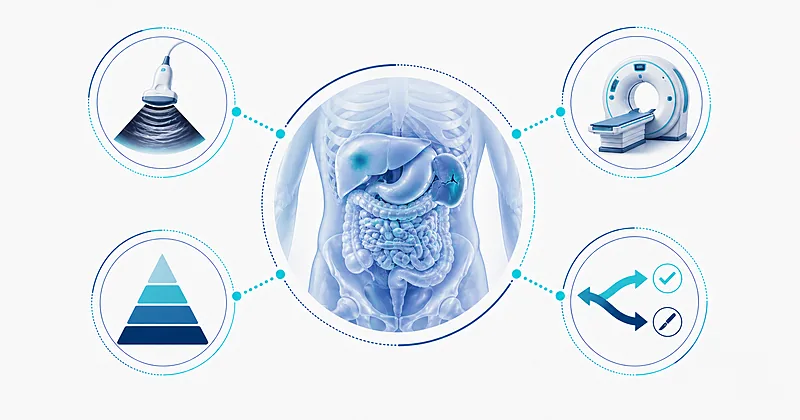
- Blunt abdominal trauma evaluation rests on hemodynamic status, FAST examination, and CT, with management stratified by WSES injury grade.
- FAST sensitivity is highest in hemodynamically unstable patients (approximately 85–90%) and lower in stable patients; contrast-enhanced CT remains the standard for definitive evaluation.
- WSES classification grades liver and spleen injuries from minor (Grade I) to hemodynamically unstable (Grade IV), guiding nonoperative versus operative decisions.
- Nonoperative management succeeds in approximately 85–95% of hemodynamically stable blunt abdominal trauma patients with low- to moderate-grade solid organ injuries.
- Angioembolization adjunctive therapy has expanded NOM eligibility to higher-grade injuries while reducing failure rates in selected patients.
Why Blunt Abdominal Trauma Evaluation Matters
Blunt abdominal trauma accounts for a substantial portion of trauma admissions, with motor vehicle collisions, falls, and assault representing the most common mechanisms. The liver and spleen are the most frequently injured solid organs. Rapid identification of significant intra-abdominal injury directly affects mortality and downstream resource utilization.
Management has shifted dramatically over recent decades. The era of routine exploratory laparotomy for solid organ injury has given way to selective nonoperative management for the majority of hemodynamically stable patients. FAST examination, contrast-enhanced CT, and angiographic adjuncts have together enabled this shift in blunt abdominal trauma care.
Three diagnostic and management decisions structure contemporary blunt abdominal trauma care. The first identifies patients who require immediate operative intervention versus further evaluation. The second defines injury extent and severity once initial stability is achieved. The third selects and monitors nonoperative management with appropriate criteria for failure conversion.
WSES (World Society of Emergency Surgery) and EAST (Eastern Association for the Surgery of Trauma) guidelines provide the contemporary framework for these decisions. This evidence synthesis examines four clinical subgroups defined by injury grade and hemodynamic status, integrating diagnostic and management evidence relevant to current blunt abdominal trauma practice.
Blunt Abdominal Trauma: What Evidence Was Reviewed
This evidence synthesis examines literature spanning the blunt abdominal trauma evaluation and management framework: WSES classification and management guidelines for liver and spleen injury, EAST practice management guidelines for nonoperative management, the Cochrane review of FAST diagnostic accuracy, the Peitzman EAST multi-institutional splenic injury study, and pediatric CT decision rules.
The evidence base draws from systematic reviews, multi-institutional cohort analyses, and consensus guidelines from major trauma surgical societies. Where direct head-to-head trials are unavailable or impractical, contemporary practice rests on consistently designed observational studies and guideline-level synthesis informing blunt abdominal trauma decisions.
Studies were prioritized for currency, methodological quality, and direct relevance to contemporary practice. Particular attention was given to evidence informing the diagnostic accuracy of FAST, indications for CT, the WSES grading framework, and nonoperative management success rates and failure criteria.
| Study / Year | Design | n | Comparison / Focus | Key Finding |
|---|---|---|---|---|
| Coccolini 2017 (WSES) | Consensus / SR | n/a | Splenic trauma classification & guidelines | Four-grade WSES classification integrating anatomy and hemodynamic status; NOM framework for adults and pediatrics |
| Coccolini 2020 (WSES) | Consensus / SR | n/a | Liver trauma classification & guidelines | Updated WSES liver injury framework with NOM success, angioembolization role, and damage control criteria |
| Stengel 2015 (Cochrane) | Systematic review | ~7,500 (pooled) | FAST diagnostic accuracy | Pooled sensitivity ~74%, specificity ~96%; sensitivity higher in unstable patients |
| Stassen 2012 (EAST — Spleen) | Practice guideline | n/a | Selective NOM of blunt splenic injury | NOM appropriate in hemodynamically stable patients regardless of injury grade or age |
| Stassen 2012 (EAST — Liver) | Practice guideline | n/a | NOM of blunt hepatic injury | NOM standard of care in hemodynamically stable patients with hepatic injury |
| Peitzman 2000 (EAST multicenter) | Multi-institutional cohort | 1,488 | Blunt splenic injury management | Established NOM as primary management in stable adults; defined failure rate by grade |
| Holmes 2013 (PECARN) | Prospective cohort | ~12,000 | Pediatric CT decision rule | Validated low-risk criteria identifying children unlikely to benefit from CT |
| Tinkoff 2008 (NTDB) | Registry analysis | ~12,000 | AAST OIS validation (spleen, liver, kidney) | Higher AAST grade associated with higher mortality and intervention rates; supports OIS framework |
| Velmahos 2003 | Prospective cohort | ~150 | NOM of solid abdominal organ injuries | Reinforced safety of NOM in stable patients with appropriate monitoring infrastructure |
| Kozar 2018 (AAST) | Consensus update | n/a | OIS update for spleen, liver, kidney | Incorporated vascular injury (active bleeding, pseudoaneurysm) into grading; aligns with imaging |
| Brenchley 2006 | Prospective evaluation | 120 | FAST in emergency physicians | FAST performed by trained emergency physicians achieves acceptable diagnostic accuracy |
Key Findings on Blunt Abdominal Trauma Subgroups
Across the four subgroups examined, blunt abdominal trauma management follows a graduated, hemodynamically-anchored approach. Hemodynamic status drives the initial branch point. Anatomic injury grade refines management within stable patients. Adjunctive interventions like angioembolization expand nonoperative eligibility into higher injury grades.
Subgroup 1 — WSES Grade I (Minor, Stable Patients)
Hemodynamically stable blunt abdominal trauma patients with WSES Grade I injuries (corresponding to AAST OIS Grade I–II) represent the largest proportion of contemporary admissions and have the highest nonoperative management success rate. Initial management emphasizes hemodynamic monitoring, serial abdominal examinations, and appropriate analgesia.
NOM success in this subgroup approaches 95% or higher in adult and pediatric series. Bedrest duration has progressively shortened across institutional protocols, and many centers permit early ambulation once pain is controlled and serial hematocrits remain stable.
Routine follow-up imaging is not recommended for asymptomatic patients per EAST and WSES guidance, which represents a meaningful change from historical practice. Patient education on warning signs (worsening pain, dizziness, syncope) supports safe early discharge.
Subgroup 2 — WSES Grade II (Moderate, Stable Patients)
Hemodynamically stable patients with WSES Grade II injuries (AAST OIS Grade III) require closer initial monitoring, typically in a step-down or short-term ICU setting. Serial abdominal examinations, hemoglobin trending, and early identification of contrast extravasation on CT inform management.
NOM success in this subgroup ranges from approximately 80–90% across series. Failure rates are lower with active surveillance protocols and lower thresholds for angioembolization in patients with contrast blush on CT or persistent transfusion requirements.
The decision to extend or shorten observation reflects institutional capability and individual patient trajectory. Discharge typically follows demonstrated hemodynamic and biochemical stability over a defined observation window in blunt abdominal trauma protocols.
Subgroup 3 — WSES Grade III (Severe, Stable Patients)
Hemodynamically stable patients with WSES Grade III injuries (AAST OIS Grade IV–V solid organ injuries) represent the cohort where adjunctive angioembolization and structured monitoring most strongly affect NOM success. Without adjuncts, failure rates rise to 30–40% in higher-grade injuries.
Angioembolization for contrast blush, pseudoaneurysm, or active bleeding has improved NOM success rates substantially in this subgroup. The Coccolini WSES guidelines and Stassen EAST guidance both recommend angioembolization as a key adjunct for selected severe blunt abdominal trauma cases.
Failure indicators include hemodynamic deterioration, ongoing transfusion requirement (commonly 2–4 units within 24 hours), peritonitis, and progression on follow-up imaging. ICU monitoring and prompt access to interventional radiology and operative capability are essential for this subgroup.
Subgroup 4 — WSES Grade IV (Hemodynamically Unstable Patients)
Hemodynamically unstable blunt abdominal trauma patients (WSES Grade IV regardless of anatomical extent) require immediate decision-making. FAST examination is most useful in this subgroup; sensitivity rises to approximately 85–90% in unstable patients, supporting rapid identification of intra-abdominal hemorrhage.
Positive FAST in an unstable patient supports immediate laparotomy without further imaging. Negative FAST in an unstable patient prompts evaluation for extra-abdominal hemorrhage sources (chest, pelvis, retroperitoneum) and consideration of alternative diagnostic modalities including diagnostic peritoneal lavage in equivocal cases.
CT is contraindicated in truly unstable patients due to delays in definitive intervention. Operative management may include damage control techniques, perihepatic packing, splenectomy with subsequent vaccination, and selective vascular control depending on anatomic injury and physiologic state.
Across the 4 subgroups, the consistent signal in blunt abdominal trauma evidence is that hemodynamic status is the master variable; injury grade and physiologic trajectory determine management within hemodynamically stable patients.
FAST examines four windows for free intraperitoneal fluid: right upper quadrant (Morison’s pouch), left upper quadrant (perisplenic), pelvic (pouch of Douglas), and pericardial (subxiphoid). Extended FAST (E-FAST) adds bilateral thoracic windows for pneumothorax and hemothorax.
Performance characteristics:
- Pooled sensitivity ~74% across mixed populations (Stengel Cochrane review)
- Sensitivity ~85–90% in hemodynamically unstable patients
- Sensitivity ~60–70% in hemodynamically stable patients
- Specificity ~95–98%
Key limitations: FAST detects free fluid (hemoperitoneum) but not solid organ injury without bleeding. Obesity, subcutaneous emphysema, and operator inexperience reduce accuracy. A negative FAST does not exclude injury; CT remains needed in stable patients with clinical concern.
The WSES splenic injury classification (Coccolini 2017) integrates anatomic injury (AAST OIS) with hemodynamic status and provides four grades to guide management:
- WSES Grade I (Minor): Hemodynamically stable, AAST OIS Grade I–II
- WSES Grade II (Moderate): Hemodynamically stable, AAST OIS Grade III
- WSES Grade III (Severe): Hemodynamically stable, AAST OIS Grade IV–V
- WSES Grade IV (Critical): Hemodynamically unstable regardless of anatomical injury
Management recommendations align with the grade: NOM is preferred for Grades I–III with appropriate monitoring; angioembolization is increasingly used as an adjunct in Grades II–III with vascular injury or active bleeding; immediate operative intervention is the default for Grade IV.
The WSES liver injury classification (Coccolini 2020) follows the same structural logic as the splenic classification, integrating AAST anatomy with hemodynamics:
- WSES Grade I (Minor): Hemodynamically stable, AAST OIS Grade I–II
- WSES Grade II (Moderate): Hemodynamically stable, AAST OIS Grade III
- WSES Grade III (Severe): Hemodynamically stable, AAST OIS Grade IV–VI
- WSES Grade IV (Critical): Hemodynamically unstable
Liver-specific considerations include the role of damage control packing, hepatic artery angioembolization, and management of biliary complications during NOM. Devastating retrohepatic vena cava injury (AAST Grade VI) carries very high mortality even with optimal damage control.
Recognized indicators that may trigger conversion from NOM to operative or angiographic intervention in blunt abdominal trauma include:
- Hemodynamic deterioration (hypotension, tachycardia, narrowing pulse pressure)
- Ongoing transfusion requirement (commonly >2–4 units PRBC within 24 hours)
- Persistent or worsening abdominal pain inconsistent with monitored injury
- Peritonitis on serial examination (concern for hollow viscus injury)
- Contrast extravasation or expanding hematoma on follow-up imaging
- New pseudoaneurysm or active bleeding on repeat imaging
- Concerning biochemical trends (rising lactate, falling hemoglobin despite resuscitation)
Failure indicators warrant low thresholds for angioembolization or operative intervention. Pre-defined institutional protocols and rapid access to interventional radiology and the operating room support timely escalation.
Quality of Evidence on Blunt Abdominal Trauma
Evidence quality varies across the four subgroups examined in this blunt abdominal trauma synthesis. FAST and CT diagnostic accuracy is well-studied with Cochrane-level synthesis. NOM success rates are robust at the population level via large multi-institutional cohorts. Specific intervention thresholds remain consensus-driven.
- FAST diagnostic accuracy — Cochrane systematic review with pooled sensitivity and specificity estimates; performance varies by population and operator.
- NOM success rates by injury grade — Multiple multi-institutional cohorts (EAST Peitzman, Velmahos) provide consistent estimates across grades.
- WSES classification framework — Strong consensus document; lacks RCT comparison but reflects systematic evidence integration.
- EAST practice management guidelines — Robust systematic review-based guidance for spleen and liver NOM with graded recommendations.
- Pediatric CT decision rules — PECARN-based prospective validation supports low-risk identification.
- Optimal angioembolization thresholds — Predominantly observational evidence; specific thresholds for prophylactic versus therapeutic use vary across institutions.
- Specific NOM monitoring protocols — Wide institutional variation in observation length, lab frequency, and follow-up imaging timing without head-to-head comparison.
What the Evidence Does Not Show
Specific Evidence Gaps
Several specific evidence gaps limit confident blunt abdominal trauma recommendations across the four subgroups examined.
Optimal monitoring protocol: The ideal observation duration, hemoglobin check frequency, and follow-up imaging schedule for stable patients undergoing NOM lack head-to-head comparative trials. Institutional variation is substantial.
Prophylactic vs therapeutic angioembolization: Whether higher-grade injuries without active blush should receive prophylactic embolization remains contested. Observational data offer mixed signals; randomized comparison would clarify.
Hollow viscus injury detection: CT sensitivity for hollow viscus injury after blunt abdominal trauma remains imperfect, and no diagnostic algorithm consistently identifies these injuries early. Repeat imaging strategies have variable yield.
Older patients and comorbidity: NOM safety in elderly patients on anticoagulation, with significant cardiopulmonary disease, or with frailty is incompletely characterized. Most cohort series under-represent these populations.
Discharge readiness criteria: Validated discharge criteria balancing safe early discharge against late deterioration risk remain consensus-driven rather than trial-validated.
Practical Implications for Blunt Abdominal Trauma
Based on the current evidence, five practice-relevant considerations emerge for blunt abdominal trauma evaluation and management. These are framed as evidence-supported considerations rather than directive recommendations and require individualization to physiologic state, injury pattern, and institutional capability.
Hemodynamic Status Drives Initial Decisions
Unstable patients with positive FAST proceed to immediate laparotomy. Stable patients undergo CT for definitive evaluation. Avoid CT-induced delay in truly unstable patients with intra-abdominal hemorrhage.
FAST Is Most Useful in Instability
FAST sensitivity is highest in unstable patients (~85–90%); a positive FAST in this group supports rapid operative decision-making. Negative FAST in instability prompts non-abdominal source evaluation.
CT Defines Injury Extent in Stability
Contrast-enhanced CT identifies solid organ injury, contrast extravasation, and pseudoaneurysm. CT findings inform WSES grading, NOM eligibility, and angioembolization decisions.
NOM Succeeds in Most Stable Patients
Evidence supports NOM as first-line management in hemodynamically stable patients across injury grades, with success rates of 85–95% supported by adequate monitoring and angioembolization in selected cases.
Define Failure Criteria Before NOM
Pre-specified failure indicators — hemodynamic change, ongoing transfusion, peritonitis, imaging progression — support timely escalation to angioembolization or operative intervention.
These considerations apply most directly to adult elective trauma evaluation in centers with appropriate diagnostic and operative capabilities. Rural and resource-limited environments, pediatric populations, and patients with significant anticoagulation or comorbidity warrant individualized planning that may diverge from standard NOM-first pathways.
Evidence Grade and Bottom Line
Overall Evidence Grade: Strong for FAST diagnostic accuracy (Cochrane synthesis); Strong for NOM as first-line management in hemodynamically stable solid organ injury (multi-institutional cohorts and EAST guidelines); Moderate for the WSES grading framework as a management anchor; Moderate for angioembolization adjunct effectiveness; Limited for specific monitoring protocol details and elderly/comorbid populations.
Bottom Line
- Hemodynamic status is the master variable in blunt abdominal trauma; unstable patients with positive FAST proceed to immediate laparotomy.
- FAST sensitivity is highest in unstable patients and lower in stable patients; CT remains the reference standard for stable trauma evaluation.
- WSES grading integrates anatomic injury severity with hemodynamic status across four grades and provides a contemporary management anchor.
- Nonoperative management succeeds in 85–95% of hemodynamically stable patients with low- to moderate-grade injuries; angioembolization expands NOM into higher grades.
- Pre-specified NOM failure criteria and rapid access to angiography and operating room support timely escalation when indicated.
Article Information & References
Disclaimer
For Educational Purposes Only. This is an original evidence synthesis informed by the studies listed below. It does not replace clinical judgement. Drug dosages should be verified against current prescribing information.
References
- Coccolini F, Montori G, Catena F, et al. Splenic trauma: WSES classification and guidelines for adult and pediatric patients. World J Emerg Surg. 2017;12:40. DOI: 10.1186/s13017-017-0151-4
- Coccolini F, Coimbra R, Ordonez C, et al. Liver trauma: WSES 2020 guidelines. World J Emerg Surg. 2020;15:24. DOI: 10.1186/s13017-020-00302-7
- Stengel D, Rademacher G, Ekkernkamp A, Güthoff C, Mutze S. Emergency ultrasound-based algorithms for diagnosing blunt abdominal trauma. Cochrane Database Syst Rev. 2015;(9):CD004446. DOI: 10.1002/14651858.CD004446.pub4
- Stassen NA, Bhullar I, Cheng JD, et al. Selective nonoperative management of blunt splenic injury: an Eastern Association for the Surgery of Trauma practice management guideline. J Trauma Acute Care Surg. 2012;73(5 Suppl 4):S294-S300. DOI: 10.1097/TA.0b013e3182702afc
- Stassen NA, Bhullar I, Cheng JD, et al. Nonoperative management of blunt hepatic injury: an Eastern Association for the Surgery of Trauma practice management guideline. J Trauma Acute Care Surg. 2012;73(5 Suppl 4):S288-S293. DOI: 10.1097/TA.0b013e318270160d
- Peitzman AB, Heil B, Rivera L, et al. Blunt splenic injury in adults: Multi-institutional Study of the Eastern Association for the Surgery of Trauma. J Trauma. 2000;49(2):177-187. DOI: 10.1097/00005373-200008000-00002
- Holmes JF, Lillis K, Monroe D, et al. Identifying children at very low risk of clinically important blunt abdominal injuries. Ann Emerg Med. 2013;62(2):107-116.e2. DOI: 10.1016/j.annemergmed.2012.11.009
- Tinkoff G, Esposito TJ, Reed J, et al. American Association for the Surgery of Trauma Organ Injury Scale I: spleen, liver, and kidney, validation based on the National Trauma Data Bank. J Am Coll Surg. 2008;207(5):646-655. DOI: 10.1016/j.jamcollsurg.2008.06.342
- Kozar RA, Crandall M, Shanmuganathan K, et al. Organ injury scaling 2018 update: spleen, liver, and kidney. J Trauma Acute Care Surg. 2018;85(6):1119-1122. DOI: 10.1097/TA.0000000000002058
- Velmahos GC, Toutouzas KG, Radin R, Chan L, Demetriades D. Nonoperative treatment of blunt injury to solid abdominal organs: a prospective study. Arch Surg. 2003;138(8):844-851. DOI: 10.1001/archsurg.138.8.844
- Brenchley J, Walker A, Sloan JP, Hassan TB, Venables H. Evaluation of focussed assessment with sonography in trauma (FAST) by UK emergency physicians. Emerg Med J. 2006;23(6):446-448. DOI: 10.1136/emj.2005.026864