
Prophylactic Mesh in High-Risk Midline Laparotomy Closure: What the Evidence Shows
A synthesis of 18 RCTs and multiple meta-analyses evaluating mesh reinforcement versus suture-only closure for incisional hernia prevention in high-risk patients, including the PRIMA trial long-term data and 2022 EHS/AHS guideline recommendations.
This is an original evidence synthesis. See References for source studies.
One-Minute Takeaway
One-Minute Takeaway
- Prophylactic mesh in high-risk midline laparotomy closure reduces incisional hernia incidence by approximately 65% (RR 0.35, 95% CI 0.21–0.57) compared with suture-only closure, based on a meta-analysis of 12 RCTs comprising 1,815 patients.
- The PRIMA trial long-term follow-up confirmed that both onlay (HR 0.39) and sublay (HR 0.49) mesh placement significantly reduced 5-year hernia rates, with the primary suture group reaching a 53% hernia rate versus 25–30% with mesh.
- The 2022 EHS/AHS guidelines provide a weak recommendation that prophylactic mesh augmentation can be considered after elective midline laparotomy in high-risk patients, advising permanent synthetic mesh in the onlay or retromuscular position.
- Evidence in emergency and contaminated settings remains limited to four RCTs with 464 patients; while results are promising, broader adoption in these contexts requires further study.
- Mesh-related complications requiring explantation are infrequent (0–3.1% at long-term follow-up), though seromas are more common with onlay placement, and the optimal mesh type and position remain debated.
Why This Topic Matters
Incisional hernia remains one of the most common long-term complications of abdominal surgery. In the general population, approximately 15% of patients develop an incisional hernia after midline laparotomy. In high-risk groups — patients with abdominal aortic aneurysm (AAA), obesity (BMI ≥27 kg/m²), or those undergoing colorectal cancer surgery — the incidence rises to approximately 40%, and the PRIMA trial long-term data suggest it may be even higher than previously recognised.
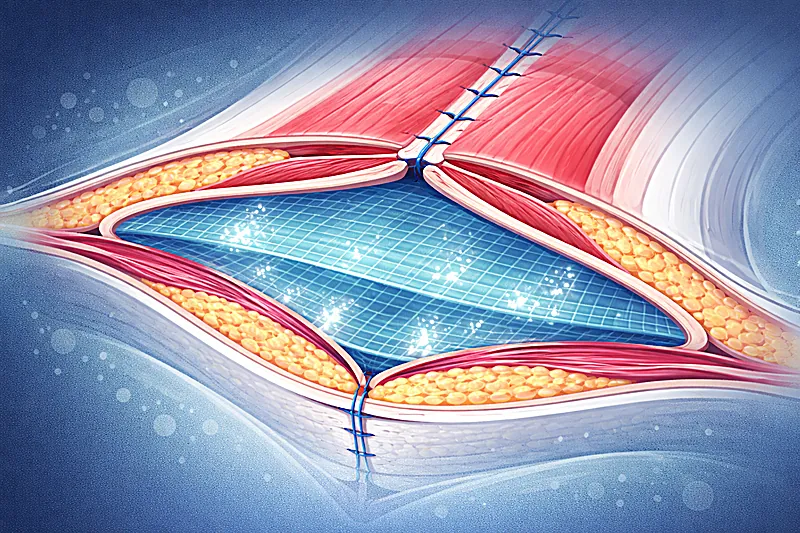
The consequences extend beyond cosmetic concern. Incisional hernias cause pain, impair body image and quality of life, and in the worst cases lead to incarceration requiring emergency surgery. Repair itself carries a recurrence rate approaching 37% at 3 years in registry data. Prevention through optimised primary closure therefore represents a significant opportunity to reduce patient morbidity and healthcare costs. Prophylactic mesh reinforcement at the time of initial laparotomy closure has emerged as a key preventive strategy, now endorsed — albeit with caveats — by both the European Hernia Society and the American Hernia Society.
What Evidence Was Reviewed
This synthesis draws on landmark RCTs, multiple systematic reviews and meta-analyses (including trial sequential analyses and network meta-analyses), long-term follow-up studies, and the 2015 and 2022 EHS/AHS guidelines on abdominal wall closure. Studies were included if they compared prophylactic mesh reinforcement with suture-only closure after midline laparotomy and reported incisional hernia incidence with a minimum 12-month follow-up.
| Study | Design | n | Population | Key Finding | Quality |
|---|---|---|---|---|---|
| Aiolfi et al. 2023 | SR/MA of RCTs | 1,815 | Midline laparotomy, 12 RCTs | PMR vs suture: RR 0.35 (95% CI 0.21–0.57); TSA confirmed | High |
| Aiolfi et al. 2023 (BJS Open) | SR/MA of RCTs | 2,659 | Elective + emergency, 18 RCTs | Hernia reduction at 1, 2, and 5 yr; safe across settings | High |
| PRIMA 2-yr (Jairam 2017) | Multicentre double-blind RCT | 480 | High-risk (AAA or BMI≥27) | Onlay OR 0.37 (0.20–0.69); sublay OR 0.55 (0.30–1.00) | High |
| PRIMA long-term (van den Dop 2024) | RCT long-term follow-up | 480 | High-risk, 5-yr radiological FU | 5-yr IH: suture 53%, onlay 25%, sublay 30% | High |
| PRIMA mesh complications (van den Berg 2024) | RCT follow-up (as-treated) | 242 | PRIMA mesh recipients | Explantation: onlay 3.1%, retrorectus 0% | Moderate |
| PRIMA infection analysis (van den Dop 2021) | RCT secondary analysis | 480 | PRIMA cohort | Mesh did not increase SSI (13.3% vs 13.9%, p=0.82) | High |
| Looareesuwan et al. 2021 | Network MA of RCTs | NR | All mesh positions | Onlay and retromuscular best for IH; no increase in SSI | Moderate |
| Indrakusuma et al. 2018 | SR/MA of RCTs | 388 | Open AAA repair, 4 RCTs | PMR vs suture: RR 0.27 (95% CI 0.11–0.66) | Moderate |
| Emergency MA (2024) | SR/MA of RCTs | 464 | Emergency laparotomy, 4 RCTs | IH: OR 0.18 (0.07–0.44); dehiscence also reduced | Moderate |
| Deerenberg et al. 2022 (EHS/AHS) | Clinical practice guideline | NR | All midline laparotomy | Weak recommendation: consider PMR in high-risk elective | High |
Key Findings: Prophylactic Mesh in High-Risk Laparotomy Closure
Hernia Prevention Efficacy Across Multiple Analyses
The evidence for prophylactic mesh reinforcement reducing incisional hernia is remarkably consistent across analyses. A 2023 meta-analysis of 12 RCTs (1,815 patients) with trial sequential analysis reported a 65% relative risk reduction (RR 0.35, 95% CI 0.21–0.57), and the trial sequential analysis boundary was crossed, indicating that this result is unlikely to change with further trials. A broader 2023 meta-analysis incorporating 18 RCTs and 2,659 patients demonstrated hernia reduction at every follow-up time point examined — 1, 2, and 5 years — confirming the durability of the effect. In the specific context of open AAA repair, the risk reduction was even more pronounced (RR 0.27, 95% CI 0.11–0.66).
The PRIMA Trial: The Landmark Evidence
The PRIMA trial — a multicentre, double-blind RCT conducted across 11 centres in Austria, Germany, and the Netherlands — remains the most influential study in this field. In the original 2-year analysis of 480 high-risk patients (AAA or BMI ≥27), onlay mesh reinforcement reduced hernia incidence from 30% to 13% (OR 0.37, 95% CI 0.20–0.69), while sublay mesh reduced it to 18% (OR 0.55, 95% CI 0.30–1.00). The long-term follow-up, published in 2024 with radiological confirmation, revealed that hernia rates continued to increase in all groups over time, but the relative benefit of mesh persisted: 5-year incisional hernia rates were 53.4% with primary suture, 24.7% with onlay mesh (HR 0.39, 95% CI 0.25–0.61), and 29.8% with sublay mesh (HR 0.49, 95% CI 0.31–0.76).
A striking finding from the long-term PRIMA data was that the hernia rate in the primary suture group was considerably higher than the approximately 30% anticipated at 2 years when followed up with radiological imaging — reaching over 53% at 5 years. This suggests that previous estimates of incisional hernia burden, often based on clinical examination alone, substantially underestimate the true incidence.
Mesh Position: Onlay, Retromuscular, or Preperitoneal?
A network meta-analysis comparing mesh positions found that both onlay and retromuscular (sublay) placement significantly reduced hernia incidence compared with suture-only closure, without meaningful differences between the two positions in hernia prevention efficacy. However, the complication profiles differ. In the PRIMA trial, seromas were significantly more common with onlay mesh (18.1%) than with sublay (7.0%) or suture (4.7%). Analysis of infectious complications found no overall increase with mesh (13.3% suture vs 13.9% mesh, p = 0.82), but the onlay group had significantly higher infection rates than the sublay group (17.6% vs 10.3%, p = 0.042). Crucially, when infection did occur, onlay mesh recipients were more likely to develop subsequent hernia than sublay mesh recipients with infection.
Patients undergoing open AAA repair represent one of the highest-risk groups for incisional hernia, with reported rates of 30–70% depending on follow-up duration and detection method. A dedicated meta-analysis of 4 RCTs comprising 388 AAA patients found that prophylactic mesh reduced hernia risk by 73% (RR 0.27, 95% CI 0.11–0.66). An updated 2024 time-to-event meta-analysis with trial sequential analysis confirmed this benefit and demonstrated that the evidence boundary has been crossed for this specific population.
The biological rationale is well understood: AAA patients often have connective tissue abnormalities (increased matrix metalloproteinase activity, altered collagen metabolism) that predispose to fascial failure after suture closure. Multiple ERAS and hernia society guidelines now identify AAA as a primary indication for prophylactic mesh.
Obesity (BMI ≥27–30 kg/m²) was one of the two primary inclusion criteria in the PRIMA trial, reflecting the elevated hernia risk in this population. Mechanical factors — increased intra-abdominal pressure, wound tension, and impaired fascial healing — contribute to this vulnerability. Several RCTs have specifically examined prophylactic mesh in bariatric surgery, with most showing reduced hernia rates. The PRIMA trial subgroup data did not show a differential effect of mesh by risk category (AAA vs obesity), suggesting that the benefit applies across high-risk indications.
For open bariatric surgery, both biological and synthetic mesh have been studied. Biologic mesh results have been disappointing in this setting, with one RCT showing no significant hernia reduction. Synthetic polypropylene mesh in the sublay or onlay position has demonstrated more consistent benefit. With the declining volume of open bariatric procedures, the primary relevance is now for obese patients undergoing laparotomy for other indications such as colorectal cancer or emergency surgery.
The use of prophylactic mesh in emergency laparotomy is more controversial but increasingly studied. A 2024 meta-analysis of 4 RCTs (464 patients) found that mesh reinforcement in the emergency setting was associated with a substantial reduction in both incisional hernia (OR 0.18, 95% CI 0.07–0.44) and fascial dehiscence (OR 0.07). Importantly, mesh placement in emergency cases did not lead to increased surgical site infections or other wound complications in these trials.
The 2022 EHS/AHS guidelines noted that no specific recommendations could yet be made for emergency laparotomy closure, citing insufficient evidence. However, the 2023 World Society of Emergency Surgery (WSES) ECLAPTE guidelines have begun addressing this gap. A dedicated systematic review of retromuscular mesh in both elective and emergency settings found consistent hernia reduction across both contexts, supporting the retromuscular plane as potentially the safest choice when mesh is used in contaminated fields.
A critical concern delaying broader adoption of prophylactic mesh has been the fear of mesh-related complications at reoperation. The PRIMA trial mesh complication analysis (van den Berg et al. 2024) provided the most rigorous long-term safety data available. Over a median follow-up of 27 months, the rate of reoperation requiring mesh explantation was 3.1% for onlay and 0% for retromuscular mesh. Overall mesh removal for any reason occurred in 7.9% of onlay and 6.1% of retromuscular patients.
Mesh-related ileus occurred in 2.6% of retromuscular patients and none of the onlay patients. Adhesions to the mesh were noted during subsequent laparotomies in a minority of cases. These data suggest that mesh-related morbidity is infrequent and generally manageable, particularly with retromuscular placement, though the incomplete follow-up data (242 of 373 mesh patients) and observational design of this analysis limit definitive conclusions.
Quality and Consistency of Evidence
What the Evidence Does Not Show
No RCT has been powered to detect differences in patient-reported quality of life, functional outcomes, or long-term pain between prophylactic mesh and suture-only closure. Additionally, the optimal mesh material (lightweight vs standard polypropylene, synthetic vs biologic) has not been adequately compared in head-to-head trials specifically for prophylaxis.
Several specific gaps persist. The evidence does not yet support a definitive recommendation for or against prophylactic mesh in non-high-risk patients undergoing midline laparotomy — the trials have been restricted to AAA, obesity, and specific oncological populations. The role of risk stratification tools such as the HERNIA score in guiding mesh use has been proposed but not validated in prospective interventional studies. Whether small-bites closure technique combined with prophylactic mesh provides additive benefit over small bites alone remains untested — most RCTs used large-bite techniques that are no longer considered optimal.
Cost-effectiveness analyses of prophylactic mesh in laparotomy closure are sparse. While the cost of incisional hernia repair is substantial, formal economic evaluations comparing the upfront cost of mesh augmentation with the potential savings from avoided hernia repairs are needed to support health system adoption. Finally, the interaction between prophylactic mesh and concomitant procedures (stoma creation, contaminated fields, immunosuppression) requires dedicated investigation.
Practical Implications
Based on the current evidence, several considerations emerge for surgical teams performing midline laparotomies in high-risk patients. These reflect what the data support rather than directive recommendations.
The strongest evidence supports prophylactic mesh in patients with AAA or BMI ≥27 kg/m² undergoing elective midline laparotomy. Additional risk factors identified in the literature — COPD (HR 2.35), diabetes (OR 6.68), smoking (OR 3.93), immunosuppression (OR 2.5) — may also warrant consideration, though specific RCT evidence for these subgroups is limited.
While both onlay and retromuscular positions effectively reduce hernia rates, the retromuscular (sublay) position is associated with fewer seromas, lower infection rates when complications occur, and a 0% explantation rate in the PRIMA follow-up. These data support the retromuscular plane as a reasonable default choice, particularly in settings where wound complications are a concern.
The EHS/AHS guidelines recommend combining mesh augmentation with continuous small-bites suture closure (5 mm bites, 5 mm advances, slowly absorbable monofilament suture, ≥4:1 suture-to-wound-length ratio). Mesh should be viewed as an additional layer of protection alongside optimised suture technique, not a substitute for it.
While the current evidence base is small, the consistent direction of effect in emergency laparotomy (OR 0.18 for hernia, plus reduced dehiscence) suggests that mesh reinforcement may have a role in selected emergency cases. Synthetic mesh in the retromuscular plane appears tolerable even in contaminated fields, though individual clinical judgement remains essential.
Evidence Grade and Bottom Line
Overall Evidence Grade: Strong (for elective high-risk) / Limited (for emergency settings)
For high-risk elective midline laparotomy closure, prophylactic mesh reinforcement is supported by multiple RCTs with trial sequential analysis confirming the evidence boundary has been crossed. The magnitude and consistency of the hernia-reduction effect are sufficient to inform practice, though the recommendation strength remains weak in guidelines due to the heterogeneity of high-risk populations and mesh techniques. For emergency settings, the evidence is promising but insufficient for a strong recommendation.
- Prophylactic mesh reduces incisional hernia by approximately 65% in high-risk midline laparotomy patients — a finding confirmed by trial sequential analysis.
- Both onlay and retromuscular positions are effective; retromuscular shows a more favourable complication profile, with fewer seromas and lower explantation rates.
- Mesh does not increase overall surgical site infection rates compared with suture-only closure.
- Even with mesh, 25–30% of high-risk patients develop hernia by 5 years — reframing mesh as risk reduction rather than prevention.
- Evidence for emergency and contaminated settings is promising but limited; the optimal mesh material, cost-effectiveness data, and patient-reported long-term outcomes remain unresolved.
Article Information
For Educational Purposes Only. This is an original evidence synthesis informed by the studies listed below. It does not replace clinical judgement. Drug dosages should be verified against current prescribing information.
References
- Aiolfi A, Cavalli M, Gambero F, et al. Prophylactic mesh reinforcement for midline incisional hernia prevention: systematic review and updated meta-analysis of randomized controlled trials. Hernia. 2023;27(2):213–224. DOI: 10.1007/s10029-022-02660-4
- Aiolfi A, Cavalli M, Micheletto G, et al. Prophylactic mesh augmentation after laparotomy for elective and emergency surgery: meta-analysis of randomized controlled trials. BJS Open. 2023;7(4):zrad060. DOI: 10.1093/bjsopen/zrad060
- Jairam AP, Timmermans L, Eker HH, et al. Prevention of incisional hernia with prophylactic onlay and sublay mesh reinforcement versus primary suture only in midline laparotomies (PRIMA): 2-year follow-up of a multicentre, double-blind, randomised controlled trial. Lancet. 2017;390(10094):567–576. DOI: 10.1016/S0140-6736(17)31332-6
- van den Dop LM, Sneiders D, Yurtkap Y, et al. Prevention of incisional hernia with prophylactic onlay and sublay mesh reinforcement vs. primary suture only in midline laparotomies (PRIMA): long-term outcomes. Lancet Reg Health Eur. 2024;36:100787. DOI: 10.1016/j.lanepe.2023.100787
- van den Berg R, van den Dop LM, Timmermans L, et al. Prophylactic Mesh-related Reoperations and Mesh-related Problems During Subsequent Relaparotomies: Long-term Results From the PRIMA Trial. Ann Surg. 2024. DOI: 10.1097/SLA.0000000000006527
- van den Dop LM, Sneiders D, Kleinrensink GJ, et al. Infectious Complication in Relation to the Prophylactic Mesh Position: The PRIMA Trial Revisited. J Am Coll Surg. 2021;232(5):772–780.e2. DOI: 10.1016/j.jamcollsurg.2021.01.016
- Deerenberg EB, Henriksen NA, Antoniou GA, et al. Updated guideline for closure of abdominal wall incisions from the European and American Hernia Societies. Br J Surg. 2022;109(12):1239–1250. DOI: 10.1093/bjs/znac302
- Indrakusuma R, Jalalzadeh H, van der Meij JE, et al. Prophylactic Mesh Reinforcement versus Sutured Closure to Prevent Incisional Hernias after Open Abdominal Aortic Aneurysm Repair. Eur J Vasc Endovasc Surg. 2018;56(1):120–128. DOI: 10.1016/j.ejvs.2018.03.021
- Hew CY, Rais T, Antoniou SA, et al. Prophylactic Mesh Reinforcement Versus Primary Suture for Abdominal Wall Closure after Elective AAA Repair: Updated Systematic Review Including Time-To-Event Meta-Analysis. Ann Vasc Surg. 2024;109:149–161. DOI: 10.1016/j.avsg.2024.06.026
- Looareesuwan P, Tansawet A, Wiwatthanasetthakarn P, et al. Mesh position for hernia prophylaxis after midline laparotomy: A systematic review and network meta-analysis of randomized clinical trials. Int J Surg. 2020;83:120–127. DOI: 10.1016/j.ijsu.2020.09.014
- Muysoms FE, Antoniou SA, Bury K, et al. European Hernia Society guidelines on the closure of abdominal wall incisions. Hernia. 2015;19(1):1–24. DOI: 10.1007/s10029-014-1342-5
- Prophylactic mesh augmentation in emergency laparotomy closure: a meta-analysis of randomized controlled trials with trial sequential analysis. Hernia. 2024;28:423–431. DOI: 10.1007/s10029-024-02949-0