
Thyroidectomy Complications: Nerve Injury, Hypocalcemia, and Hematoma Management
An evidence synthesis of the three complications that drive morbidity, readmission, and reoperation after thyroid surgery — with what the data say about preventing and managing each.
One-Minute Takeaway on Thyroidectomy Complications
One-Minute Takeaway
- The three dominant thyroidectomy complications — recurrent laryngeal nerve injury, hypocalcemia, and hematoma — are characterized at the highest evidence level by large meta-analyses of observational cohorts, with a smaller body of randomized data on neuromonitoring and supplementation.
- Hypocalcemia is by far the most common, with transient rates near 27% and permanent hypoparathyroidism around 1%. Nerve injury is intermediate, and hematoma is rare (~1.4%) but the leading cause of reoperation.
- Intraoperative neuromonitoring reduces permanent nerve injury in some meta-analyses but not others, leaving its benefit genuinely contested.
- Perioperative PTH is the single best predictor of hypocalcemia and now anchors most risk-stratified supplementation protocols.
Why This Topic Matters
Thyroidectomy is among the most frequently performed operations in general and endocrine surgery, and rising detection of small thyroid cancers has expanded its volume further. The procedure is safe in experienced hands, yet a small set of predictable complications accounts for nearly all of its morbidity.
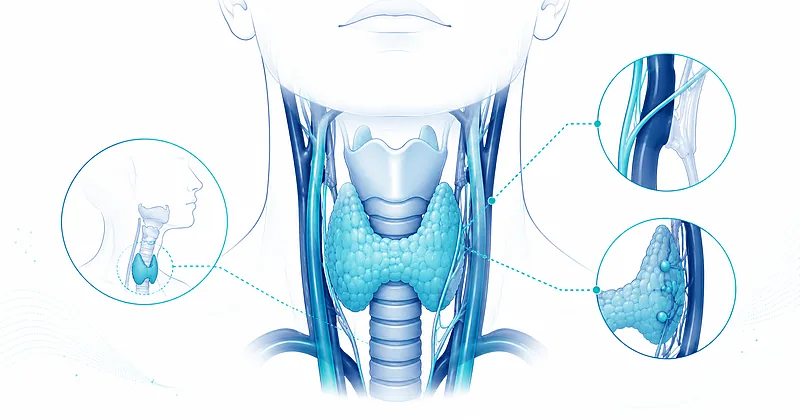
Three complications dominate clinical attention. Recurrent laryngeal nerve injury threatens voice and, when bilateral, the airway. Hypocalcemia from parathyroid disruption is the most common reason for prolonged stay and readmission. Cervical hematoma, though rare, can obstruct the airway within hours and is the leading indication for reoperation.
Understanding the incidence, predictors, and management of these thyroidectomy complications is what separates a routine recovery from a preventable adverse event. This review synthesizes the meta-analytic evidence on each, weighs where it agrees and conflicts, and frames the practice considerations that follow from current data.
Evidence Reviewed
The synthesis below draws on systematic reviews and meta-analyses pooling hundreds of cohorts alongside the randomized trials that exist for neuromonitoring and supplementation. The table presents an original comparative structure across the major evidence syntheses, grouped by which complication they address.
| Evidence Synthesis | Design | Scale (n) | Complication Focus | Headline Effect |
|---|---|---|---|---|
| Saxe 2024 | SR/MA (5 RCTs + 55 studies) | 60 studies | Nerve injury (IONM) | OR 0.66 favoring IONM |
| Bai 2018 | SR/MA | 34 studies | Nerve injury (IONM) | RR 0.68 total injury |
| Cirocchi-type endoscopic MA | SR/MA (prospective) | 73,325 NAR | Nerve injury (IONM) | No significant difference |
| Edafe 2014 | SR/MA | 115 studies | Hypocalcemia predictors | Transient 27%, permanent 1% |
| Najmi 2024 | SR/MA | 253,941 patients | Hematoma + hypocalcemia | Hematoma 1.43%, hypocalcemia 23.1% |
| Koimtzis 2024 | SR/MA + TSA | Pooled cohorts | Parathyroid autotransplant | No reduction in permanent hypoPT |
| Wang 2024 (RCT MA) | SR/MA of RCTs | Pooled RCTs | Pre-op Ca/vit D | Symptomatic hypoCa RR 0.54 |
Two features of this evidence base shape interpretation. First, most incidence data are observational, so heterogeneity is high and definitions vary between studies. Second, the randomized evidence concentrates narrowly on neuromonitoring and supplementation rather than on the complications themselves.
Key Findings by Theme
Recurrent laryngeal nerve injury: common, and contested on prevention
Across syntheses, transient nerve injury clusters around 3% and permanent injury near 0.4–1%, rising substantially in reoperative and malignant cases. The pooled rates are consistent enough that the burden of nerve injury is not in serious dispute.
What is disputed is whether intraoperative neuromonitoring prevents it. Saxe 2024 reported an odds ratio of 0.66 favoring neuromonitoring over visualization alone for permanent injury, and Bai 2018 found a relative risk of 0.68 for total injury. These are clinically meaningful reductions.
Yet the largest endoscopic synthesis, pooling 73,325 nerves at risk, found temporary and permanent injury rates that were essentially identical with and without neuromonitoring, with overlapping confidence intervals. The conflict appears to turn on study design, control selection, and how injury is ascertained.
Hypocalcemia: the most common complication, now PTH-guided
Hypocalcemia is the most frequent of the thyroidectomy complications. Edafe 2014 placed the median transient rate at 27% and permanent hypoparathyroidism at roughly 1%, and Najmi 2024 pooled a hypocalcemia incidence near 23%. The wide spread reflects differing biochemical thresholds across studies.
Perioperative parathyroid hormone has emerged as the strongest single predictor. Multiple syntheses converge on early PTH measurement as the best tool for identifying who will become hypocalcemic, with a PTH below roughly 15 pg/mL flagging high risk and supporting safe early discharge protocols.
Prophylactic supplementation also has randomized support. A meta-analysis of trials found that preoperative calcium and vitamin D reduced symptomatic hypocalcemia (RR 0.54), though it did not change permanent hypoparathyroidism or length of stay. The benefit is real but bounded.
Parathyroid autotransplantation: protective in theory, unproven in pooled data
When a parathyroid gland is devascularized or inadvertently removed, autotransplantation is widely practiced. The pooled evidence is sobering: Koimtzis 2024, with trial sequential analysis, found that autotransplantation does not reduce permanent hypoparathyroidism, and several cohorts associate it with more transient hypocalcemia.
This does not make reimplantation wrong when a gland is already lost, but it reframes the priority. In-situ preservation of well-vascularized glands, rather than reliance on autotransplantation as a rescue, is what the aggregate data favor.
Hematoma: rare, fast, and the leading reason to return to theatre
Cervical hematoma is uncommon, with a pooled incidence near 1.43% in Najmi 2024 and rates of 0.1–1.7% in narrative reviews. Despite its rarity, it is consistently the most common indication for reoperation after thyroid surgery.
Timing is the clinically decisive feature. The majority of hematomas present within six hours, but a substantial minority — roughly a quarter in several cohorts — occur between six and twenty-four hours. That tail is the central argument against unselected same-day discharge.
Because a meaningful share of hematomas appear after the first six hours, the timing data, more than the incidence data, are what should govern decisions about ambulatory thyroidectomy.
— Synthesis of hematoma timing cohorts
Where the themes converge
A consistent thread runs through all three thyroidectomy complications: surgeon experience and extent of surgery are recurring independent predictors. Total thyroidectomy, malignancy, reoperation, and Graves’ disease raise risk across nerve injury, hypocalcemia, and hematoma alike.
Quality & Consistency
The evidence quality differs sharply by question. Incidence estimates rest on large but heterogeneous observational pools, while intervention questions have some randomized data of variable quality.
What the Evidence Does Not Show
Specific Evidence Gaps
- No adequately powered randomized trial establishes whether neuromonitoring reduces permanent nerve injury; the meta-analytic conflict cannot be resolved by pooling observational data alone.
- The optimal PTH threshold and timing for triggering supplementation are not standardized, with cutoffs from 10 to 20 pg/mL and sampling from intraoperative to 24 hours all in use.
- No trial defines a safe observation window for ambulatory thyroidectomy that accounts for the documented six-to-twenty-four-hour hematoma tail.
- Whether continuous neuromonitoring outperforms intermittent monitoring for bilateral palsy prevention remains inadequately tested in randomized designs.
- The interaction between energy-device choice, drain use, and hematoma risk is reported inconsistently and lacks definitive comparative data.
Practical Implications
The following considerations are framed as what the current evidence supports, not as directives. Each reflects the weight and consistency of the synthesized data on thyroidectomy complications.
For nerve injury, the contested neuromonitoring evidence supports a selective rather than absolute stance. Most syntheses that favor it point to bilateral procedures, malignancy, and reoperation as the settings where benefit is most plausible.
Perioperative PTH, measured intraoperatively or in the early hours after surgery, predicts who will develop hypocalcemia more reliably than calcium trends alone. A value below approximately 15 pg/mL is widely used to flag high risk and to guide whether active supplementation and closer monitoring are warranted before discharge.
Because thresholds and timing are not standardized across the literature, the value lies in applying a consistent local protocol rather than a single universal cutoff.
Management depends on severity and trajectory. Stable, non-expanding collections may be observed, while a rapidly expanding hematoma with airway compromise is a surgical emergency requiring immediate evacuation, occasionally at the bedside before transfer to theatre.
Tracheostomy for airway compression is uncommon in reported series but remains the fallback when evacuation does not relieve obstruction.
The honest answer from the aggregate evidence is that it depends on which synthesis is weighted most heavily. Meta-analyses using contemporaneous controls and routine laryngoscopy tend to favor neuromonitoring, whereas the largest endoscopic pooling finds no difference.
Given this, many groups reserve the strongest endorsement for higher-risk settings — bilateral surgery, malignancy, and reoperation — where the consequences of bilateral palsy are gravest.
Reported hematoma risk factors include previous thyroid operation, large dominant nodules, retrosternal goiter, antithrombotic use, elevated perioperative blood pressure, male sex, and Graves’ disease. The documented hematoma tail beyond six hours adds caution.
Patients combining these features are those for whom overnight observation is most defensible on current data.
Evidence Grade & Bottom Line
Overall Evidence Grade: Moderate. Incidence and prediction for hypocalcemia and hematoma rest on consistent large-scale data, while the key intervention questions — neuromonitoring and autotransplantation — remain contested or unfavorable, so some recommendations may change as randomized evidence matures.
Bottom Line
- Hypocalcemia is the most common thyroidectomy complication, and perioperative PTH is its strongest predictor and the basis for risk-stratified care.
- Nerve injury is well characterized in incidence but the benefit of neuromonitoring is genuinely contested across meta-analyses.
- Hematoma is rare yet the leading cause of reoperation, and its timing tail beyond six hours is the central caution for same-day discharge.
- Pooled evidence does not support routine parathyroid autotransplantation as a means to prevent permanent hypoparathyroidism.
- Based on the current evidence, the largest gaps are randomized data on neuromonitoring for permanent injury and a defined safe observation window for ambulatory surgery.
Article Information & References
For Educational Purposes Only. This is an original evidence synthesis informed by the studies listed below. It does not replace clinical judgement. Drug dosages should be verified against current prescribing information.
- Saxe A, Idris M, Gemechu J. Does the use of intraoperative neuromonitoring during thyroid and parathyroid surgery reduce the incidence of recurrent laryngeal nerve injuries? A systematic review and meta-analysis. Diagnostics. 2024;14(9):860. DOI: 10.3390/diagnostics14090860
- Bai B, Chen W. Protective effects of intraoperative nerve monitoring (IONM) for recurrent laryngeal nerve injury in thyroidectomy: meta-analysis. Sci Rep. 2018;8(1):7761. DOI: 10.1038/s41598-018-26219-5
- Merchavy S, Kassem K, Awawde R, et al. Intraoperative nerve monitoring parameters and risk of recurrent laryngeal nerve injury in thyroidectomy: a systematic review and meta-analysis. Biomedicines. 2025;13(10):2516. DOI: 10.3390/biomedicines13102516
- Edafe O, Antakia R, Laskar N, Uttley L, Balasubramanian SP. Systematic review and meta-analysis of predictors of post-thyroidectomy hypocalcaemia. Br J Surg. 2014;101(4):307-320. DOI: 10.1002/bjs.9384
- Najmi M, et al. Post-thyroidectomy hematoma and hypocalcemia as separate complications: risk factors and management — a systematic review and meta-analysis. Ann Thyroid. 2024. DOI: 10.21037/aot-24-5
- Koimtzis G, Stefanopoulos L, Geropoulos G, Papavramidis T. The outcomes of parathyroid gland autotransplantation during thyroid surgery: a systematic review, meta-analysis and trial sequential analysis. Endocrine. 2025;87(1):27-38. DOI: 10.1007/s12020-024-04011-y
- Xing T, et al. The effectiveness of parathyroid gland autotransplantation in preserving parathyroid function during thyroid surgery for thyroid neoplasms: a meta-analysis. PLoS One. 2019;14(8):e0221173. DOI: 10.1371/journal.pone.0221173
- Pisanu A, Porceddu G, Podda M, Cois A, Uccheddu A. Systematic review with meta-analysis of studies comparing intraoperative neuromonitoring of recurrent laryngeal nerves versus visualization alone during thyroidectomy. J Surg Res. 2014;188(1):152-161. DOI: 10.1016/j.jss.2013.12.022
- Lorente-Poch L, Sancho JJ, Muñoz-Nova JL, Sánchez-Velázquez P, Sitges-Serra A. Defining the syndromes of parathyroid failure after total thyroidectomy. Gland Surg. 2015;4(1):82-90. DOI: 10.3978/j.issn.2227-684X.2014.12.04
- Doran HE, et al. Post-thyroidectomy bleeding: analysis of risk factors from a national registry. Br J Surg. 2021;108(7):851-857. DOI: 10.1093/bjs/znab015
- Sanabria A, et al. Prophylactic calcium and vitamin D administration in patients undergoing thyroidectomy: a systematic review and meta-analysis of randomized controlled trials. Otolaryngol Head Neck Surg. 2024. DOI: 10.1002/ohn.640
- Promberger R, Ott J, Kober F, et al. Risk factors for postoperative bleeding after thyroid surgery. Br J Surg. 2012;99(3):373-379. DOI: 10.1002/bjs.7824