
Total Knee Arthroplasty: 5 Key Practice Considerations
Synthesizing recovery evidence across multimodal analgesia, regional anesthesia, mobilization protocols, same-day discharge, and aspirin versus direct oral anticoagulant venous thromboembolism prophylaxis.
One-Minute Takeaway on Total Knee Arthroplasty Recovery
One-Minute Takeaway
- Total knee arthroplasty recovery has shifted toward Enhanced Recovery After Surgery (ERAS) pathways, reducing length of stay and opioid exposure without compromising functional outcomes.
- Multimodal analgesia combining acetaminophen, NSAIDs, local infiltration analgesia, and selective gabapentinoids consistently reduces opioid requirements and improves early pain control.
- Spinal anesthesia paired with adductor canal block preserves quadriceps strength and supports earlier mobilization compared with general anesthesia plus femoral nerve block.
- Aspirin and direct oral anticoagulants showed comparable VTE prevention in EPCAT II, while CRISTAL found aspirin inferior to enoxaparin — supporting risk-stratified prophylaxis.
- Same-day discharge protocols have expanded for selected patients, though long-term comparative outcome data remain less mature than for inpatient pathways.
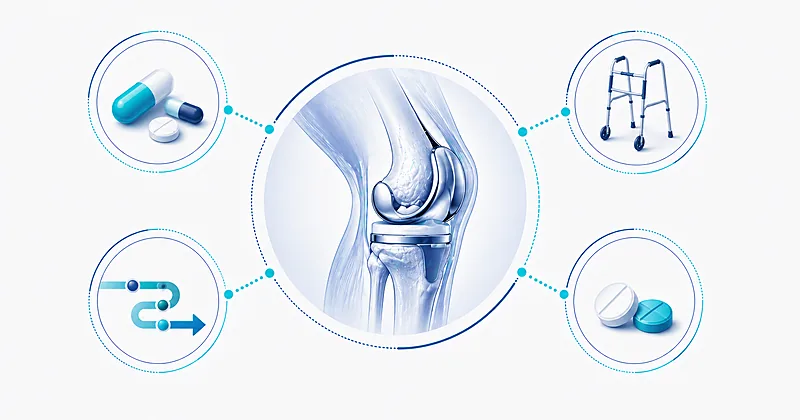
Why Total Knee Arthroplasty Recovery Matters in Modern Practice
More than 1.0 million total knee arthroplasty procedures are performed annually in the United States, with projections approaching 3.5 million by 2030. As volume has grown, length of stay has compressed dramatically — from approximately 7 days in the 1990s to under 2 days in many contemporary protocols. Same-day discharge protocols have emerged for selected patients.
This compression has been enabled by Enhanced Recovery After Surgery pathways adapted for orthopedic populations from their colorectal surgery origins. ERAS protocols bundle pre-operative education, multimodal analgesia, regional anesthesia, early mobilization, and structured discharge planning into a coordinated total knee arthroplasty recovery framework.
Three contemporary debates dominate clinical practice. The first concerns multimodal analgesia — particularly the role of gabapentinoids and the choice between local infiltration analgesia and peripheral nerve blocks. The second concerns VTE prophylaxis, where aspirin has gained traction based on EPCAT II and CRISTAL trial evidence.
A third debate addresses patient selection for same-day discharge as outpatient total knee arthroplasty volume grows. Beyond hospital metrics, recovery quality matters because persistent post-surgical pain develops in approximately 15–20% of patients, and post-operative opioid prescribing is a recognized contributor to chronic opioid use.
This evidence synthesis examines five practice considerations spanning pre-operative, intra-operative, and post-operative total knee arthroplasty recovery domains. The synthesis draws from major randomized trials, ERAS Society consensus guidelines, and large registry datasets to support contemporary clinical decisions.
Total Knee Arthroplasty: What Evidence Was Reviewed
This evidence synthesis examines literature across five domains relevant to total knee arthroplasty recovery: multimodal analgesia regimens, regional anesthesia and peripheral nerve blocks, mobilization and rehabilitation protocols, same-day discharge protocols, and venous thromboembolism prophylaxis with aspirin versus direct oral anticoagulants.
The evidence base spans randomized controlled trials, network and pairwise meta-analyses, ERAS Society consensus statements, and large registry analyses. Priority is given to landmark RCTs (EPCAT II, CRISTAL) anchoring the VTE comparison, ERAS Society 2020 consensus recommendations for protocol-level guidance, and observational registry data where comparative trials are unavailable.
Studies were prioritized for currency, methodological quality, and direct relevance to active total knee arthroplasty practice. Where single-domain RCTs are lacking, multi-component pathway evaluations and rigorously analyzed cohort studies provide supporting evidence for the synthesis.
| Study / Year | Design | n | Comparison / Focus | Key Finding |
|---|---|---|---|---|
| EPCAT II (Anderson 2018) | RCT | 3,424 | Aspirin vs rivaroxaban after THA/TKA | Aspirin non-inferior to rivaroxaban for symptomatic VTE prevention after initial 5-day rivaroxaban course |
| CRISTAL (Sidhu 2022) | Cluster RCT | ~9,700 | Aspirin vs enoxaparin after THA/TKA | Aspirin associated with higher symptomatic VTE rate (~3.5% vs ~1.8%); aspirin inferior in this design |
| Wainwright 2020 | Consensus / SR | n/a | ERAS Society perioperative care | 17-item recommendation set covering preoperative, intraoperative, and postoperative recovery components |
| Memtsoudis 2013 | Registry analysis | ~382,000 | Neuraxial vs general anesthesia | Neuraxial techniques associated with lower 30-day mortality and complication rates |
| Andersen & Kehlet 2014 | Systematic review | ~2,400 (pooled) | Local infiltration analgesia (LIA) | LIA associated with reduced opioid use during the first 24–48 hours after TKA |
| Husted 2012 | Cohort analysis | ~5,500 | Fast-track THA/TKA outcomes | Pain and dizziness identified as principal modifiable barriers to early discharge |
| Kehlet 1997 | Conceptual review | n/a | Multimodal recovery framework | Foundational description of bundled approach to control postoperative pathophysiology |
| Fillingham 2018 | Network meta-analysis | ~10,000+ | Tranexamic acid in TKA | TXA reduces transfusion approximately 50%; multiple routes effective; IV and topical comparable |
| AAOS / AAHKS positions | Guideline / consensus | n/a | VTE prophylaxis & outpatient TKA | Risk-stratified VTE prophylaxis; outpatient TKA appropriate for selected patients with adequate criteria |
| Falck-Ytter 2012 (CHEST) | Guideline / SR | n/a | VTE prophylaxis after orthopedic surgery | Pharmacologic prophylaxis recommended for at least 10–14 days; aspirin acceptable in select patients |
Key Findings on Total Knee Arthroplasty Recovery
Across the five considerations examined, evidence converges on bundled approaches that emphasize regional anesthesia, opioid-sparing analgesia, structured early mobilization, careful patient selection for outpatient pathways, and risk-stratified VTE prophylaxis. The strongest evidence supports the ERAS framework as a whole-pathway approach to total knee arthroplasty recovery rather than reliance on any single intervention.
Multimodal Analgesia Within ERAS Pathways
Multimodal analgesia combines pharmacologic agents acting through different mechanisms to reduce opioid requirements and improve pain control after total knee arthroplasty. Standard regimens include scheduled acetaminophen, an NSAID or COX-2 inhibitor, local infiltration analgesia, and selective use of gabapentinoids.
The Andersen meta-analysis of local infiltration analgesia found significant reductions in opioid use during the first 24–48 hours compared with placebo or systemic analgesia alone. ERAS Society 2020 recommendations endorse multimodal analgesia as a core component of contemporary total knee arthroplasty recovery pathways.
Recent reassessment of gabapentinoids has tempered initial enthusiasm; meta-analyses report modest opioid-sparing effects balanced against sedation and confusion risks, particularly in older adults. Tranexamic acid is now standard practice; the Fillingham network meta-analysis reports approximately 50% reduction in transfusion with comparable efficacy across IV, topical, and combined routes.
Regional Anesthesia and Adductor Canal Block
Regional anesthesia has evolved substantially in total knee arthroplasty practice. Spinal anesthesia is associated with reduced morbidity compared with general anesthesia in observational data. The Memtsoudis registry analysis of orthopedic patients reported lower rates of cardiopulmonary and infectious complications with neuraxial techniques.
Peripheral nerve block selection has shifted from femoral nerve block to adductor canal block. Femoral block provides superior analgesia but causes quadriceps weakness and increases fall risk during early mobilization. Adductor canal block preserves quadriceps function while providing meaningful analgesic benefit.
The contemporary combination of spinal anesthesia, adductor canal block, and local infiltration analgesia has become a standard anesthetic strategy for total knee arthroplasty in many centers, supported by ERAS Society consensus.
Early Mobilization and Rehabilitation Protocols
Early mobilization within 4–6 hours of surgery is a cornerstone of ERAS pathways for total knee arthroplasty. The Husted fast-track analyses identified pain control and dizziness as principal barriers to same-day mobilization, both modifiable with multimodal analgesia and adequate hydration.
Inpatient physical therapy intensity has shifted from prescriptive minute counts to functional milestone-based progression. Recent trials suggest no benefit from supervised outpatient physical therapy for routine cases compared with structured home exercise programs in motivated, well-selected patients.
Pre-operative patient education and expectation setting consistently emerge as predictors of recovery trajectory across cohort studies, supporting their integration into ERAS Society consensus protocols for total knee arthroplasty.
Same-Day Discharge and Outpatient Total Knee Arthroplasty
Same-day discharge after total knee arthroplasty has expanded substantially in suitable patients. Selection criteria converge on patients younger than 75, with BMI under 35–40, without severe cardiopulmonary comorbidity, and with adequate home support and motivation.
Observational comparisons report comparable 90-day outcomes between selected outpatients and matched inpatients, including readmission and revision rates. However, long-term functional and survivorship comparisons remain less mature than for traditional inpatient pathways.
Patient selection rigor — rather than the procedure itself — appears to drive outcomes; expanding criteria beyond well-validated parameters has not been supported by high-quality comparative evidence.
VTE Prophylaxis — Aspirin vs DOAC
VTE prophylaxis has shifted toward aspirin in selected patients based on two landmark trials. The EPCAT II trial randomized patients after total hip or knee arthroplasty to aspirin 81 mg twice daily versus rivaroxaban 10 mg daily following 5 days of rivaroxaban; symptomatic VTE rates were comparable, with aspirin demonstrating non-inferiority for the primary outcome.
The CRISTAL cluster-randomized trial compared aspirin with enoxaparin in approximately 9,700 patients and found aspirin associated with higher symptomatic VTE rates (approximately 3.5% vs 1.8%). The discordance with EPCAT II likely reflects differences in patient populations, dosing protocols, and trial design.
Contemporary practice now stratifies risk: standard-risk total knee arthroplasty patients may receive aspirin, while higher-risk patients (prior VTE, BMI >40, hypercoagulable state, prolonged immobilization) typically receive direct oral anticoagulants or low-molecular-weight heparin.
Across the five considerations, the strongest signal in total knee arthroplasty recovery evidence is that bundled ERAS pathways outperform single-component changes — the whole pathway delivers more than the sum of its parts.
The ERAS Society 2020 statement for hip and knee arthroplasty consolidates 17 perioperative care components into a unified pathway. Pre-operative components include patient education, optimization of comorbidities (anemia, diabetes, smoking, alcohol), and pre-operative carbohydrate loading.
Intra-operative components emphasize regional anesthesia, multimodal analgesia, fluid balance, normothermia, antibiotic prophylaxis, and tranexamic acid for blood conservation. Post-operative components include early mobilization, structured analgesia, early oral nutrition, and discharge criteria-based progression.
The statement emphasizes that the bundle approach — rather than any single component — drives outcome improvement, reflecting the cumulative impact of consistent, evidence-based perioperative care across the entire pathway.
Contemporary multimodal regimens for total knee arthroplasty typically combine several agents acting on distinct pain pathways:
- Scheduled acetaminophen (1 g every 6 hours) — central analgesic effect
- NSAID or COX-2 inhibitor — peripheral inflammatory blockade
- Local infiltration analgesia — intraoperative wound infiltration
- Adductor canal block — selective sensory blockade preserving motor function
- Gabapentinoid (selective use) — modulation of neuropathic pain components
- Dexamethasone — anti-inflammatory and antiemetic effects
- Rescue opioid only — minimized scheduled opioid exposure
The regimen is individualized based on patient risk factors (renal function for NSAIDs, fall risk for gabapentinoids, history of opioid use).
The two landmark aspirin VTE trials reached different conclusions, and reconciling them is essential for clinical practice. EPCAT II was a superiority-then-non-inferiority design that gave all patients 5 days of rivaroxaban before randomizing to aspirin or rivaroxaban for the remainder of prophylaxis.
CRISTAL was a cluster-randomized open-label trial assigning hospitals to either aspirin or enoxaparin from the immediate post-operative period without an initial DOAC course. Patient populations also differed: CRISTAL enrolled a broader risk spectrum.
The pragmatic interpretation: aspirin alone may be inadequate as primary prophylaxis from day 0, but aspirin can reasonably continue prophylaxis after an initial parenteral or DOAC course in standard-risk total knee arthroplasty patients.
Selection criteria for outpatient total knee arthroplasty have converged across institutional protocols. Common inclusion parameters include:
- Age generally <75 years (some programs extend with otherwise excellent function)
- BMI <35–40 kg/m²
- ASA classification I–II
- No active cardiopulmonary disease, untreated obstructive sleep apnea, or severe cognitive impairment
- Adequate home support (caregiver presence)
- Patient understanding and motivation for early discharge
- Reasonable proximity to the hospital for emergencies
Programs maintain explicit fallback criteria for conversion to overnight admission — commonly inadequate analgesia, orthostasis, urinary retention, or unanticipated medical findings.
Quality of Evidence on Total Knee Arthroplasty Recovery
Evidence quality varies across the five considerations examined in this total knee arthroplasty recovery synthesis. VTE prophylaxis evidence rests on direct RCT comparisons. ERAS bundle evidence is consensus-driven with supporting RCT components. Same-day discharge evidence is largely observational with variable risk-adjustment.
- VTE prophylaxis (aspirin vs DOAC vs LMWH) — Multiple landmark RCTs (EPCAT II, CRISTAL) provide direct comparative evidence; risk-stratified application is supported.
- Tranexamic acid in TKA — Network meta-analysis with consistent evidence supporting transfusion reduction across multiple administration routes.
- Multimodal analgesia and LIA — Systematic reviews support opioid reduction; specific component combinations less directly compared.
- ERAS pathway implementation — Consensus statement (Wainwright 2020) supported by component RCTs; whole-pathway RCTs less common.
- Outpatient/same-day discharge TKA — Mostly observational comparisons in selected patients; risk-adjusted RCTs sparse; selection bias possible.
- Gabapentinoid role — Mixed signals across meta-analyses; modest opioid-sparing balanced against safety concerns in older adults.
- Long-term outcomes (>5 years) of contemporary pathways — Limited follow-up data for outpatient and aspirin-only prophylaxis approaches.
What the Evidence Does Not Show
Specific Evidence Gaps
Several specific evidence gaps limit confident total knee arthroplasty recovery recommendations across the five domains examined.
Optimal aspirin regimen: The ideal aspirin dose (81 mg vs 162 mg, once vs twice daily) and duration after initial parenteral prophylaxis have not been definitively established. Risk-stratification thresholds also lack uniform validation.
Gabapentinoid role: Whether gabapentinoids should be routine in multimodal regimens or reserved for specific subgroups (pre-existing chronic pain, opioid-tolerant patients) remains contested; recent guidelines have moved toward selective use.
Outpatient long-term outcomes: Functional recovery, implant survivorship, and patient-reported outcomes beyond 2–3 years for outpatient pathways are sparsely reported; selection effects complicate direct comparison with inpatient cohorts.
Persistent post-surgical pain prevention: No intervention has been shown to reliably reduce the 15–20% incidence of persistent post-surgical pain. Pre-operative phenotyping and targeted intervention remain investigational.
Pathway component prioritization: Which ERAS components contribute most to outcome improvement — and which can be safely omitted in resource-limited settings — is not adequately defined by component-elimination studies.
Practical Implications for Total Knee Arthroplasty
Based on the current evidence, five practice-relevant considerations emerge for total knee arthroplasty recovery planning. These are framed as evidence-supported considerations rather than directive recommendations, requiring individualization to patient comorbidities, surgical context, and institutional resources.
Multimodal Analgesia Reduces Opioid Exposure
Bundled regimens combining acetaminophen, NSAIDs, LIA, and selective adjuncts consistently reduce opioid requirements. Gabapentinoids warrant selective rather than routine use given safety considerations in older adults.
Regional Anesthesia Supports Early Mobilization
Spinal anesthesia plus adductor canal block plus local infiltration analgesia preserves quadriceps strength and supports earlier ambulation. Femoral nerve block is now generally avoided due to fall risk.
Early Mobilization Predicts Faster Recovery
Mobilization within 4–6 hours is associated with shorter length of stay. Pain control and orthostasis are the principal modifiable barriers; pre-operative education predicts recovery trajectory.
Same-Day Discharge Suits Selected Patients
Outpatient pathways show comparable 90-day outcomes in carefully selected patients. Selection rigor — not procedural change — drives outcomes; expanding criteria beyond validated parameters lacks evidentiary support.
VTE Prophylaxis Should Be Risk-Stratified
Aspirin is acceptable in standard-risk patients (often after initial DOAC or LMWH); higher-risk patients (prior VTE, BMI >40, thrombophilia) typically receive direct oral anticoagulants or LMWH.
These considerations apply most directly to elective total knee arthroplasty in patients without prior failed reconstruction or active medical instability. Revision surgery, septic indications, and patients with significant comorbidity burden warrant individualized multidisciplinary planning that may diverge from standard ERAS pathways.
Evidence Grade and Bottom Line
Overall Evidence Grade: Strong for VTE prophylaxis comparisons (multiple landmark RCTs); Strong for tranexamic acid use; Moderate for multimodal analgesia and regional anesthesia; Moderate for the ERAS bundle approach (consensus plus component RCTs); Limited for outpatient pathway long-term outcomes and gabapentinoid optimization.
Bottom Line
- Strong evidence supports bundled ERAS pathways for total knee arthroplasty as the contemporary standard, with multimodal analgesia and regional anesthesia as core components.
- Spinal anesthesia paired with adductor canal block preserves quadriceps function and supports earlier safe mobilization compared with femoral nerve block.
- Aspirin is non-inferior to rivaroxaban for VTE prevention after an initial DOAC course (EPCAT II) but inferior when used alone from the immediate post-operative period (CRISTAL); risk-stratified prophylaxis applies these findings differently.
- Same-day discharge after total knee arthroplasty shows comparable 90-day outcomes in carefully selected patients; long-term comparative survivorship data remain less mature.
- Persistent post-surgical pain in 15–20% of patients and chronic opioid use after surgery are unresolved challenges that no current intervention reliably prevents.
Article Information & References
Disclaimer
For Educational Purposes Only. This is an original evidence synthesis informed by the studies listed below. It does not replace clinical judgement. Drug dosages should be verified against current prescribing information.
References
- Anderson DR, Dunbar M, Murnaghan J, et al. Aspirin or Rivaroxaban for VTE Prophylaxis after Hip or Knee Arthroplasty. N Engl J Med. 2018;378(8):699-707. DOI: 10.1056/NEJMoa1712746
- Sidhu VS, Kelly TL, Pratt N, et al. Effect of Aspirin vs Enoxaparin on Symptomatic Venous Thromboembolism in Patients Undergoing Hip or Knee Arthroplasty: The CRISTAL Randomized Trial. JAMA. 2022;328(8):719-727. DOI: 10.1001/jama.2022.13416
- Wainwright TW, Gill M, McDonald DA, et al. Consensus statement for perioperative care in total hip replacement and total knee replacement surgery: Enhanced Recovery After Surgery (ERAS) Society recommendations. Acta Orthop. 2020;91(1):3-19. DOI: 10.1080/17453674.2019.1683790
- Memtsoudis SG, Sun X, Chiu YL, et al. Perioperative comparative effectiveness of anesthetic technique in orthopedic patients. Anesthesiology. 2013;118(5):1046-1058. DOI: 10.1097/ALN.0b013e318286061d
- Andersen LØ, Kehlet H. Analgesic efficacy of local infiltration analgesia in hip and knee arthroplasty: a systematic review. Br J Anaesth. 2014;113(3):360-374. DOI: 10.1093/bja/aeu155
- Husted H. Fast-track hip and knee arthroplasty: clinical and organizational aspects. Acta Orthop Suppl. 2012;83(346):1-39. DOI: 10.3109/17453674.2012.700593
- Kehlet H. Multimodal approach to control postoperative pathophysiology and rehabilitation. Br J Anaesth. 1997;78(5):606-617. DOI: 10.1093/bja/78.5.606
- Fillingham YA, Ramkumar DB, Jevsevar DS, et al. The Efficacy of Tranexamic Acid in Total Knee Arthroplasty: A Network Meta-analysis. J Arthroplasty. 2018;33(10):3090-3098.e1. DOI: 10.1016/j.arth.2018.04.043
- Falck-Ytter Y, Francis CW, Johanson NA, et al. Prevention of VTE in orthopedic surgery patients: Antithrombotic Therapy and Prevention of Thrombosis, 9th ed: American College of Chest Physicians Evidence-Based Clinical Practice Guidelines. Chest. 2012;141(2 Suppl):e278S-e325S. DOI: 10.1378/chest.11-2404
- Mont MA, Jacobs JJ, Boggio LN, et al. Preventing venous thromboembolic disease in patients undergoing elective hip and knee arthroplasty. J Am Acad Orthop Surg. 2011;19(12):768-776. DOI: 10.5435/00124635-201112000-00007
- Memtsoudis SG, Cozowicz C, Bekeris J, et al. Anaesthetic care of patients undergoing primary hip and knee arthroplasty: consensus recommendations from the International Consensus on Anaesthesia-Related Outcomes after Surgery group (ICAROS). Br J Anaesth. 2019;123(3):269-287. DOI: 10.1016/j.bja.2019.05.042
- Lewis SR, Schofield-Robinson OJ, Rhodes S, Smith AF. Local anaesthetic infiltration for postoperative pain relief after laparoscopy: a qualitative and quantitative systematic review. Cochrane Database Syst Rev. 2018 (related methodology); Andersen LO et al. companion analyses on TKA infiltration. DOI: 10.1093/bja/aeu155